International Centre for Genetic Engineering and Biotechnology Padriciano, 99, Trieste, 34149, Italy.
VNU Institute of Microbiology and Biotechnology, Hanoi, Vietnam.
Environ Microbiol. 2021 Dec;23(12):7671-7687. doi: 10.1111/1462-2920.15726. Epub 2021 Aug 25.
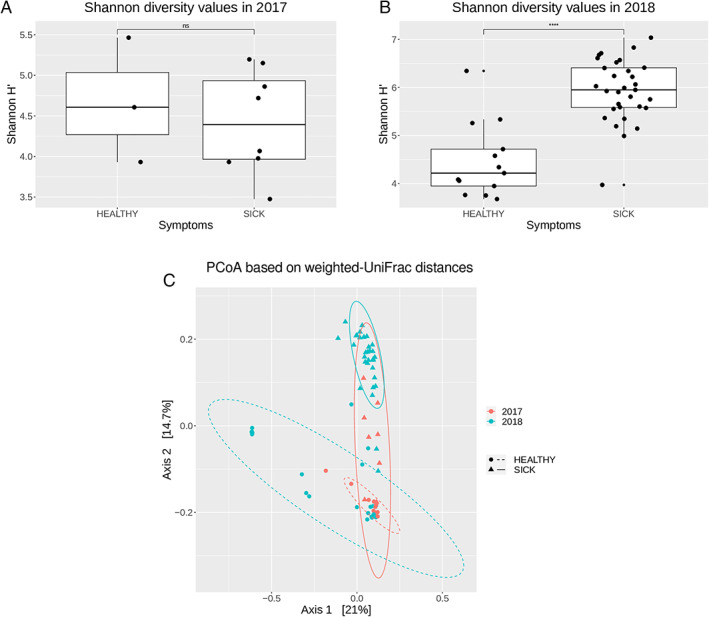
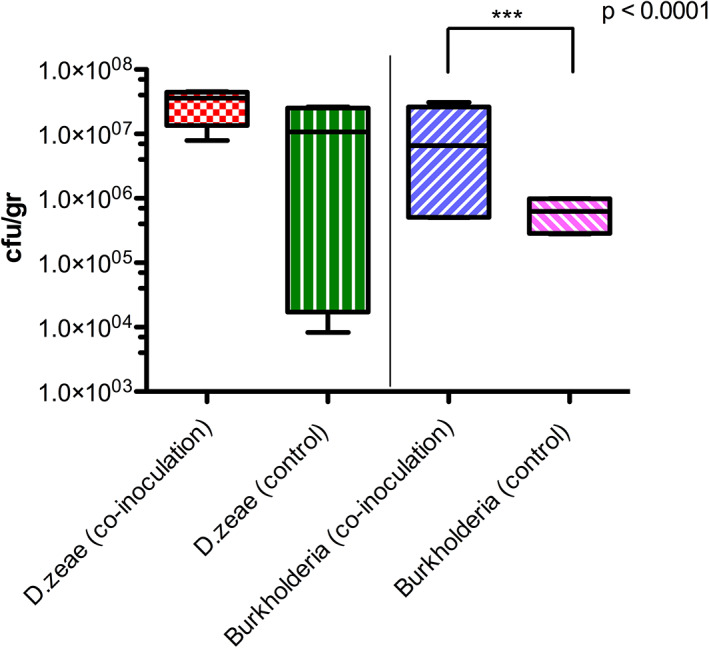
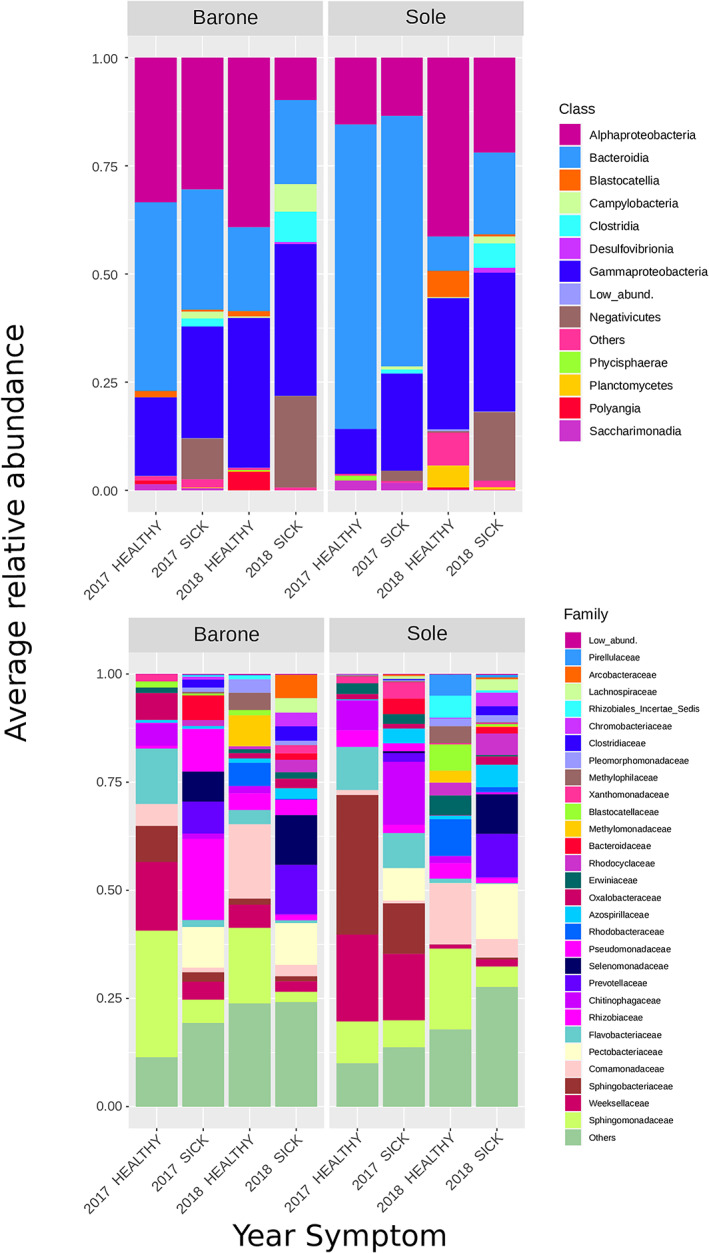
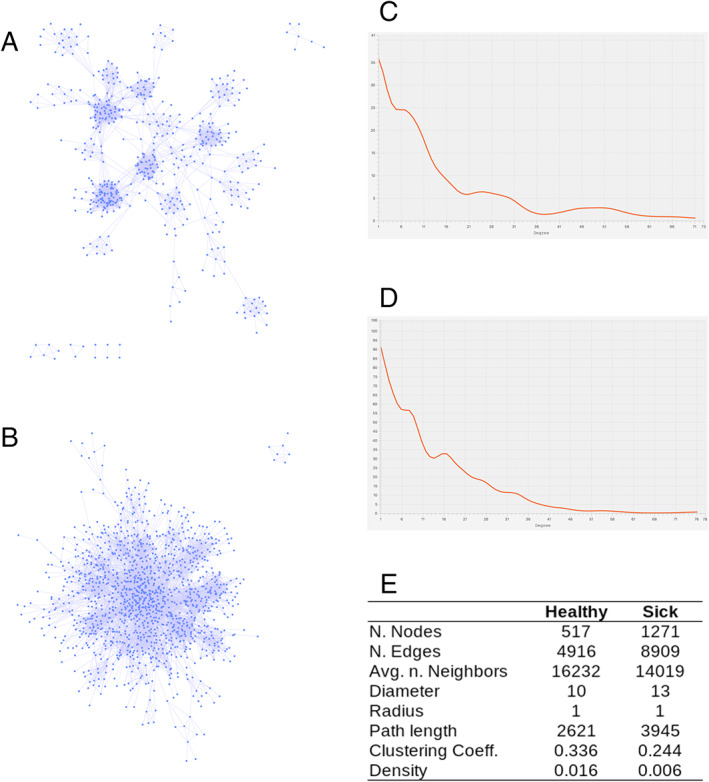
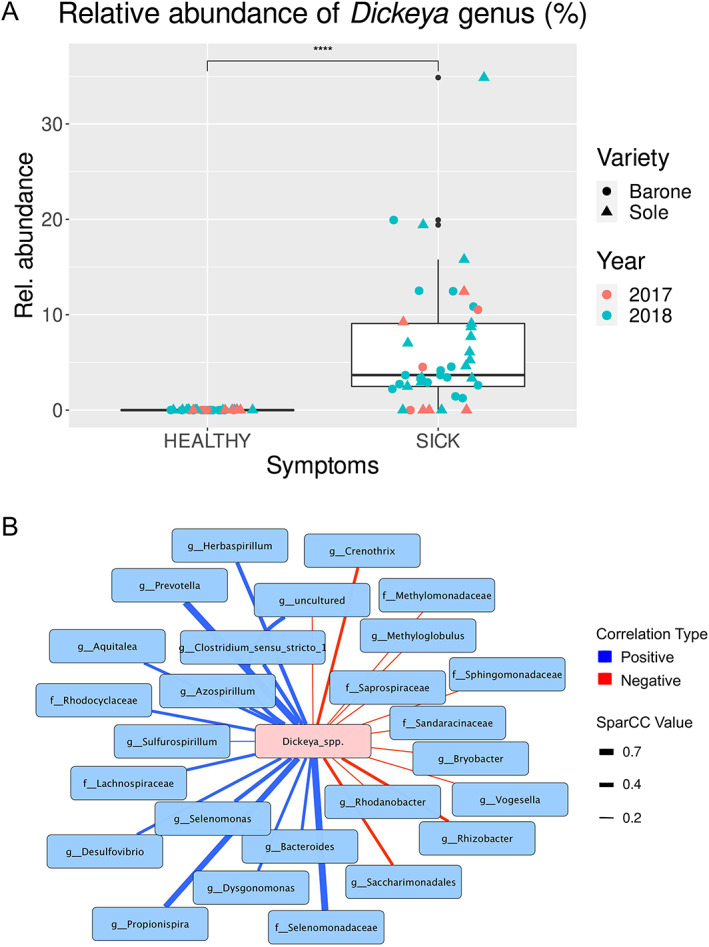
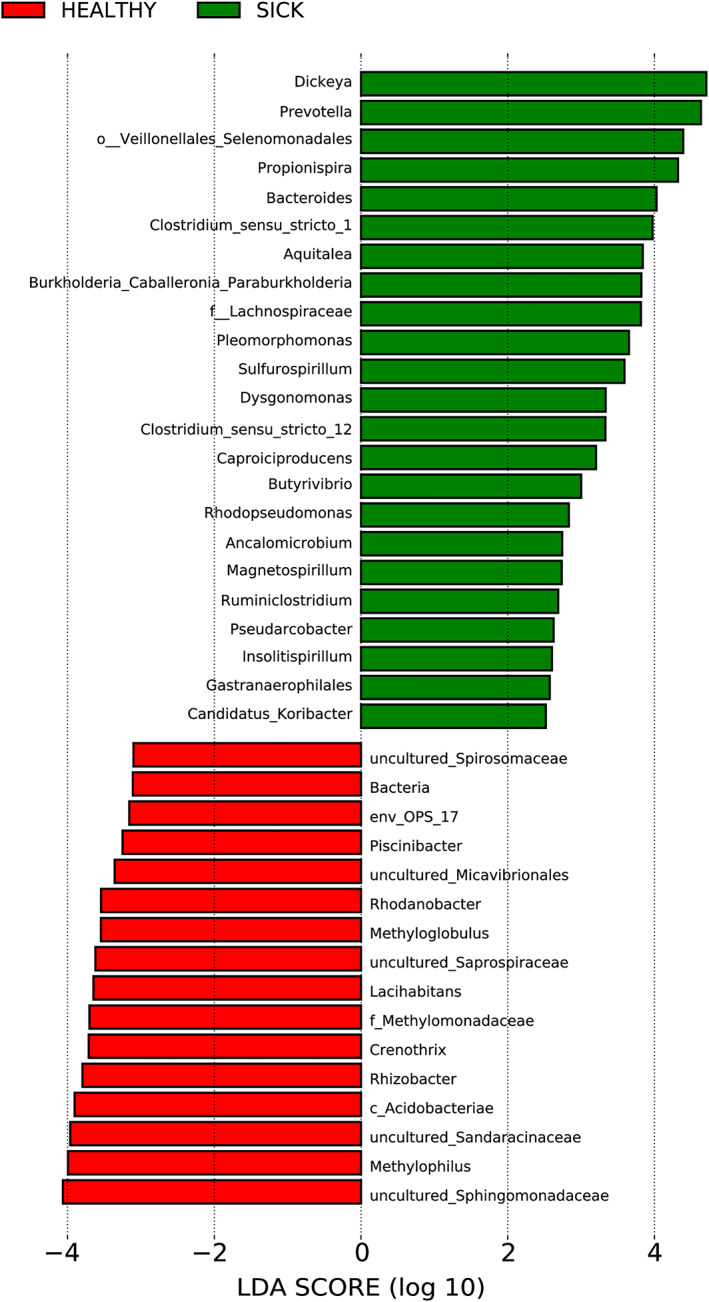
Studies on bacterial plant diseases have thus far been focused on the single bacterial species causing the disease, with very little attention given to the many other microorganisms present in the microbiome. This study intends to use pathobiome analysis of the rice foot rot disease, caused by Dickeya zeae, as a case study to investigate the effects of this bacterial pathogen to the total resident microbiome and to highlight possible interactions between the pathogen and the members of the community involved in the disease process. The microbiome of asymptomatic and the pathobiome of foot-rot symptomatic field-grown rice plants over two growing periods and belonging to two rice cultivars were determined via 16S rRNA gene amplicon sequencing. Results showed that the presence of D. zeae is associated with an alteration of the resident bacterial community in terms of species composition, abundance and richness, leading to the formation of microbial consortia linked to the disease state. Several bacterial species were significantly co-presented with the pathogen in the two growing periods suggesting that they could be involved in the disease process. Besides, culture-dependent isolation and in planta inoculation studies of a bacterial member of the pathobiome, identified as positive correlated with the pathogen in our in silico analysis, indicated that it benefits from the presence of D. zeae. A similar microbiome/pathobiome experiment was also performed in a symptomatically different rice disease evidencing that not all plant diseases have the same consequence/relationship with the plant microbiome. This study moves away from a pathogen-focused stance and goes towards a more ecological perception considering the effect of the entire microbial community which could be involved in the pathogenesis, persistence, transmission and evolution of plant pathogens.
迄今为止,对植物细菌病的研究主要集中在引起疾病的单一细菌物种上,而对微生物组中存在的许多其他微生物关注甚少。本研究拟以稻细菌性基腐病(由玉米伯克霍尔德氏菌引起)的病理组学分析为案例研究,调查该细菌病原体对总常驻微生物组的影响,并强调该病原体与参与疾病过程的社区成员之间可能存在的相互作用。通过对两个生长季节和两个水稻品种的无症状和稻基腐病症状田间生长的水稻植物的 16S rRNA 基因扩增子测序,确定了微生物组和病理组。结果表明,玉米伯克霍尔德氏菌的存在与常驻细菌群落的物种组成、丰度和丰富度的改变有关,导致与疾病状态相关的微生物群落的形成。在两个生长季节中,有几个细菌物种与病原菌显著共现,表明它们可能参与了疾病过程。此外,对病理组中一个与病原菌在我们的计算机分析中呈正相关的细菌成员进行了基于培养的分离和植株接种研究,表明它受益于玉米伯克霍尔德氏菌的存在。在一个表现出不同症状的水稻疾病中也进行了类似的微生物组/病理组实验,表明并非所有植物疾病都对植物微生物组产生相同的后果/关系。本研究从以病原体为重点的立场转变为更具生态意义的观点,考虑了整个微生物组可能参与植物病原体的发病机制、持久性、传播和进化的影响。