Guangdong Provincial Key Laboratory of Infectious Diseases and Molecular Immunopathology, the Key Laboratory of Molecular Biology for High Cancer Incidence Coastal Chaoshan Area, Shantou University Medical College, Shantou, Guangdong, China.
College of Science, Heilongjiang Institute of Technology, Harbin, Heilongjiang, China.
Nat Commun. 2021 Aug 16;12(1):4961. doi: 10.1038/s41467-021-25202-5.
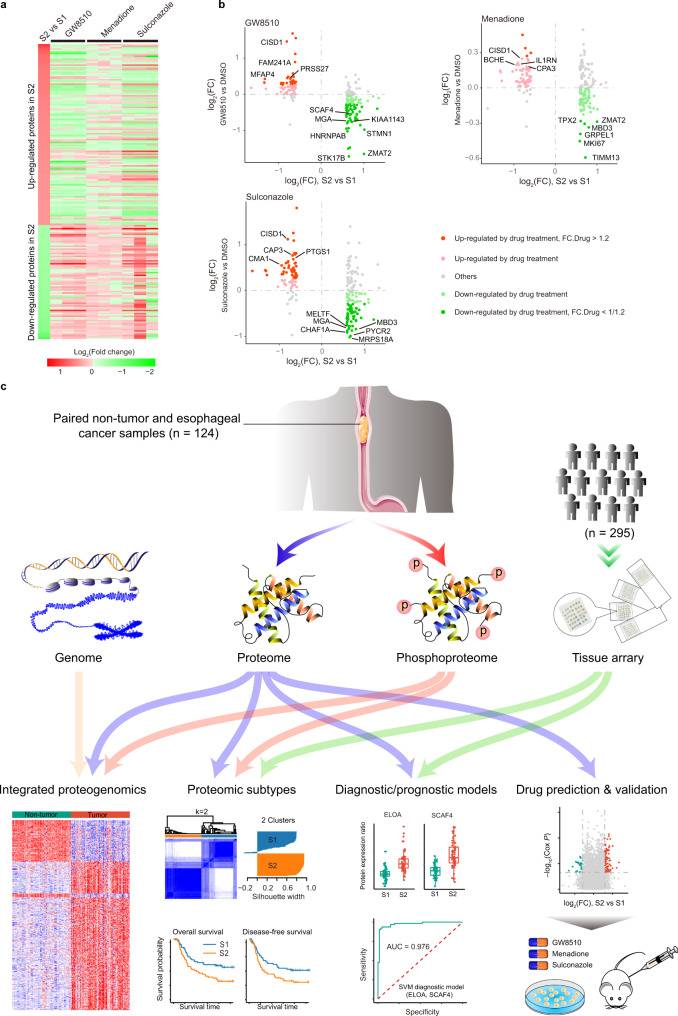
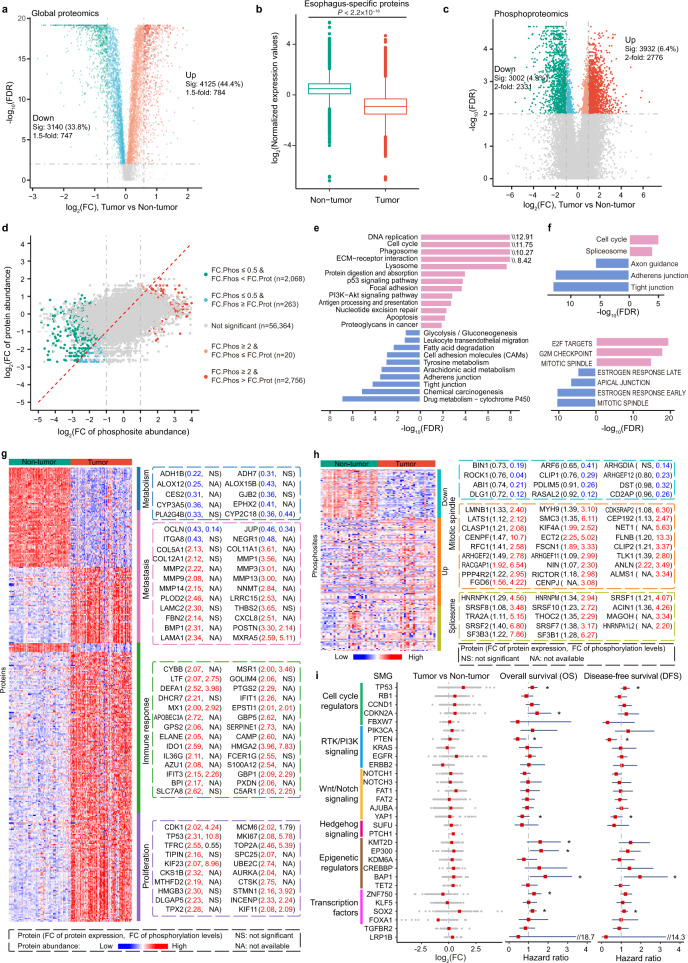
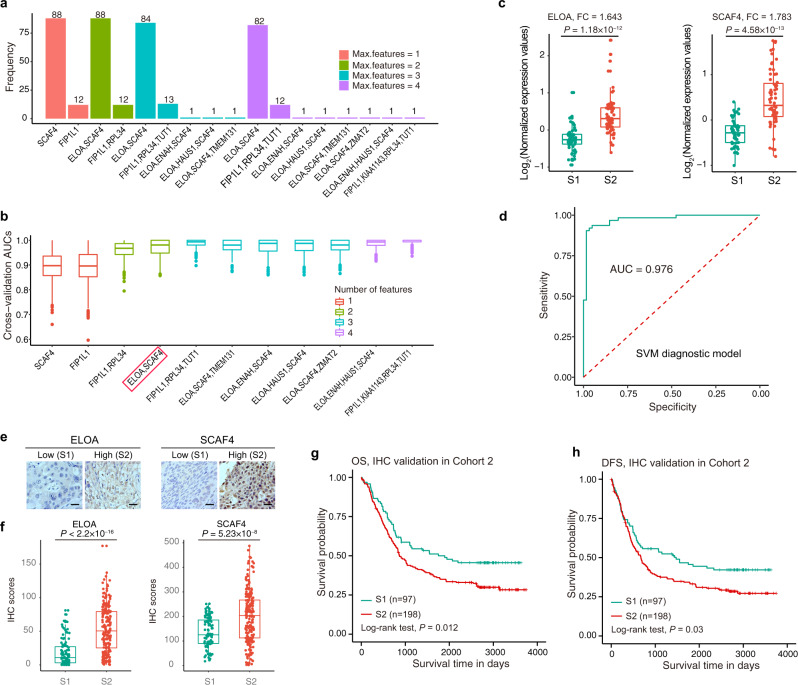
Esophageal cancer (EC) is a type of aggressive cancer without clinically relevant molecular subtypes, hindering the development of effective strategies for treatment. To define molecular subtypes of EC, we perform mass spectrometry-based proteomic and phosphoproteomics profiling of EC tumors and adjacent non-tumor tissues, revealing a catalog of proteins and phosphosites that are dysregulated in ECs. The EC cohort is stratified into two molecular subtypes-S1 and S2-based on proteomic analysis, with the S2 subtype characterized by the upregulation of spliceosomal and ribosomal proteins, and being more aggressive. Moreover, we identify a subtype signature composed of ELOA and SCAF4, and construct a subtype diagnostic and prognostic model. Potential drugs are predicted for treating patients of S2 subtype, and three candidate drugs are validated to inhibit EC. Taken together, our proteomic analysis define molecular subtypes of EC, thus providing a potential therapeutic outlook for improving disease outcomes in patients with EC.
食管癌(EC)是一种侵袭性癌症,没有临床相关的分子亚型,这阻碍了治疗有效策略的发展。为了定义 EC 的分子亚型,我们对 EC 肿瘤和相邻非肿瘤组织进行基于质谱的蛋白质组学和磷酸化蛋白质组学分析,揭示了一组在 EC 中失调的蛋白质和磷酸化位点。根据蛋白质组学分析,EC 队列被分为两个分子亚型-S1 和 S2,其中 S2 亚型的剪接体和核糖体蛋白上调,侵袭性更强。此外,我们确定了由 ELOA 和 SCAF4 组成的亚型特征,并构建了一个亚型诊断和预后模型。预测了潜在的药物来治疗 S2 亚型的患者,并验证了三种候选药物来抑制 EC。总之,我们的蛋白质组学分析定义了 EC 的分子亚型,从而为改善 EC 患者的疾病结局提供了潜在的治疗前景。