Department of Epidemiology and Data Science, Amsterdam UMC, location VUmc, Amsterdam, the Netherlands.
Amsterdam Public Health Research Institute, Amsterdam, the Netherlands.
Diabetologia. 2021 Nov;64(11):2367-2377. doi: 10.1007/s00125-021-05541-0. Epub 2021 Aug 16.
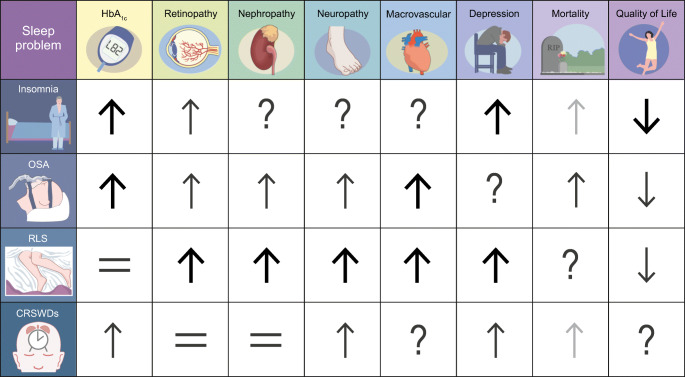
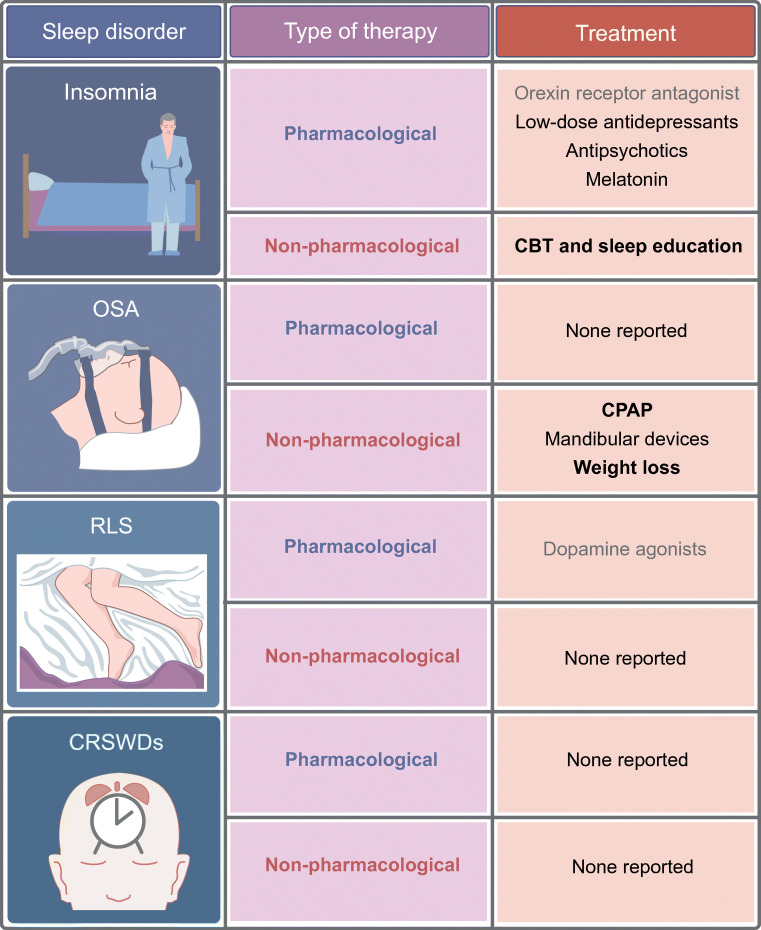
Sleep disorders are linked to development of type 2 diabetes and increase the risk of developing diabetes complications. Treating sleep disorders might therefore play an important role in the prevention of diabetes progression. However, the detection and treatment of sleep disorders are not part of standardised care for people with type 2 diabetes. To highlight the importance of sleep disorders in people with type 2 diabetes, we provide a review of the literature on the prevalence of sleep disorders in type 2 diabetes and the association between sleep disorders and health outcomes, such as glycaemic control, microvascular and macrovascular complications, depression, mortality and quality of life. Additionally, we examine the extent to which treating sleep disorders in people with type 2 diabetes improves these health outcomes. We performed a literature search in PubMed from inception until January 2021, using search terms for sleep disorders, type 2 diabetes, prevalence, treatment and health outcomes. Both observational and experimental studies were included in the review. We found that insomnia (39% [95% CI 34, 44]), obstructive sleep apnoea (55-86%) and restless legs syndrome (8-45%) were more prevalent in people with type 2 diabetes, compared with the general population. No studies reported prevalence rates for circadian rhythm sleep-wake disorders, central disorders of hypersomnolence or parasomnias. Additionally, several cross-sectional and prospective studies showed that sleep disorders negatively affect health outcomes in at least one diabetes domain, especially glycaemic control. For example, insomnia is associated with increased HbA levels (2.51 mmol/mol [95% CI 1.1, 4.4]; 0.23% [95% CI 0.1, 0.4]). Finally, randomised controlled trials that investigate the effect of treating sleep disorders in people with type 2 diabetes are scarce, based on a small number of participants and sometimes inconclusive. Conventional therapies such as weight loss, sleep education and cognitive behavioural therapy seem to be effective in improving sleep and health outcomes in people with type 2 diabetes. We conclude that sleep disorders are highly prevalent in people with type 2 diabetes, negatively affecting health outcomes. Since treatment of the sleep disorder could prevent diabetes progression, efforts should be made to diagnose and treat sleep disorders in type 2 diabetes in order to ultimately improve health and therefore quality of life.
睡眠障碍与 2 型糖尿病的发生有关,并增加了糖尿病并发症发生的风险。因此,治疗睡眠障碍可能在预防糖尿病进展方面发挥重要作用。然而,睡眠障碍的检测和治疗并不是 2 型糖尿病患者标准化护理的一部分。为了强调 2 型糖尿病患者睡眠障碍的重要性,我们综述了 2 型糖尿病患者睡眠障碍的患病率以及睡眠障碍与血糖控制、微血管和大血管并发症、抑郁、死亡率和生活质量等健康结果之间的关联。此外,我们还研究了治疗 2 型糖尿病患者睡眠障碍对改善这些健康结果的程度。我们在 PubMed 上进行了一项从创建到 2021 年 1 月的文献检索,使用了睡眠障碍、2 型糖尿病、患病率、治疗和健康结果的搜索词。综述中包括观察性研究和实验研究。我们发现,与普通人群相比,2 型糖尿病患者中失眠(39%[95%CI 34, 44%])、阻塞性睡眠呼吸暂停(55-86%)和不安腿综合征(8-45%)更为常见。没有研究报告昼夜节律睡眠-觉醒障碍、中枢性过度睡眠障碍或睡眠相关运动障碍的患病率。此外,几项横断面和前瞻性研究表明,睡眠障碍至少在一个糖尿病领域对健康结果产生负面影响,尤其是血糖控制。例如,失眠与 HbA 水平升高相关(2.51mmol/mol[95%CI 1.1, 4.4];0.23%[95%CI 0.1, 0.4])。最后,基于参与者数量较少且有时结果不确定,针对 2 型糖尿病患者治疗睡眠障碍效果的随机对照试验非常少。减肥、睡眠教育和认知行为疗法等常规疗法似乎可以有效改善 2 型糖尿病患者的睡眠和健康结果。我们得出结论,睡眠障碍在 2 型糖尿病患者中非常普遍,对健康结果产生负面影响。由于治疗睡眠障碍可以预防糖尿病进展,因此应该努力在 2 型糖尿病中诊断和治疗睡眠障碍,以最终改善健康状况,从而提高生活质量。