Key Laboratory of Biosafety, National Health and Family Planning Commission, National Institute for Viral Disease Control and Prevention, Chinese Center for Disease Control and Prevention, Beijing 102206, China.
Chin Med J (Engl). 2021 Aug 16;134(17):2048-2053. doi: 10.1097/CM9.0000000000001687.
With the ongoing worldwide coronavirus disease 2019 (COVID-19) pandemic, an increasing number of viral variants are being identified, which poses a challenge for nucleic acid-based diagnostic tests. Rapid tests, such as real-time reverse transcription-polymerase chain reaction (rRT-PCR), play an important role in monitoring COVID-19 infection and controlling its spread. However, the changes in the genotypes of severe acute respiratory syndrome coronavirus 2 (SARS-CoV-2) variants may result in decreased sensitivity of the rRT-PCR assay and it is necessary to monitor the mutations in primers and probes of SARS-CoV-2 detection over time.
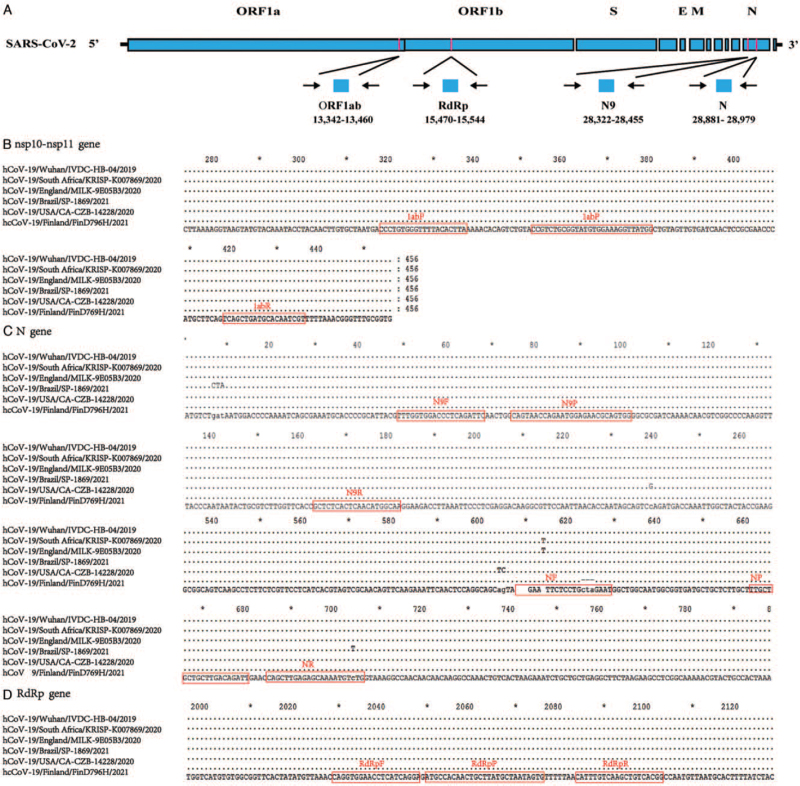
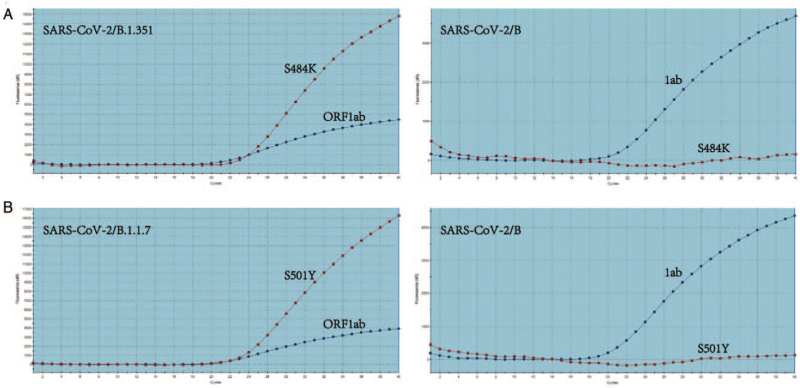
We developed two rRT-PCR assays to detect the RNA-dependent RNA polymerase (RdRp) and nucleocapsid (N) genes of SARS-CoV-2. We evaluated these assays together with our previously published assays targeting the ORF1ab and N genes for the detection and confirmation of SARS-CoV-2 and its variants of concern (VOCs). In addition, we also developed two rRT-PCR assays (S484K and S501Y) targeting the spike gene, which when combined with the open reading frames (ORF)1ab assay, respectively, to form duplex rRT-PCR assays, were able to detect SARS-CoV-2 VOCs (lineages B.1.351 and B.1.1.7).
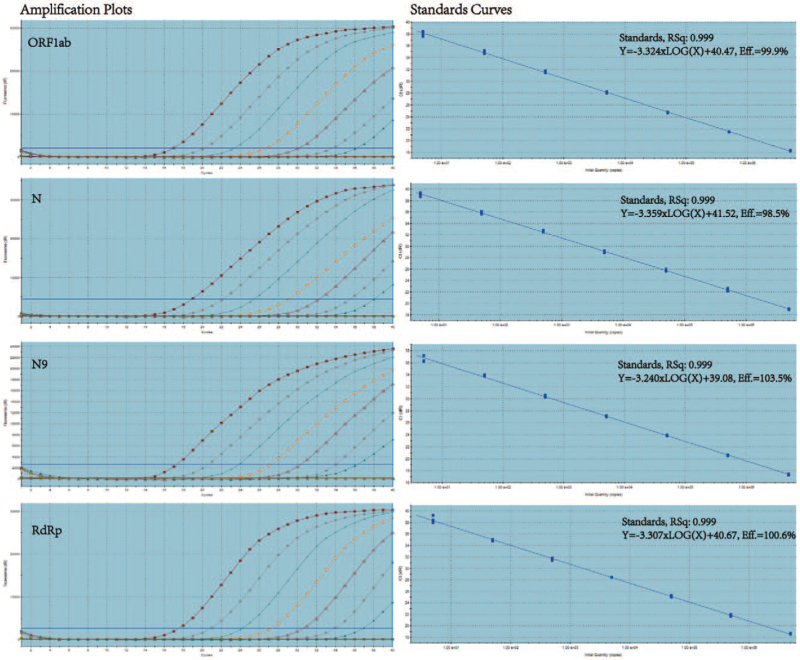
Using a SARS-CoV-2 stock with predetermined genomic copies as a standard, the detection limit of both assays targeting RdRp and N was five copies/reaction. Furthermore, no cross-reactions with six others human CoVs (229E, OC43, NL63, HKU1, severe acute respiratory syndrome coronavirus and Middle East respiratory syndrome coronavirus) were observed using these assays. In addition, the S484K and S501Y assays were combined with the ORF1ab assay, respectively.
Four rRT-PCR assays (RdRp, N, S484K, and S501Y) were used to detect SARS-CoV-2 variants, and these assays were shown to be effective in screening for multiple virus strains.
随着全球 2019 年冠状病毒病(COVID-19)大流行的持续,越来越多的病毒变异体被发现,这给基于核酸的诊断测试带来了挑战。实时逆转录-聚合酶链反应(rRT-PCR)等快速检测方法在监测 COVID-19 感染和控制其传播方面发挥着重要作用。然而,严重急性呼吸综合征冠状病毒 2(SARS-CoV-2)变异体基因型的变化可能导致 rRT-PCR 检测的敏感性降低,因此有必要随着时间的推移监测 SARS-CoV-2 检测中引物和探针的突变。
我们开发了两种 rRT-PCR 检测方法来检测 SARS-CoV-2 的 RNA 依赖性 RNA 聚合酶(RdRp)和核衣壳(N)基因。我们评估了这些检测方法,以及我们之前发表的针对 ORF1ab 和 N 基因的检测方法,用于检测和确认 SARS-CoV-2 及其关注的变异体(VOCs)。此外,我们还开发了两种针对刺突基因的 rRT-PCR 检测方法(S484K 和 S501Y),当与 ORF1ab 检测方法结合时,分别形成双 rRT-PCR 检测方法,能够检测 SARS-CoV-2 VOCs(谱系 B.1.351 和 B.1.1.7)。
使用具有预定基因组拷贝的 SARS-CoV-2 标准品作为标准,两种针对 RdRp 和 N 的检测方法的检测限均为五个拷贝/反应。此外,这些检测方法未与其他六种人类冠状病毒(229E、OC43、NL63、HKU1、严重急性呼吸综合征冠状病毒和中东呼吸综合征冠状病毒)发生交叉反应。此外,S484K 和 S501Y 检测方法分别与 ORF1ab 检测方法结合。
我们使用四种 rRT-PCR 检测方法(RdRp、N、S484K 和 S501Y)来检测 SARS-CoV-2 变异体,这些方法在筛选多种病毒株方面显示出有效性。