Clinical Research Team of Spine and Spinal Cord Diseases, Medical Research Center, Affiliated Hospital of Jining Medical University, 89 Guhuai Road, Jining, Shandong Province 272000, China.
Neuropathic Pain Institute for Spinal Nerve of Jining Medical University, 89 Guhuai Road, Jining, Shandong Province 272000, China.
Biosci Rep. 2021 Sep 30;41(9). doi: 10.1042/BSR20210051.
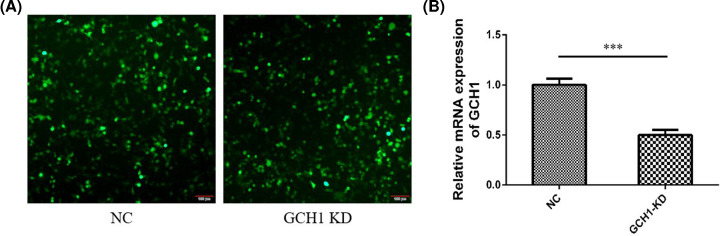
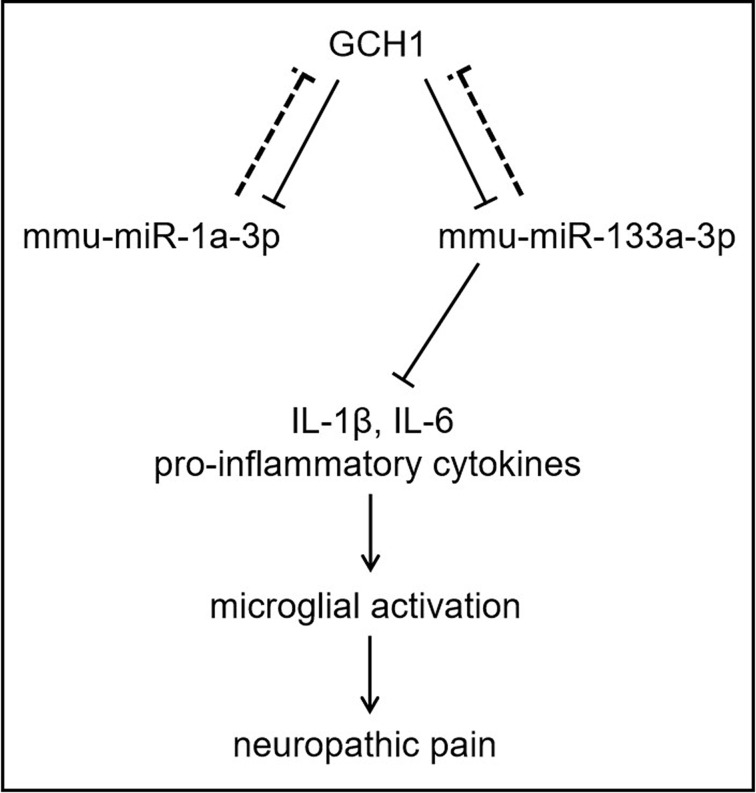
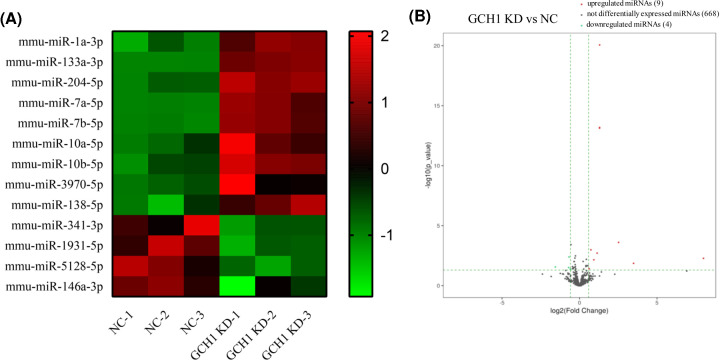
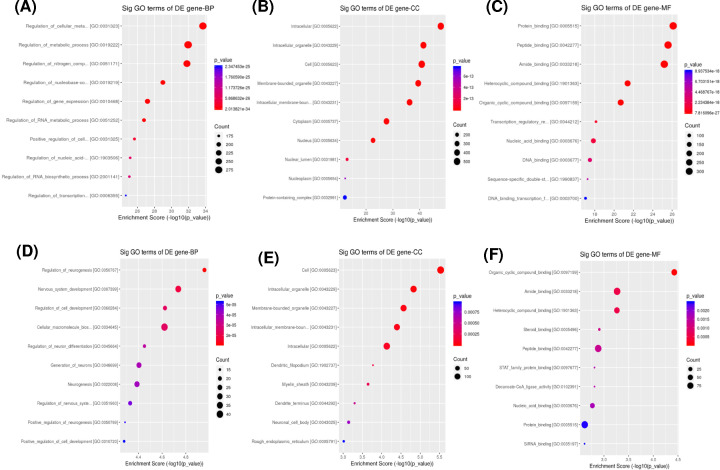
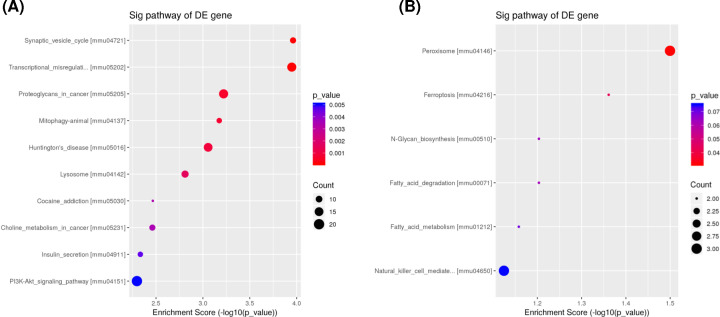
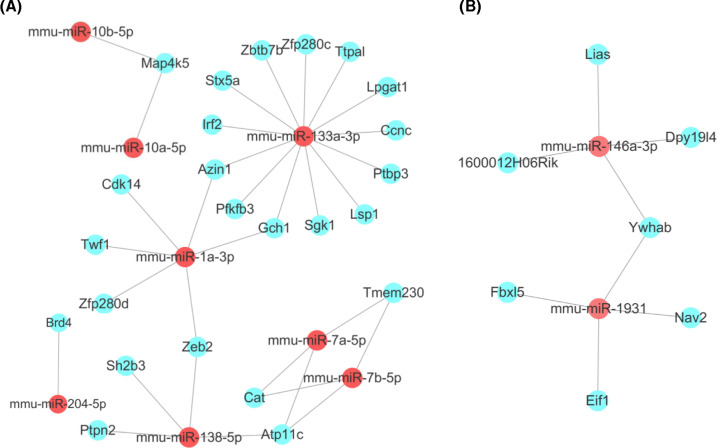
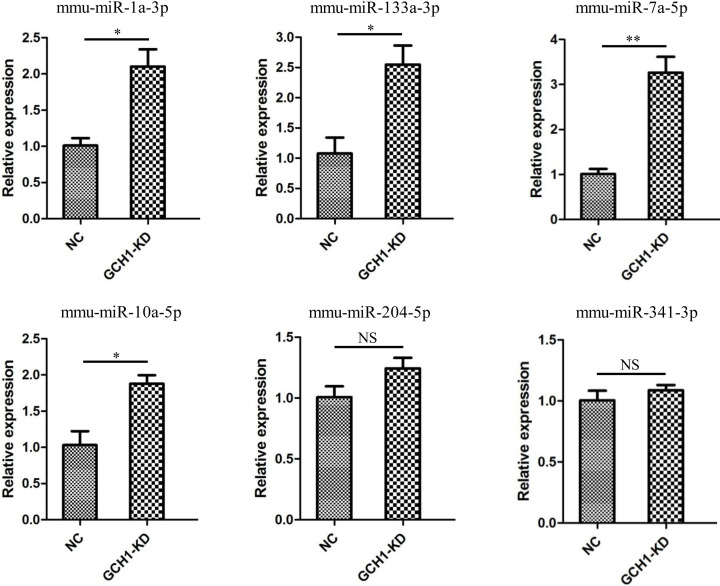
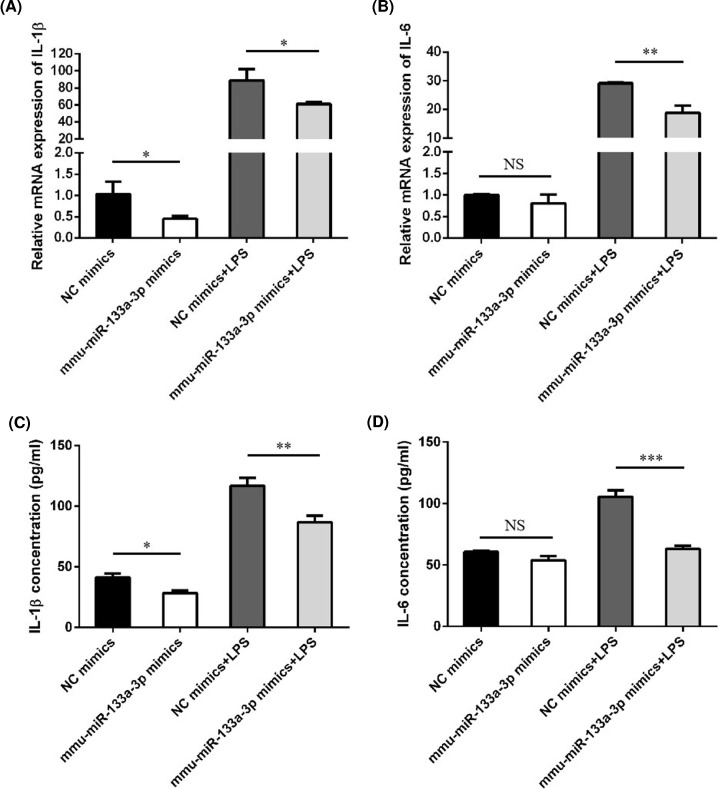
Neuropathic pain (NP) is a chronic pain directly caused by injury or disease of the somatosensory nervous system. Previous studies suggest that GTP cyclohydrolase I (GCH1) may play a pivotal role in microglial activation, which has been shown to be essential for NP. However, its underlying mechanisms in microglial activation remain unclear. A wide range of microRNAs (miRNAs) have been found to be involved in microglial activation-induced NP. To identify the miRNAs regulated by GCH1 and predict their functions in the progression of microglial activation, we analyzed the miRNA expression profiles of GCH1-knockdown (KD) BV2 microglial cells. Small RNA-sequencing analysis revealed 13 differentially expressed (DE) miRNAs in GCH1-KD cells. The target genes of DE miRNAs mainly participate in PI3K-Akt signaling pathway, peroxisome and ferroptosis. The miRNA-mRNA regulatory network analysis showed that GCH1, MAP4K5 and YWHAB acted as hub genes. qRT-PCR results further verified the expression levels of mmu-miR-1a-3p, mmu-miR-133a-3p, mmu-miR-7a-5p and mmu-miR-10a-5p in GCH1-KD cells, which were consistent with the sequencing data. In addition, our data indicated that overexpression of mmu-miR-133a-3p alleviated the pro-inflammatory cytokines IL-1β and IL-6 production induced by lipopolysaccharide (LPS), indicating that mmu-miR-133a-3p has a negative effect on microglial activation. Taken together, our findings suggest that many miRNAs regulated by GCH1 may be involved in microglial activation, which may provide new potential targets for GCH1 in the pathogenesis of NP.
神经病理性疼痛(NP)是一种由躯体感觉神经系统损伤或疾病直接引起的慢性疼痛。先前的研究表明,GTP 环水解酶 I(GCH1)可能在小胶质细胞激活中发挥关键作用,小胶质细胞激活已被证明对 NP 至关重要。然而,其在小胶质细胞激活中的潜在机制尚不清楚。大量 microRNAs(miRNAs)已被发现参与小胶质细胞激活诱导的 NP。为了确定受 GCH1 调控的 miRNAs,并预测它们在小胶质细胞激活进展中的功能,我们分析了 GCH1 敲低(KD)BV2 小胶质细胞的 miRNA 表达谱。小 RNA 测序分析显示,GCH1-KD 细胞中有 13 个差异表达(DE)miRNAs。DE miRNAs 的靶基因主要参与 PI3K-Akt 信号通路、过氧化物酶体和铁死亡。miRNA-mRNA 调控网络分析表明,GCH1、MAP4K5 和 YWHAB 作为 hub 基因发挥作用。qRT-PCR 结果进一步验证了 GCH1-KD 细胞中 mmu-miR-1a-3p、mmu-miR-133a-3p、mmu-miR-7a-5p 和 mmu-miR-10a-5p 的表达水平,与测序数据一致。此外,我们的数据表明,mmu-miR-133a-3p 的过表达减轻了脂多糖(LPS)诱导的促炎细胞因子 IL-1β 和 IL-6 的产生,表明 mmu-miR-133a-3p 对小胶质细胞激活具有负向作用。综上所述,我们的研究结果表明,许多受 GCH1 调控的 miRNAs 可能参与小胶质细胞激活,这可能为 GCH1 在 NP 发病机制中的作用提供新的潜在靶点。