Department of Child and Adolescent Psychiatry, Institute of Psychiatry, Psychology and Neuroscience, PO63, 16 De Crespigny Park, London, SE5 8AF, UK.
Child and Adolescent Mental Health Services, South London and the Maudsley NHS Foundation Trust, London, UK.
Eur Child Adolesc Psychiatry. 2023 Jul;32(7):1151-1177. doi: 10.1007/s00787-021-01856-w. Epub 2021 Aug 18.
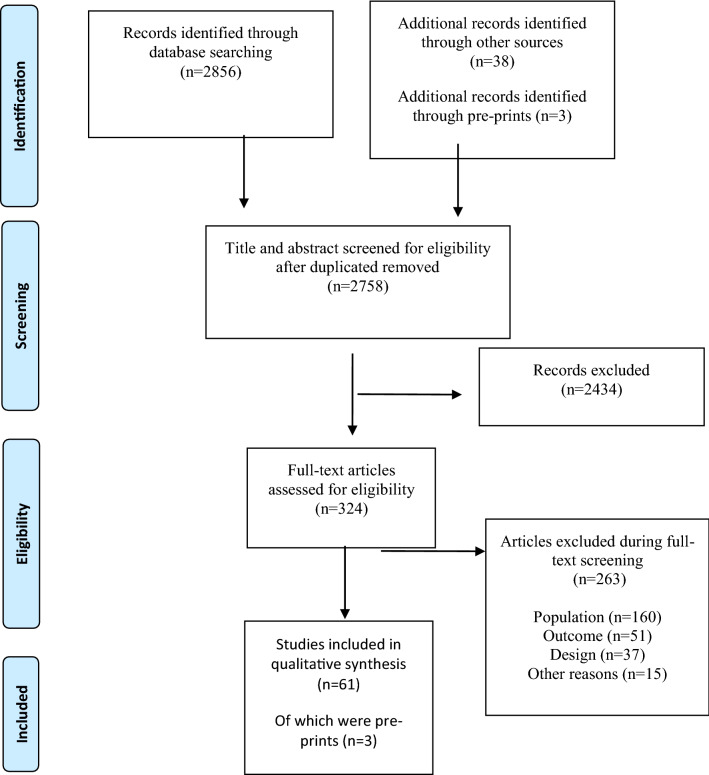
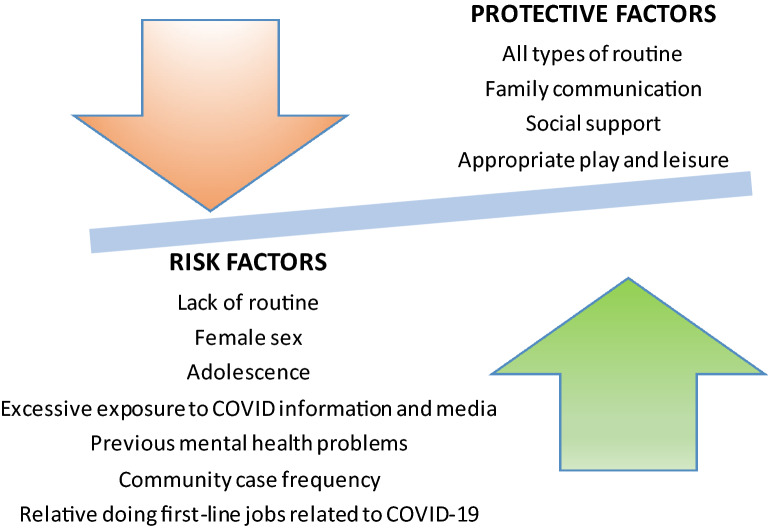
COVID-19 was declared a pandemic in March 2020, resulting in many countries worldwide calling for lockdowns. This study aimed to review the existing literature on the effects of the lockdown measures established as a response to the COVID-19 pandemic on the mental health of children and adolescents. Embase, Ovid, Global Health, PsycINFO, Web of Science, and pre-print databases were searched in this PRISMA-compliant systematic review (PROSPERO: CRD42021225604). We included individual studies reporting on a wide range of mental health outcomes, including risk and protective factors, conducted in children and adolescents (aged ≤ 19 years), exposed to COVID-19 lockdown. Data extraction and quality appraisal were conducted by independent researchers, and results were synthesised by core themes. 61 articles with 54,999 children and adolescents were included (mean age = 11.3 years, 49.7% female). Anxiety symptoms and depression symptoms were common in the included studies and ranged 1.8-49.5% and 2.2-63.8%, respectively. Irritability (range = 16.7-73.2%) and anger (range = 30.0-51.3%), were also frequently reported by children and adolescents. Special needs and the presence of mental disorders before the lockdown, alongside excessive media exposure, were significant risk factors for anxiety. Parent-child communication was protective for anxiety and depression. The COVID-19 lockdown has resulted in psychological distress and highlighted vulnerable groups such as those with previous or current mental health difficulties. Supporting the mental health needs of children and adolescents at risk is key. Clinical guidelines to alleviate the negative effects of COVID-19 lockdown and public health strategies to support this population need to be developed.
2020 年 3 月,COVID-19 被宣布为大流行,导致全球许多国家呼吁封锁。本研究旨在回顾 COVID-19 大流行期间为应对 COVID-19 而建立的封锁措施对儿童和青少年心理健康影响的现有文献。这项符合 PRISMA 标准的系统评价(PROSPERO:CRD42021225604)在 Embase、Ovid、全球健康、PsycINFO、Web of Science 和预印本数据库中进行了搜索。我们纳入了报告广泛心理健康结果的个体研究,包括风险和保护因素,研究对象为暴露于 COVID-19 封锁的儿童和青少年(年龄≤19 岁)。数据提取和质量评估由独立研究人员进行,结果通过核心主题进行综合。共有 61 篇文章,涉及 54999 名儿童和青少年(平均年龄为 11.3 岁,49.7%为女性)。纳入研究中常见焦虑症状和抑郁症状,分别为 1.8-49.5%和 2.2-63.8%。儿童和青少年还经常报告烦躁(范围为 16.7-73.2%)和愤怒(范围为 30.0-51.3%)。封锁前有特殊需求和精神障碍以及过度接触媒体是焦虑的重要危险因素。父母与子女的沟通对焦虑和抑郁有保护作用。COVID-19 封锁导致了心理困扰,并突出了弱势群体,如以前或目前有心理健康问题的人群。满足有风险的儿童和青少年的心理健康需求是关键。需要制定减轻 COVID-19 封锁负面影响的临床指南和支持这一人群的公共卫生战略。