Department of Chemistry, The University of Kansas, Lawrence, Kansas 66045, United States.
Center of BioModular Multiscale Systems for Precision Medicine, The University of Kansas, Lawrence, Kansas 66045, United States.
ACS Sens. 2021 Aug 27;6(8):3133-3143. doi: 10.1021/acssensors.1c01359. Epub 2021 Aug 18.
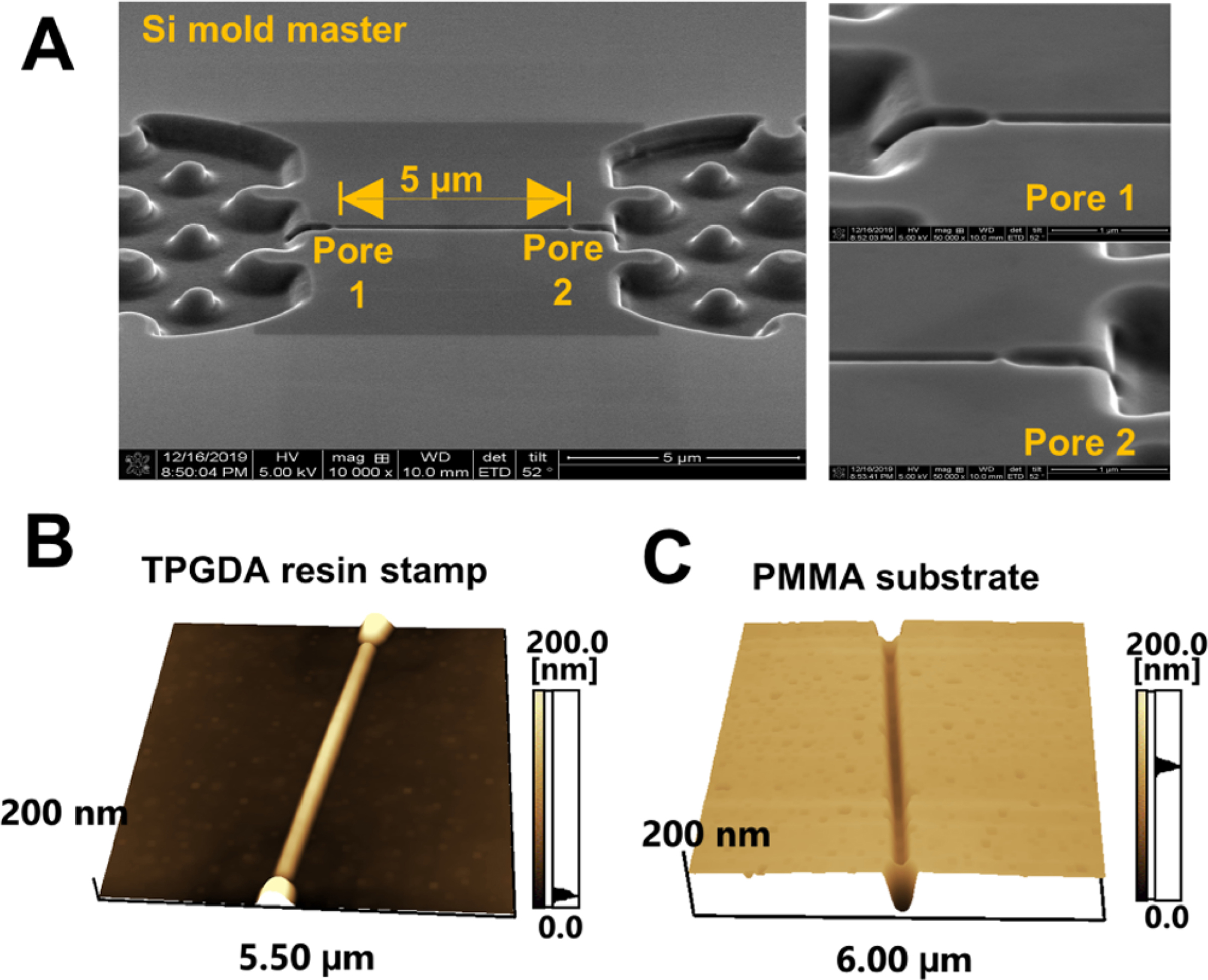
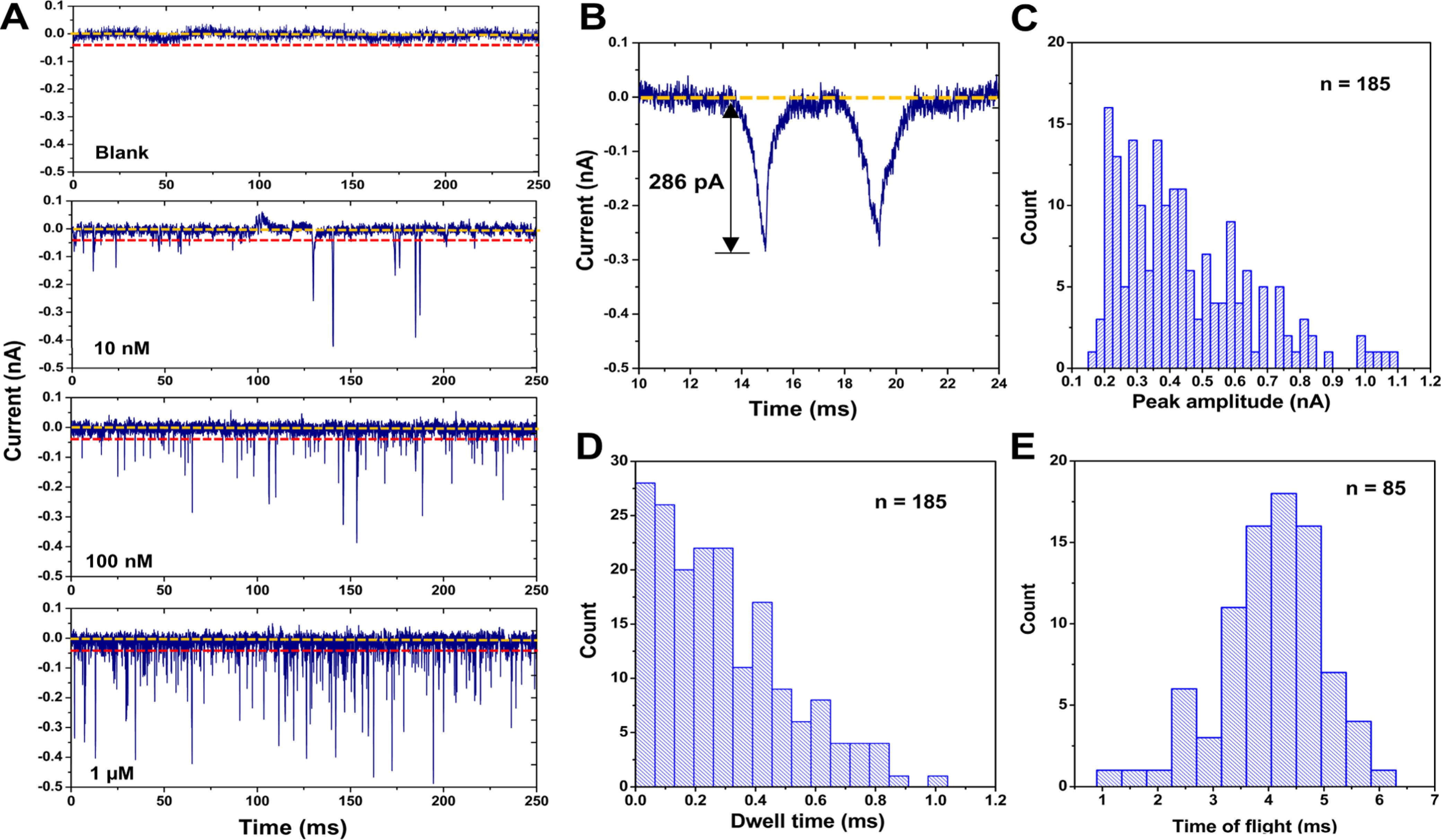
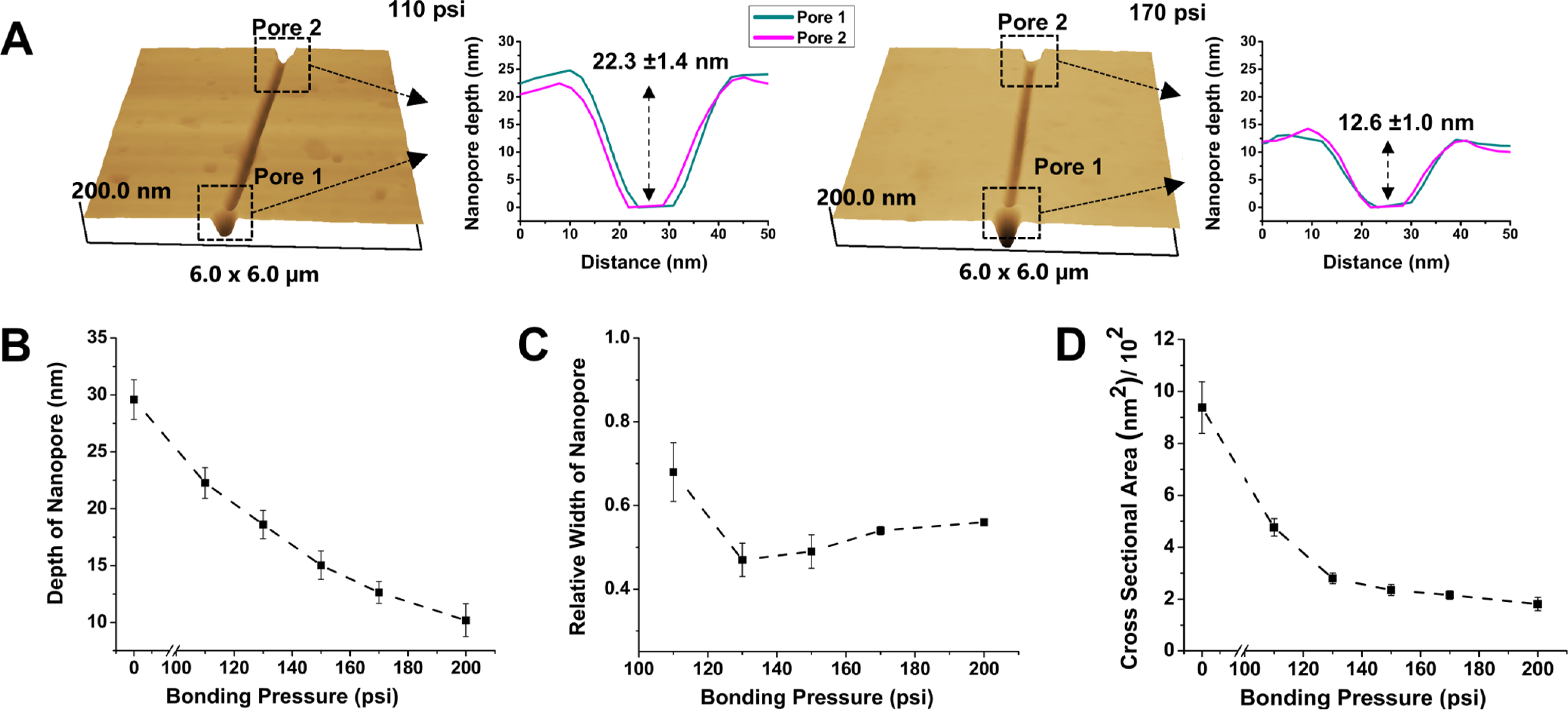
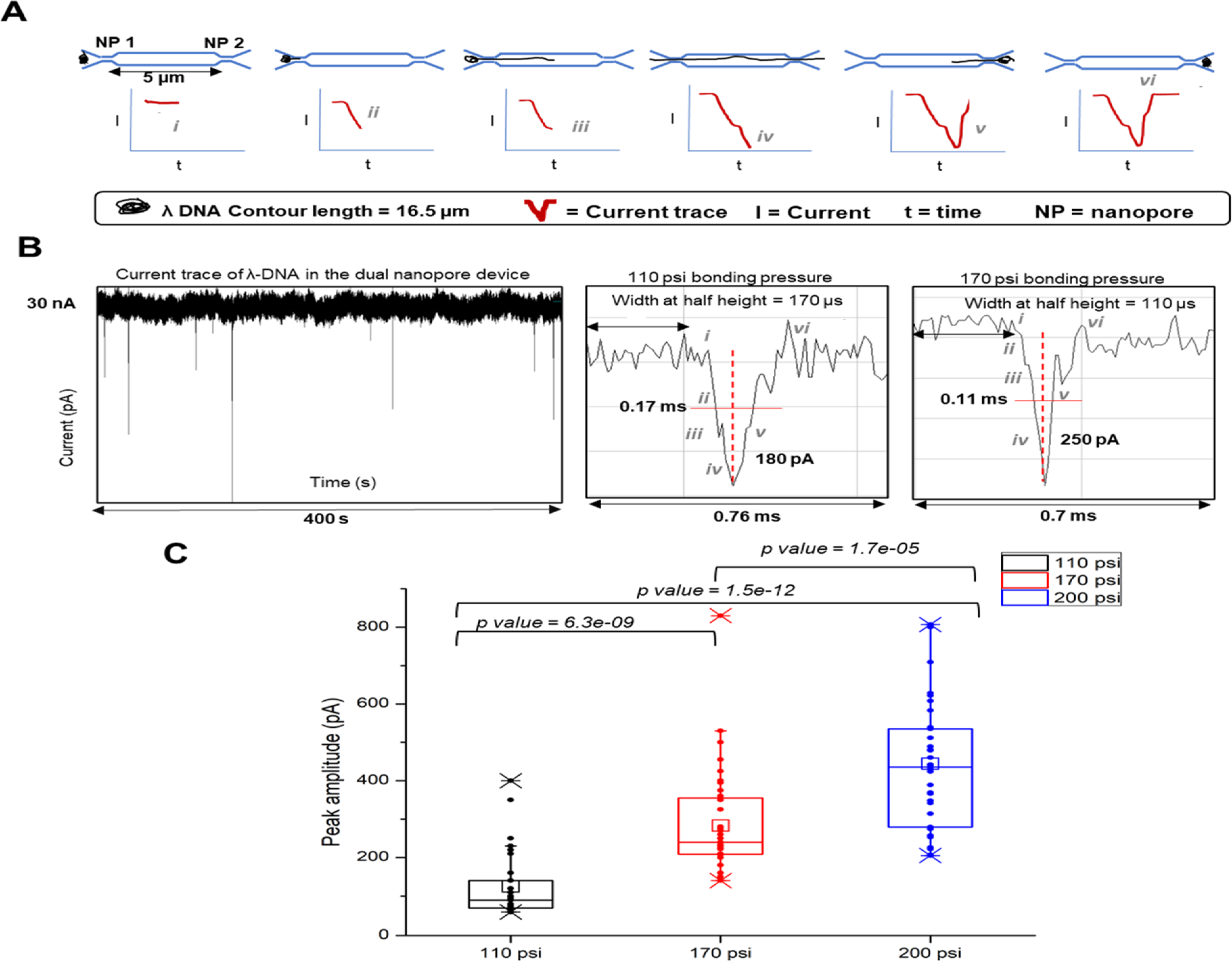
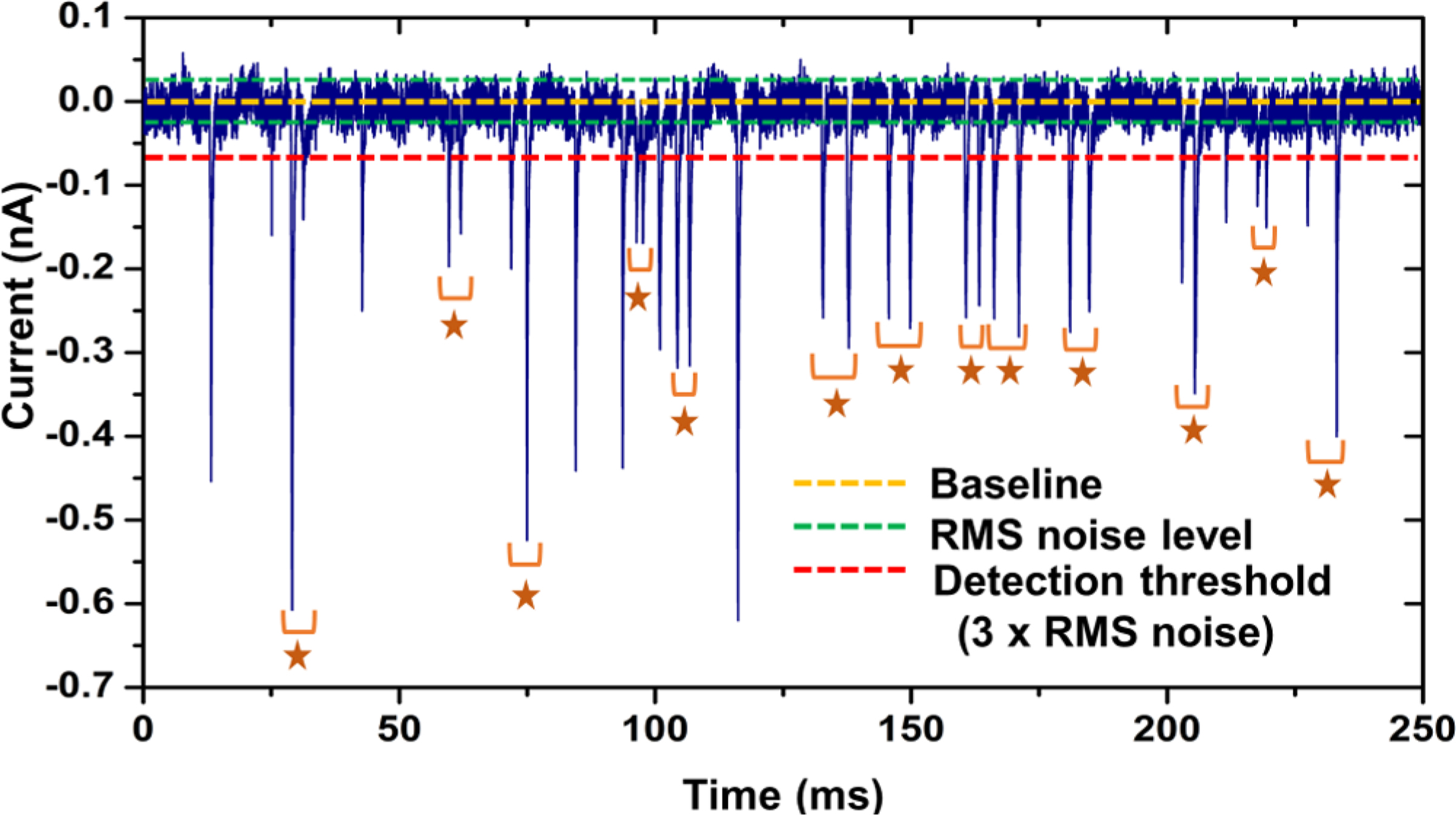
We report a simple method for tailoring the size of in-plane nanopores fabricated in thermoplastics for single-molecule sensing. The in-plane pores were fabricated nanoimprint lithography (NIL) from resin stamps, which were generated from Si masters. We could reduce the size of the in-plane nanopores from 30 to ∼10 nm during the thermal fusion bonding (TFB) step, which places a cover plate over the imprinted polymer substrate under a controlled pressure and temperature to form the relevant nanofluidic devices. Increased pressures during TFB caused the cross-sectional area of the in-plane pore to be reduced. The in-plane nanopores prepared with different TFB pressures were utilized to detect single-λ-DNA molecules resistive pulse sensing, which showed a higher current amplitude in devices bonded at higher pressures. Using this method, we also show the ability to tune the pore size to detect single-stranded (ss) RNA molecules and single ribonucleotide adenosine monophosphate (rAMP). However, due to the small size of the pores required for detection of the ssRNA and rAMPs, the surface charge arising from carboxylate groups generated during O plasma oxidation of the surfaces of the nanopores to make them wettable had to be reduced to allow translocation of coions. This was accomplished using EDC/NHS coupling chemistry and ethanolamine. This simple modification chemistry increased the event frequency from ∼1 s to >136 s for an ssRNA concentration of 100 nM.
我们报告了一种用于定制热塑性塑料中平面纳米孔尺寸的简单方法,用于单分子传感。平面孔通过纳米压印光刻(NIL)从树脂印章中制造,树脂印章是由 Si 母版生成的。我们可以在热融合键合(TFB)步骤中将平面纳米孔的尺寸从 30nm 减小到约 10nm,在该步骤中,将覆盖板放置在经过压印的聚合物基底上,在受控的压力和温度下形成相关的纳流控器件。TFB 过程中增加的压力导致平面内孔的横截面积减小。使用不同 TFB 压力制备的平面纳米孔用于通过电阻脉冲感应检测单λ-DNA 分子,在键合压力较高的器件中显示出较高的电流幅度。使用这种方法,我们还展示了调节孔尺寸以检测单链 RNA 分子和单核苷酸腺苷一磷酸(rAMP)的能力。然而,由于检测 ssRNA 和 rAMPs 需要较小的孔尺寸,因此必须减少表面电荷,表面电荷是由于等离子体氧化纳米孔表面以使其润湿而产生的羧酸盐基团引起的,以允许共离子迁移。这是通过 EDC/NHS 偶联化学和乙醇胺来实现的。这种简单的修饰化学将事件频率从约 1s 增加到 >136s,对于 100nM 的 ssRNA 浓度。