Saha Cardiovascular Research Center (J.Z.C., H.S., D.Y., M.K., S.O.-U., J.J.M., M.K.F., D.A.H., M.B.S., H.S.L., A.D.), University of Kentucky, Lexington.
Saha Aortic Center (J.Z.C., H.S., D.Y., M.K., S.O.-U., J.J.M., M.K.F., D.A.H., M.B.S., H.S.L., A.D.), University of Kentucky, Lexington.
Arterioscler Thromb Vasc Biol. 2021 Oct;41(10):2538-2550. doi: 10.1161/ATVBAHA.121.315715. Epub 2021 Aug 19.
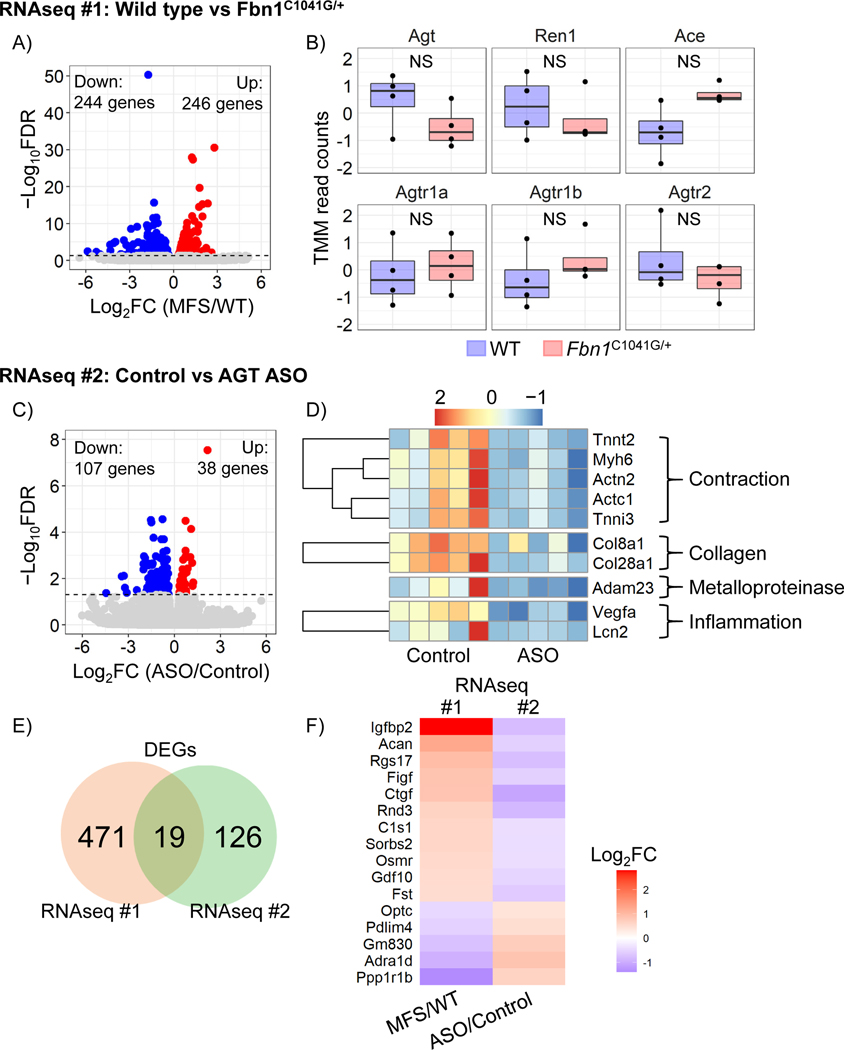
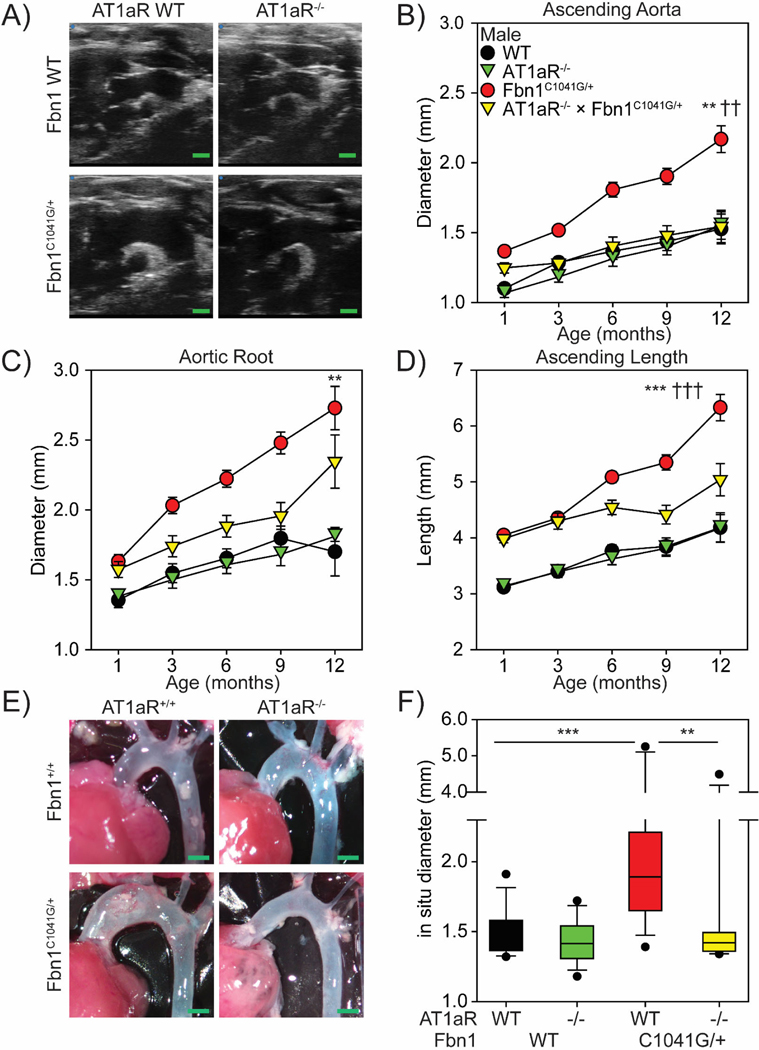
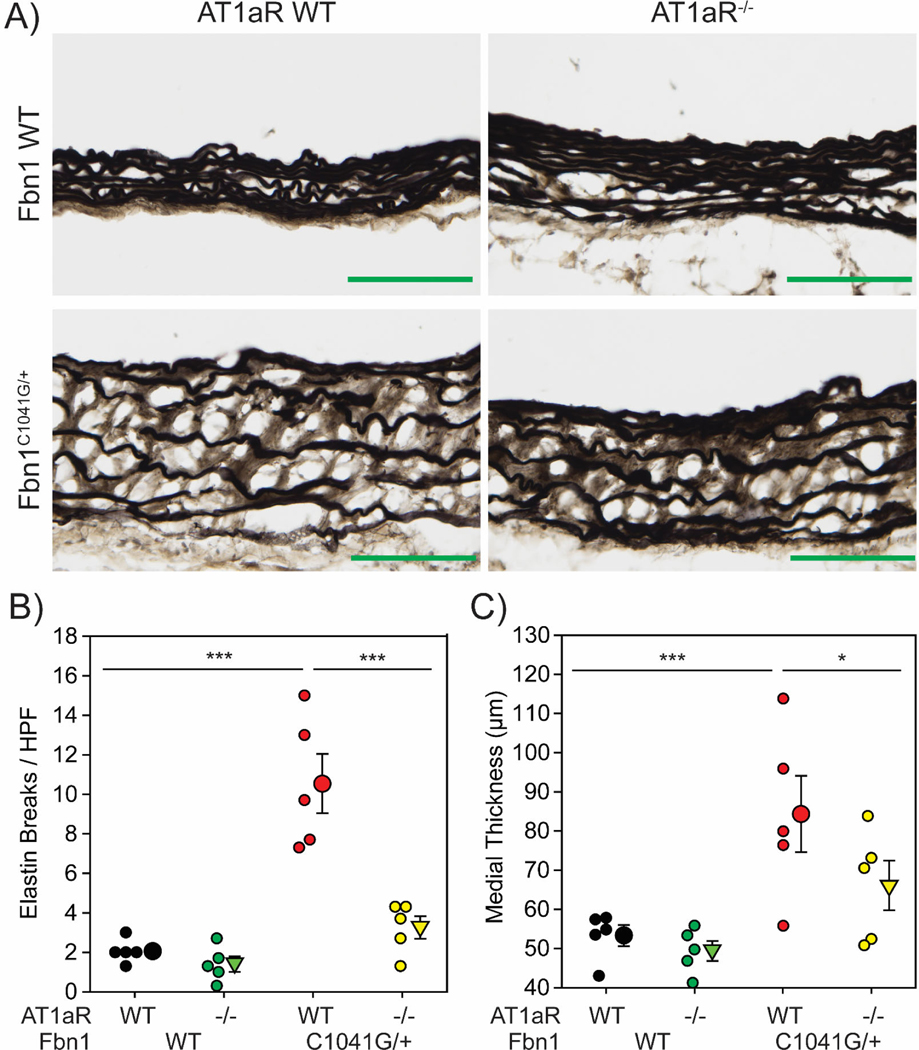
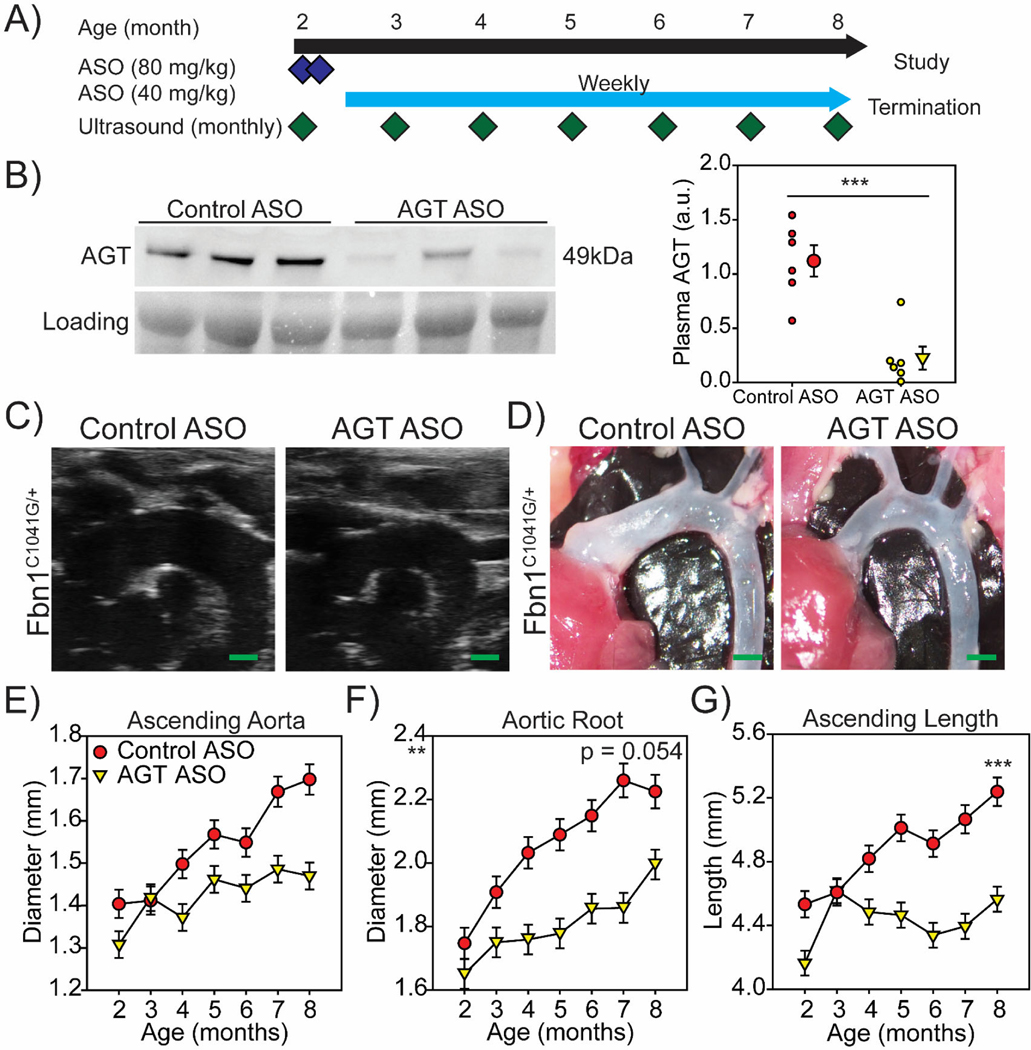
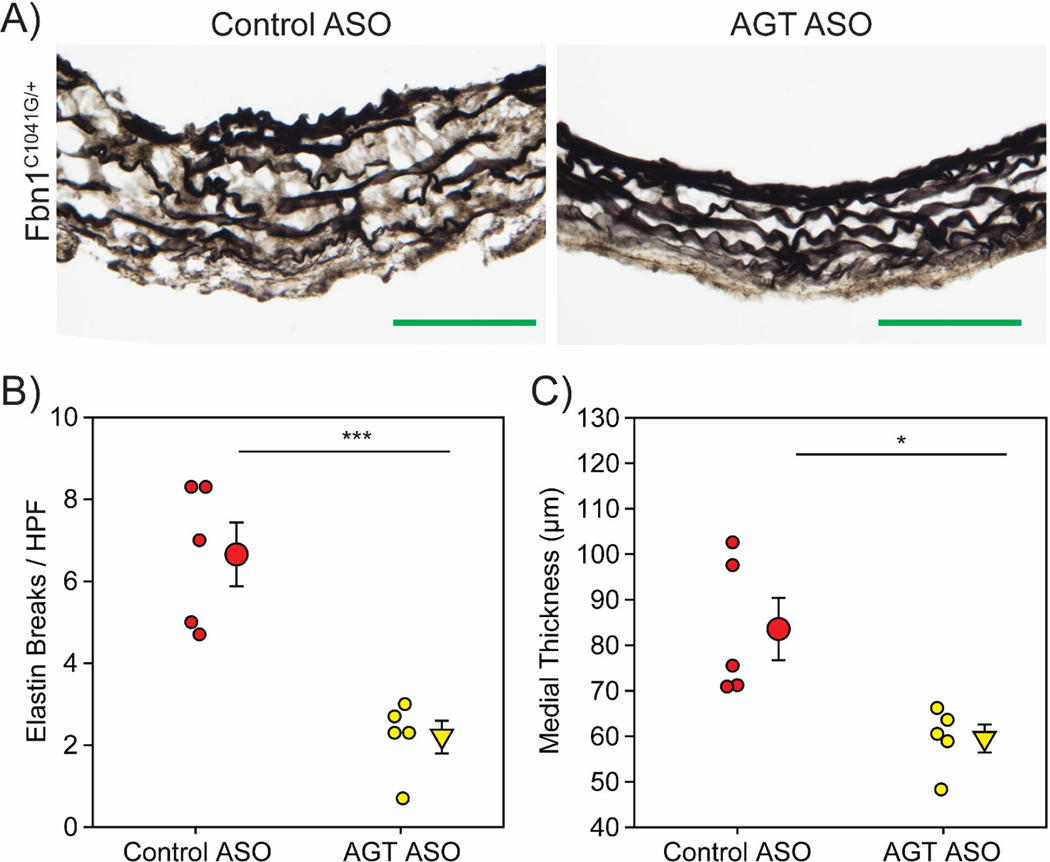
Objective: A cardinal feature of Marfan syndrome is thoracic aortic aneurysm. The contribution of the renin-angiotensin system via AT1aR (Ang II [angiotensin II] receptor type 1a) to thoracic aortic aneurysm progression remains controversial because the beneficial effects of angiotensin receptor blockers have been ascribed to off-target effects. This study used genetic and pharmacological modes of attenuating angiotensin receptor and ligand, respectively, to determine their roles on thoracic aortic aneurysm in mice with fibrillin-1 haploinsufficiency (Fbn1C1041G/+). Approach and Results: Thoracic aortic aneurysm in Fbn1C1041G/+ mice was found to be strikingly sexual dimorphic. Males displayed aortic dilation over 12 months while aortic dilation in Fbn1C1041G/+ females did not differ significantly from wild-type mice. To determine the role of AT1aR, Fbn1C1041G/+ mice that were either +/+ or -/- for AT1aR were generated. AT1aR deletion reduced expansion of ascending aorta and aortic root diameter from 1 to 12 months of age in males. Medial thickening and elastin fragmentation were attenuated. An antisense oligonucleotide against angiotensinogen was administered to male Fbn1C1041G/+ mice to determine the effects of Ang II depletion. Antisense oligonucleotide against angiotensinogen administration attenuated dilation of the ascending aorta and aortic root and reduced extracellular remodeling. Aortic transcriptome analyses identified potential targets by which inhibition of the renin-angiotensin system reduced aortic dilation in Fbn1C1041G/+ mice. Conclusions: Deletion of AT1aR or inhibition of Ang II production exerted similar effects in attenuating pathologies in the proximal thoracic aorta of male Fbn1C1041G/+ mice. Inhibition of the renin-angiotensin system attenuated dysregulation of genes within the aorta related to pathology of Fbn1C1041G/+ mice.
马凡综合征的一个主要特征是胸主动脉瘤。血管紧张素 II(血管紧张素 II)受体 1a(AT1aR)的肾素-血管紧张素系统对胸主动脉瘤进展的贡献仍存在争议,因为血管紧张素受体阻滞剂的有益作用归因于脱靶效应。本研究分别使用遗传和药理学模式来减弱血管紧张素受体和配体,以确定它们在纤维连接蛋白 1 杂合不足(Fbn1C1041G/+)小鼠胸主动脉瘤中的作用。
发现 Fbn1C1041G/+ 小鼠的胸主动脉瘤具有明显的性别二态性。雄性在 12 个月时表现出主动脉扩张,而 Fbn1C1041G/+ 雌性的主动脉扩张与野生型小鼠无显著差异。为了确定 AT1aR 的作用,生成了 Fbn1C1041G/+ 小鼠的 AT1aR+/+或-/-。AT1aR 缺失减少了雄性从 1 个月到 12 个月的升主动脉和主动脉根部直径的扩张。中膜增厚和弹性蛋白碎片减少。给予 Fbn1C1041G/+ 雄性抗血管紧张素原反义寡核苷酸以确定血管紧张素 II 耗竭的影响。抗血管紧张素原反义寡核苷酸的给药减轻了升主动脉和主动脉根部的扩张,并减少了细胞外重塑。主动脉转录组分析确定了潜在的靶点,通过抑制肾素-血管紧张素系统减少了 Fbn1C1041G/+ 小鼠的主动脉扩张。
在减少 Fbn1C1041G/+ 雄性小鼠近胸主动脉病变方面,AT1aR 的缺失或 Ang II 产生的抑制具有相似的作用。抑制肾素-血管紧张素系统减弱了与 Fbn1C1041G/+ 小鼠病理学相关的主动脉内基因的失调。