College of Biology, Hunan University, Changsha, 410082, China.
BMC Plant Biol. 2021 Aug 18;21(1):380. doi: 10.1186/s12870-021-03016-3.
The CH-type zinc finger proteins (CH-ZFPs) are one of major classes of transcription factors that play important roles in plant growth, development and stress responses. Limit information about the CH-ZF genes hinders the molecular breeding in bread wheat (Triticum aestivum).
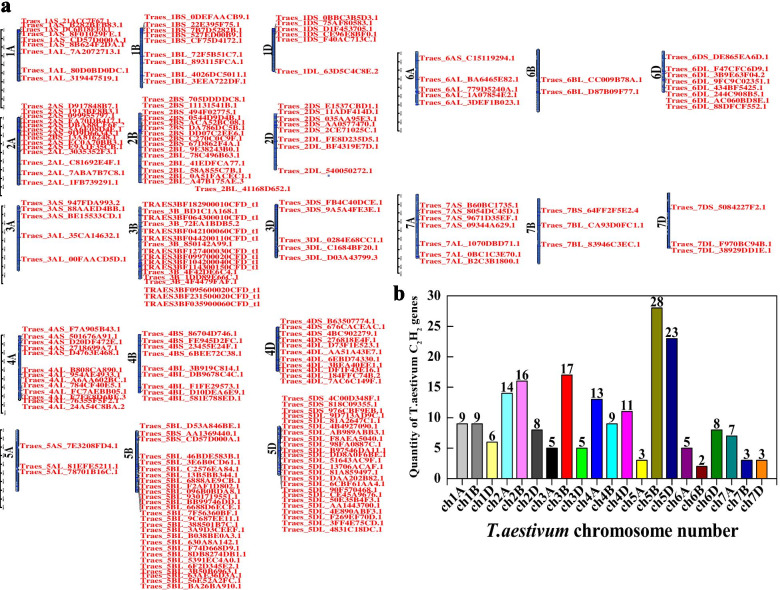
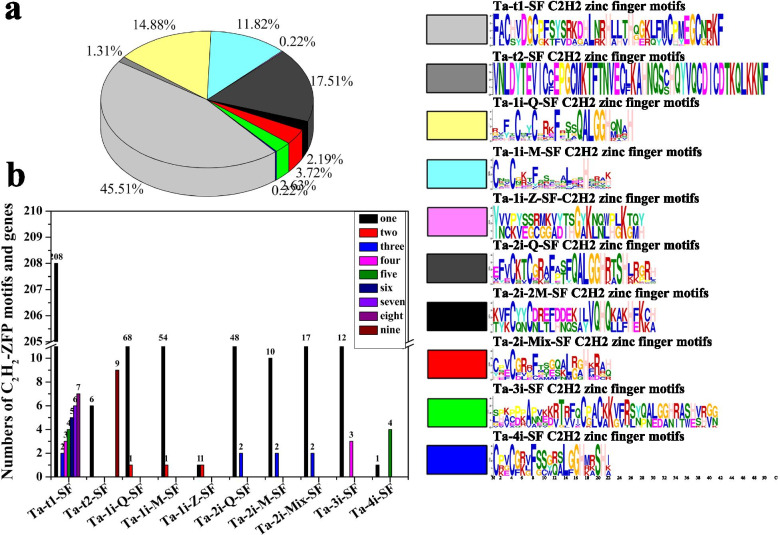
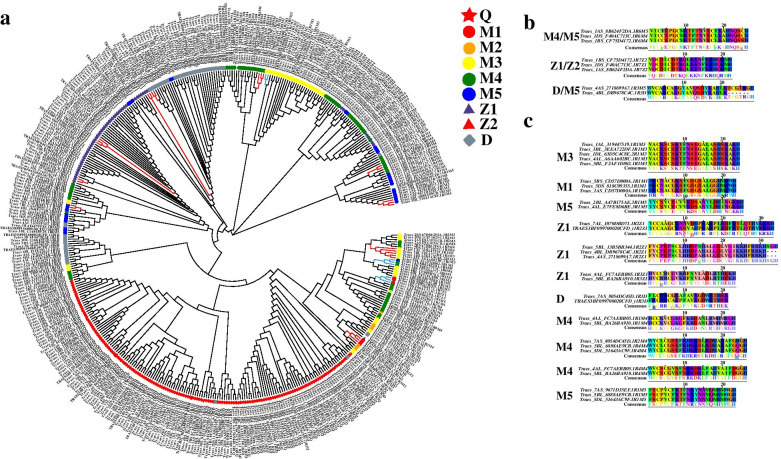
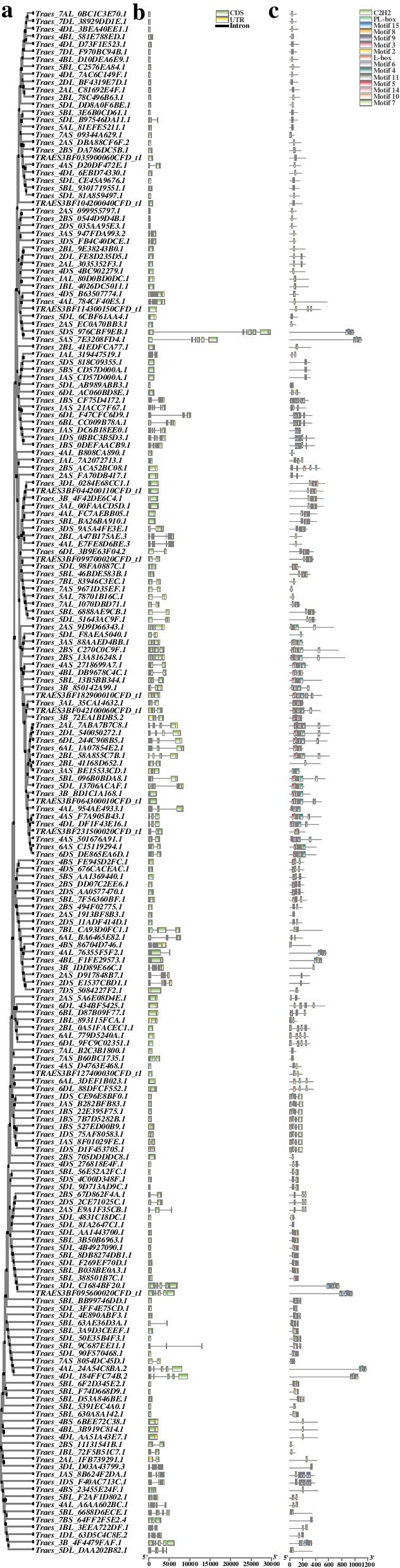
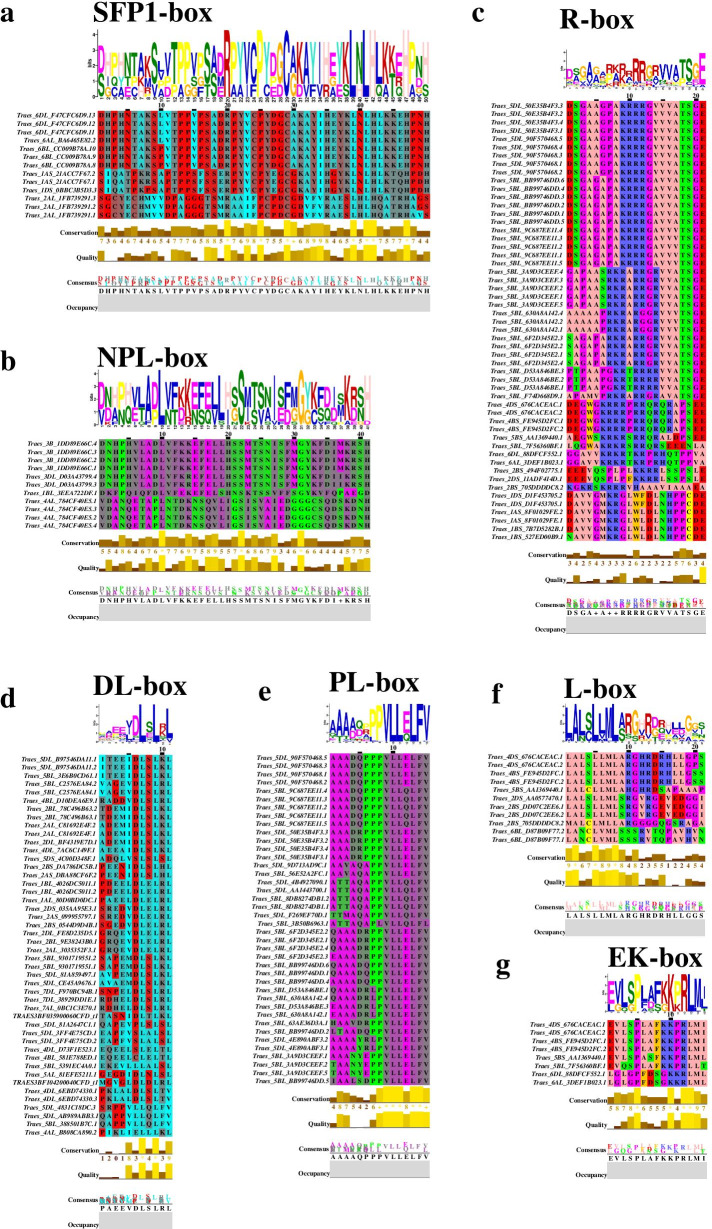
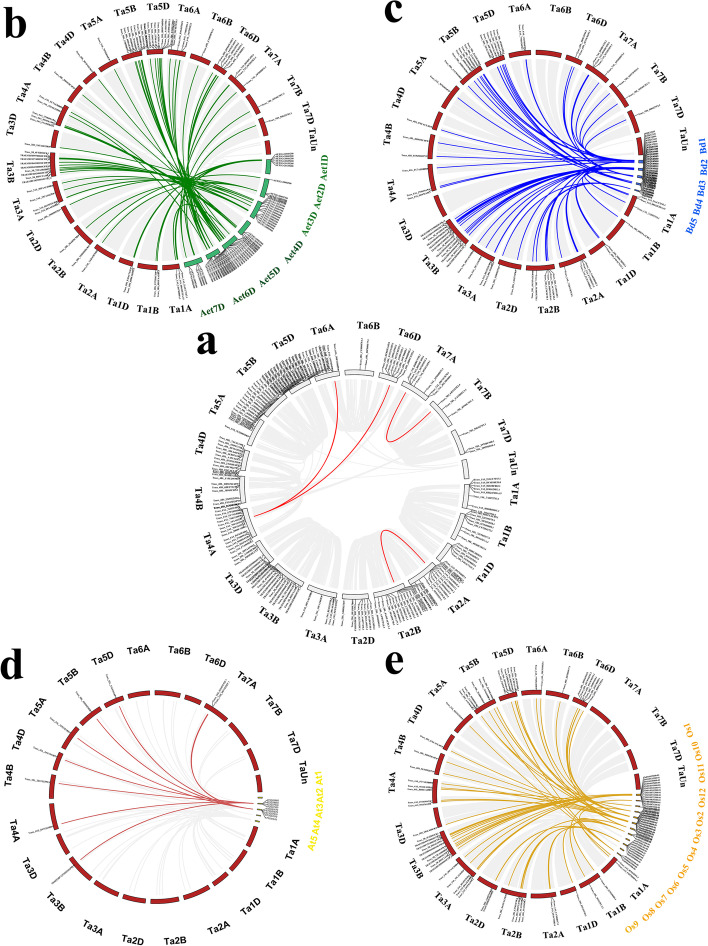
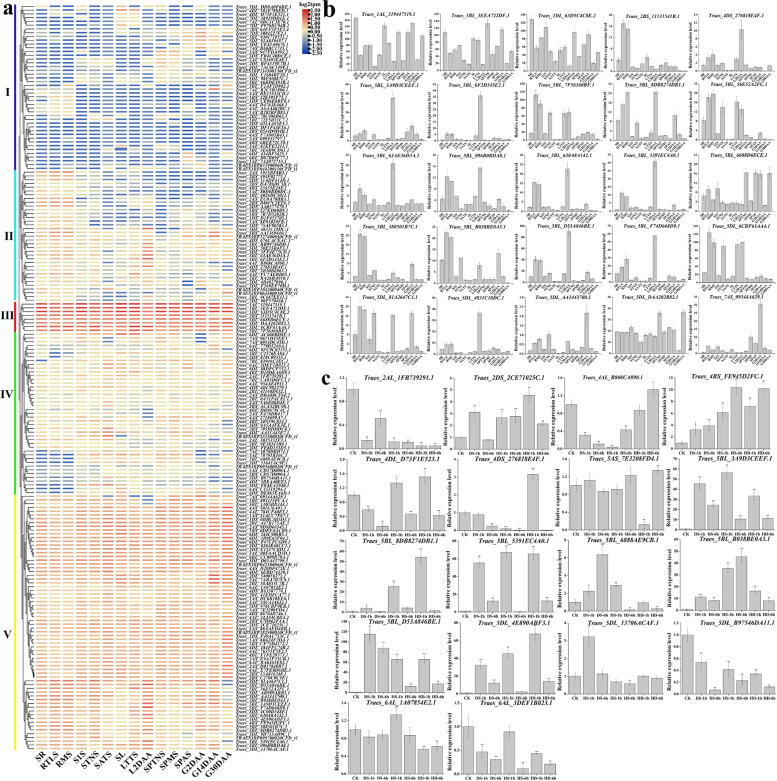
In this study, 457 CH-ZFP proteins (including 253 splice variants), which contain four types of conserved domain (named Q, M, Z, and D), could be further classified into ten subsets. They were identified to be distributed in 21 chromosomes in T. aestivum. Subset-specific motifs, like NPL-, SFP1-, DL- (EAR-like-motif), R-, PL-, L- and EK-, might make CH-ZFP diverse multifunction. Interestingly, NPL- and SFP1-box were firstly found to be located in CH-ZFP proteins. Synteny analyses showed that only 4 pairs of CH family genes in T. aestivum, 65 genes in B. distachyon, 66 genes in A. tauschii, 68 genes in rice, 9 genes in Arabidopsis, were syntenic relationships respectively. It indicated that TaZFPs were closely related to genes in Poaceae. From the published transcriptome data, totally 198 of 204 TaCH-ZF genes have expression data. Among them, 25 TaCH-ZF genes were certificated to be significantly differentially expressed in 5 different organs and 15 different development stages by quantitative RT-PCR. The 18 TaCH-ZF genes were verified in response to heat, drought, and heat & drought stresses. According to expression pattern analysis, several TaZFPs, like Traes_5BL_D53A846BE.1, were not only highly expressed in L2DAAs, RTLS, RMS, but also endowed tolerance to drought and heat stresses, making them good candidates for molecular breeding.
This study systematically characterized the TaCH-ZFPs and their potential roles in T. aestivum. Our findings provide new insights into the CH-ZF genes in T. aestivum as well as a foundation for further studies on the roles of TaCH-ZF genes in T. aestivum molecular breeding.
CH 型锌指蛋白(CH-ZFPs)是一类主要的转录因子,在植物生长、发育和应激反应中发挥重要作用。关于 CH-ZF 基因的信息有限,阻碍了普通小麦(Triticum aestivum)的分子育种。
在这项研究中,鉴定出 457 种 CH-ZFP 蛋白(包括 253 种剪接变体),它们含有四种类型的保守结构域(命名为 Q、M、Z 和 D),可进一步分为十个亚类。它们被鉴定为分布在普通小麦的 21 条染色体上。亚类特异性基序,如 NPL-、SFP1-、DL-(EAR-like-motif)、R-、PL-、L-和 EK-,可能使 CH-ZFP 具有多样化的多功能性。有趣的是,NPL-和 SFP1 盒首次被发现位于 CH-ZFP 蛋白中。同线性分析表明,普通小麦中只有 4 对 CH 家族基因、拟南芥中 65 个基因、节节麦中 66 个基因、水稻中 68 个基因、拟南芥中 9 个基因具有同源关系。这表明 TaZFPs 与禾本科植物的基因密切相关。从已发表的转录组数据中,204 个 TaCH-ZF 基因中有 198 个有表达数据。其中,25 个 TaCH-ZF 基因通过定量 RT-PCR 被证实在 5 种不同器官和 15 种不同发育阶段的表达存在显著差异。18 个 TaCH-ZF 基因在热、干旱和热干旱胁迫下得到验证。根据表达模式分析,一些 TaZFPs,如 Traes_5BL_D53A846BE.1,不仅在 L2DAAs、RTLS、RMS 中高度表达,而且对干旱和热胁迫具有耐受性,使它们成为分子育种的良好候选基因。
本研究系统地描述了 TaCH-ZFPs 及其在普通小麦中的潜在作用。我们的发现为普通小麦中的 CH-ZF 基因提供了新的见解,并为进一步研究 TaCH-ZF 基因在普通小麦分子育种中的作用奠定了基础。