Liu Zijing, Pu Youwei, Bao Yixi, He Song
Department of Gastroenterology, the Second Affiliated Hospital of Chongqing Medical University, Chongqing, 400010, People's Republic of China.
Department of Clinical Laboratory, the Second Affiliated Hospital of Chongqing Medical University, Chongqing, 400010, People's Republic of China.
Int J Gen Med. 2021 Aug 10;14:4369-4380. doi: 10.2147/IJGM.S323868. eCollection 2021.
Alpha-fetoprotein (AFP) is the most important diagnostic and prognostic index of hepatocellular carcinoma (HCC). AFP-positive HCC can be easily diagnosed based on the serum AFP level and typical imaging features, but a number of HCC patients are negative (AFP < 20 ng/mL) for AFP. Therefore, it is necessary to develop novel diagnostic and prognostic biomarkers for AFP-negative HCC.
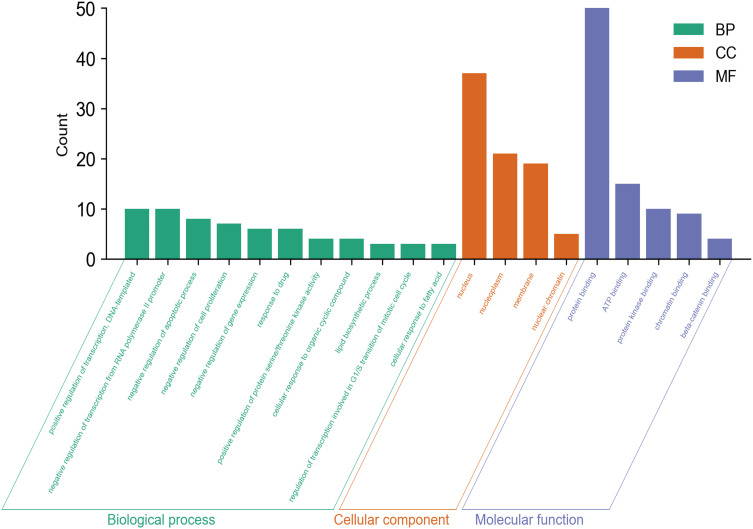
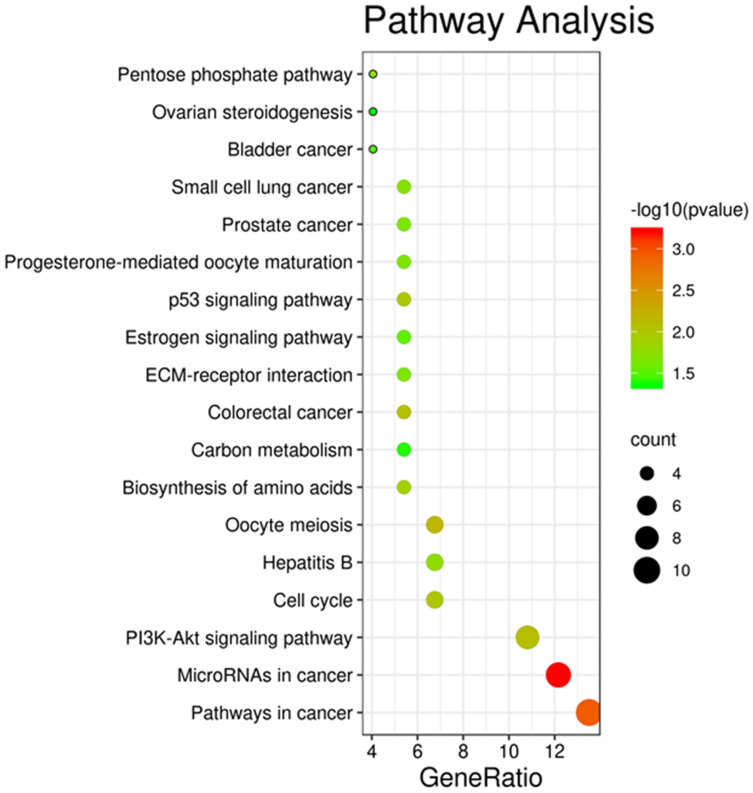
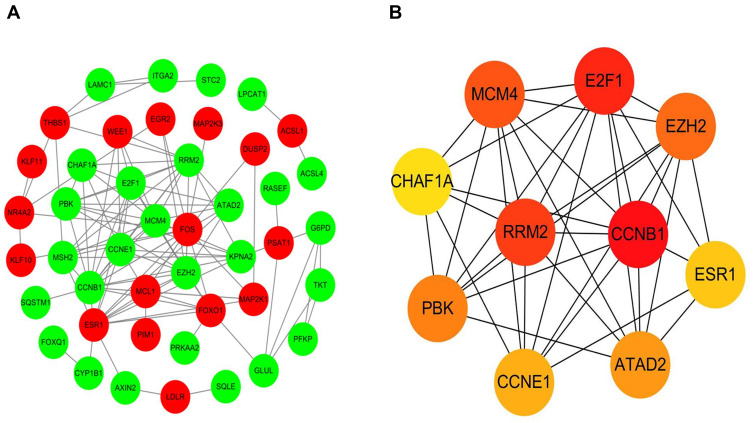
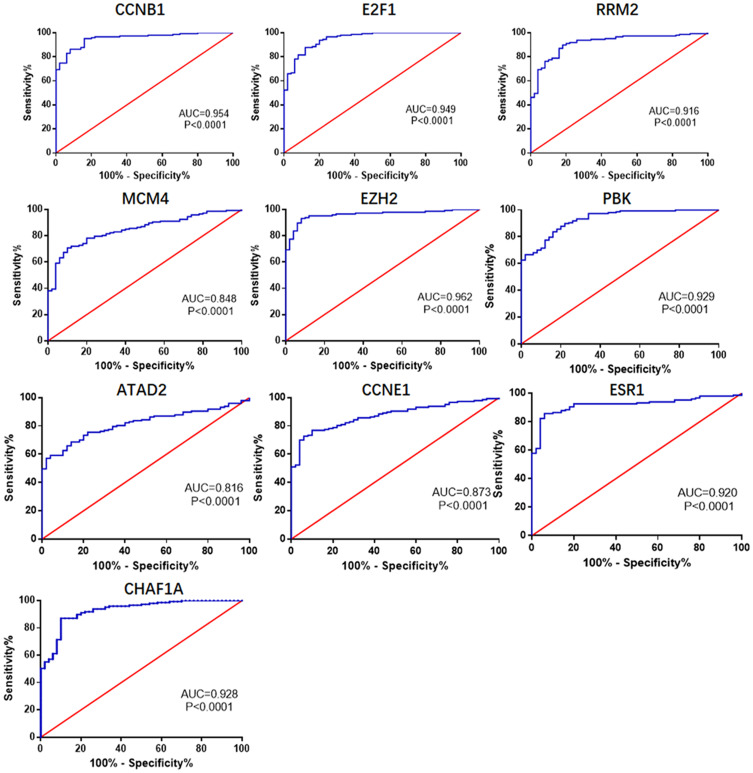
RNA data from TCGA and differential expression of lncRNAs, miRNAs, and mRNAs were downloaded to analyze the differential RNA expression patterns between AFP-negative HCC tissues and normal tissues. A lncRNA-miRNA-mRNA ceRNA regulatory network was constructed to elucidate the interaction mechanism of RNAs. Functional enrichment analysis of these DEmRNAs was performed to indirectly reveal the mechanism of action of lncRNAs. A PPI network was built using STRING, and the hub genes were identified with Cytoscape. The diagnostic value of hub genes was assessed with receiver operating characteristic (ROC) analysis. And the prognostic value of RNAs in the ceRNA was estimated with Kaplan-Meier curve analysis.
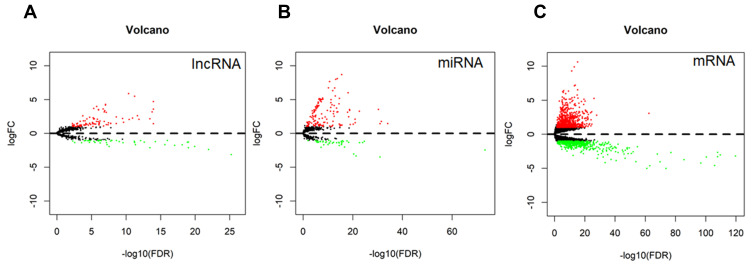
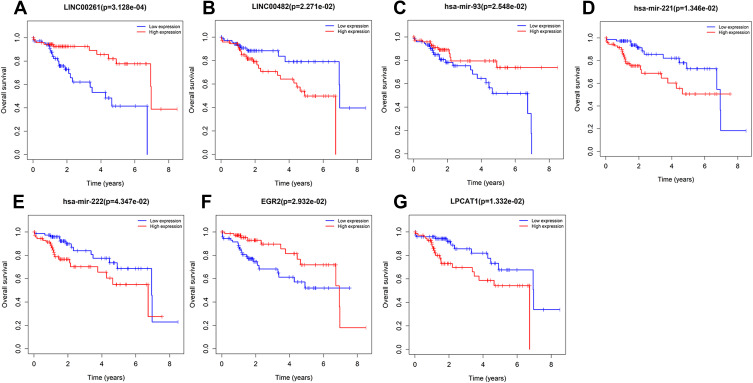
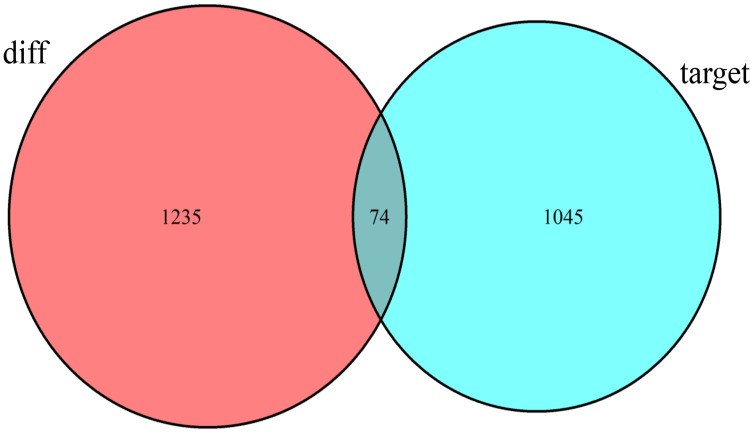
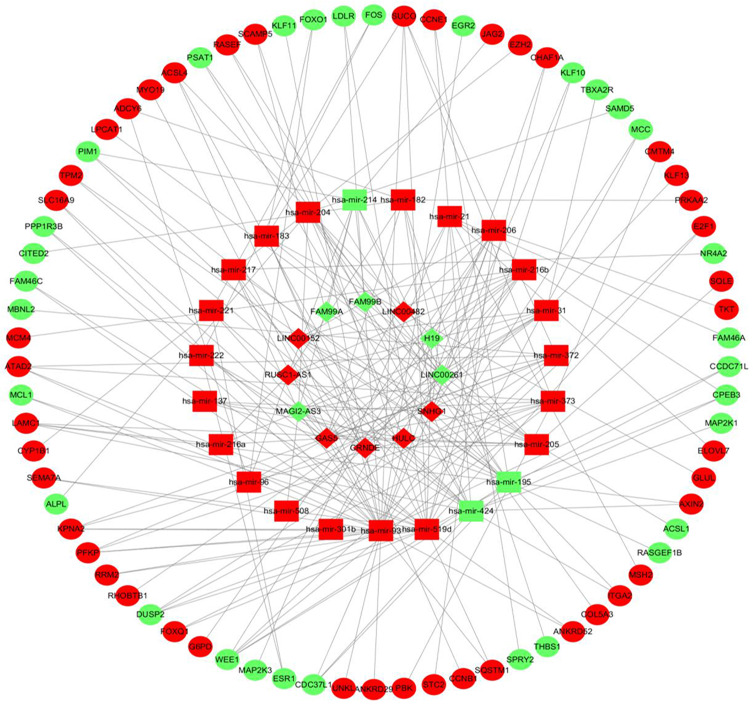
A total of 131 lncRNAs, 185 miRNA, and 1309 mRNAs were found to be differentially expressed in AFP-negative HCC. A ceRNA network consisting of 12 lncRNA, 23 miRNA, and 74 mRNA was constructed. The top ten hub genes including EZH2, CCNB1, E2F1, PBK, CHAF1A, ESR1, RRM2, CCNE1, MCM4, and ATAD2 showed good diagnostic power under the ROC curve; and 2 lncRNAs (LINC00261, LINC00482), 3 miRNAs (hsa-miR-93, hsa-miR-221, hsa-miR-222), and 2 mRNAs (EGR2, LPCAT1) were found to be associated with the overall survival of AFP-negative patients.
This study could provide a novel insight into the molecular pathogenesis of AFP-negative HCC and reveal some candidate diagnostic and prognostic biomarkers for AFP-negative HCC.
甲胎蛋白(AFP)是肝细胞癌(HCC)最重要的诊断和预后指标。基于血清AFP水平和典型影像学特征,AFP阳性的HCC易于诊断,但许多HCC患者的AFP呈阴性(AFP<20 ng/mL)。因此,有必要为AFP阴性的HCC开发新的诊断和预后生物标志物。
下载来自TCGA的RNA数据以及lncRNA、miRNA和mRNA的差异表达数据,以分析AFP阴性HCC组织与正常组织之间的RNA差异表达模式。构建lncRNA-miRNA-mRNA ceRNA调控网络,以阐明RNA的相互作用机制。对这些差异表达mRNA进行功能富集分析,以间接揭示lncRNA的作用机制。使用STRING构建蛋白质-蛋白质相互作用(PPI)网络,并用Cytoscape识别枢纽基因。通过受试者工作特征(ROC)分析评估枢纽基因的诊断价值。并用Kaplan-Meier曲线分析评估ceRNA中RNA的预后价值。
共发现131种lncRNA、185种miRNA和1309种mRNA在AFP阴性HCC中差异表达。构建了一个由12种lncRNA、23种miRNA和74种mRNA组成的ceRNA网络。包括EZH2、CCNB1、E2F1、PBK、CHAF1A、ESR1、RRM2、CCNE1、MCM4和ATAD2在内的前十个枢纽基因在ROC曲线下显示出良好的诊断能力;并且发现2种lncRNA(LINC00261、LINC00482)、3种miRNA(hsa-miR-93、hsa-miR-221、hsa-miR-222)和2种mRNA(EGR2、LPCAT1)与AFP阴性患者的总生存期相关。
本研究可为AFP阴性HCC分子发病机制提供新的见解,并揭示一些AFP阴性HCC的候选诊断和预后生物标志物。