Margiotta Joseph F, Smith-Edwards Kristen M, Nestor-Kalinoski Andrea, Davis Brian M, Albers Kathryn M, Howard Marthe J
Department of Neurosciences, College of Medicine and Life Sciences, University of Toledo, Toledo, OH, United States.
Department of Neurobiology, University of Pittsburgh School of Medicine, Pittsburgh, PA, United States.
Front Physiol. 2021 Aug 2;12:652714. doi: 10.3389/fphys.2021.652714. eCollection 2021.
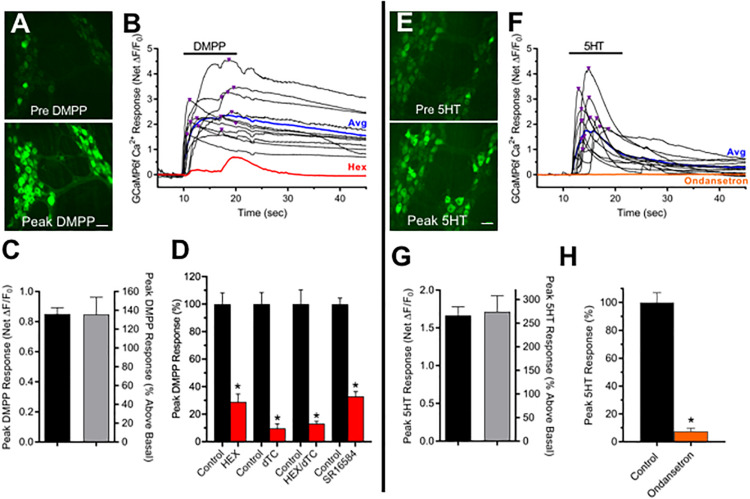
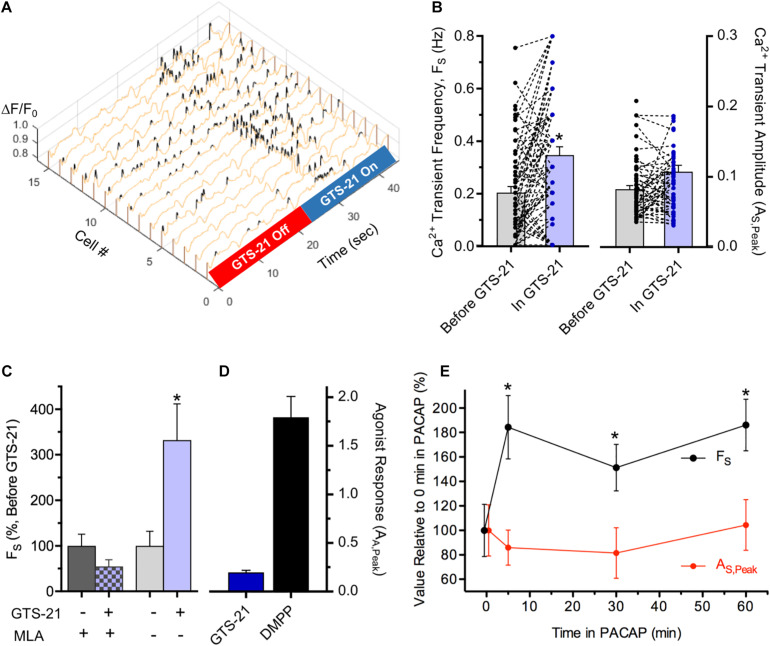
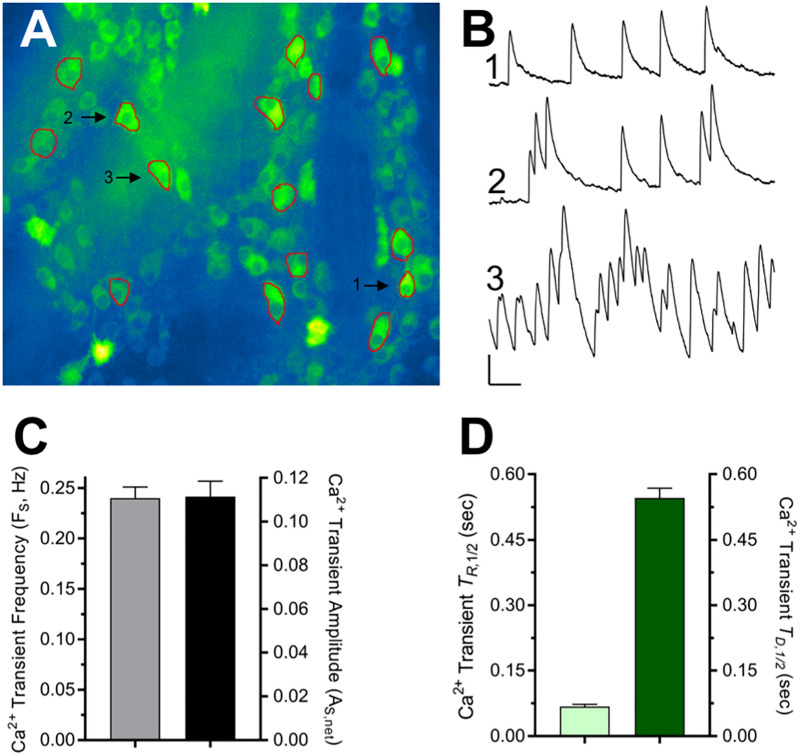
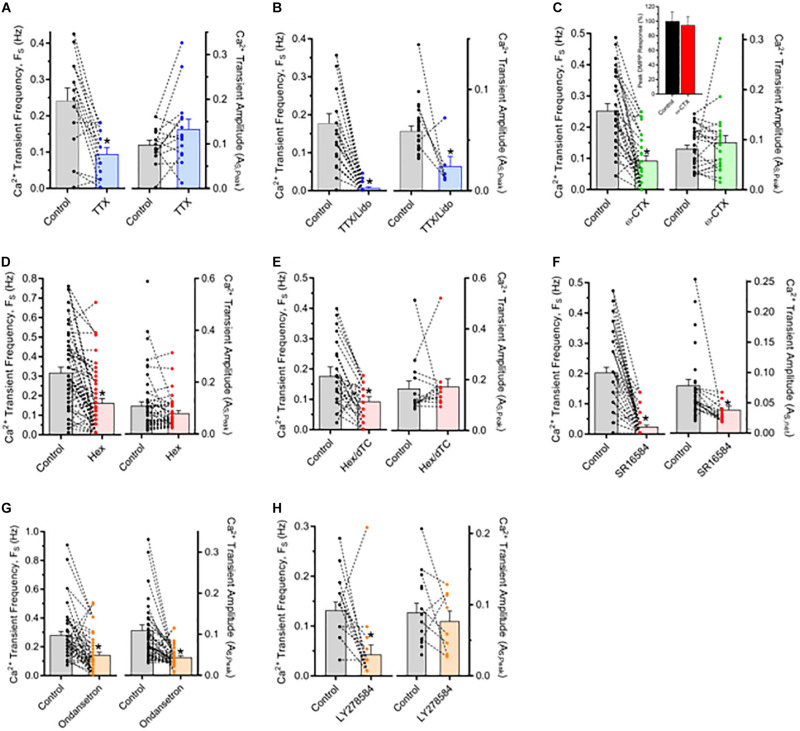
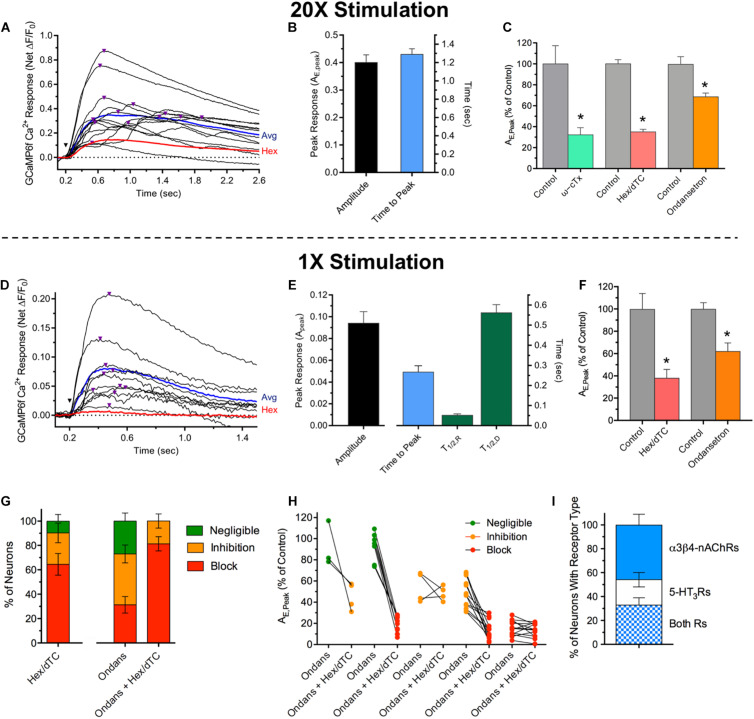
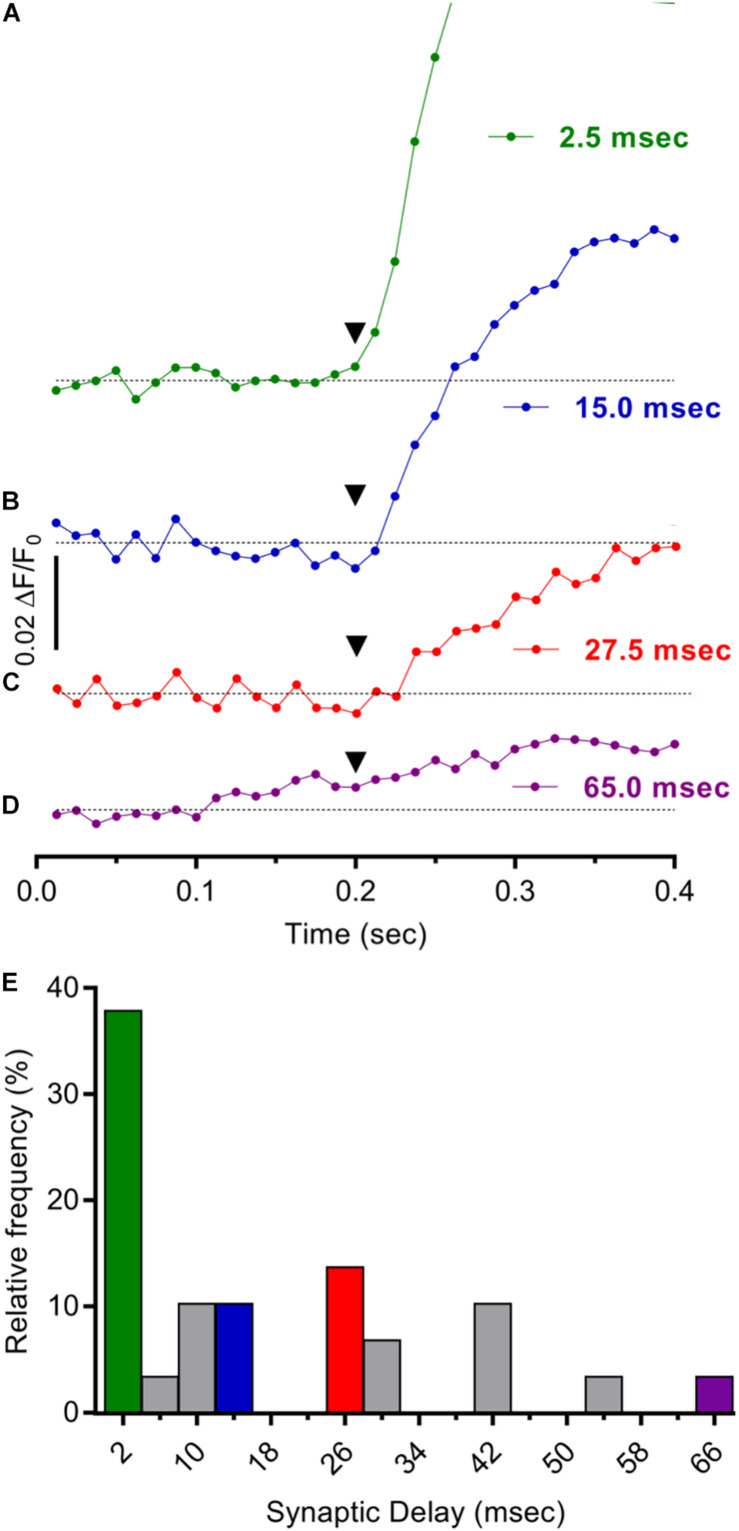
The peristaltic contraction and relaxation of intestinal circular and longitudinal smooth muscles is controlled by synaptic circuit elements that impinge upon phenotypically diverse neurons in the myenteric plexus. While electrophysiological studies provide useful information concerning the properties of such synaptic circuits, they typically involve tissue disruption and do not correlate circuit activity with biochemically defined neuronal phenotypes. To overcome these limitations, mice were engineered to express the sensitive, fast Ca indicator GCaMP6f selectively in neurons that express the acetylcholine (ACh) biosynthetic enzyme choline acetyltransfarse (ChAT) thereby allowing rapid activity-driven changes in Ca fluorescence to be observed without disrupting intrinsic connections, solely in cholinergic myenteric ganglion (MG) neurons. Experiments with selective receptor agonists and antagonists reveal that most mouse colonic cholinergic (i.e., GCaMP6f/ChAT) MG neurons express nicotinic ACh receptors (nAChRs), particularly the ganglionic subtype containing α3 and β4 subunits, and most express ionotropic serotonin receptors (5-HTRs). Cholinergic MG neurons also display small, spontaneous Ca transients occurring at ≈ 0.2 Hz. Experiments with inhibitors of Na channel dependent impulses, presynaptic Ca channels and postsynaptic receptor function reveal that the Ca transients arise from impulse-driven presynaptic activity and subsequent activation of postsynaptic nAChRs or 5-HTRs. Electrical stimulation of axonal connectives to MG evoked Ca responses in the neurons that similarly depended on nAChRs or/and 5-HTRs. Responses to single connective shocks had peak amplitudes and rise and decay times that were indistinguishable from the spontaneous Ca transients and the largest fraction had brief synaptic delays consistent with activation by monosynaptic inputs. These results indicate that the spontaneous Ca transients and stimulus evoked Ca responses in MG neurons originate in circuits involving fast chemical synaptic transmission mediated by nAChRs or/and 5-HTRs. Experiments with an α7-nAChR agonist and antagonist, and with pituitary adenylate cyclase activating polypeptide (PACAP) reveal that the same synaptic circuits display extensive capacity for presynaptic modulation. Our use of non-invasive GCaMP6f/ChAT Ca imaging in colon segments with intrinsic connections preserved, reveals an abundance of direct and modulatory synaptic influences on cholinergic MG neurons.
肠道环形和纵行平滑肌的蠕动性收缩与舒张受突触回路元件控制,这些元件作用于肌间神经丛中表型多样的神经元。虽然电生理研究提供了有关此类突触回路特性的有用信息,但它们通常涉及组织破坏,且未将回路活动与生化定义的神经元表型相关联。为克服这些局限性,对小鼠进行基因改造,使其在表达乙酰胆碱(ACh)生物合成酶胆碱乙酰转移酶(ChAT)的神经元中选择性表达灵敏、快速的钙指示剂GCaMP6f,从而能够在不破坏内在连接的情况下,仅在胆碱能肌间神经节(MG)神经元中观察到由活动驱动的快速钙荧光变化。使用选择性受体激动剂和拮抗剂进行的实验表明,大多数小鼠结肠胆碱能(即GCaMP6f/ChAT)MG神经元表达烟碱型ACh受体(nAChRs),特别是含有α3和β4亚基的神经节亚型,并且大多数表达离子型5-羟色胺受体(5-HTRs)。胆碱能MG神经元还表现出约0.2Hz的小的自发钙瞬变。使用钠通道依赖性冲动抑制剂、突触前钙通道和突触后受体功能抑制剂进行的实验表明,钙瞬变源于冲动驱动的突触前活动以及随后突触后nAChRs或5-HTRs的激活。对MG轴突连接的电刺激在神经元中诱发的钙反应同样依赖于nAChRs或/和5-HTRs。对单个连接冲击的反应具有峰值幅度、上升和衰减时间,与自发钙瞬变无法区分,并且最大比例具有与单突触输入激活一致的短暂突触延迟。这些结果表明,MG神经元中的自发钙瞬变和刺激诱发的钙反应起源于涉及由nAChRs或/和5-HTRs介导的快速化学突触传递的回路。使用α7-nAChR激动剂和拮抗剂以及垂体腺苷酸环化酶激活多肽(PACAP)进行的实验表明,相同的突触回路具有广泛的突触前调制能力。我们在保留内在连接的结肠段中使用非侵入性GCaMP6f/ChAT钙成像,揭示了对胆碱能MG神经元存在大量直接和调制性突触影响。