Zheng Panpan, Kang Jiyu, Xing Entong, Zheng Bin, Wang Xueyao, Zhou Huacheng
Department of Anesthesiology, The Fourth Affiliated Hospital, Harbin Medical University, Harbin, China.
Front Physiol. 2021 Aug 2;12:699344. doi: 10.3389/fphys.2021.699344. eCollection 2021.
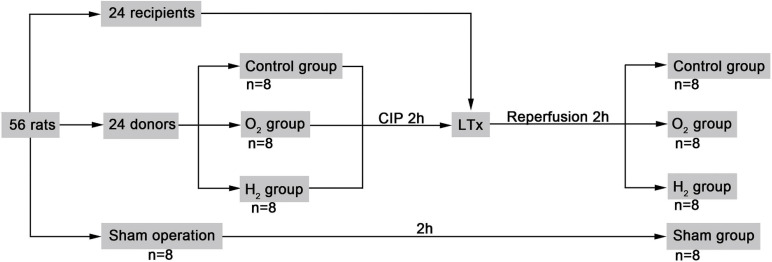
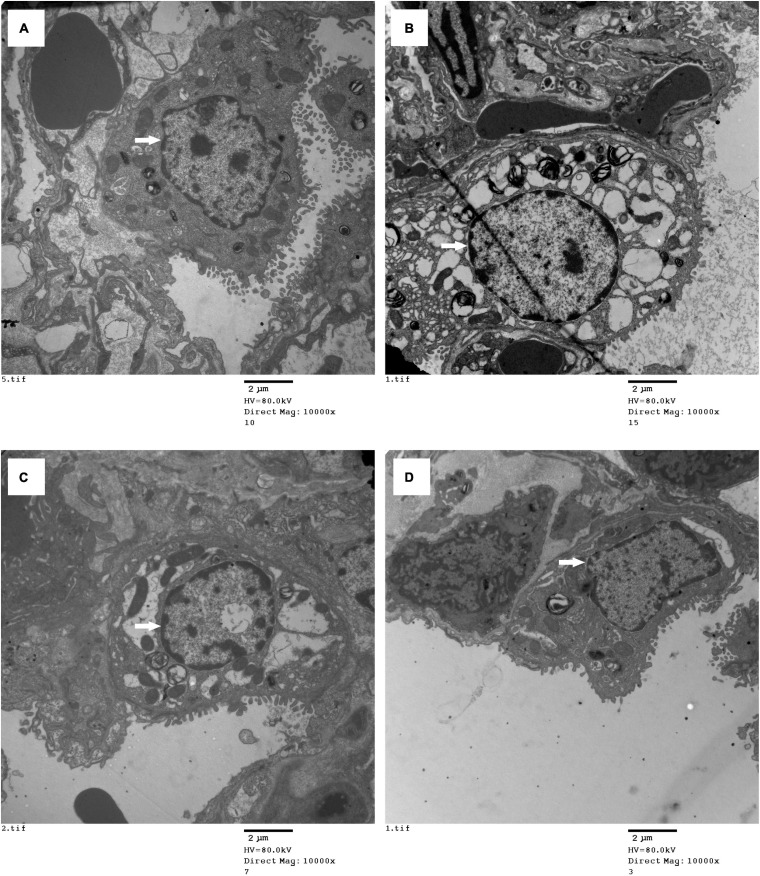
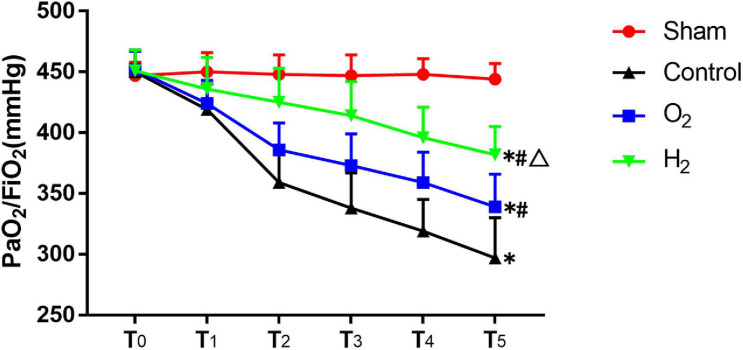
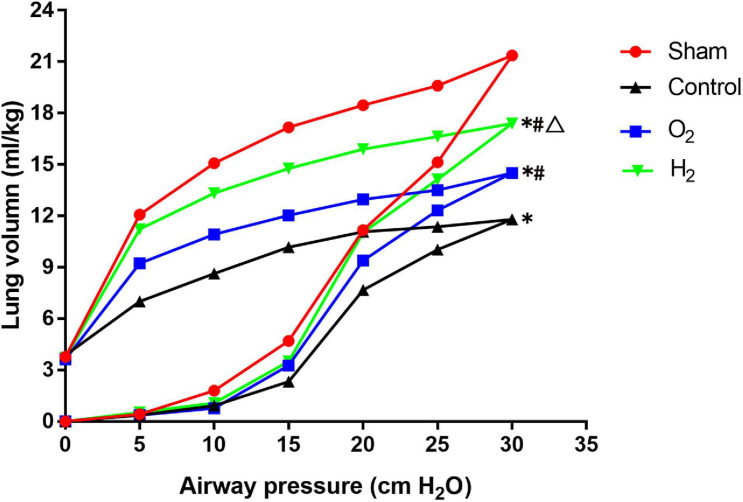
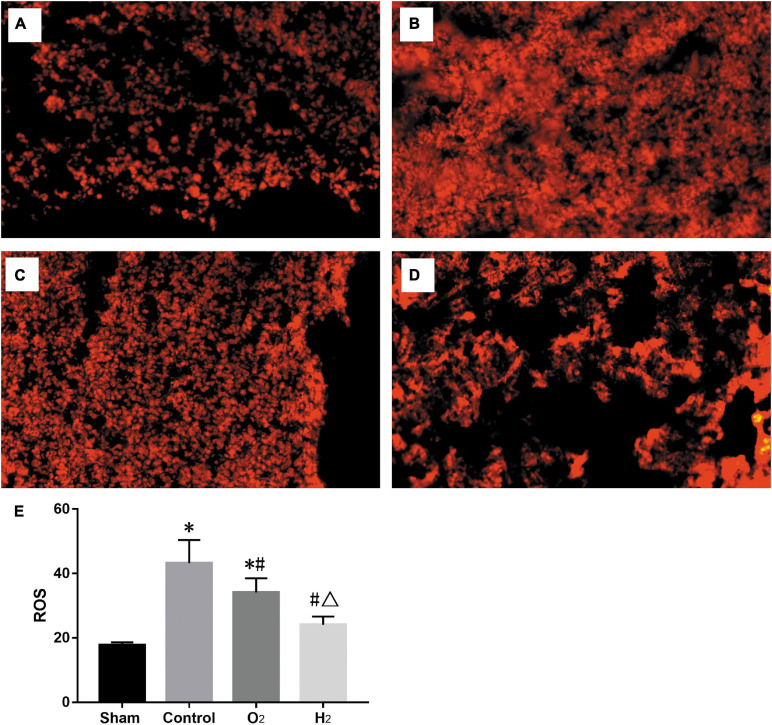
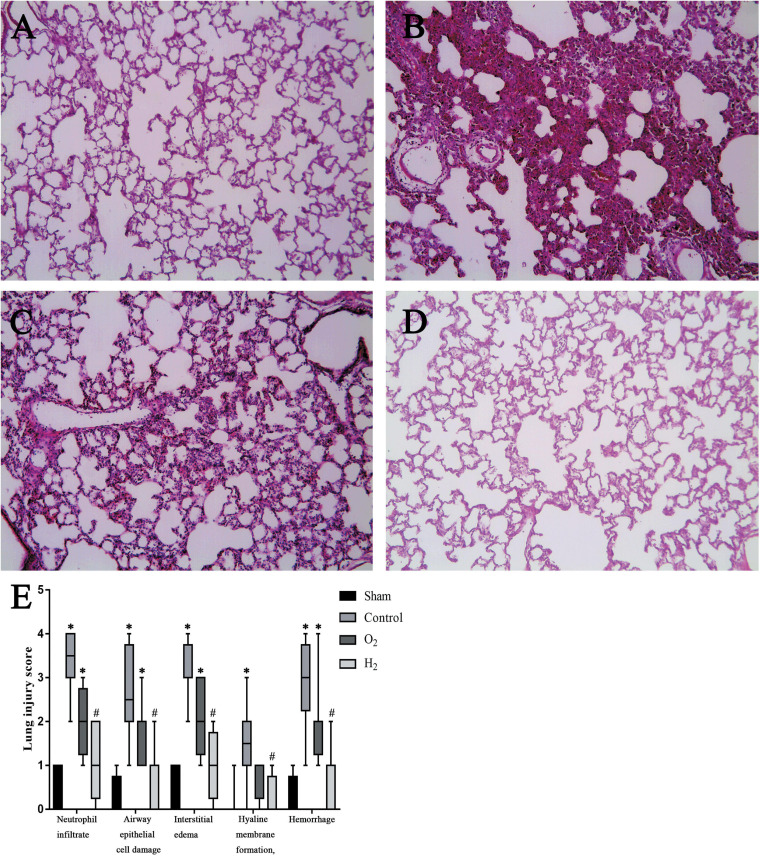
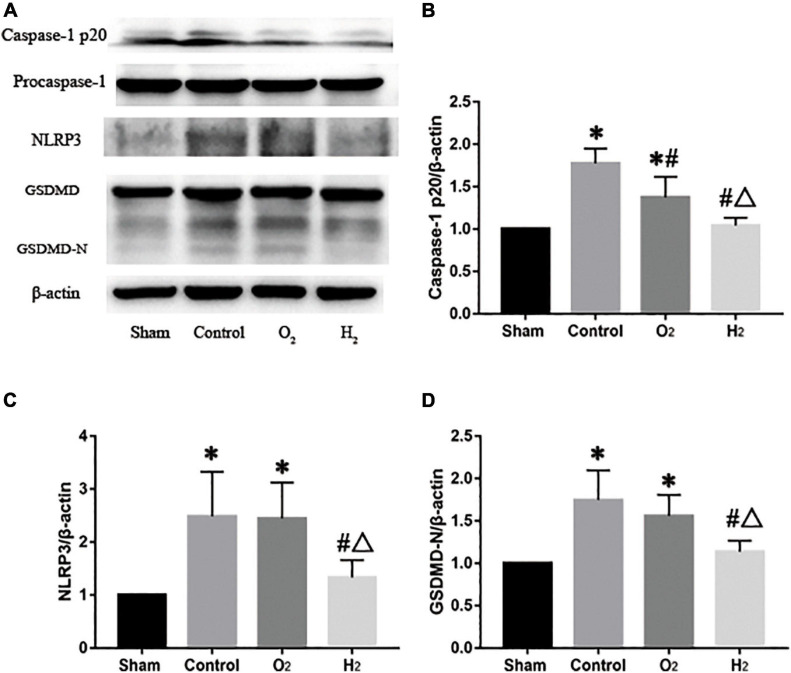
Lung inflation with hydrogen is an effective method to protect donor lungs from lung ischemia-reperfusion injury (IRI). This study aimed to examine the effect of lung inflation with 3% hydrogen during the cold ischemia phase on pyroptosis in lung grafts of rats. Adult male Wistar rats were randomly divided into the sham group, the control group, the oxygen (O) group, and the hydrogen (H) group. The sham group underwent thoracotomy but no lung transplantation. In the control group, the donor lungs were deflated for 2 h. In the O and H groups, the donor lungs were inflated with 40% O + 60% N and 3% H + 40% O + 57% N, respectively, at 10 ml/kg, and the gas was replaced every 20 min during the cold ischemia phase for 2 h. Two hours after orthotopic lung transplantation, the recipients were euthanized. Compared with the control group, the O and H groups improved oxygenation indices, decreases the inflammatory response and oxidative stress, reduced lung injury, and improved pressure-volume (P-V) curves. H had a better protective effect than O. Furthermore, the levels of the pyroptosis-related proteins selective nucleotide-binding oligomerization domain-like receptor protein 3 (NLRP3), cysteinyl aspartate specific proteinase (caspase)-1 p20, and the N-terminal of gasdermin D (GSDMD-N) were decreased in the H group. Lung inflation with 3% hydrogen during the cold ischemia phase inhibited the inflammatory response, oxidative stress, and pyroptosis and improved the function of the graft. Inhibiting reactive oxygen species (ROS) production may be the main mechanism of the antipyroptotic effect of hydrogen.
用氢气进行肺膨胀是保护供体肺免受肺缺血再灌注损伤(IRI)的有效方法。本研究旨在探讨冷缺血期用3%氢气进行肺膨胀对大鼠肺移植中肺组织焦亡的影响。成年雄性Wistar大鼠随机分为假手术组、对照组、氧气(O)组和氢气(H)组。假手术组开胸但不进行肺移植。对照组中,供体肺萎陷2小时。在O组和H组中,供体肺分别以10 ml/kg的体积用40% O + 60% N和3% H + 40% O + 57% N进行膨胀,在冷缺血期每20分钟更换一次气体,持续2小时。原位肺移植2小时后,对受体实施安乐死。与对照组相比,O组和H组的氧合指数得到改善,炎症反应和氧化应激降低,肺损伤减轻,压力-容积(P-V)曲线得到改善。氢气组的保护作用优于氧气组。此外,氢气组中焦亡相关蛋白选择性核苷酸结合寡聚化结构域样受体蛋白3(NLRP3)、半胱天冬酶(caspase)-1 p20和gasdermin D(GSDMD-N)N端的水平降低。冷缺血期用3%氢气进行肺膨胀可抑制炎症反应、氧化应激和焦亡,并改善移植肺功能。抑制活性氧(ROS)产生可能是氢气抗焦亡作用的主要机制。