• 文献检索
  • 文档翻译
  • 深度研究
  • 学术资讯
  • Suppr Zotero 插件Zotero 插件
  • 邀请有礼
  • 套餐&价格
  • 历史记录
应用&插件
Suppr Zotero 插件Zotero 插件浏览器插件Mac 客户端Windows 客户端微信小程序
定价
高级版会员购买积分包购买API积分包
服务
文献检索文档翻译深度研究API 文档MCP 服务
关于我们
关于 Suppr公司介绍联系我们用户协议隐私条款
关注我们

Suppr 超能文献

核心技术专利:CN118964589B侵权必究
粤ICP备2023148730 号-1Suppr @ 2026

文献检索

告别复杂PubMed语法,用中文像聊天一样搜索,搜遍4000万医学文献。AI智能推荐,让科研检索更轻松。

立即免费搜索

文件翻译

保留排版,准确专业,支持PDF/Word/PPT等文件格式,支持 12+语言互译。

免费翻译文档

深度研究

AI帮你快速写综述,25分钟生成高质量综述,智能提取关键信息,辅助科研写作。

立即免费体验

CLEC4s作为肝细胞癌微环境中的潜在治疗靶点

CLEC4s as Potential Therapeutic Targets in Hepatocellular Carcinoma Microenvironment.

作者信息

Zhang Yinjiang, Wei Hongyun, Fan Lu, Fang Mingyan, He Xu, Lu Binan, Pang Zongran

机构信息

School of Pharmacy, Minzu University of China, Beijing, China.

Key Laboratory of Ethnomedicine, Minzu University of China, Ministry of Education, Beijing, China.

出版信息

Front Cell Dev Biol. 2021 Aug 2;9:681372. doi: 10.3389/fcell.2021.681372. eCollection 2021.

DOI:10.3389/fcell.2021.681372
PMID:34409028
原文链接:https://pmc.ncbi.nlm.nih.gov/articles/PMC8367378/
Abstract

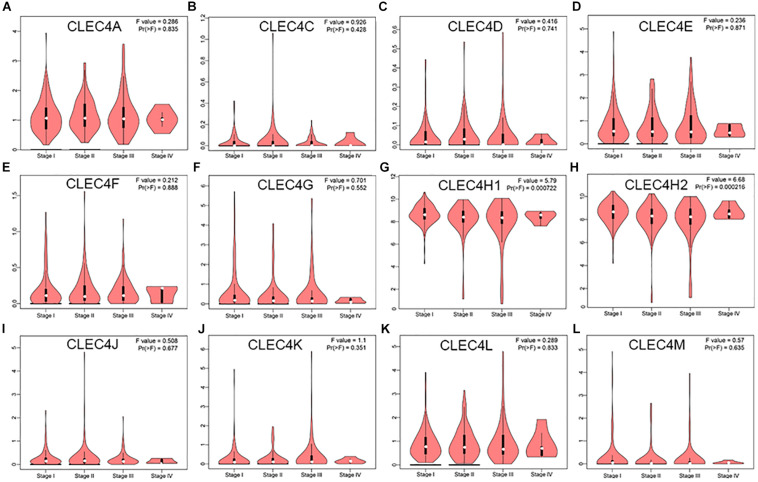
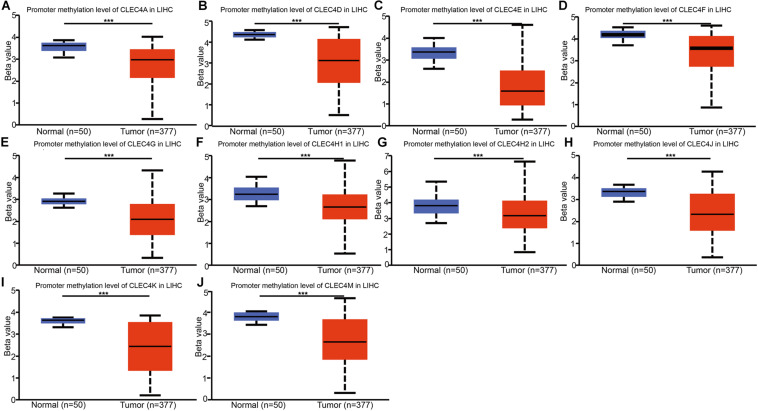
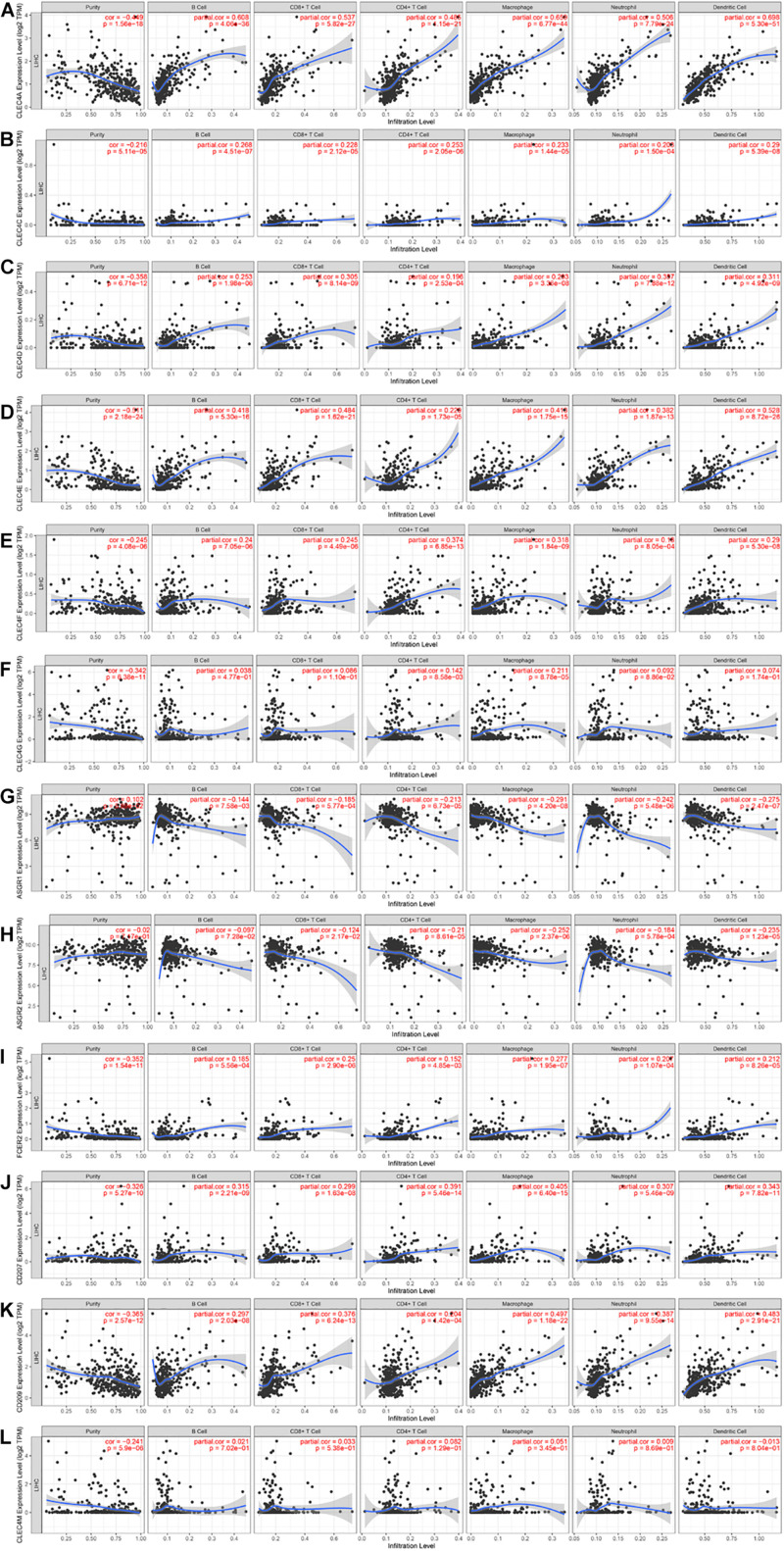
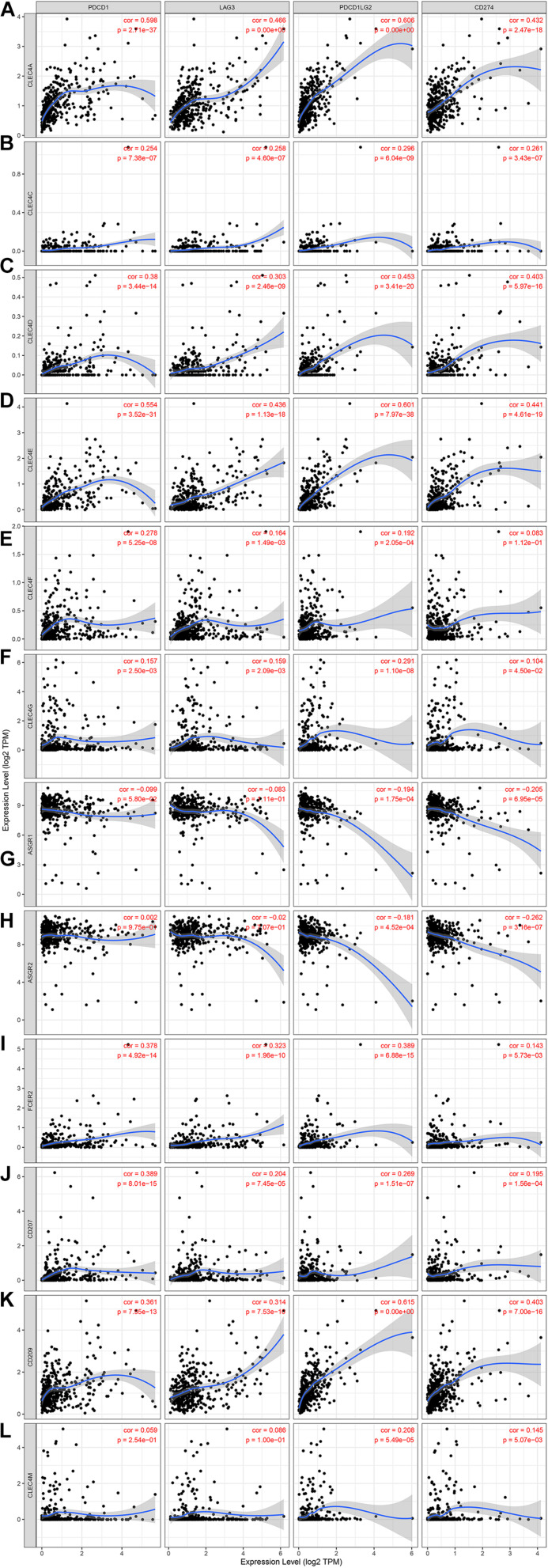
Immunosuppressive tumor microenvironment in hepatocellular carcinoma (HCC) is critical in tumor development. C-type (Ca -dependent) lectin (CLEC) receptors, essential in innate pattern recognition, have potential regulatory effects on immune cell trafficking and modulatory effects on cancer cell activity. However, information on the expression and prognostic value of CLECs in HCC is scanty. Herein, we explored the potential role of CLECs in HCC based on TCGA, ONCOMINE, GEPIA, UALCAN, cBioPortal, Metascape, TRRUST, and TIMER databases. Results demonstrated a significantly higher mRNA level of CLEC4A and CLEC4L in HCC tissues than normal liver tissues. Contrarily, we found significantly low CLEC4G/H1/H2/M expression in HCC tissues. The IHC analysis revealed the following: Absence of CLEC4A/J/K/M in normal and liver cancer tissues; high CLEC4C expression in HCC tissues; low expression and zero detection of CLEC4D/E/H1/H2/L in HCC tissues and normal tissues, respectively. And the HepG2 and LX-2 were used to verify the expression level of CLEC4s via qRT-PCR . Furthermore, the expression of CLEC4H1 (ASGR1) and CLEC4H2 (ASGR2) exhibited a significant relation to clinical stages. However, the expression of CLEC4A, CLEC4D, CLEC4E, CLEC4J (FCER2), CLEC4K (CD207), CLEC4G, CLEC4H1, CLEC4M, and CLEC4H2 decreased with tumor progression. Patients expressing higher CLEC4H1/H2 levels had longer overall survival than patients exhibiting lower expression. Moreover, CLEC4A/D/E/J/K/G/H1/M/H2 had significant down-regulated levels of promoter methylation. The expression level of CLEC4s was correlated with the infiltration of B cells, CD8 + T cells, CD4 + T cells, macrophage cells, neutrophil cells, and dendritic cells. Functional analysis revealed the potential role of CLECL4s in virus infection, including COVID-19. Also, hsa-miR-4278 and hsa-miR-324-5p, two potential miRNA targets of CLEC4s, were uncovered. This article demonstrates that CLEC4 is crucial for the development of HCC and is associated with infiltration of various immune cells, providing evidence for new immunotherapy targets in HCC.

摘要

肝细胞癌(HCC)中的免疫抑制肿瘤微环境在肿瘤发展中至关重要。C型(钙依赖性)凝集素(CLEC)受体在先天性模式识别中起重要作用,对免疫细胞转运具有潜在调节作用,对癌细胞活性具有调节作用。然而,关于CLEC在HCC中的表达和预后价值的信息很少。在此,我们基于TCGA、ONCOMINE、GEPIA、UALCAN、cBioPortal、Metascape、TRRUST和TIMER数据库探讨了CLEC在HCC中的潜在作用。结果表明,HCC组织中CLEC4A和CLEC4L的mRNA水平显著高于正常肝组织。相反,我们发现HCC组织中CLEC4G/H1/H2/M表达显著降低。免疫组化分析显示:正常组织和肝癌组织中不存在CLEC4A/J/K/M;HCC组织中CLEC4C表达高;HCC组织和正常组织中CLEC4D/E/H1/H2/L分别低表达和未检测到。并且使用HepG2和LX-2通过qRT-PCR验证CLEC4s的表达水平。此外,CLEC4H1(ASGR1)和CLEC4H2(ASGR2)的表达与临床分期显著相关。然而,CLEC4A、CLEC4D、CLEC4E、CLEC4J(FCER2)、CLEC4K(CD207)、CLEC4G、CLEC4H1、CLEC4M和CLEC4H2的表达随肿瘤进展而降低。CLEC4H1/H2水平较高的患者总生存期长于表达较低的患者。此外,CLEC4A/D/E/J/K/G/H1/M/H2的启动子甲基化水平显著下调。CLEC4s的表达水平与B细胞、CD8 + T细胞、CD4 + T细胞、巨噬细胞、中性粒细胞和树突状细胞的浸润相关。功能分析揭示了CLECL4s在病毒感染(包括COVID-19)中的潜在作用。此外,还发现了CLEC4s的两个潜在miRNA靶点hsa-miR-4278和hsa-miR-324-5p。本文表明CLEC4对HCC的发展至关重要,并与各种免疫细胞的浸润相关,为HCC新的免疫治疗靶点提供了证据。
https://cdn.ncbi.nlm.nih.gov/pmc/blobs/9d80/8367378/1dfd19e89931/fcell-09-681372-g010.jpg
https://cdn.ncbi.nlm.nih.gov/pmc/blobs/9d80/8367378/cc9bb3dbf7d0/fcell-09-681372-g001.jpg
https://cdn.ncbi.nlm.nih.gov/pmc/blobs/9d80/8367378/b99e561c41d6/fcell-09-681372-g002.jpg
https://cdn.ncbi.nlm.nih.gov/pmc/blobs/9d80/8367378/6d760a82e878/fcell-09-681372-g003.jpg
https://cdn.ncbi.nlm.nih.gov/pmc/blobs/9d80/8367378/19038b13b1cc/fcell-09-681372-g004.jpg
https://cdn.ncbi.nlm.nih.gov/pmc/blobs/9d80/8367378/1dac7852f788/fcell-09-681372-g005.jpg
https://cdn.ncbi.nlm.nih.gov/pmc/blobs/9d80/8367378/9ff7063ffe4b/fcell-09-681372-g006.jpg
https://cdn.ncbi.nlm.nih.gov/pmc/blobs/9d80/8367378/ac789ffb8b2d/fcell-09-681372-g007.jpg
https://cdn.ncbi.nlm.nih.gov/pmc/blobs/9d80/8367378/d171f7a474f1/fcell-09-681372-g008.jpg
https://cdn.ncbi.nlm.nih.gov/pmc/blobs/9d80/8367378/1c4744cf293b/fcell-09-681372-g009.jpg
https://cdn.ncbi.nlm.nih.gov/pmc/blobs/9d80/8367378/1dfd19e89931/fcell-09-681372-g010.jpg
https://cdn.ncbi.nlm.nih.gov/pmc/blobs/9d80/8367378/cc9bb3dbf7d0/fcell-09-681372-g001.jpg
https://cdn.ncbi.nlm.nih.gov/pmc/blobs/9d80/8367378/b99e561c41d6/fcell-09-681372-g002.jpg
https://cdn.ncbi.nlm.nih.gov/pmc/blobs/9d80/8367378/6d760a82e878/fcell-09-681372-g003.jpg
https://cdn.ncbi.nlm.nih.gov/pmc/blobs/9d80/8367378/19038b13b1cc/fcell-09-681372-g004.jpg
https://cdn.ncbi.nlm.nih.gov/pmc/blobs/9d80/8367378/1dac7852f788/fcell-09-681372-g005.jpg
https://cdn.ncbi.nlm.nih.gov/pmc/blobs/9d80/8367378/9ff7063ffe4b/fcell-09-681372-g006.jpg
https://cdn.ncbi.nlm.nih.gov/pmc/blobs/9d80/8367378/ac789ffb8b2d/fcell-09-681372-g007.jpg
https://cdn.ncbi.nlm.nih.gov/pmc/blobs/9d80/8367378/d171f7a474f1/fcell-09-681372-g008.jpg
https://cdn.ncbi.nlm.nih.gov/pmc/blobs/9d80/8367378/1c4744cf293b/fcell-09-681372-g009.jpg
https://cdn.ncbi.nlm.nih.gov/pmc/blobs/9d80/8367378/1dfd19e89931/fcell-09-681372-g010.jpg

相似文献

1
CLEC4s as Potential Therapeutic Targets in Hepatocellular Carcinoma Microenvironment.CLEC4s作为肝细胞癌微环境中的潜在治疗靶点
Front Cell Dev Biol. 2021 Aug 2;9:681372. doi: 10.3389/fcell.2021.681372. eCollection 2021.
2
Identification of therapeutic targets and prognostic biomarkers among CXC chemokines in hepatocellular carcinoma microenvironment.鉴定肝细胞癌微环境中 CXC 趋化因子的治疗靶点和预后生物标志物。
Cancer Biomark. 2023;36(3):231-250. doi: 10.3233/CBM-210300.
3
MJDs family members: Potential prognostic targets and immune-associated biomarkers in hepatocellular carcinoma.马查多-约瑟夫病(MJD)家族成员:肝细胞癌潜在的预后靶点及免疫相关生物标志物
Front Genet. 2022 Sep 9;13:965805. doi: 10.3389/fgene.2022.965805. eCollection 2022.
4
ALDH2 is a prognostic biomarker and related with immune infiltrates in HCC.乙醛脱氢酶2是一种预后生物标志物,与肝癌中的免疫浸润有关。
Am J Cancer Res. 2021 Nov 15;11(11):5319-5337. eCollection 2021.
5
Identification of chloride intracellular channels as prognostic factors correlated with immune infiltration in hepatocellular carcinoma using bioinformatics analysis.利用生物信息学分析鉴定氯离子细胞内通道作为与肝癌免疫浸润相关的预后因素。
Medicine (Baltimore). 2021 Nov 12;100(45):e27739. doi: 10.1097/MD.0000000000027739.
6
RAB6B is a potential prognostic marker and correlated with the remolding of tumor immune microenvironment in hepatocellular carcinoma.RAB6B是一种潜在的预后标志物,与肝细胞癌肿瘤免疫微环境的重塑相关。
Front Pharmacol. 2022 Sep 2;13:989655. doi: 10.3389/fphar.2022.989655. eCollection 2022.
7
Expression, immune infiltration and clinical significance of SPAG5 in hepatocellular carcinoma: A gene expression-based study.SPAG5 在肝细胞癌中的表达、免疫浸润和临床意义:基于基因表达的研究。
J Gene Med. 2020 Apr;22(4):e3155. doi: 10.1002/jgm.3155. Epub 2020 Jan 27.
8
Overexpressed SNRPB/D1/D3/E/F/G correlate with poor survival and immune infiltration in hepatocellular carcinoma.过表达的SNRPB/D1/D3/E/F/G与肝细胞癌的不良生存和免疫浸润相关。
Am J Transl Res. 2022 Jun 15;14(6):4207-4228. eCollection 2022.
9
Xanthine dehydrogenase as a prognostic biomarker related to tumor immunology in hepatocellular carcinoma.黄嘌呤脱氢酶作为肝细胞癌中与肿瘤免疫学相关的预后生物标志物。
Cancer Cell Int. 2021 Sep 8;21(1):475. doi: 10.1186/s12935-021-02173-7.
10
DCK is a promising prognostic biomarker and correlated with immune infiltrates in hepatocellular carcinoma.DCK是一种很有前景的预后生物标志物,与肝细胞癌中的免疫浸润相关。
World J Surg Oncol. 2020 Jul 20;18(1):176. doi: 10.1186/s12957-020-01953-1.

引用本文的文献

1
Asialoglycoprotein receptor 1: a multifaceted receptor in the liver and cardiovascular system.去唾液酸糖蛋白受体1:肝脏和心血管系统中的多功能受体。
Front Med (Lausanne). 2025 Aug 7;12:1653452. doi: 10.3389/fmed.2025.1653452. eCollection 2025.
2
Validation of signature molecular profiles of advanced HCV liver disease in hepatocellular carcinoma patients.肝细胞癌患者晚期丙型肝炎病毒肝病特征性分子谱的验证
Virus Res. 2025 Jul;357:199593. doi: 10.1016/j.virusres.2025.199593. Epub 2025 Jun 7.
3
A High-Throughput Cell-Based Luciferase Reporter Assay for Identifying Inhibitors of ASGR1.

本文引用的文献

1
Role of SOX Protein Groups F and H in Lung Cancer Progression.SOX蛋白F组和H组在肺癌进展中的作用。
Cancers (Basel). 2020 Nov 3;12(11):3235. doi: 10.3390/cancers12113235.
2
Emerging Landscapes of Tumor Immunity and Metabolism.肿瘤免疫与代谢的新领域
Front Oncol. 2020 Oct 7;10:575037. doi: 10.3389/fonc.2020.575037. eCollection 2020.
3
Combinational Immunotherapy for Hepatocellular Carcinoma: Radiotherapy, Immune Checkpoint Blockade and Beyond.肝癌的联合免疫治疗:放射治疗、免疫检查点阻断及其他。
一种用于鉴定ASGR1抑制剂的基于细胞的高通量荧光素酶报告基因检测方法。
Int J Mol Sci. 2025 May 10;26(10):4590. doi: 10.3390/ijms26104590.
4
Potential diagnostic marker gene set for non-alcoholic steatohepatitis associated hepatocellular carcinoma with lymphocyte infiltration.与淋巴细胞浸润相关的非酒精性脂肪性肝炎相关肝细胞癌的潜在诊断标志物基因集。
Transl Cancer Res. 2025 Apr 30;14(4):2274-2289. doi: 10.21037/tcr-2024-2291. Epub 2025 Apr 25.
5
Integration of single-cell sequencing and mendelian randomization reveals novel causal pathways between monocytes and hepatocellular carcinoma.单细胞测序与孟德尔随机化的整合揭示了单核细胞与肝细胞癌之间新的因果途径。
Discov Oncol. 2025 Apr 24;16(1):604. doi: 10.1007/s12672-025-02357-x.
6
Gut colonization of suppresses colitis-associated colon cancer development.肠道定殖可抑制结肠炎相关的结肠癌发展。
Microbiol Spectr. 2025 Feb 4;13(2):e0259924. doi: 10.1128/spectrum.02599-24. Epub 2025 Jan 13.
7
TMErisk score: A tumor microenvironment-based model for predicting prognosis and immunotherapy in patients with head and neck squamous cell carcinoma.肿瘤微环境风险评分:一种基于肿瘤微环境的模型,用于预测头颈部鳞状细胞癌患者的预后和免疫治疗效果。
Heliyon. 2024 May 23;10(11):e31877. doi: 10.1016/j.heliyon.2024.e31877. eCollection 2024 Jun 15.
8
CLEC4D as a Novel Prognostic Marker Boosts the Proliferation and Migration of Gastric Cancer via the NF-κB/AKT Signaling Pathway.CLEC4D作为一种新型预后标志物,通过NF-κB/AKT信号通路促进胃癌的增殖和迁移。
Int J Gen Med. 2024 May 6;17:1923-1935. doi: 10.2147/IJGM.S458228. eCollection 2024.
9
Association between novel genetic variants of Notch signaling pathway genes and survival of hepatitis B virus-related hepatocellular carcinoma.Notch 信号通路基因新型遗传变异与乙型肝炎病毒相关肝细胞癌患者生存的关系。
Cancer Med. 2024 Apr;13(7):e7040. doi: 10.1002/cam4.7040.
10
The C-type lectin DCIR contributes to the immune response and pathogenesis of colorectal cancer.C 型凝集素 DCIR 有助于结直肠癌的免疫反应和发病机制。
Sci Rep. 2024 Mar 26;14(1):7199. doi: 10.1038/s41598-024-57941-y.
Front Immunol. 2020 Sep 30;11:568759. doi: 10.3389/fimmu.2020.568759. eCollection 2020.
4
The Current Landscape of Immune Checkpoint Blockade in Hepatocellular Carcinoma: A Review.免疫检查点阻断在肝细胞癌中的现状:综述。
JAMA Oncol. 2021 Jan 1;7(1):113-123. doi: 10.1001/jamaoncol.2020.3381.
5
Immune Checkpoint Inhibitors for Unresectable Hepatocellular Carcinoma.用于不可切除肝细胞癌的免疫检查点抑制剂
Vaccines (Basel). 2020 Oct 19;8(4):616. doi: 10.3390/vaccines8040616.
6
Immune Checkpoint Inhibitors in Hepatocellular Carcinoma: Current Status and Novel Perspectives.肝细胞癌中的免疫检查点抑制剂:现状与新观点
Cancers (Basel). 2020 Oct 18;12(10):3025. doi: 10.3390/cancers12103025.
7
Editorial: Sentinel CLECs at Immunological Decision Nodes.社论:免疫决策节点处的哨兵 CLEC
Front Immunol. 2020 Sep 10;11:2066. doi: 10.3389/fimmu.2020.02066. eCollection 2020.
8
CRLF1-MYH9 Interaction Regulates Proliferation and Metastasis of Papillary Thyroid Carcinoma Through the ERK/ETV4 Axis.CRLF1-MYH9 相互作用通过 ERK/ETV4 轴调节甲状腺乳头状癌的增殖和转移。
Front Endocrinol (Lausanne). 2020 Aug 25;11:535. doi: 10.3389/fendo.2020.00535. eCollection 2020.
9
Systemic complement activation is associated with respiratory failure in COVID-19 hospitalized patients.系统性补体激活与 COVID-19 住院患者的呼吸衰竭有关。
Proc Natl Acad Sci U S A. 2020 Oct 6;117(40):25018-25025. doi: 10.1073/pnas.2010540117. Epub 2020 Sep 17.
10
HNF4α regulates sulfur amino acid metabolism and confers sensitivity to methionine restriction in liver cancer.HNF4α 调节硫氨基酸代谢,并赋予肝癌细胞对蛋氨酸限制的敏感性。
Nat Commun. 2020 Aug 7;11(1):3978. doi: 10.1038/s41467-020-17818-w.