Illinois Natural History Survey at University of Illinois Urbana-Champaign, Champaign, United States.
Smurfit Institute of Genetics, Trinity College Dublin, Dublin, Ireland.
Elife. 2021 Aug 19;10:e65394. doi: 10.7554/eLife.65394.
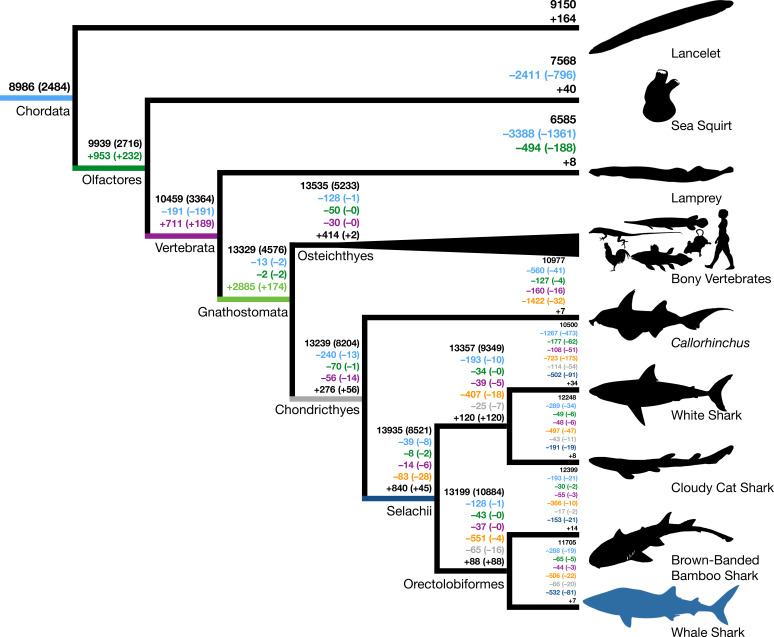
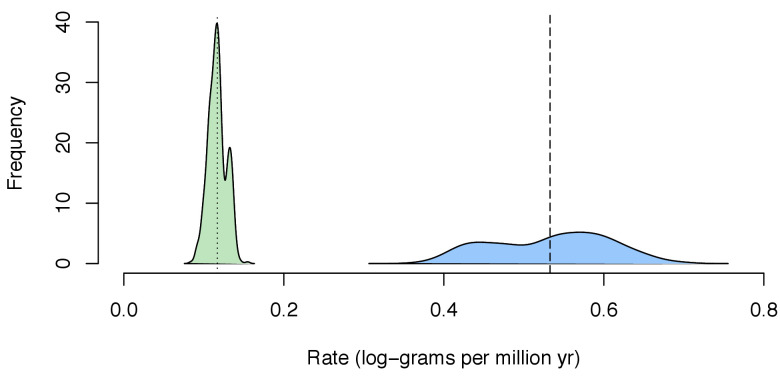
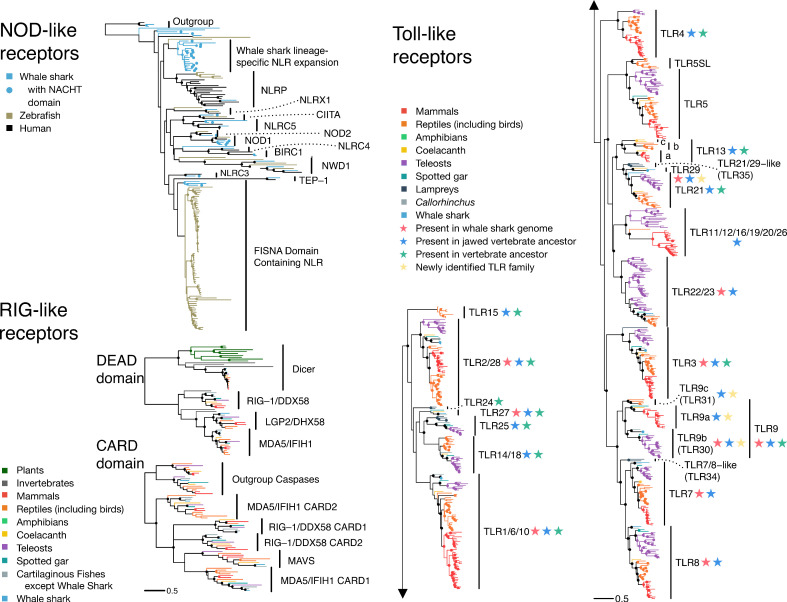
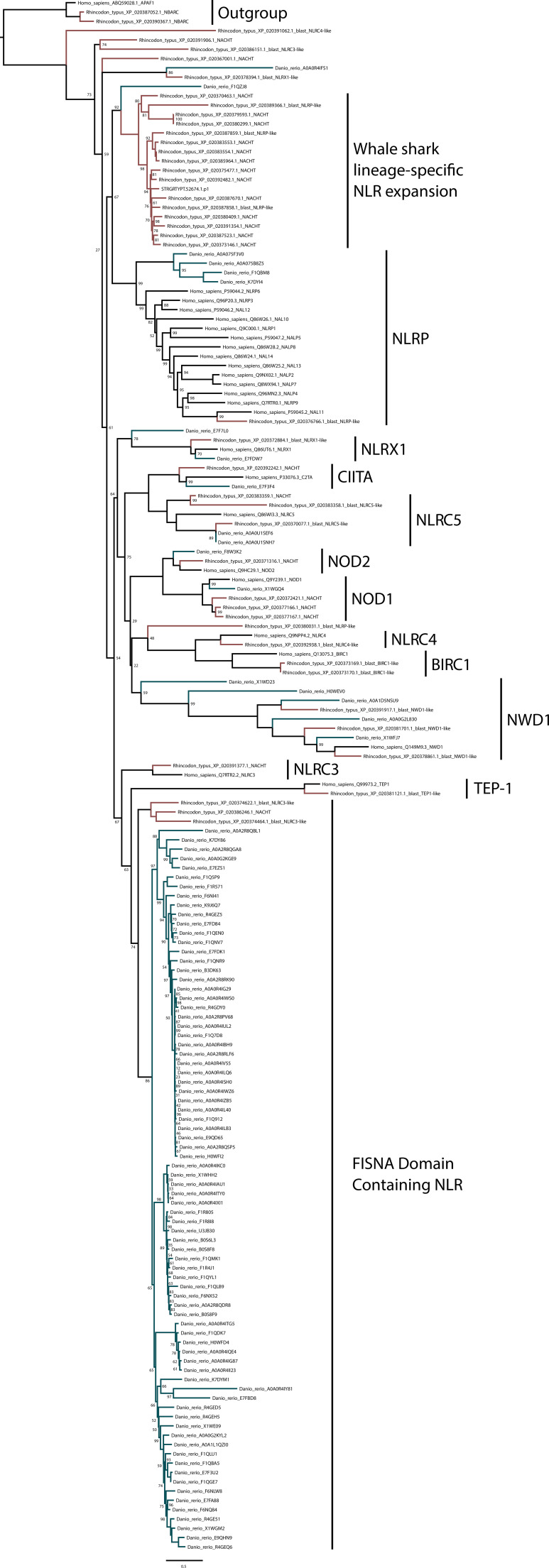
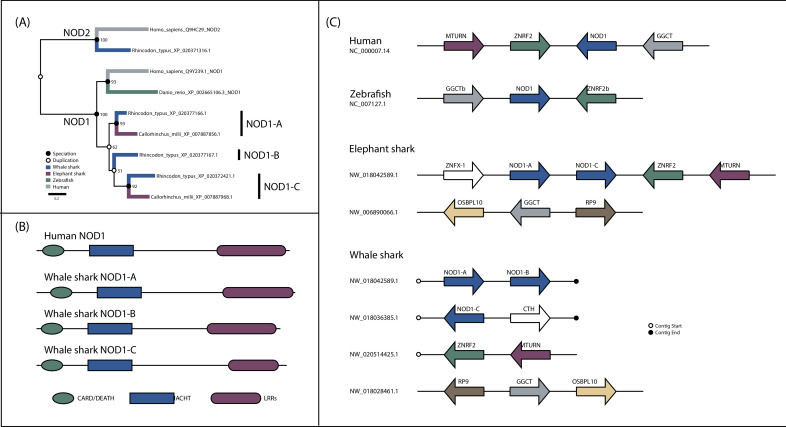
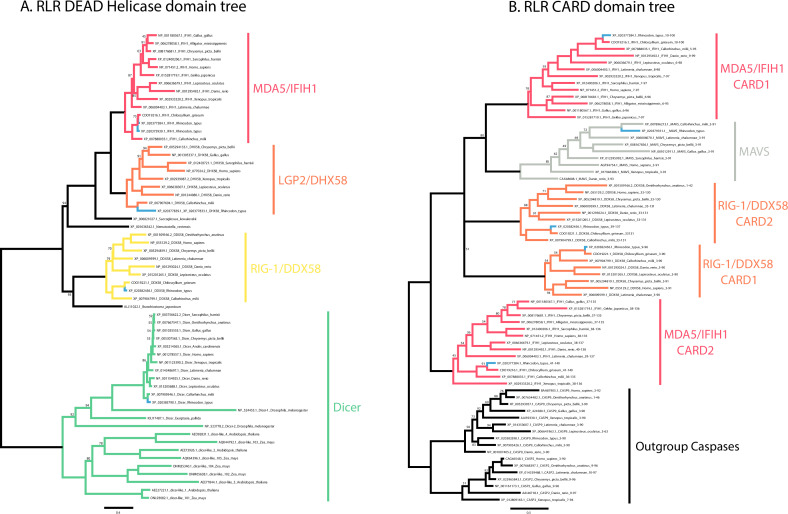
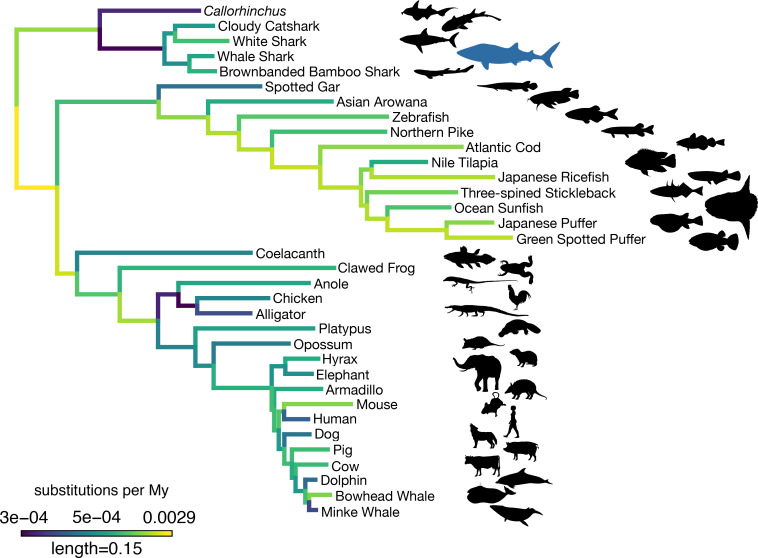
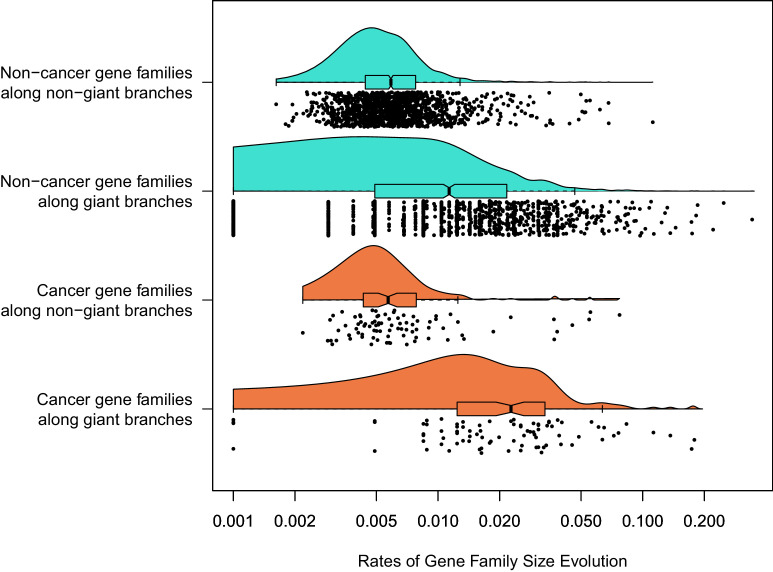
Chondrichthyes (cartilaginous fishes) are fundamental for understanding vertebrate evolution, yet their genomes are understudied. We report long-read sequencing of the whale shark genome to generate the best gapless chondrichthyan genome assembly yet with higher contig contiguity than all other cartilaginous fish genomes, and studied vertebrate genomic evolution of ancestral gene families, immunity, and gigantism. We found a major increase in gene families at the origin of gnathostomes (jawed vertebrates) independent of their genome duplication. We studied vertebrate pathogen recognition receptors (PRRs), which are key in initiating innate immune defense, and found diverse patterns of gene family evolution, demonstrating that adaptive immunity in gnathostomes did not fully displace germline-encoded PRR innovation. We also discovered a new toll-like receptor (TLR29) and three NOD1 copies in the whale shark. We found chondrichthyan and giant vertebrate genomes had decreased substitution rates compared to other vertebrates, but gene family expansion rates varied among vertebrate giants, suggesting substitution and expansion rates of gene families are decoupled in vertebrate genomes. Finally, we found gene families that shifted in expansion rate in vertebrate giants were enriched for human cancer-related genes, consistent with gigantism requiring adaptations to suppress cancer.
软骨鱼纲(软骨鱼类)对于理解脊椎动物的进化至关重要,但它们的基因组却研究不足。我们报告了鲸鲨基因组的长读测序结果,生成了迄今为止最无间隙的软骨鱼类基因组组装,其连续序列比所有其他软骨鱼类基因组都要高,并且研究了脊椎动物祖先进化的基因家族、免疫和巨型化。我们发现,在颌脊椎动物(有颌脊椎动物)的起源中,基因家族数量显著增加,这与它们的基因组复制无关。我们研究了脊椎动物病原体识别受体(PRRs),这是启动先天免疫防御的关键,发现了基因家族进化的多样化模式,表明颌脊椎动物的适应性免疫并没有完全取代种系编码的 PRR 创新。我们还在鲸鲨中发现了一个新的 Toll 样受体(TLR29)和三个 NOD1 拷贝。我们发现软骨鱼类和巨型脊椎动物的基因组与其他脊椎动物相比,取代率较低,但脊椎动物巨体的基因家族扩张率各不相同,这表明脊椎动物基因组中基因家族的取代和扩张率是分离的。最后,我们发现脊椎动物巨体中扩张率发生变化的基因家族富集了与人类癌症相关的基因,这与巨型化需要适应来抑制癌症的观点一致。