Tutsoy Onder, Polat Adem
Adana Alparslan Turkes Science and Technology University, Adana, Turkey.
Çanakkale Onsekiz Mart University, Çanakkale, Turkey.
ISA Trans. 2022 May;124:90-102. doi: 10.1016/j.isatra.2021.08.008. Epub 2021 Aug 9.
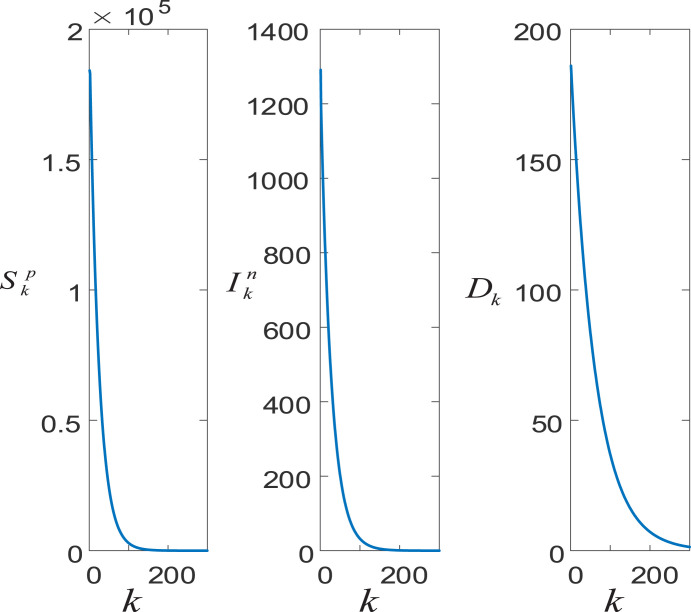
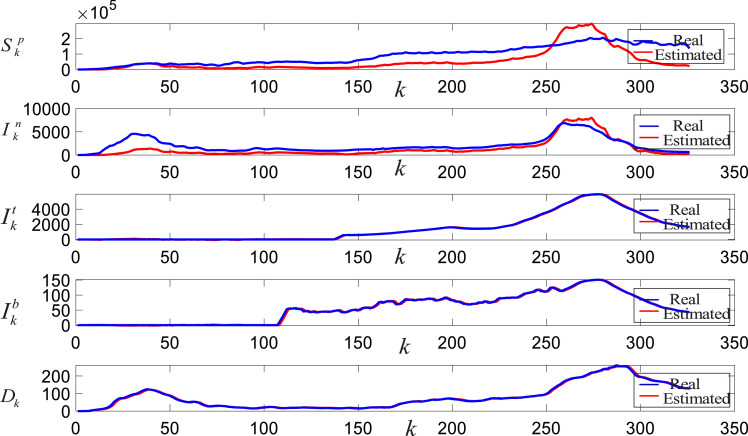
Coronavirus disease 2019 (COVID-19) has endured constituting formidable economic, social, educational, and phycological challenges for the societies. Moreover, during pandemic outbreaks, the hospitals are overwhelmed with patients requiring more intensive care units and intubation equipment. Therein, to cope with these urgent healthcare demands, the state authorities seek ways to develop policies based on the estimated future casualties. These policies are mainly non-pharmacological policies including the restrictions, curfews, closures, and lockdowns. In this paper, we construct three model structures of the SIIID-N (suspicious S, infected I, intensive care I, intubated I, and dead D together with the non-pharmacological policies N) holding two key targets. The first one is to predict the future COVID-19 casualties including the intensive care and intubated ones, which directly determine the need for urgent healthcare facilities, and the second one is to analyse the linear and non-linear dynamics of the COVID-19 pandemic under the non-pharmacological policies. In this respect, we have modified the non-pharmacological policies and incorporated them within the models whose parameters are learned from the available data. The trained models with the data released by the Turkish Health Ministry confirmed that the linear SIIID-N model yields more accurate results under the imposed non-pharmacological policies. It is important to note that the non-pharmacological policies have a damping effect on the pandemic casualties and this can dominate the non-linear dynamics. Herein, a model without pharmacological or non-pharmacological policies might have more dominant non-linear dynamics. In addition, the paper considers two machine learning approaches to optimize the unknown parameters of the constructed models. The results show that the recursive neural network has superior performance for learning nonlinear dynamics. However, the batch least squares outperforms in the presence of linear dynamics and stochastic data. The estimated future pandemic casualties with the linear SIIID-N model confirm that the suspicious, infected, and dead casualties converge to zero from 200000, 1400, 200 casualties, respectively. The convergences occur in 120 days under the current conditions.
2019冠状病毒病(COVID-19)持续存在,给社会带来了巨大的经济、社会、教育和心理挑战。此外,在疫情爆发期间,医院里挤满了需要更多重症监护病房和插管设备的患者。在这种情况下,为了应对这些紧急的医疗需求,国家当局寻求根据预计的未来伤亡情况制定政策的方法。这些政策主要是非药物政策,包括限制措施、宵禁、关闭场所和封锁。在本文中,我们构建了SIIID-N(疑似S、感染I、重症监护I、插管I和死亡D以及非药物政策N)的三种模型结构,有两个关键目标。第一个目标是预测未来的COVID-19伤亡情况,包括重症监护和插管患者,这直接决定了对紧急医疗设施的需求;第二个目标是分析非药物政策下COVID-19大流行的线性和非线性动态。在这方面,我们修改了非药物政策,并将其纳入从现有数据中学习参数的模型中。用土耳其卫生部公布的数据训练的模型证实,在实施的非药物政策下,线性SIIID-N模型产生的结果更准确。需要注意的是,非药物政策对大流行伤亡有抑制作用,这可能主导非线性动态。在此,一个没有药物或非药物政策的模型可能具有更主导的非线性动态。此外,本文考虑了两种机器学习方法来优化所构建模型的未知参数。结果表明,递归神经网络在学习非线性动态方面具有卓越性能。然而,在存在线性动态和随机数据的情况下,批量最小二乘法表现更优。线性SIIID-N模型估计的未来大流行伤亡情况证实,疑似、感染和死亡伤亡分别从2000****、1400、200人降至零。在当前条件下,收敛在120天内发生。