Department of Sarcoma, Peritoneal and Rare Tumours (SPRinT), Division of Surgery and Surgical Oncology, National Cancer Centre Singapore, 11 Hospital Crescent, Singapore, 169610, Singapore.
Department of Sarcoma, Peritoneal and Rare Tumours (SPRinT), Division of Surgery and Surgical Oncology, Singapore General Hospital, Outram Road, Singapore, 169608, Singapore.
Sci Rep. 2021 Aug 19;11(1):16829. doi: 10.1038/s41598-021-96072-6.
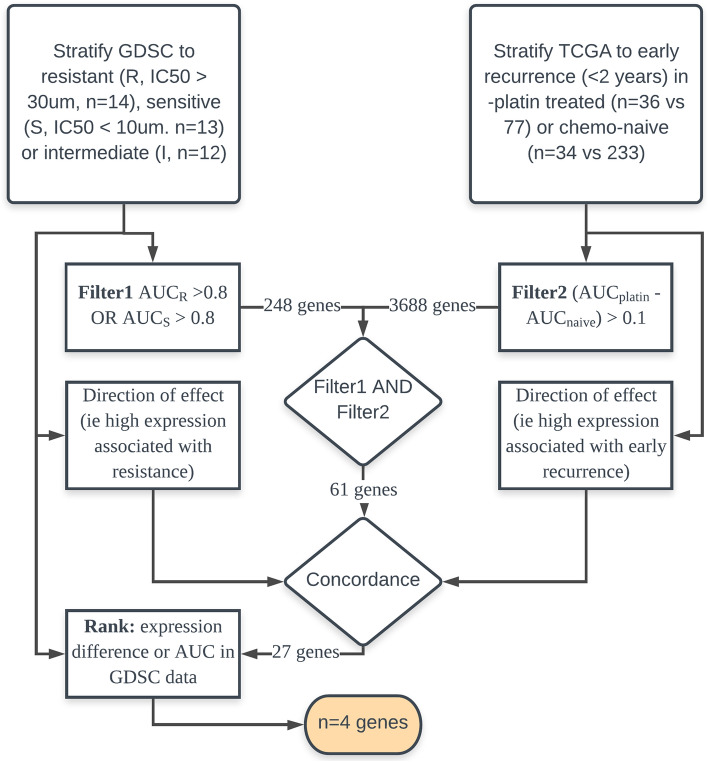
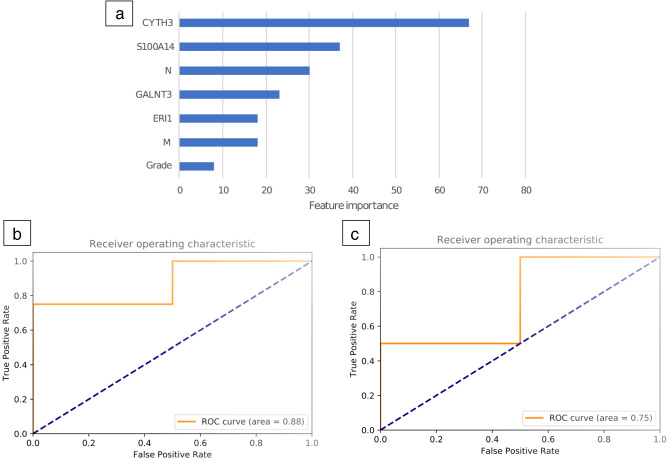
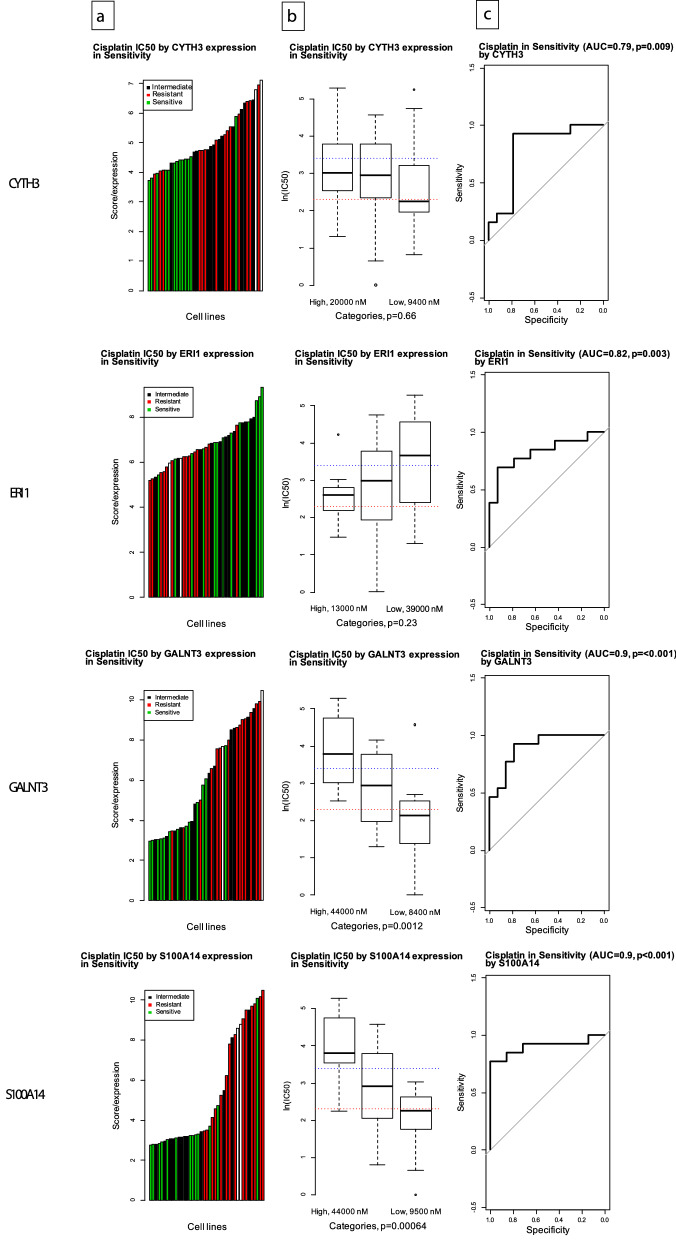
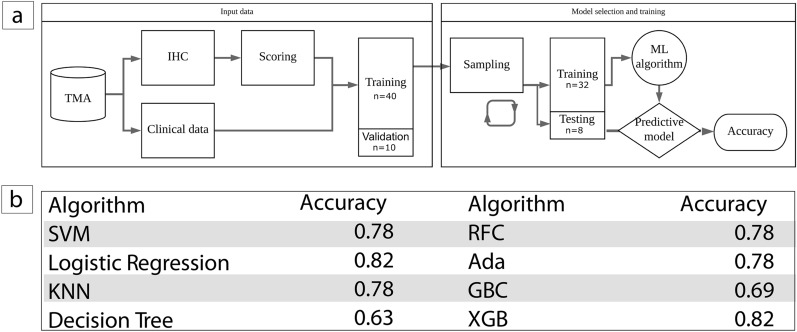
Ovarian cancer is associated with poor prognosis. Platinum resistance contributes significantly to the high rate of tumour recurrence. We aimed to identify a set of molecular markers for predicting platinum sensitivity. A signature predicting cisplatin sensitivity was generated using the Genomics of Drug Sensitivity in Cancer and The Cancer Genome Atlas databases. Four potential biomarkers (CYTH3, GALNT3, S100A14, and ERI1) were identified and optimized for immunohistochemistry (IHC). Validation was performed on a cohort of patients (n = 50) treated with surgical resection followed by adjuvant carboplatin. Predictive models were established to predict chemosensitivity. The four biomarkers were also assessed for their ability to prognosticate overall survival in three ovarian cancer microarray expression datasets from The Gene Expression Omnibus. The extreme gradient boosting (XGBoost) algorithm was selected for the final model to validate the accuracy in an independent validation dataset (n = 10). CYTH3 and S100A14, followed by nodal stage, were the features with the greatest importance. The four gene signature had comparable prognostication as clinical information for two-year survival. Assessment of tumour biology by means of gene expression can serve as an adjunct for prediction of chemosensitivity and prognostication. Potentially, the assessment of molecular markers alongside clinical information offers a chance to further optimise therapeutic decision making.
卵巢癌预后不良。铂类耐药显著导致肿瘤高复发率。本研究旨在鉴定一组预测铂类敏感性的分子标志物。使用癌症基因组药物敏感性和癌症基因组图谱数据库生成预测顺铂敏感性的特征签名。鉴定并优化了四个潜在的生物标志物(CYTH3、GALNT3、S100A14 和 ERI1)用于免疫组织化学(IHC)验证。对接受手术切除和辅助卡铂治疗的患者队列(n=50)进行了验证。建立预测化疗敏感性的预测模型。还评估了这四个生物标志物在三个来自基因表达综合数据库的卵巢癌微阵列表达数据集中预测总生存期的能力。最终模型选择极端梯度增强(XGBoost)算法在独立验证数据集(n=10)中验证准确性。CYTH3 和 S100A14,其次是淋巴结分期,是最重要的特征。四个基因标志物在预测两年生存率方面与临床信息具有相当的预后价值。通过基因表达评估肿瘤生物学可以作为预测化疗敏感性和预后的辅助手段。潜在地,在临床信息的基础上评估分子标志物提供了进一步优化治疗决策的机会。