Department of Ophthalmology, University of Colorado School of Medicine, Aurora, Colorado, United States.
Department of Biostatistics, Colorado School of Public Health, Aurora, Colorado, United States.
Invest Ophthalmol Vis Sci. 2021 Aug 2;62(10):24. doi: 10.1167/iovs.62.10.24.
To determine the effect of metformin on early Nd:YAG laser treatment for posterior capsule opacification (PCO) and to explore a molecular mechanism to explain a possible protective effect of metformin against PCO.
We conducted: 1) a retrospective cohort study of patient eyes undergoing phacoemulsification at our institution; and 2) laboratory investigation of the effect of metformin on the behavior of lens epithelial cells in the context of an animal model for PCO. Population-averaged Cox proportional hazards modeling was used to estimate risk for time to Nd:YAG. For laboratory studies, expression of markers for epithelial-to-mesenchymal transition (EMT) implicated in PCO pathogenesis was measured in tissue culture and following extracapsular lens extraction in a mouse model.
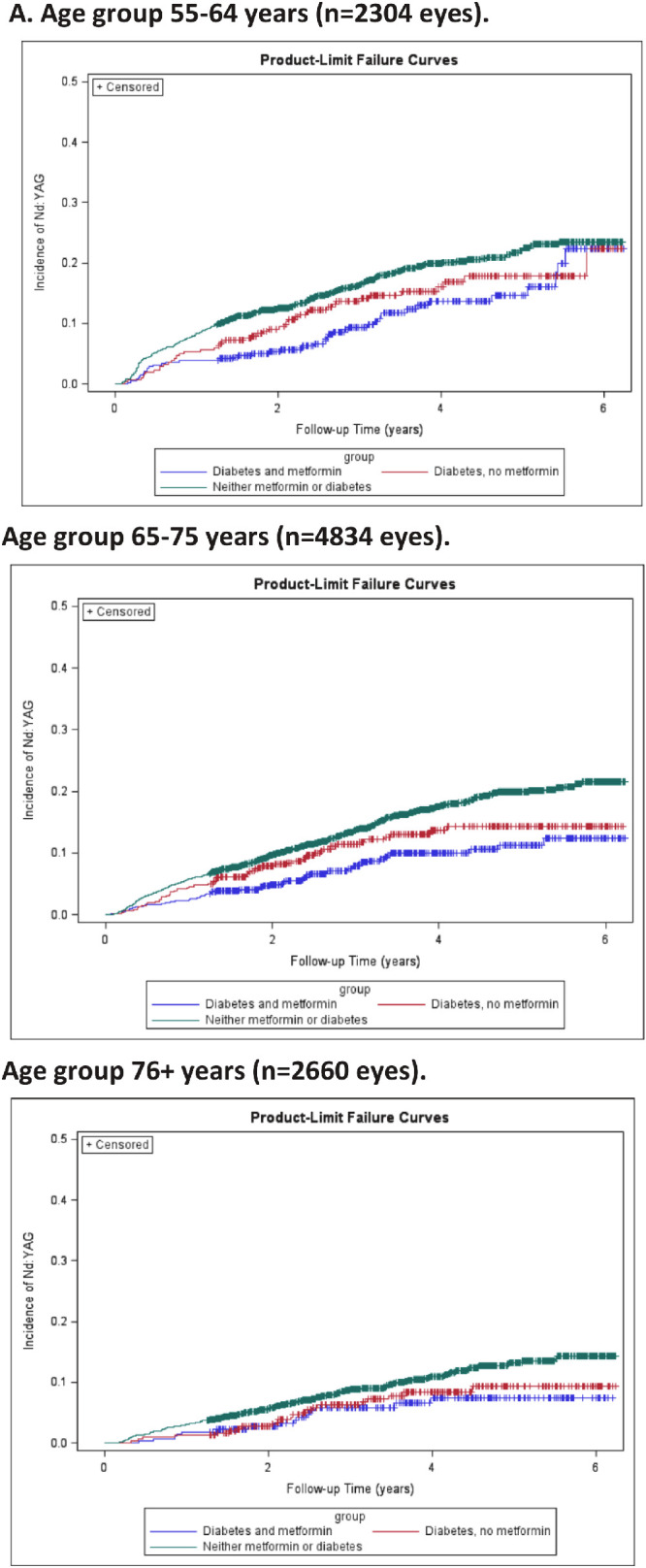
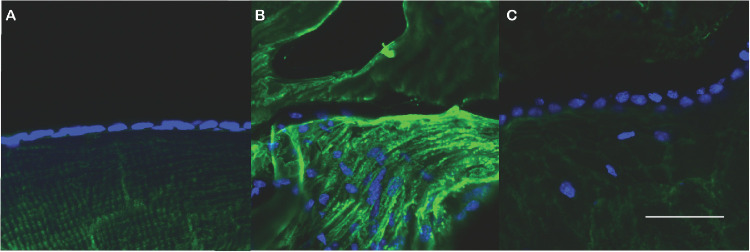
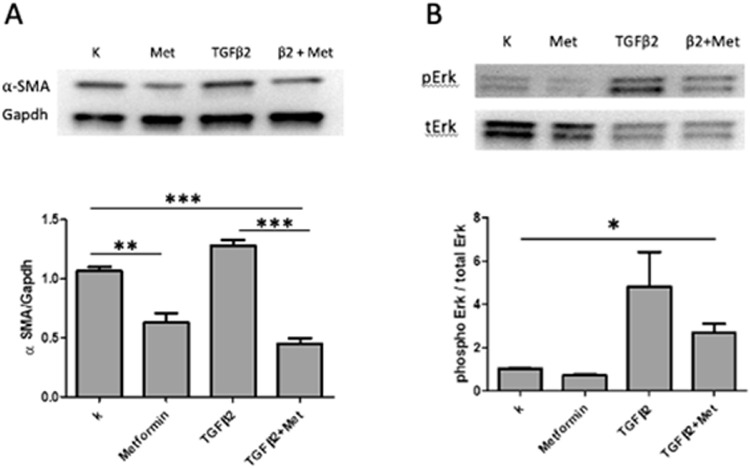
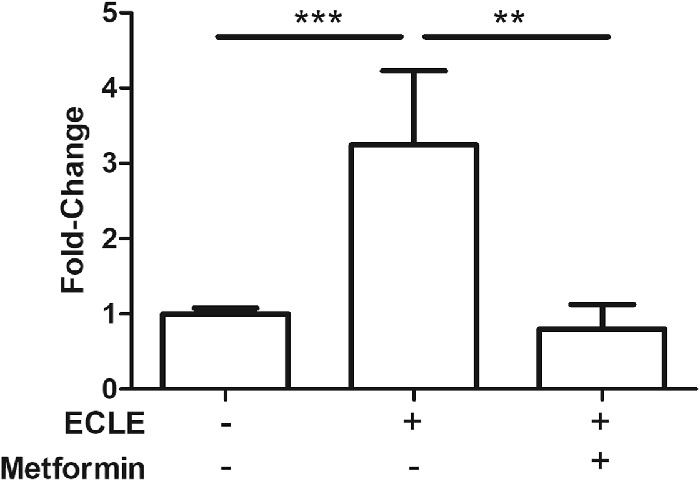
The rate of Nd:YAG laser capsulotomy was 13.1% among the 9798 eyes. Both metformin use and diabetes were protective factors for Nd:YAG laser capsulotomy in univariate analysis. However, in multivariable analysis with nondiabetics as the reference group, only metformin use among diabetics was significantly protective of Nd:YAG (hazard ratio: 0.68, 95% CI: 0.54-0.85, P = 0.0008), while eyes of patients with diabetes without metformin use did not significantly differ (P = 0.5026). Treatment of lens epithelial cells with metformin reduced the level of the EMT markers ⍺-SMA and pERK induced by TGF-β2. Similarly, metformin treatment reduced ⍺-SMA expression in lens epithelial cells following extracapsular lens extraction in a mouse model.
The protective effect of metformin against early Nd:YAG may relate to its ability to downregulate EMT in residual lens epithelial cells that otherwise trend toward myofibroblast development and PCO.
确定二甲双胍对后囊混浊(PCO)早期 Nd:YAG 激光治疗的影响,并探讨一种分子机制来解释二甲双胍对 PCO 可能具有的保护作用。
我们进行了:1)对在我们机构接受白内障超声乳化术的患者眼睛进行回顾性队列研究;2)在 PCO 动物模型中,研究二甲双胍对晶状体上皮细胞行为的影响的实验室研究。采用人群平均 Cox 比例风险模型来估计 Nd:YAG 的时间风险。对于实验室研究,在组织培养和小鼠模型的囊外晶状体提取后,测量与 PCO 发病机制相关的上皮间质转化(EMT)标志物的表达。
9798 只眼中 Nd:YAG 激光囊切开术的发生率为 13.1%。在单变量分析中,二甲双胍的使用和糖尿病均为 Nd:YAG 激光囊切开术的保护因素。然而,在多变量分析中,以非糖尿病患者为参考组,仅糖尿病患者中二甲双胍的使用对 Nd:YAG 具有显著保护作用(风险比:0.68,95%CI:0.54-0.85,P = 0.0008),而未使用二甲双胍的糖尿病患者的眼睛则无显著差异(P = 0.5026)。用二甲双胍治疗晶状体上皮细胞可降低 TGF-β2 诱导的 EMT 标志物 ⍺-SMA 和 pERK 的水平。同样,在小鼠模型中,囊外晶状体提取后,二甲双胍治疗可降低晶状体上皮细胞中 ⍺-SMA 的表达。
二甲双胍对早期 Nd:YAG 的保护作用可能与其能够下调残留晶状体上皮细胞中的 EMT 有关,否则这些细胞会趋向于肌成纤维细胞的发育和 PCO。