Burdea Grigore, Kim Nam, Polistico Kevin, Kadaru Ashwin, Roll Doru, Grampurohit Namrata
Bright Cloud International Corp, Corporate Laboratories, North Brunswick, NJ, USA.
Department of Electrical and Computer Engineering, Rutgers - The State University of New Jersey, Piscataway, NJ, USA.
J Rehabil Assist Technol Eng. 2021 Jul 7;8:20556683211012885. doi: 10.1177/20556683211012885. eCollection 2021 Jan-Dec.
Design and test the usability of a novel virtual rehabilitation system for bimanual training of gravity supported arms, pronation/supination, grasp strengthening, and finger extension.
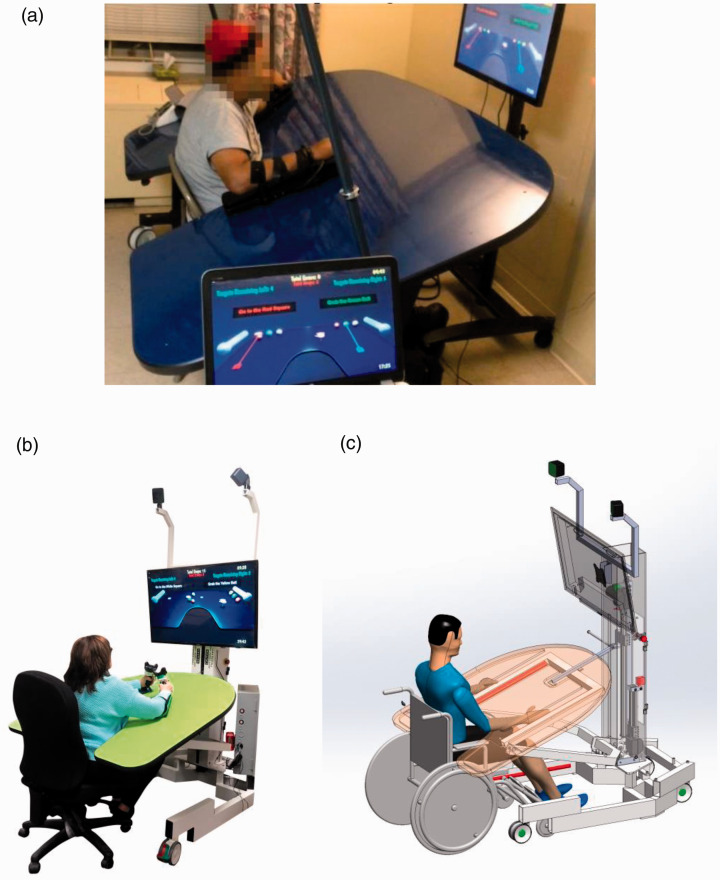
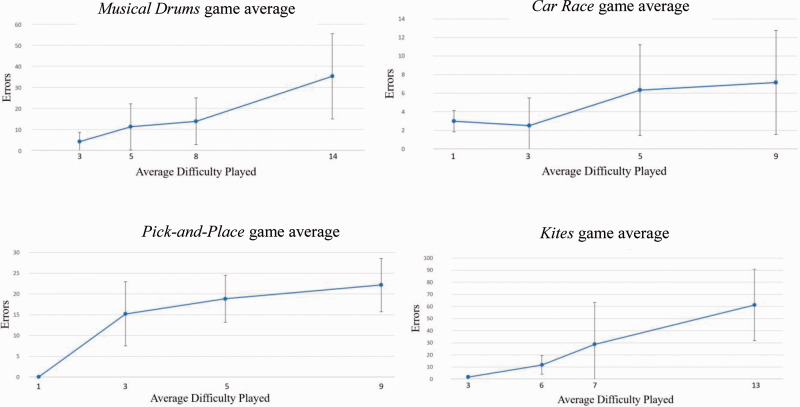
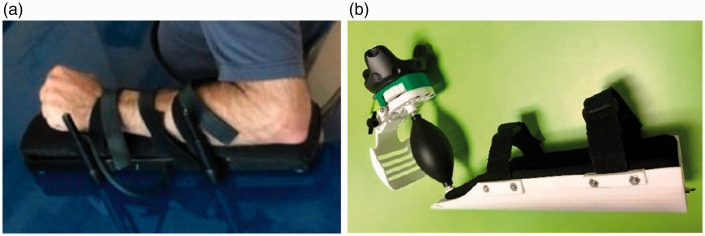
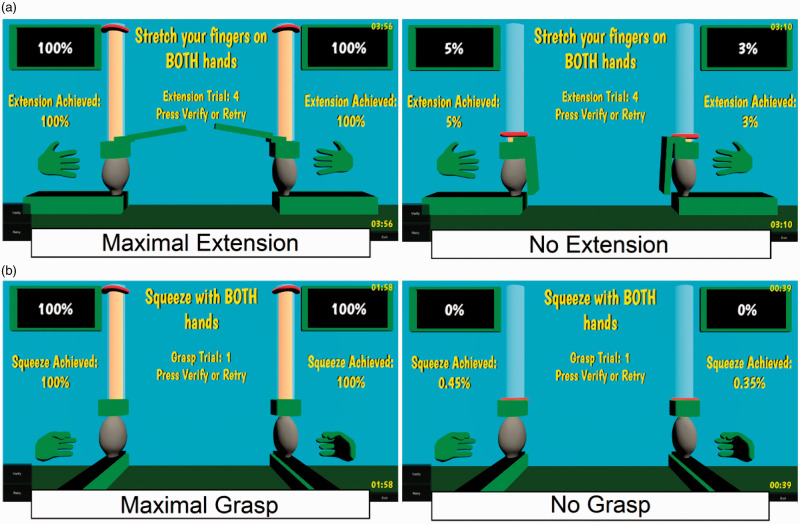
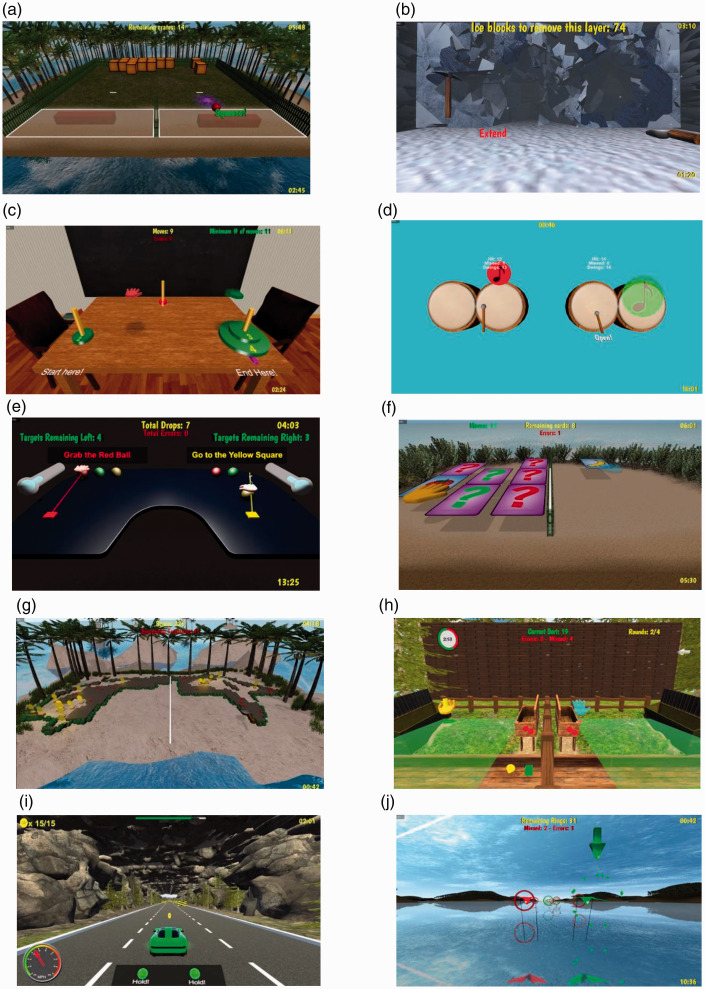
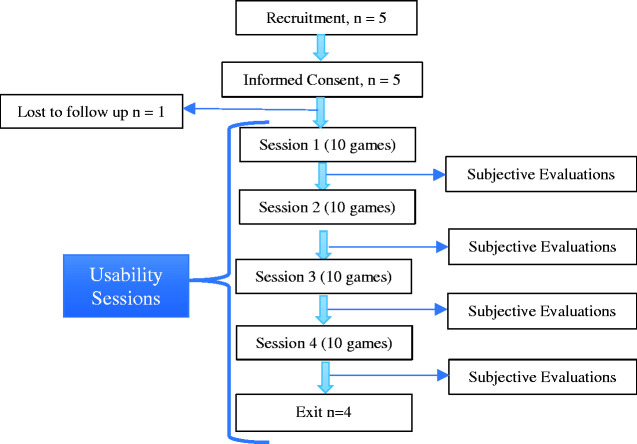
A robotic rehabilitation table, therapeutic game controllers, and adaptive rehabilitation games were developed. The rehabilitation table lifted/lowered and tilted up/down to modulate gravity loading. Arms movement was measured simultaneously, allowing bilateral training. Therapeutic games adapted through a baseline process. Four healthy adults performed four usability evaluation sessions each, and provided feedback using the USE questionnaire and custom questions. Participant's game play performance was sampled and analyzed, and system modifications made between sessions.
Participants played four sessions of about 50 minutes each, with training difficulty gradually increasing. Participants averaged a total of 6,300 arm repetitions, 2,200 grasp counts, and 2,100 finger extensions when adding counts for each upper extremity. USE questionnaire data averaged 5.1/7 rating, indicative of usefulness, ease of use, ease of learning, and satisfaction with the system. Subjective feedback on the custom evaluation form was 84% favorable.
The novel system was well-accepted, induced high repetition counts, and the usability study helped optimize it and achieve satisfaction. Future studies include examining effectiveness of the novel system when training patients acute post-stroke.
设计并测试一种新型虚拟康复系统的可用性,该系统用于重力支持手臂的双手训练、旋前/旋后、抓握强化和手指伸展。
开发了一种机器人康复台、治疗游戏控制器和适应性康复游戏。康复台可升降和上下倾斜以调节重力负荷。同时测量手臂运动,允许进行双侧训练。治疗游戏通过基线过程进行调整。四名健康成年人每人进行了四次可用性评估,并使用USE问卷和自定义问题提供反馈。对参与者的游戏表现进行采样和分析,并在各阶段之间对系统进行修改。
参与者每人进行了四节约50分钟的训练,训练难度逐渐增加。将每个上肢的计数相加,参与者平均总共进行了6300次手臂重复、2200次抓握计数和2100次手指伸展。USE问卷数据平均评分为5.1/7,表明该系统有用、易用、易于学习且令人满意。自定义评估表上的主观反馈有84%是正面的。
该新型系统广受好评,能诱导较高的重复次数,可用性研究有助于对其进行优化并实现满意度。未来的研究包括检查该新型系统在训练中风急性期患者时的有效性。