Yao Kun, Liu Hua, Yin Jiajun, Yuan Jianmin, Tao Hong
Brain Science Basic Laboratory, The Affiliated Wuxi Mental Health Center with Nanjing Medical University, Wuxi, 214151, Jiangsu, China.
Department of Clinical Psychology, The Affiliated Wuxi Mental Health Center with Nanjing Medical University, Wuxi, 214151, Jiangsu, China.
J Exp Clin Cancer Res. 2021 Aug 23;40(1):263. doi: 10.1186/s13046-021-02054-x.
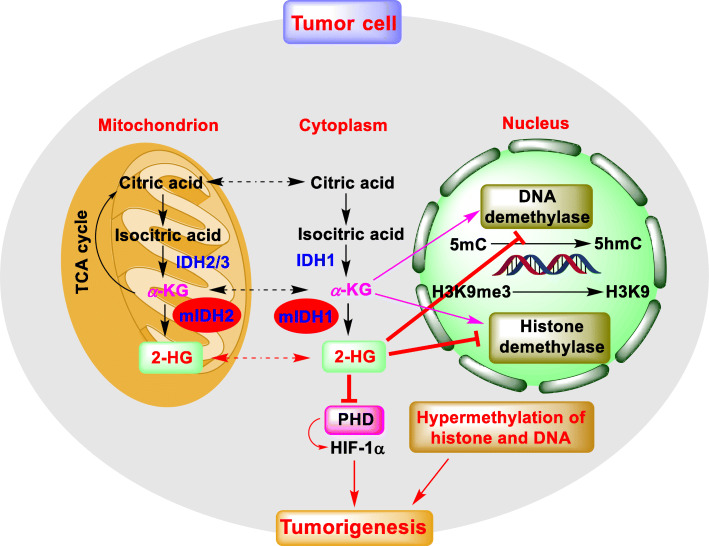
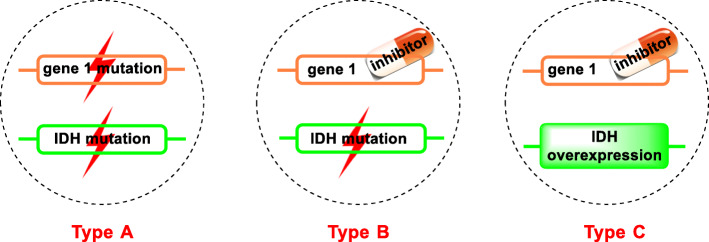
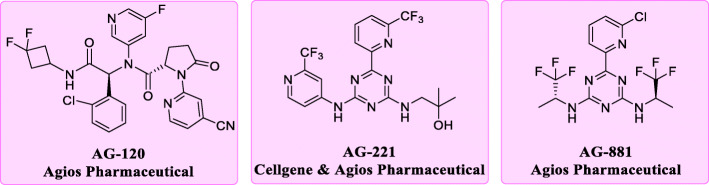
Mutant isocitrate dehydrogenase 1/2 (mIDH1/2) gain a novel function for the conversion of α-ketoglutarate (α-KG) to oncometabolite R-2-hydroxyglutarate (R-2-HG). Two molecular entities namely enasidenib (AG-221) and ivosidenib (AG-120) targeting mIDH2 and mIDH1 respectively, have already been approved by FDA for the treatment of relapsed/refractory acute myeloid leukemia (R/R AML). However, the low responses, drug-related adverse effects, and most significantly, the clinically-acquired resistance of AG-221 and AG-120 has shown great influence on their clinical application. Therefore, searching for novel therapeutic strategies to enhance tumor sensitivity, reduce drug-related side effects, and overcome drug resistance have opened a new research field for defeating IDH-mutated cancers. As the effective methods, synthetic lethal interactions and synergetic therapies are extensively investigated in recent years for the cure of different cancers. In this review, the molecules displaying synergetic effects with mIDH1/2 inhibitors, as well as the targets showing relevant synthetic lethal interactions with mIDH1/2 are described emphatically. On these foundations, we discuss the opportunities and challenges for translating these strategies into clinic to combat the defects of existing IDH inhibitors.
突变型异柠檬酸脱氢酶1/2(mIDH1/2)获得了一种新功能,即将α-酮戊二酸(α-KG)转化为致癌代谢物R-2-羟基戊二酸(R-2-HG)。两种分别靶向mIDH2和mIDH1的分子实体,即恩西地平(AG-221)和艾伏尼布(AG-120),已获美国食品药品监督管理局(FDA)批准用于治疗复发/难治性急性髓系白血病(R/R AML)。然而,AG-221和AG-120的低反应率、药物相关不良反应,以及最显著的临床获得性耐药性,对它们的临床应用产生了重大影响。因此,寻找新的治疗策略以提高肿瘤敏感性、减少药物相关副作用并克服耐药性,为战胜IDH突变癌症开辟了一个新的研究领域。作为有效的方法,近年来合成致死相互作用和协同治疗在不同癌症的治疗中得到了广泛研究。在这篇综述中,着重描述了与mIDH1/2抑制剂显示协同效应的分子,以及与mIDH1/2显示相关合成致死相互作用的靶点。在此基础上,我们讨论了将这些策略转化为临床应用以对抗现有IDH抑制剂缺陷所面临的机遇和挑战。