Department of Medicine, Université de Montréal, Montréal, QC, Canada.
Faculty of Medicine, Université de Montréal, Montréal, QC, Canada.
Int J Obes (Lond). 2021 Dec;45(12):2617-2622. doi: 10.1038/s41366-021-00938-8. Epub 2021 Aug 25.
The impact of obesity on outcomes in acute respiratory distress syndrome (ARDS) is not well understood and remains controversial. Recent studies suggest that obesity might be associated with higher morbidity and mortality in respiratory disease caused by SARS-CoV-2 (COVID-19 disease). Our objective was to evaluate the association between obesity and hospital mortality in critical COVID-19 patients.
We conducted a retrospective cohort study in a tertiary academic center located in Montréal between March and August 2020. We included all consecutive adult patients admitted to the ICU for COVID-19-confirmed respiratory disease. Our main outcome was hospital mortality. We estimated the association between obesity, using the body mass index as a continuous variable, and hospital survival by fitting a multivariable Cox proportional hazards model.
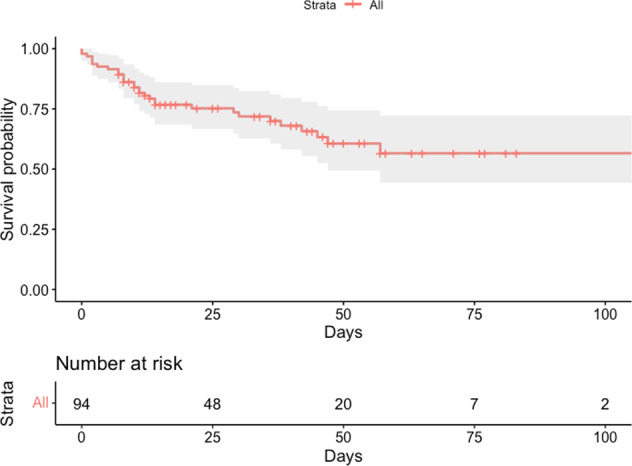
We included 94 patients. Median [q1, q3] body mass index (BMI) was 29 [26-32] kg/m and 37% of patients were obese (defined as BMI > 30 kg/m). Hospital mortality for the entire cohort was 33%. BMI was significantly associated with hospital mortality (hazard ratio [HR] = 2.49 per 10 units BMI; 95% CI, from 1.69 to 3.70; p < 0.001) even after adjustment for sex, age and obesity-related comorbidities (adjusted HR = 3.50; 95% CI from 2.03 to 6.02; p < 0.001).
Obesity was prevalent in hospitalized patients with critical illness secondary to COVID-19 disease and a higher BMI was associated with higher hospital mortality. Further studies are needed to validate this association and to better understand its underlying mechanisms.
肥胖对急性呼吸窘迫综合征(ARDS)结局的影响尚不清楚,仍存在争议。最近的研究表明,肥胖可能与由严重急性呼吸综合征冠状病毒 2(SARS-CoV-2,即 COVID-19 疾病)引起的呼吸道疾病的发病率和死亡率升高有关。我们的目的是评估肥胖与危重症 COVID-19 患者院内死亡率的关系。
我们在 2020 年 3 月至 8 月期间在位于蒙特利尔的一家三级学术中心进行了一项回顾性队列研究。我们纳入了所有因 COVID-19 确诊的呼吸道疾病而入住 ICU 的连续成年患者。我们的主要结局是院内死亡率。我们通过拟合多变量 Cox 比例风险模型来评估肥胖(使用体重指数作为连续变量)与医院生存之间的关系。
我们纳入了 94 例患者。中位数[Q1,Q3]体重指数(BMI)为 29[26-32]kg/m2,37%的患者肥胖(BMI>30kg/m2)。整个队列的院内死亡率为 33%。BMI 与医院死亡率显著相关(HR=每增加 10 个单位 BMI 的 2.49;95%CI,1.69 至 3.70;p<0.001),即使在校正性别、年龄和肥胖相关合并症后(校正 HR=3.50;95%CI,2.03 至 6.02;p<0.001)。
COVID-19 疾病导致危重症住院患者中肥胖很常见,BMI 越高,院内死亡率越高。需要进一步研究来验证这种关联,并更好地了解其潜在机制。