Kim Hyun Woo, Adhikari Pradeep, Chang Min Ho, Seo Changwan
EcoBank Team, National Institute of Ecology, Seocheon-gun, Chungnam 33657, Korea.
Institute of Ecological Phytochemistry, Hankyong National University, Anseong-si 17579, Korea.
Animals (Basel). 2021 Jul 23;11(8):2185. doi: 10.3390/ani11082185.
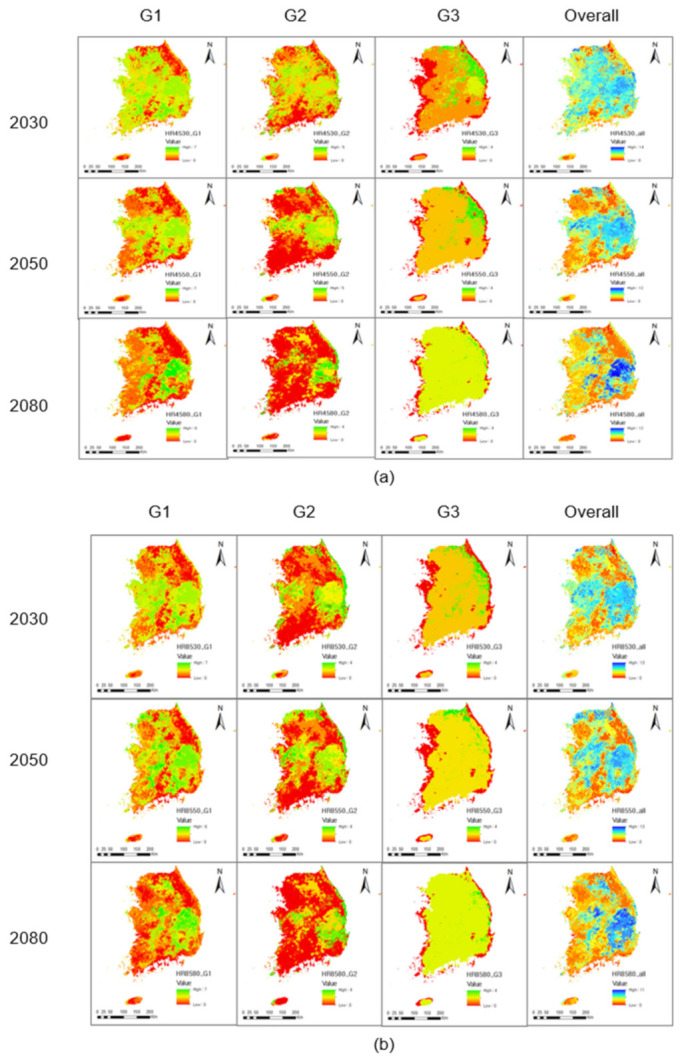
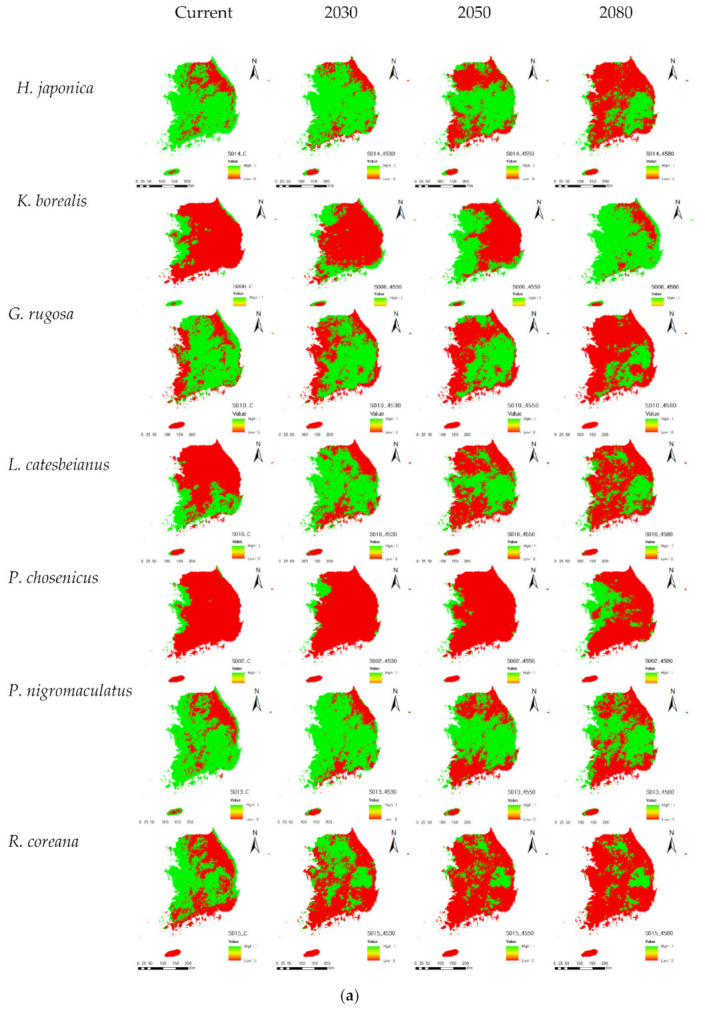
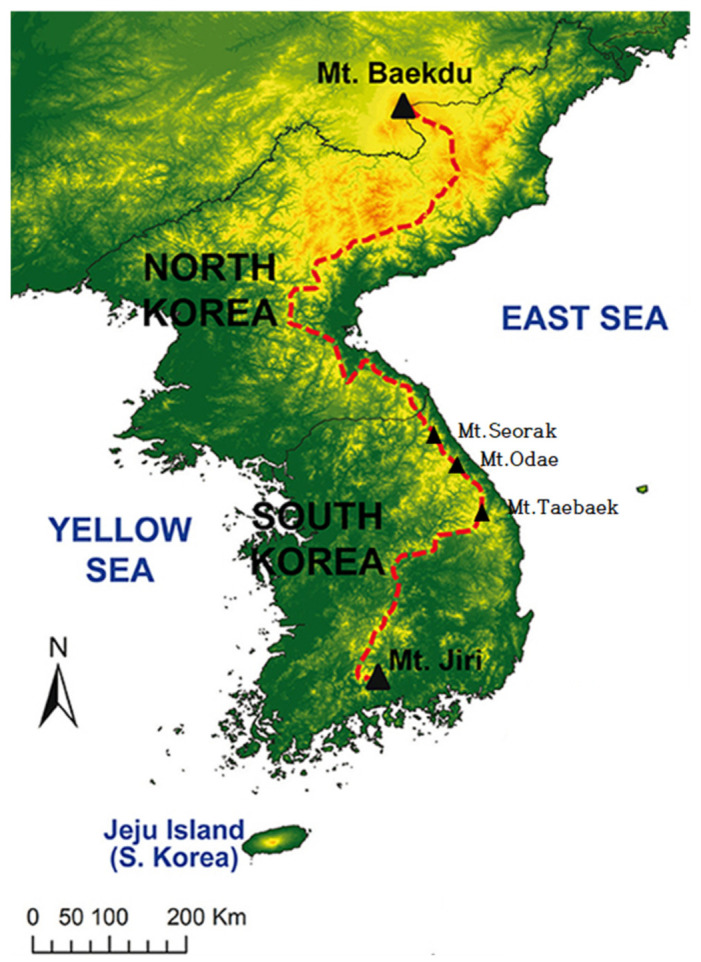
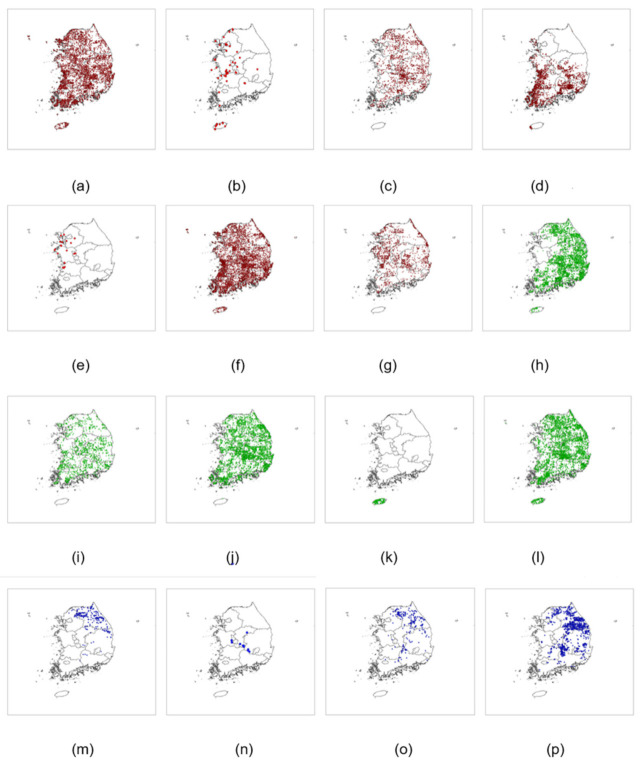
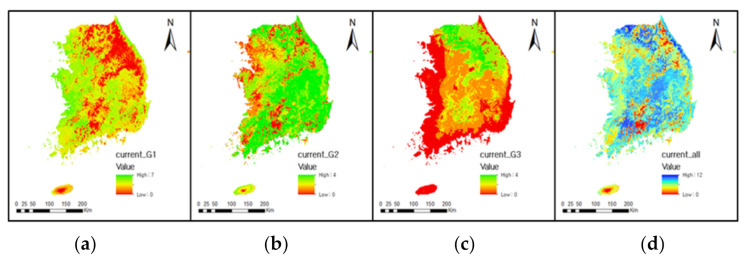
Amphibian species are highly vulnerable to climate change with significant species decline and extinction predicted worldwide. However, there are very limited studies on amphibians in South Korea. Here, we assessed the potential impacts of climate change on different habitat groups (wetland amphibians, Group 1; migrating amphibians, Group 2; and forest-dwelling amphibians, Group 3) under future climate change and land cover change in South Korea using a maximum entropy modelling approach. Our study revealed that all amphibians would suffer substantial loss of suitable habitats in the future, except , , and . Similarly, species richness for Groups 2 and 3 will decline by 2030, 2050, and 2080. Currently, amphibian species are widely distributed across the country; however, in future, suitable habitats for amphibians would be concentrated along the Baekdudaegan Mountain Range and the southeastern region. Among the three groups, Group 3 amphibians are predicted to be the most vulnerable to climate change; therefore, immediate conservation action is needed to protect them. We expect this study could provide crucial baseline information required for the government to design climate change mitigation strategies for indigenous amphibians.
两栖动物物种极易受到气候变化的影响,预计全球范围内两栖动物物种数量将大幅减少甚至灭绝。然而,关于韩国两栖动物的研究非常有限。在此,我们采用最大熵建模方法,评估了未来气候变化和韩国土地覆盖变化对不同栖息地类型两栖动物(湿地两栖动物,第1组;洄游两栖动物,第2组;森林栖息两栖动物,第3组)的潜在影响。我们的研究表明,未来除了 、 和 之外,所有两栖动物都将遭受适宜栖息地的大幅丧失。同样,第2组和第3组的物种丰富度在2030年、2050年和2080年也将下降。目前,两栖动物物种在韩国广泛分布;然而,未来两栖动物的适宜栖息地将集中在太白山脉和东南部地区。在这三组中,预计第3组两栖动物对气候变化最为脆弱;因此,需要立即采取保护行动来保护它们。我们期望这项研究能够为政府制定本土两栖动物气候变化缓解策略提供所需的关键基础信息。