Schoch Sarah, Sen Vasily, Brenner Walburgis, Hartwig Andrea, Köberle Beate
Department of Laboratory Medicine, Lund University, Scheelevägen 2, 223 81 Lund, Sweden.
Institute of Problems of Chemical Physics, Russian Academy of Sciences, Chernogolovka, 142432 Moscow, Russia.
Biomedicines. 2021 Aug 18;9(8):1033. doi: 10.3390/biomedicines9081033.
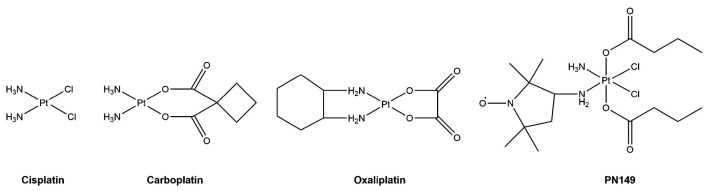
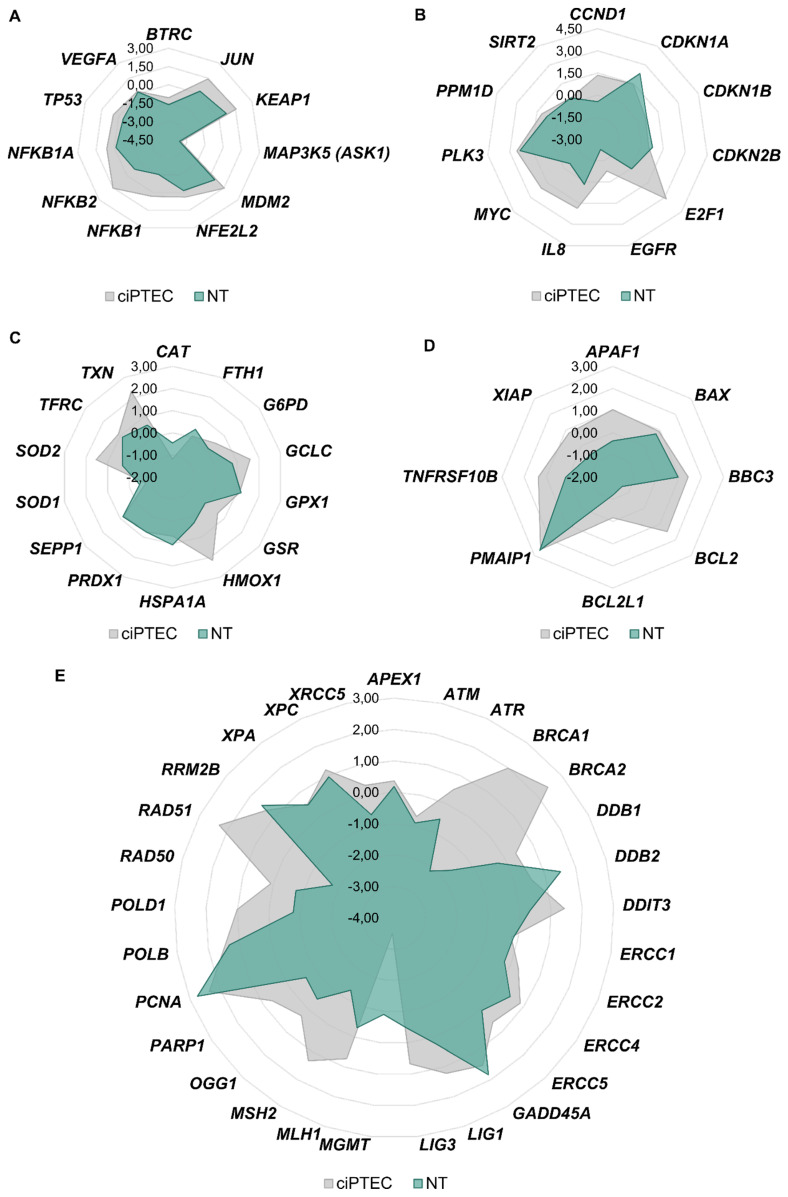
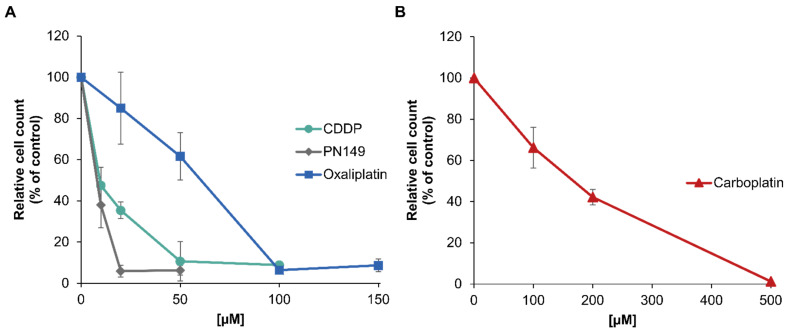
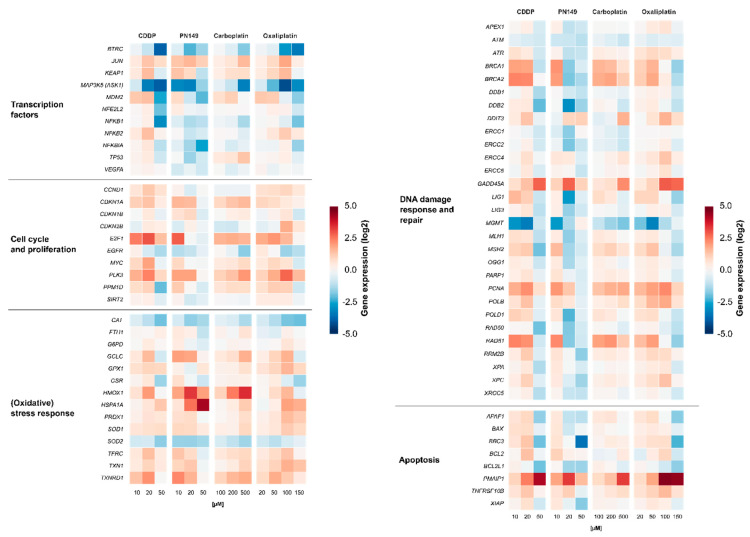
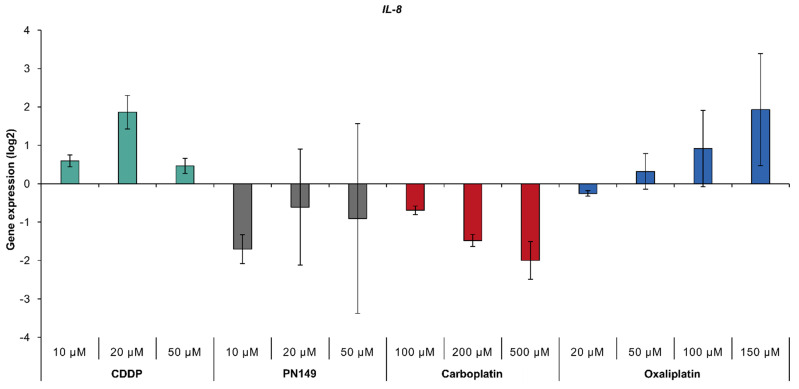
Cisplatin is one of the most commonly used drugs for the treatment of various solid cancers. However, its efficacy is restricted by severe side effects, especially dose-limiting nephrotoxicity. New platinum-based compounds are designed to overcome this limitation. Previous investigations showed that the platinum(IV)-nitroxyl complex PN149 is highly cytotoxic in various tumor cell lines. In the present study, investigations with PN149 were extended to normal human kidney tubule epithelia. Coincident with higher intracellular platinum accumulation, the cytotoxicity of PN149 in the proximal tubule epithelial cell line ciPTEC was more pronounced compared to the established platinum chemotherapeutics cisplatin, carboplatin and oxaliplatin. Quantitative gene expression profiling revealed the induction of ROS-inducible and anti-oxidative genes, suggesting an oxidative stress response by PN149. However, in contrast to cisplatin, no pro-inflammatory response was observed. Genes coding for distinct DNA damage response factors and genes related to apoptosis were up-regulated, indicating the activation of the DNA damage response system and induction of the apoptotic cascade by PN149. Altogether, a comparable transcriptional response was observed for PN149 and the platinum chemotherapeutics. However, the lack of inflammatory activity, which is a possible cause contributing to toxicity in human renal proximal tubule epithelia, might indicate the reduced nephrotoxic potential of PN149.
顺铂是治疗各种实体癌最常用的药物之一。然而,其疗效受到严重副作用的限制,尤其是剂量限制性肾毒性。新型铂基化合物旨在克服这一局限性。先前的研究表明,铂(IV)-硝酰络合物PN149在各种肿瘤细胞系中具有高度细胞毒性。在本研究中,对PN149的研究扩展到了正常人肾小管上皮细胞。与细胞内铂积累增加相一致,与已有的铂类化疗药物顺铂、卡铂和奥沙利铂相比,PN149在近端小管上皮细胞系ciPTEC中的细胞毒性更为明显。定量基因表达谱分析显示ROS诱导型和抗氧化基因的诱导,提示PN149引起氧化应激反应。然而,与顺铂不同,未观察到促炎反应。编码不同DNA损伤反应因子的基因和与凋亡相关的基因上调,表明PN149激活了DNA损伤反应系统并诱导了凋亡级联反应。总之,PN149和铂类化疗药物观察到了类似的转录反应。然而,缺乏炎症活性,这可能是导致人类肾近端小管上皮毒性的一个原因,可能表明PN149的肾毒性潜力降低。