Graduate Program in Medical Sciences, McMaster University, Hamilton, ON L8S 4K1, Canada.
Department of Obstetrics and Gynecology, McMaster University, Hamilton, ON L8S 4K1, Canada.
Int J Mol Sci. 2021 Aug 9;22(16):8576. doi: 10.3390/ijms22168576.
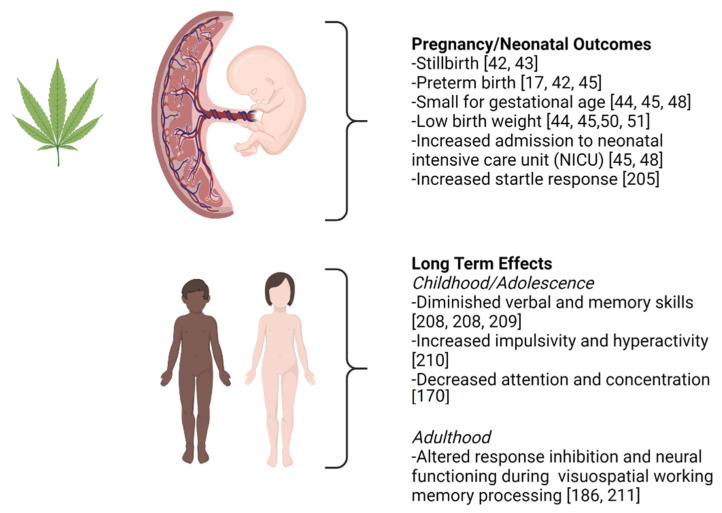
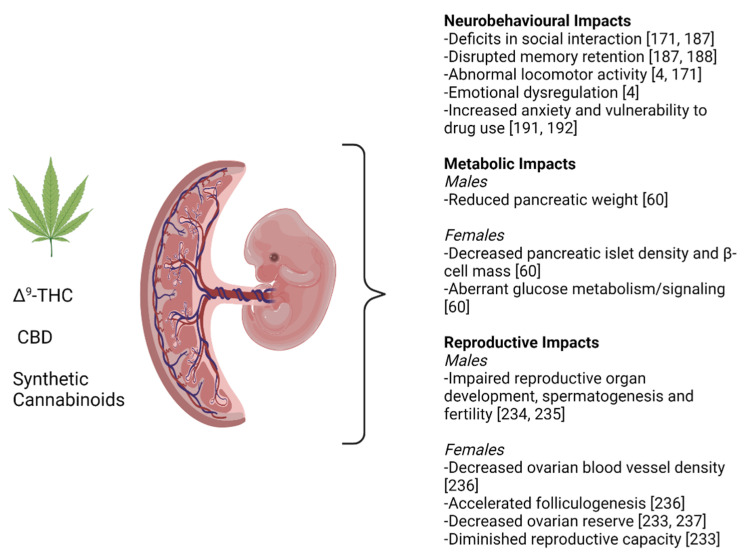
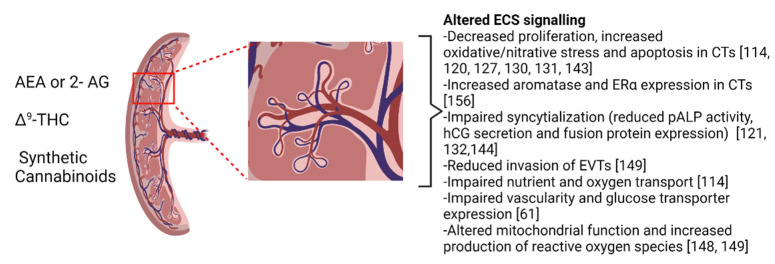
Cannabis use during pregnancy has continued to rise, particularly in developed countries, as a result of the trend towards legalization and lack of consistent, evidence-based knowledge on the matter. While there is conflicting data regarding whether cannabis use during pregnancy leads to adverse outcomes such as stillbirth, preterm birth, low birthweight, or increased admission to neonatal intensive care units, investigations into long-term effects on the offspring's health are limited. Historically, studies have focused on the neurobehavioral effects of prenatal cannabis exposure on the offspring. The effects of cannabis on other physiological aspects of the developing fetus have received less attention. Importantly, our knowledge about cannabinoid signaling in the placenta is also limited. The endocannabinoid system (ECS) is present at early stages of development and represents a potential target for exogenous cannabinoids in utero. The ECS is expressed in a broad range of tissues and influences a spectrum of cellular functions. The aim of this review is to explore the current evidence surrounding the effects of prenatal exposure to cannabinoids and the role of the ECS in the placenta and the developing fetus.
怀孕期间使用大麻的情况持续上升,尤其是在发达国家,这是由于大麻合法化的趋势以及缺乏关于这方面的一致性、基于证据的知识。虽然关于怀孕期间使用大麻是否会导致不良后果,如死产、早产、低出生体重或新生儿重症监护病房入住率增加,存在相互矛盾的数据,但对后代健康的长期影响的调查有限。从历史上看,研究主要集中在产前大麻暴露对后代的神经行为影响上。大麻对发育中胎儿其他生理方面的影响受到的关注较少。重要的是,我们对胎盘中环烷烃信号的了解也很有限。内源性大麻素系统 (ECS) 在发育的早期阶段就存在,并代表了子宫内外源大麻素的潜在靶点。ECS 在广泛的组织中表达,并影响一系列细胞功能。本综述的目的是探讨产前暴露于大麻素的影响以及 ECS 在胎盘和发育中的胎儿中的作用的现有证据。