De Ridder David, Loizeau Andrea Jutta, Sandoval José Luis, Ehrler Frédéric, Perrier Myriam, Ritch Albert, Violot Guillemette, Santolini Marc, Greshake Tzovaras Bastian, Stringhini Silvia, Kaiser Laurent, Pradeau Jean-François, Joost Stéphane, Guessous Idris
Division of Primary Care, Geneva University Hospitals, Geneva, Switzerland.
Department of Health and Community Medicine, Faculty of Medicine, University of Geneva, Geneva, Switzerland.
JMIR Res Protoc. 2021 Oct 6;10(10):e30444. doi: 10.2196/30444.
The early detection of clusters of infectious diseases such as the SARS-CoV-2-related COVID-19 disease can promote timely testing recommendation compliance and help to prevent disease outbreaks. Prior research revealed the potential of COVID-19 participatory syndromic surveillance systems to complement traditional surveillance systems. However, most existing systems did not integrate geographic information at a local scale, which could improve the management of the SARS-CoV-2 pandemic.
The aim of this study is to detect active and emerging spatiotemporal clusters of COVID-19-associated symptoms, and to examine (a posteriori) the association between the clusters' characteristics and sociodemographic and environmental determinants.
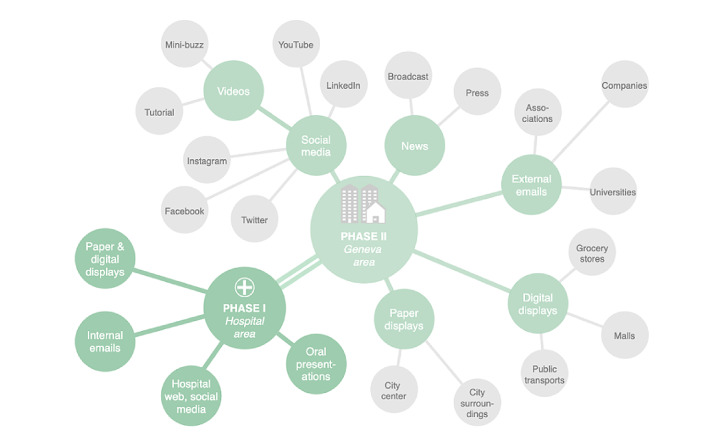
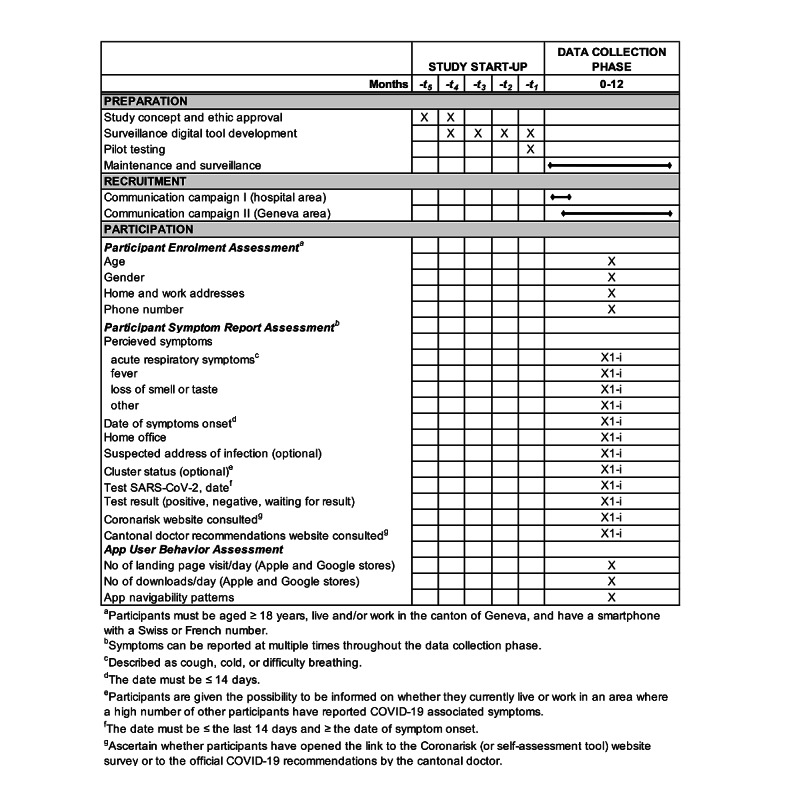
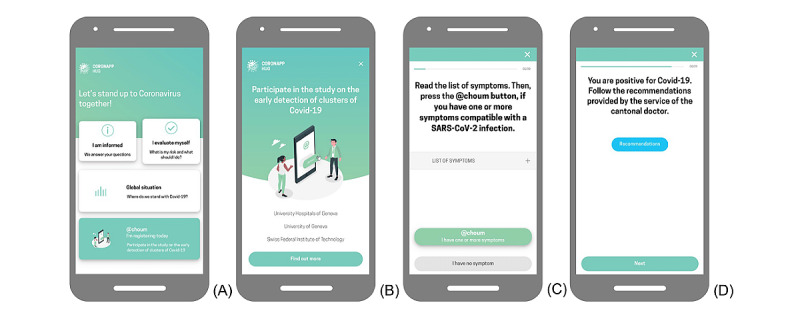
This report presents the methodology and development of the @choum (English: "achoo") study, evaluating an epidemiological digital surveillance tool to detect and prevent clusters of individuals (target sample size, N=5000), aged 18 years or above, with COVID-19-associated symptoms living and/or working in the canton of Geneva, Switzerland. The tool is a 5-minute survey integrated into a free and secure mobile app (CoronApp-HUG). Participants are enrolled through a comprehensive communication campaign conducted throughout the 12-month data collection phase. Participants register to the tool by providing electronic informed consent and nonsensitive information (gender, age, geographically masked addresses). Symptomatic participants can then report COVID-19-associated symptoms at their onset (eg, symptoms type, test date) by tapping on the @choum button. Those who have not yet been tested are offered the possibility to be informed on their cluster status (information returned by daily automated clustering analysis). At each participation step, participants are redirected to the official COVID-19 recommendations websites. Geospatial clustering analyses are performed using the modified space-time density-based spatial clustering of applications with noise (MST-DBSCAN) algorithm.
The study began on September 1, 2020, and will be completed on February 28, 2022. Multiple tests performed at various time points throughout the 5-month preparation phase have helped to improve the tool's user experience and the accuracy of the clustering analyses. A 1-month pilot study performed among 38 pharmacists working in 7 Geneva-based pharmacies confirmed the proper functioning of the tool. Since the tool's launch to the entire population of Geneva on February 11, 2021, data are being collected and clusters are being carefully monitored. The primary study outcomes are expected to be published in mid-2022.
The @choum study evaluates an innovative participatory epidemiological digital surveillance tool to detect and prevent clusters of COVID-19-associated symptoms. @choum collects precise geographic information while protecting the user's privacy by using geomasking methods. By providing an evidence base to inform citizens and local authorities on areas potentially facing a high COVID-19 burden, the tool supports the targeted allocation of public health resources and promotes testing.
INTERNATIONAL REGISTERED REPORT IDENTIFIER (IRRID): DERR1-10.2196/30444.
早期发现诸如与严重急性呼吸综合征冠状病毒2(SARS-CoV-2)相关的冠状病毒病(COVID-19)等传染病聚集性病例,可促使及时遵循检测建议,并有助于预防疾病暴发。先前的研究揭示了COVID-19参与性症状监测系统对传统监测系统的补充潜力。然而,大多数现有系统未整合局部尺度的地理信息,而这有助于改善SARS-CoV-2大流行的管理。
本研究旨在检测COVID-19相关症状的活跃和新出现的时空聚集性病例,并(事后)检查聚集性病例特征与社会人口学及环境决定因素之间的关联。
本报告介绍了@choum(英文:“阿嚏”)研究的方法和开展情况,该研究评估了一种流行病学数字监测工具,以检测和预防年龄在18岁及以上、在瑞士日内瓦州生活和/或工作且有COVID-19相关症状的个体聚集性病例(目标样本量N = 5000)。该工具是一项融入免费且安全的移动应用程序(CoronApp-HUG)的5分钟调查。参与者通过在为期12个月的数据收集阶段开展的全面宣传活动进行招募。参与者通过提供电子知情同意书和非敏感信息(性别、年龄、地理掩码地址)注册该工具。有症状的参与者随后可通过点击@choum按钮报告COVID-19相关症状的发作情况(如症状类型、检测日期)。尚未接受检测的参与者可了解其聚集性病例状态(每日自动聚类分析返回的信息)。在每个参与步骤,参与者都会被重定向到官方COVID-19建议网站。使用改进的基于时空密度的带噪声空间聚类(MST-DBSCAN)算法进行地理空间聚类分析。
该研究于2020年9月1日开始,将于2022年2月28日完成。在为期5个月的准备阶段的各个时间点进行的多次测试有助于改善该工具的用户体验和聚类分析的准确性。在日内瓦7家药店工作的38名药剂师中进行的为期1个月的试点研究证实了该工具的正常运行。自该工具于2021年2月11日向日内瓦全体民众推出以来,一直在收集数据并仔细监测聚集性病例。主要研究结果预计将于2022年年中发表。
@choum研究评估了一种创新性的参与性流行病学数字监测工具,以检测和预防COVID-19相关症状的聚集性病例。@choum收集精确的地理信息,同时通过使用地理掩码方法保护用户隐私。通过提供证据基础,以便向公民和地方当局通报可能面临高COVID-19负担的地区,该工具支持公共卫生资源的针对性分配并促进检测。
国际注册报告识别码(IRRID):DERR1-10.2196/30444。