Yang Tsung-Ying, Tseng Sung-Pin, Dlamini Heather Nokulunga, Lu Po-Liang, Lin Lin, Wang Liang-Chun, Hung Wei-Chun
Department of Medical Laboratory Science and Biotechnology, College of Health Sciences, Kaohsiung Medical University, Kaohsiung 807, Taiwan.
Department of Marine Biotechnology and Resources, National Sun Yat-sen University, Kaohsiung 80424, Taiwan.
Pharmaceuticals (Basel). 2021 Aug 21;14(8):823. doi: 10.3390/ph14080823.
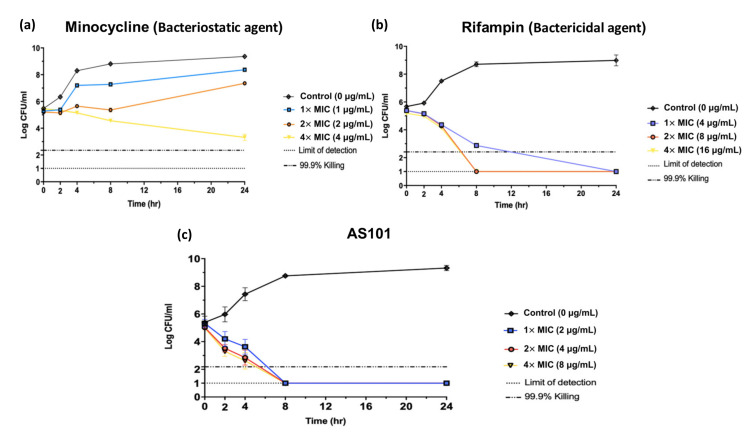
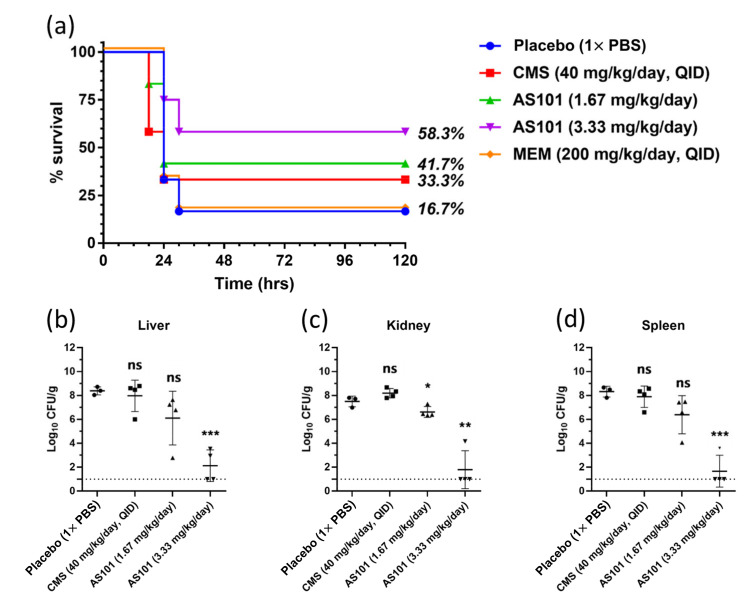
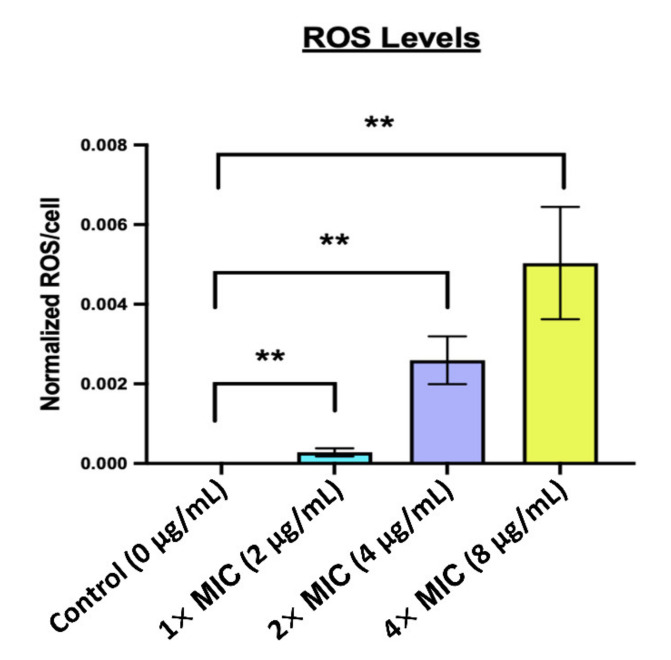
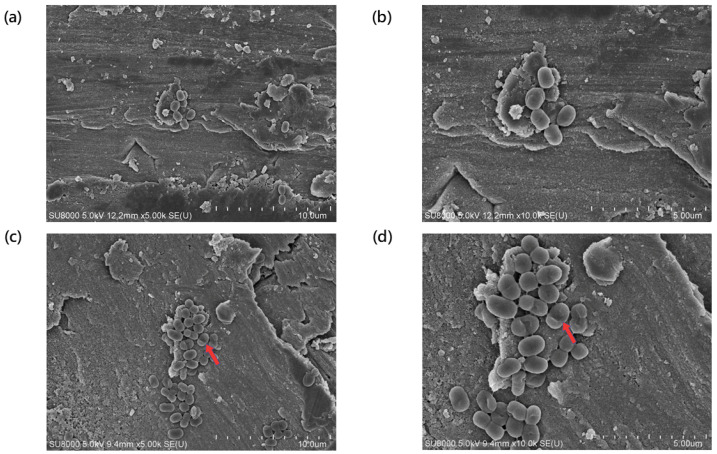
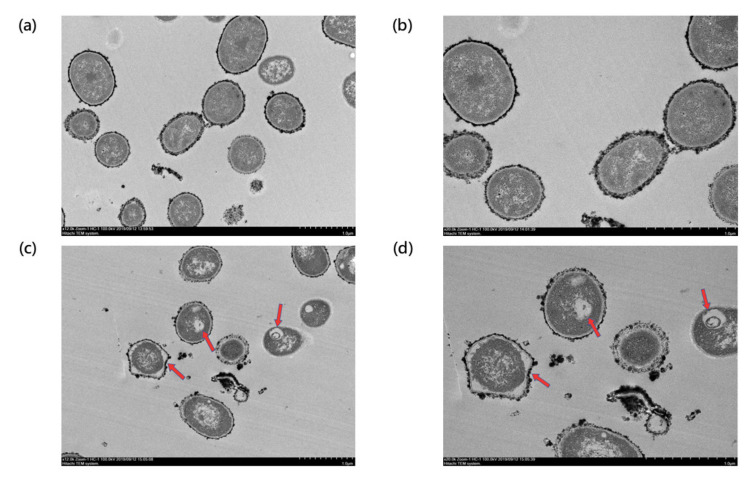
The increasing trend of carbapenem-resistant (CRAB) worldwide has become a concern, limiting therapeutic alternatives and increasing morbidity and mortality rates. The immunomodulation agent ammonium trichloro (dioxoethylene-O,O'-) tellurate (AS101) was repurposed as an antimicrobial agent against CRAB. Between 2016 and 2018, 27 CRAB clinical isolates were collected in Taiwan. The in vitro antibacterial activities of AS101 were evaluated using broth microdilution, time-kill assay, reactive oxygen species (ROS) detection and electron microscopy. In vivo effectiveness was assessed using a sepsis mouse infection model. The MIC range of AS101 for 27 CRAB isolates was from 0.5 to 32 µg/mL, which is below its 50% cytotoxicity (approximately 150 µg/mL). Bactericidal activity was confirmed using a time-kill assay. The antibacterial mechanism of AS101 was the accumulation of the ROS and the disruption of the cell membrane, which, in turn, results in cell death. The carbapenemase-producing mouse sepsis model showed that AS101 was a better therapeutic effect than colistin. The mice survival rate after 120 h was 33% (4/12) in the colistin-treated group and 58% (7/12) in the high-dose AS101 (3.33 mg/kg/day) group. Furthermore, high-dose AS101 significantly decreased bacterial population in the liver, kidney and spleen (all < 0.001). These findings support the concept that AS101 is an ideal candidate for further testing in future studies.
全球范围内耐碳青霉烯类鲍曼不动杆菌(CRAB)感染呈上升趋势,这一现象令人担忧,因为它限制了治疗选择,并增加了发病率和死亡率。免疫调节剂三氯(二氧乙烯-O,O'-)碲酸铵(AS101)被重新用作抗CRAB的抗菌剂。2016年至2018年期间,在台湾收集了27株CRAB临床分离株。使用肉汤微量稀释法、时间杀菌试验、活性氧(ROS)检测和电子显微镜评估了AS101的体外抗菌活性。使用败血症小鼠感染模型评估体内有效性。AS101对27株CRAB分离株的MIC范围为0.5至32μg/mL,低于其50%细胞毒性(约150μg/mL)。通过时间杀菌试验证实了杀菌活性。AS101的抗菌机制是ROS的积累和细胞膜的破坏,进而导致细胞死亡。产碳青霉烯酶小鼠败血症模型表明,AS101的治疗效果优于黏菌素。黏菌素治疗组120小时后的小鼠存活率为33%(4/12),高剂量AS101(3.33mg/kg/天)组为58%(7/12)。此外,高剂量AS101显著降低了肝脏、肾脏和脾脏中的细菌数量(均<0.001)。这些发现支持了AS101是未来研究中进一步测试的理想候选药物这一概念。