Department of Microbiology, Immunology and Biochemistry, The University of Tennessee Health Science Center, Memphis, TN 38163, USA.
Department of Clinical Pharmacy and Translational Sciences, The University of Tennessee Health Science Center, Memphis, TN 38163, USA.
Viruses. 2021 Jul 31;13(8):1509. doi: 10.3390/v13081509.
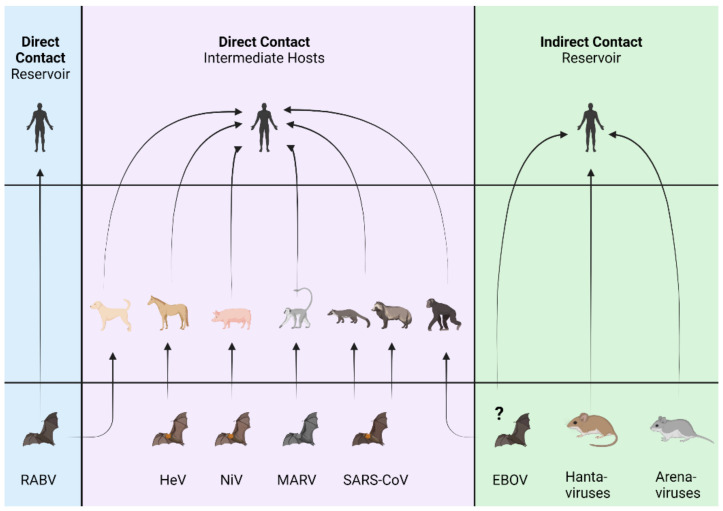
Rodents (order Rodentia), followed by bats (order Chiroptera), comprise the largest percentage of living mammals on earth. Thus, it is not surprising that these two orders account for many of the reservoirs of the zoonotic RNA viruses discovered to date. The spillover of these viruses from wildlife to human do not typically result in pandemics but rather geographically confined outbreaks of human infection and disease. While limited geographically, these viruses cause thousands of cases of human disease each year. In this review, we focus on three questions regarding zoonotic viruses that originate in bats and rodents. First, what biological strategies have evolved that allow RNA viruses to reside in bats and rodents? Second, what are the environmental and ecological causes that drive viral spillover? Third, how does virus spillover occur from bats and rodents to humans?
啮齿动物(目 Rodentia)和蝙蝠(目 Chiroptera)是地球上现存哺乳动物中数量最多的两个目。因此,毫不奇怪,这两个目是迄今为止发现的许多人畜共患 RNA 病毒的宿主。这些病毒从野生动物向人类溢出通常不会导致大流行,而是导致人类感染和疾病的地理上有限的爆发。虽然这些病毒在地理上是有限的,但每年都会导致数千例人类疾病。在这篇综述中,我们重点关注起源于蝙蝠和啮齿动物的人畜共患病毒的三个问题。首先,哪些生物学策略允许 RNA 病毒在蝙蝠和啮齿动物中生存?其次,是什么环境和生态因素导致病毒溢出?第三,病毒如何从蝙蝠和啮齿动物溢出到人类?