Zou Mengqiang, Liao Changrui, Liu Shen, Xiong Cong, Zhao Cong, Zhao Jinlai, Gan Zongsong, Chen Yanping, Yang Kaiming, Liu Dan, Wang Ying, Wang Yiping
Key Laboratory of Optoelectronic Devices and Systems of Ministry of Education/GuangDong Province, College of Physics and Optoelectronic Engineering, Shenzhen University, Shenzhen, 518060, China.
Shenzhen Key Laboratory of Photonic Devices and Sensing Systems for Internet of Things, Guangdong and Hong Kong Joint Research Centre for Optical Fibre Sensors, Shenzhen University, Shenzhen, 518060, China.
Light Sci Appl. 2021 Aug 27;10(1):171. doi: 10.1038/s41377-021-00611-9.
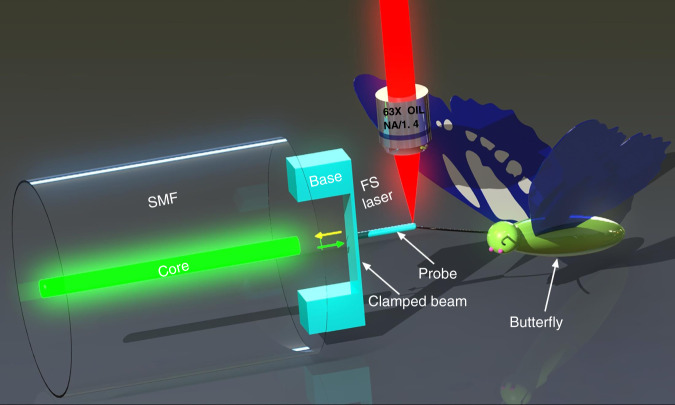
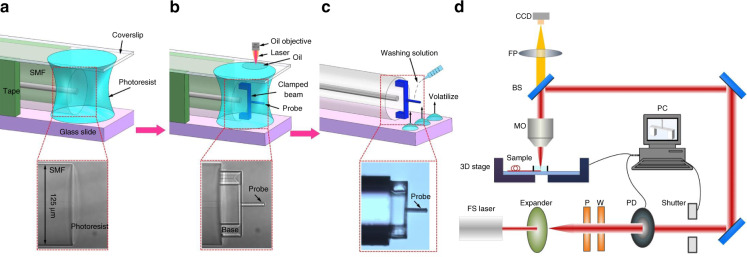
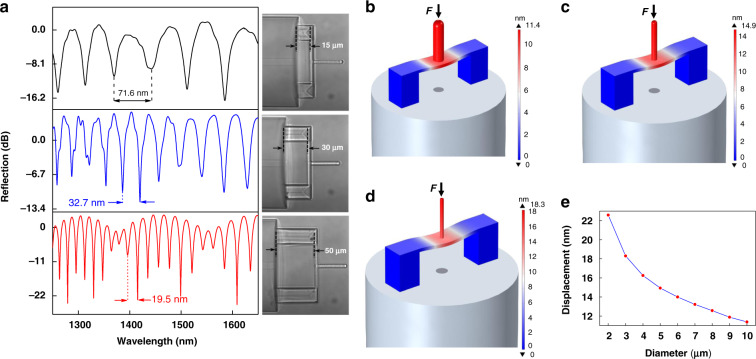
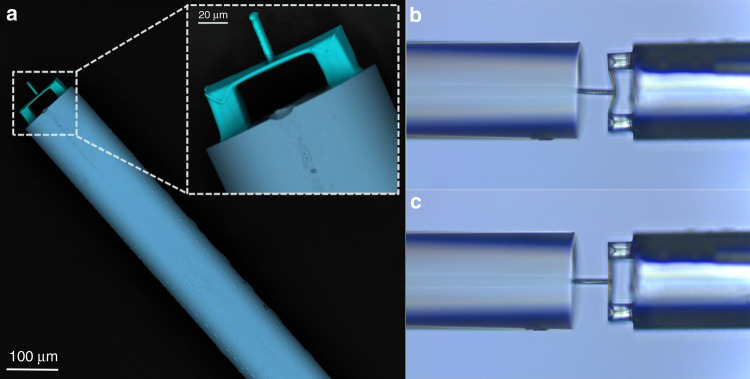
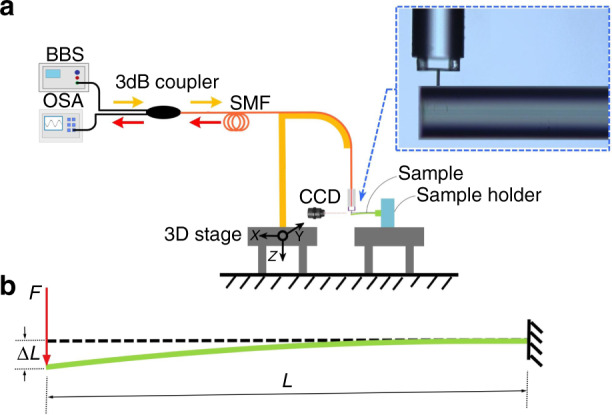
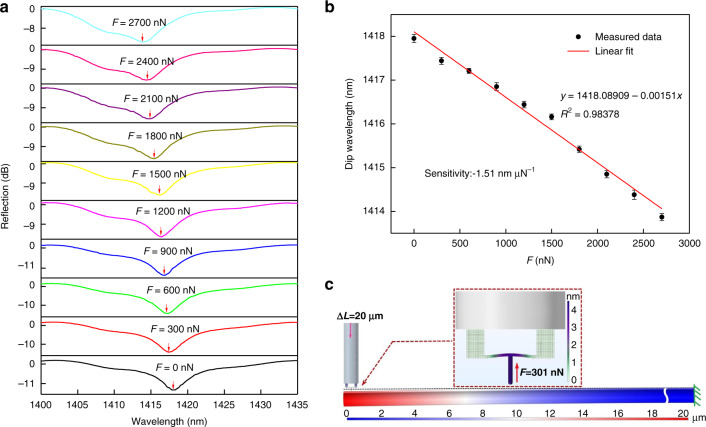
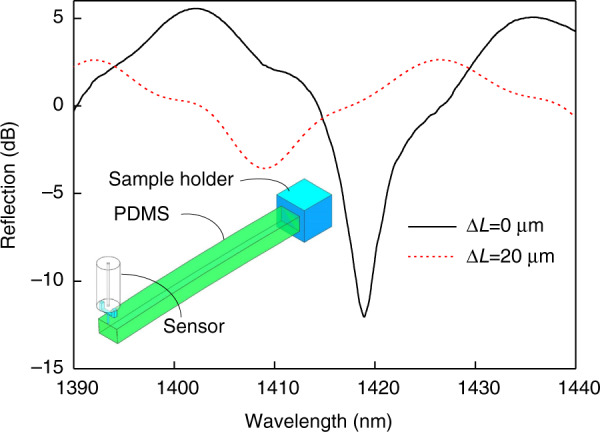
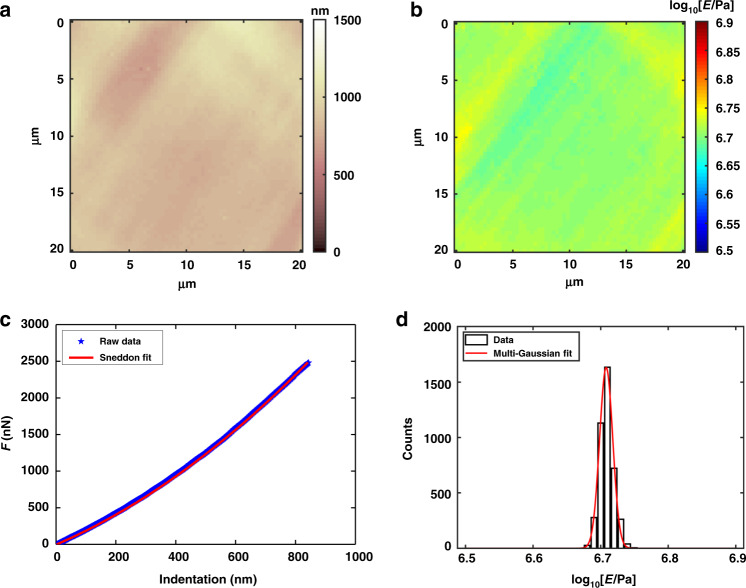
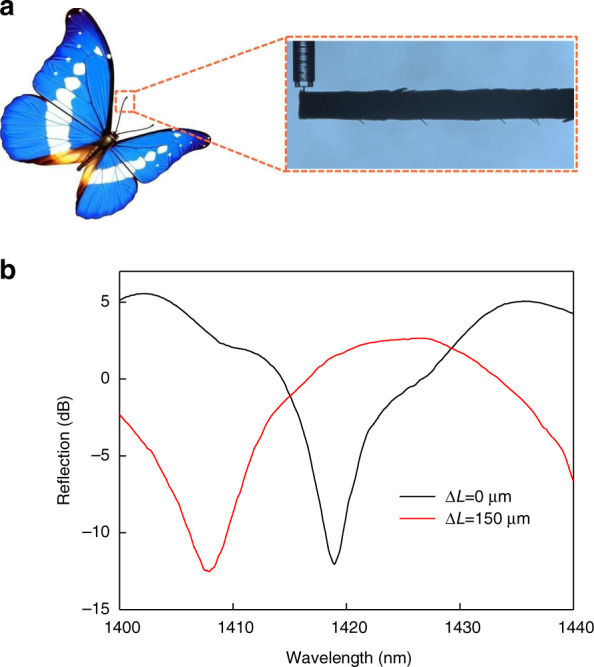
Micromanipulation and biological, material science, and medical applications often require to control or measure the forces asserted on small objects. Here, we demonstrate for the first time the microprinting of a novel fiber-tip-polymer clamped-beam probe micro-force sensor for the examination of biological samples. The proposed sensor consists of two bases, a clamped beam, and a force-sensing probe, which were developed using a femtosecond-laser-induced two-photon polymerization (TPP) technique. Based on the finite element method (FEM), the static performance of the structure was simulated to provide the basis for the structural design. A miniature all-fiber micro-force sensor of this type exhibited an ultrahigh force sensitivity of 1.51 nm μN, a detection limit of 54.9 nN, and an unambiguous sensor measurement range of ~2.9 mN. The Young's modulus of polydimethylsiloxane, a butterfly feeler, and human hair were successfully measured with the proposed sensor. To the best of our knowledge, this fiber sensor has the smallest force-detection limit in direct contact mode reported to date, comparable to that of an atomic force microscope (AFM). This approach opens new avenues towards the realization of small-footprint AFMs that could be easily adapted for use in outside specialized laboratories. As such, we believe that this device will be beneficial for high-precision biomedical and material science examination, and the proposed fabrication method provides a new route for the next generation of research on complex fiber-integrated polymer devices.
微观操作以及生物、材料科学和医学应用常常需要控制或测量施加在小物体上的力。在此,我们首次展示了一种用于生物样品检测的新型光纤尖端聚合物悬臂梁探针微力传感器的微打印技术。所提出的传感器由两个基座、一个悬臂梁和一个力传感探针组成,它们是使用飞秒激光诱导双光子聚合(TPP)技术开发的。基于有限元方法(FEM),对该结构的静态性能进行了模拟,为结构设计提供了依据。这种微型全光纤微力传感器表现出1.51 nm/μN的超高力灵敏度、54.9 nN的检测限和约2.9 mN的明确传感器测量范围。利用所提出的传感器成功测量了聚二甲基硅氧烷、蝴蝶触角和人类头发的杨氏模量。据我们所知,这种光纤传感器在直接接触模式下具有迄今为止报道的最小力检测限,与原子力显微镜(AFM)相当。这种方法为实现小尺寸原子力显微镜开辟了新途径,这种显微镜可以很容易地适用于专门实验室之外的环境。因此,我们相信这种设备将有利于高精度生物医学和材料科学检测,并且所提出的制造方法为下一代复杂光纤集成聚合物设备的研究提供了一条新途径。