Department of Physics, Washington University in St. Louis, St. Louis, MO, USA.
Neuroscience Research Institute, University of California, Santa Barbara, CA, USA.
Nat Commun. 2021 Aug 27;12(1):5170. doi: 10.1038/s41467-021-25437-2.
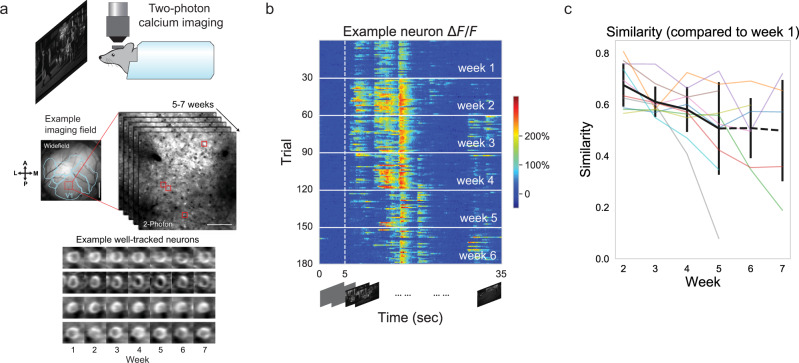
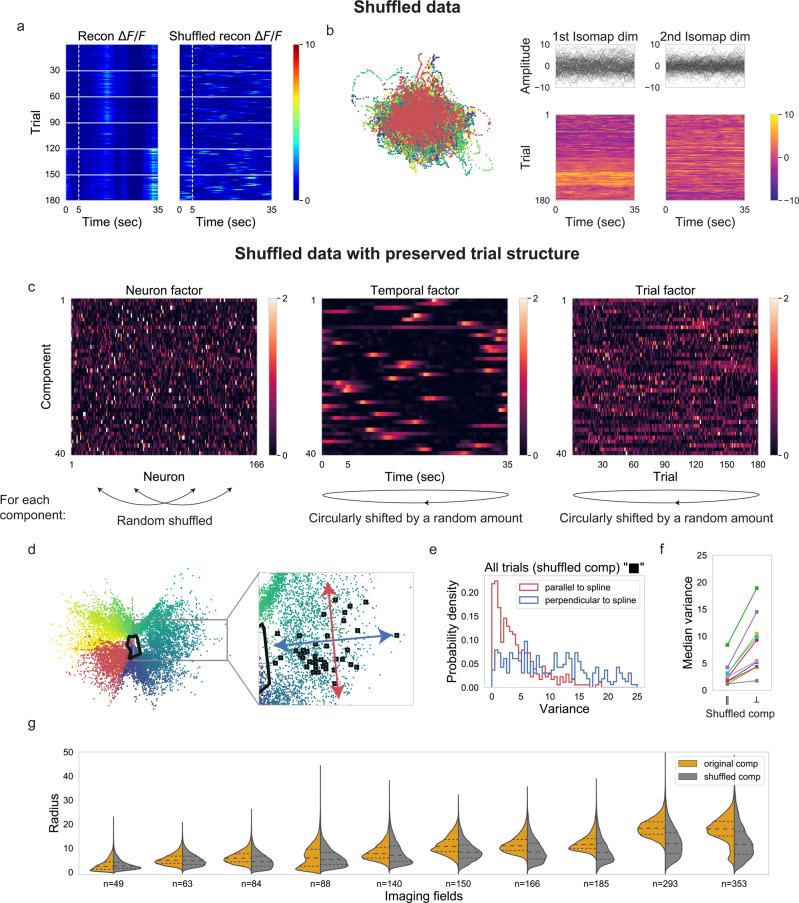
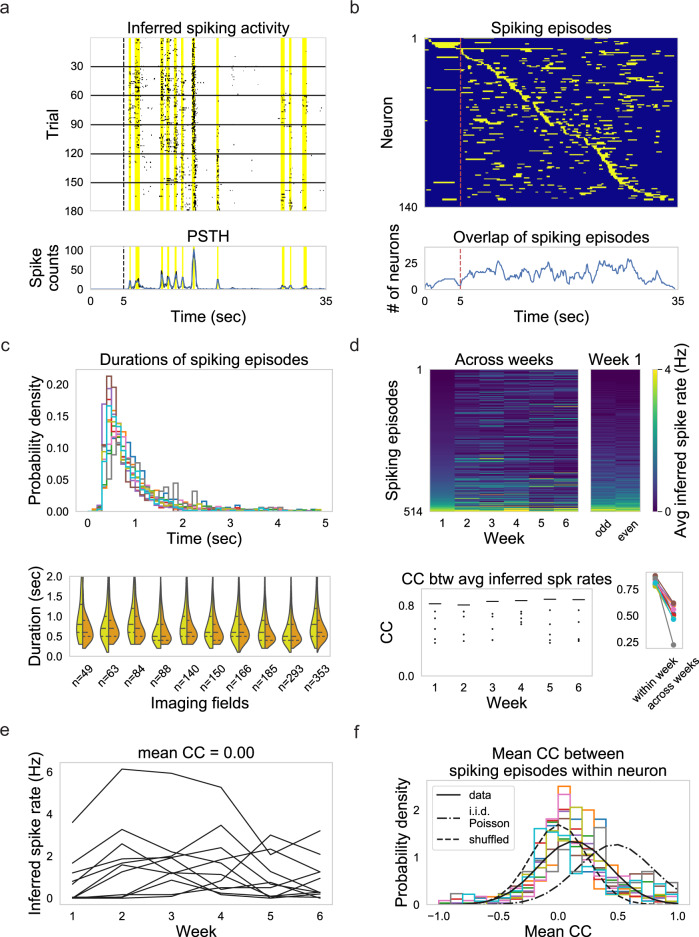
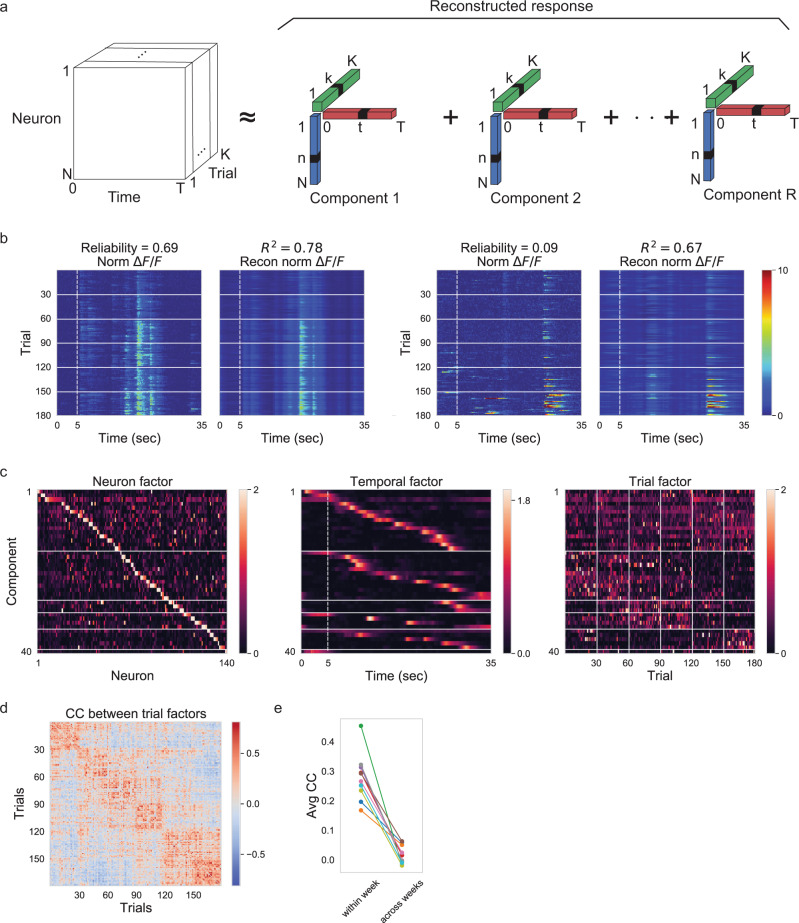
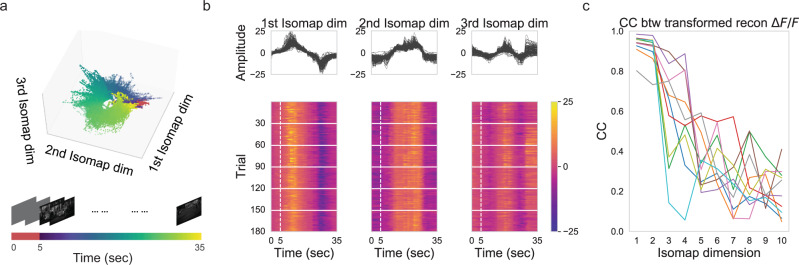
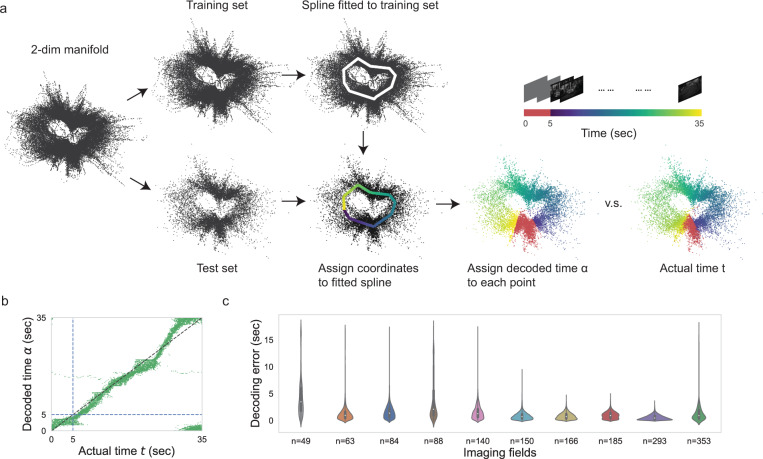
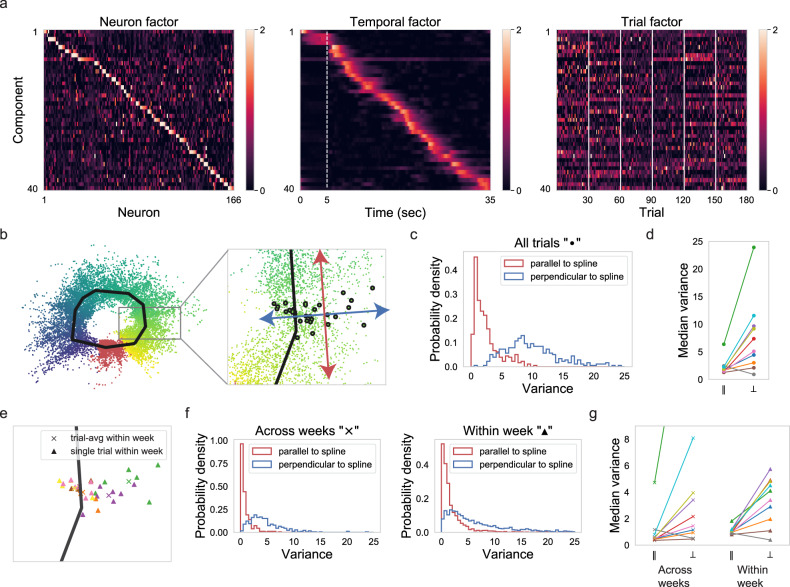
Visual cortical responses are known to be highly variable across trials within an experimental session. However, the long-term stability of visual cortical responses is poorly understood. Here using chronic imaging of V1 in mice we show that neural responses to repeated natural movie clips are unstable across weeks. Individual neuronal responses consist of sparse episodic activity which are stable in time but unstable in gain across weeks. Further, we find that the individual episode, instead of neuron, serves as the basic unit of the week-to-week fluctuation. To investigate how population activity encodes the stimulus, we extract a stable one-dimensional representation of the time in the natural movie, using an unsupervised method. Most week-to-week fluctuation is perpendicular to the stimulus encoding direction, thus leaving the stimulus representation largely unaffected. We propose that precise episodic activity with coordinated gain changes are keys to maintain a stable stimulus representation in V1.
视觉皮层反应在实验过程中多次试验内具有高度可变性。然而,视觉皮层反应的长期稳定性尚不清楚。在这里,我们使用慢性成像技术研究了小鼠的 V1,结果表明,对重复的自然电影片段的神经反应在数周内不稳定。单个神经元的反应由稀疏的偶发性活动组成,这些活动在时间上是稳定的,但在增益上是不稳定的。此外,我们发现个体事件而不是神经元是周际波动的基本单位。为了研究群体活动如何对刺激进行编码,我们使用无监督的方法提取自然电影中时间的稳定一维表示。大多数周际波动与刺激编码方向垂直,因此,刺激表示基本不受影响。我们提出,精确的偶发性活动和协调的增益变化是在 V1 中保持稳定刺激表示的关键。