Elzayat Mahmoud T, Markofski Melissa M, Simpson Richard J, Laughlin Mitzi, LaVoy Emily C
Department of Health and Human Performance, University of Houston, Houston, TX, United States.
Department of Nutritional Sciences, College of Agriculture and Life Sciences, University of Arizona, Tucson, AZ, United States.
Front Physiol. 2021 Aug 12;12:713183. doi: 10.3389/fphys.2021.713183. eCollection 2021.
Older adults are at elevated risk for morbidity and mortality caused by influenza. Vaccination is the primary means of prophylaxis, but protection is often compromised in older adults. As resistance exercise mobilizes immune cells into muscle, it may enhance vaccination response.
Compare antibody and cell mediated immune responses to influenza vaccination in older adults who performed eccentric resistance exercise immediately prior to vaccination to those who did not exercise.
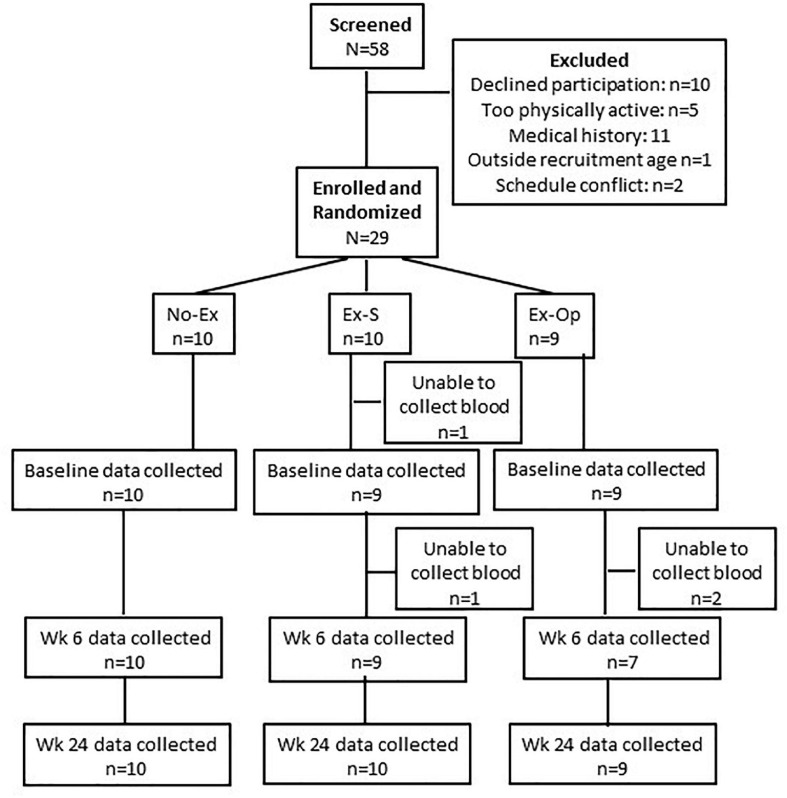
Twenty nine resistance training-naive older adults (20 women, 73.9 ± 5.3 years) were randomized to 1 of 3 groups: vaccination in the same arm that exercised (Ex-S), vaccination in the opposite arm that exercised (Ex-Op), and seated rest (No-Ex). Exercise consisted of 10 sets of 5 eccentric unilateral repetitions at 80% of the pre-determined concentric one repetition maximum. Lateral raises were alternated with bicep curls. No-Ex sat quietly for 25 min. Following exercise or rest, all received the 2018 quadrivalent influenza vaccine (Seqirus Afluria) in the non-dominant deltoid. Antibody titers against each influenza vaccine strain were determined by hemagglutinin inhibition assays at baseline, 6-, and 24-weeks post-vaccination. Influenza-specific T cells were quantified after stimulation with the vaccine by intracellular cytokine staining.
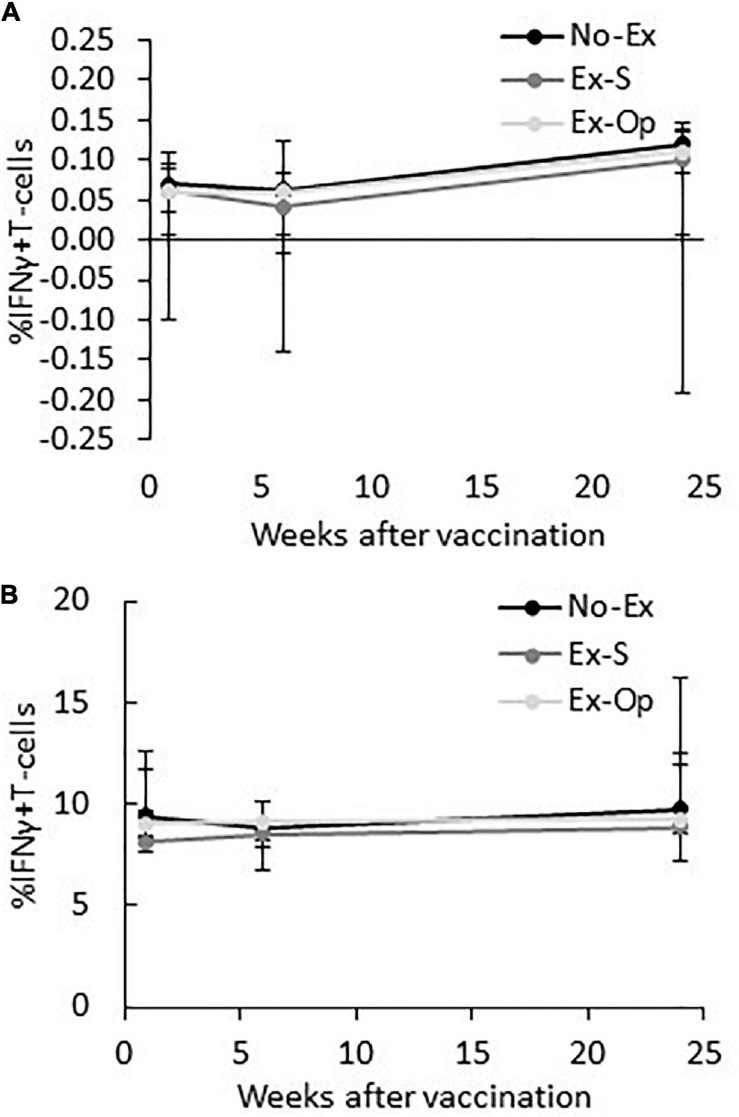
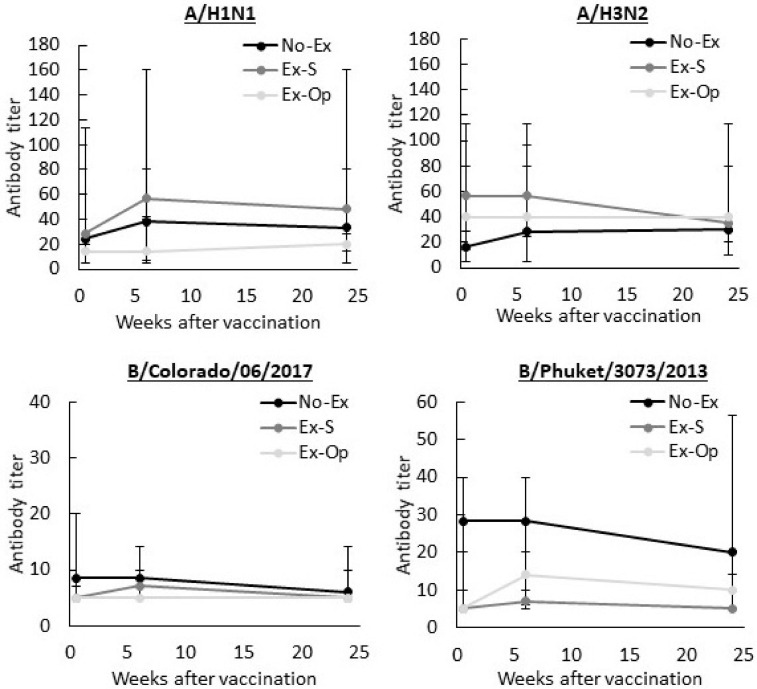
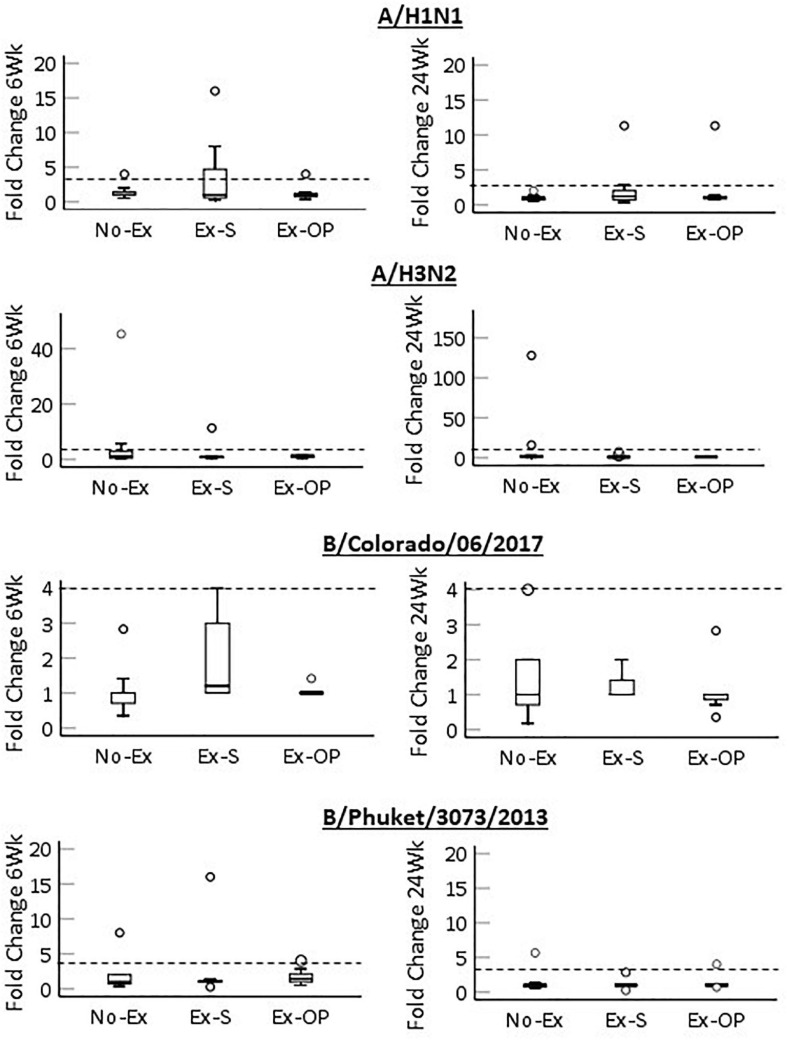
No significant group x time effects were found in antibody responses to any strain (interaction for A/H1N1: = 0.682; A/H3N2: = 0.644; B/Colorado/06/2017: = 0.262; B/Phuket/3073/2013: = 0.851). Groups did not differ in fold-increase of antibody titers 6- and 24-weeks post-vaccination. Influenza-specific T-cells did not differ between groups at any time (comparison at baseline: = 0.985; 6-weeks: = 0.889; 24 weeks: = 0.857). One subject (Ex-S) reported flu-like symptoms 18 weeks post-vaccination.
Acute arm eccentric exercise did not influence antibody titers or cell mediated immune responses to the influenza vaccine delivered post-exercise in older adults. More strenuous exercise may be required for exercise to act as an adjuvant. ClinicalTrials.gov Identifier: NCT03736759.
老年人因流感导致发病和死亡的风险较高。接种疫苗是预防的主要手段,但在老年人中保护效果往往会受到影响。由于抗阻运动能将免疫细胞动员到肌肉中,它可能会增强疫苗接种反应。
比较在接种流感疫苗前立即进行离心抗阻运动的老年人与未运动的老年人对流感疫苗的抗体和细胞介导免疫反应。
29名从未进行过抗阻训练的老年人(20名女性,73.9±5.3岁)被随机分为3组中的1组:在运动手臂接种疫苗(Ex-S)、在对侧运动手臂接种疫苗(Ex-Op)和坐着休息(No-Ex)。运动包括以预先确定的一次最大向心收缩力量的80%进行10组,每组5次离心单侧重复动作。侧平举与二头肌弯举交替进行。No-Ex组安静坐25分钟。运动或休息后,所有人在非优势三角肌接种2018年四价流感疫苗(Seqirus Afluria)。在基线、接种疫苗后6周和24周通过血凝抑制试验测定针对每种流感疫苗毒株的抗体滴度。通过细胞内细胞因子染色在疫苗刺激后对流感特异性T细胞进行定量。
对于任何毒株,在抗体反应中均未发现显著的组×时间效应(A/H1N1的交互作用: = 0.682;A/H3N2: = 0.644;B/科罗拉多/06/2017: = 0.262;B/普吉特/3073/2013: = 0.851)。接种疫苗后6周和24周,各组抗体滴度的增加倍数没有差异。在任何时间点,各组之间的流感特异性T细胞均无差异(基线时比较: = 0.985;6周时: = 0.889;24周时: = 0.857)。一名受试者(Ex-S)在接种疫苗后18周报告了类似流感的症状。
急性手臂离心运动不会影响老年人运动后接种的流感疫苗的抗体滴度或细胞介导免疫反应。可能需要更剧烈的运动才能使运动起到佐剂作用。ClinicalTrials.gov标识符:NCT03736759。