Department of Laboratory Medicine and Pathobiology, Temerty Faculty of Medicine, University of Toronto, Toronto, Ontario, Canada.
Université de Paris, Institut Cochin, Institut National de la Santé et de la Recherche Médicale, Centre National de la Recherche Scientifique, Paris, France.
J Cell Biol. 2021 Oct 4;220(10). doi: 10.1083/jcb.202102146. Epub 2021 Aug 30.
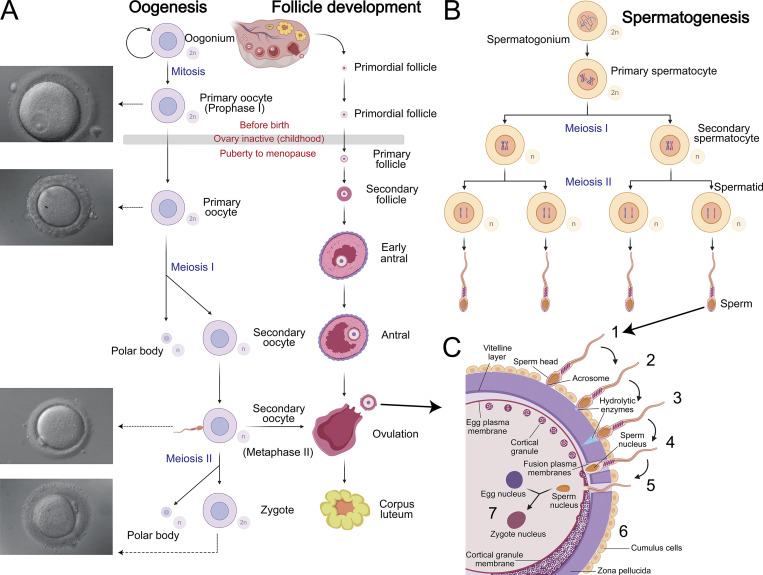
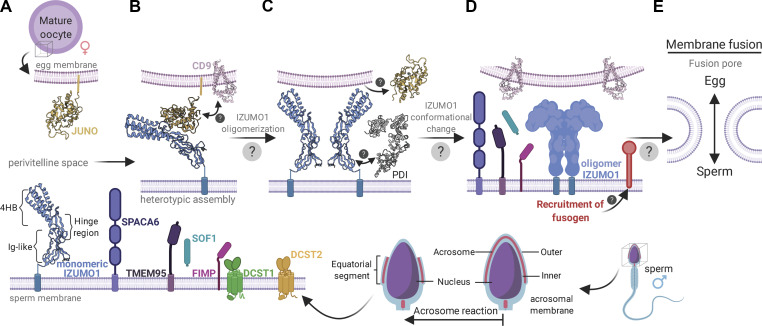
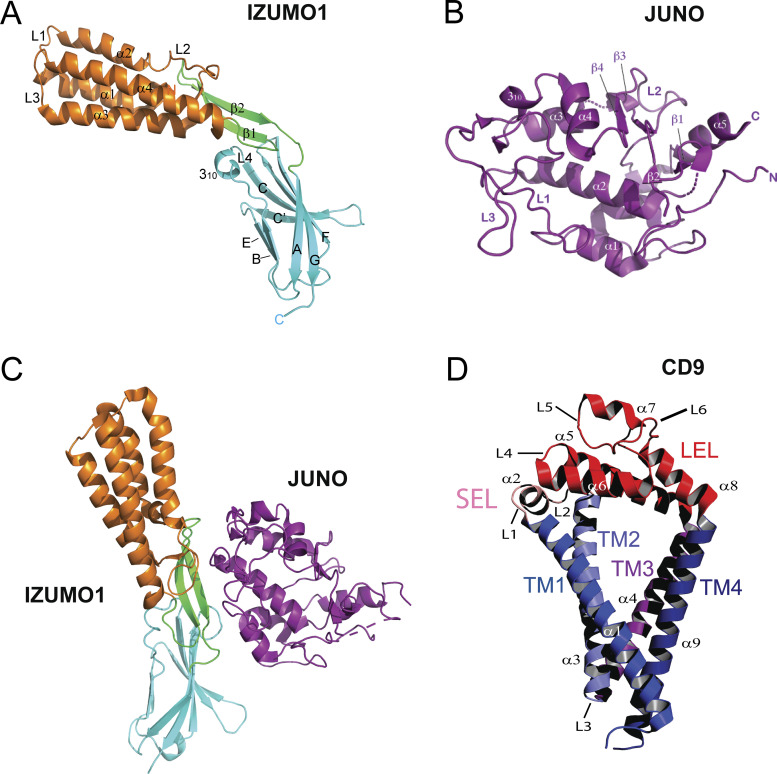
Fertilization is defined as the union of two gametes. During fertilization, sperm and egg fuse to form a diploid zygote to initiate prenatal development. In mammals, fertilization involves multiple ordered steps, including the acrosome reaction, zona pellucida penetration, sperm-egg attachment, and membrane fusion. Given the success of in vitro fertilization, one would think that the mechanisms of fertilization are understood; however, the precise details for many of the steps in fertilization remain a mystery. Recent studies using genetic knockout mouse models and structural biology are providing valuable insight into the molecular basis of sperm-egg attachment and fusion. Here, we review the cell biology of fertilization, specifically summarizing data from recent structural and functional studies that provide insights into the interactions involved in human gamete attachment and fusion.
受精被定义为两个配子的结合。受精过程中,精子和卵子融合形成二倍体受精卵,从而启动产前发育。在哺乳动物中,受精涉及多个有序步骤,包括顶体反应、透明带穿透、精子-卵子结合和膜融合。鉴于体外受精的成功,人们可能会认为受精机制已经被理解;然而,受精过程中的许多步骤的确切细节仍然是个谜。最近使用遗传敲除小鼠模型和结构生物学的研究为精子-卵子结合和融合的分子基础提供了有价值的见解。在这里,我们综述了受精的细胞生物学,特别是总结了最近的结构和功能研究数据,这些数据为人类配子结合和融合所涉及的相互作用提供了深入了解。