
一种用于磁共振成像(MRI)系统质量控制的自动化方法:方法与考量
An Automated Method for Quality Control in MRI Systems: Methods and Considerations.
作者信息
Epistatou Angeliki C, Tsalafoutas Ioannis A, Delibasis Konstantinos K
机构信息
Department of Computer Science and Biomedical Informatics, University of Thessaly, 35131 Lamia, Greece.
Occupational Health and Safety Department, Radiation Safety Section, Hamad Medical Corporation, Doha P.O. Box 3050, Qatar.
出版信息
J Imaging. 2020 Oct 18;6(10):111. doi: 10.3390/jimaging6100111.
OBJECTIVE
The purpose of this study was to develop an automated method for performing quality control (QC) tests in magnetic resonance imaging (MRI) systems, investigate the effect of different definitions of QC parameters and its sensitivity with respect to variations in regions of interest (ROI) positioning, and validate the reliability of the automated method by comparison with results from manual evaluations.
MATERIALS AND METHODS
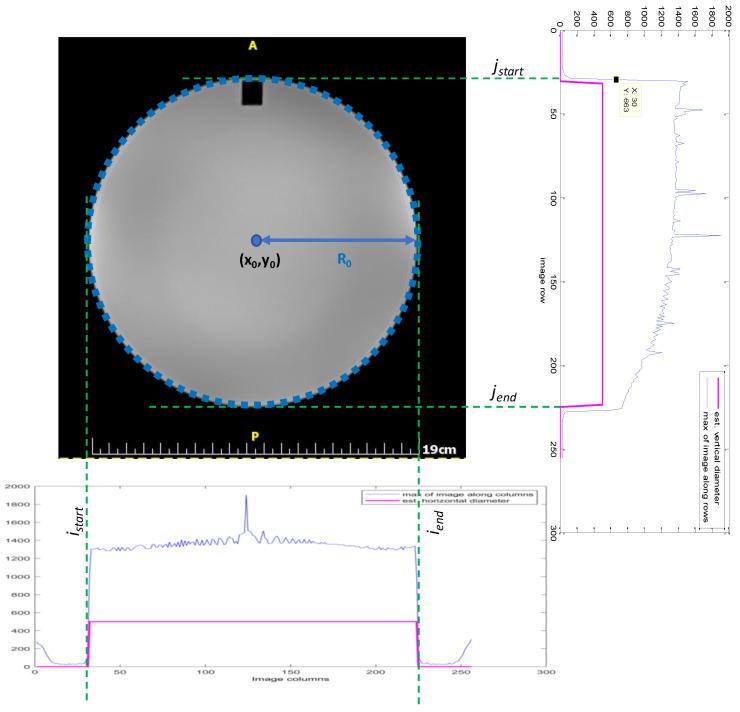
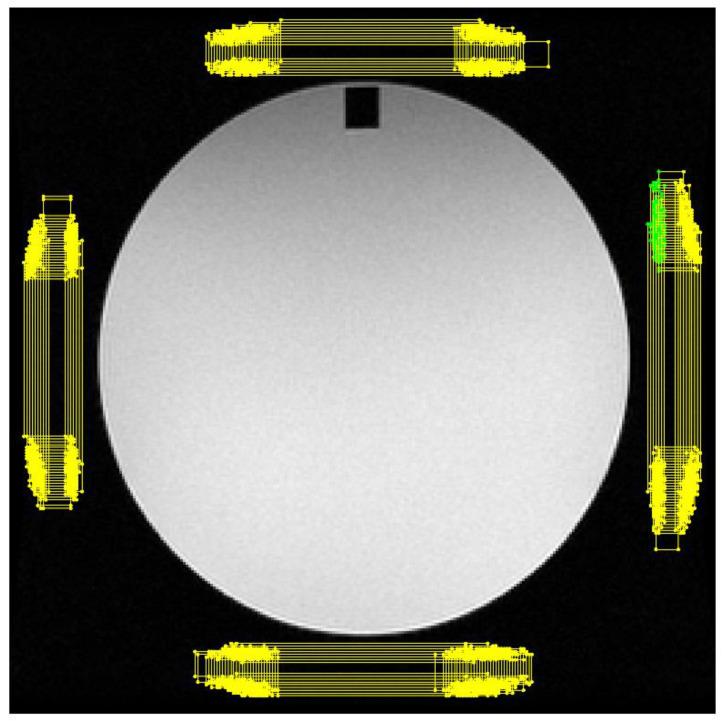
Magnetic Resonance imaging MRI used for acceptance and routine QC tests from five MRI systems were selected. All QC tests were performed using the American College of Radiology (ACR) MRI accreditation phantom. The only selection criterion was that in the same QC test, images from two identical sequential sequences should be available. The study was focused on four QC parameters: percent signal ghosting (PSG), percent image uniformity (PIU), signal-to-noise ratio (SNR), and SNR uniformity (SNRU), whose values are calculated using the mean signal and the standard deviation of ROIs defined within the phantom image or in the background. The variability of manual ROIs placement was emulated by the software using random variables that follow appropriate normal distributions.
RESULTS
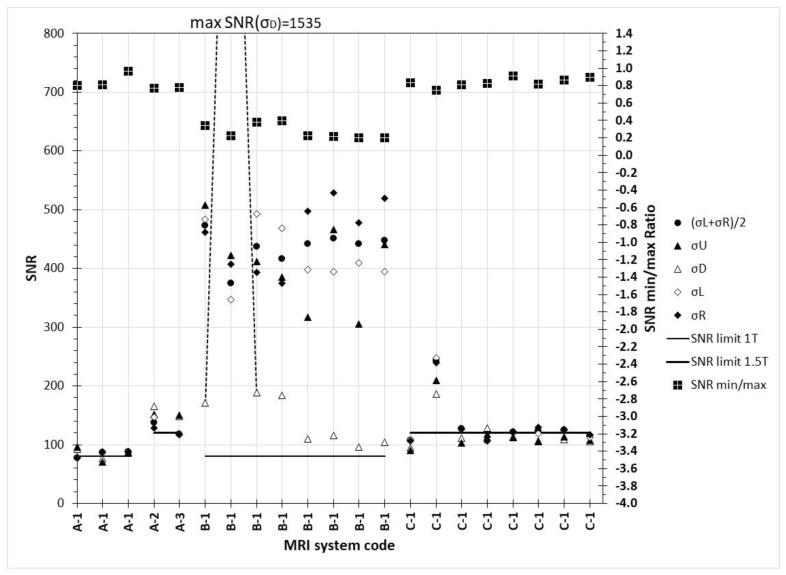
Twenty-one paired sequences were employed. The automated test results for PIU were in good agreement with manual results. However, the PSG values were found to vary depending on the selection of ROIs with respect to the phantom. The values of SNR and SNRU also vary significantly, depending on the combination of the two out of the four standard rectangular ROIs. Furthermore, the methodology used for SNR and SNRU calculation also had significant effect on the results.
CONCLUSIONS
The automated method standardizes the position of ROIs with respect to the ACR phantom image and allows for reproducible QC results.
目的
本研究的目的是开发一种用于在磁共振成像(MRI)系统中执行质量控制(QC)测试的自动化方法,研究QC参数不同定义的影响及其对感兴趣区域(ROI)定位变化的敏感性,并通过与手动评估结果进行比较来验证该自动化方法的可靠性。
材料与方法
选择了用于五个MRI系统验收和常规QC测试的磁共振成像(MRI)。所有QC测试均使用美国放射学会(ACR)MRI认证体模进行。唯一的选择标准是在相同的QC测试中,应可获得来自两个相同连续序列的图像。该研究集中于四个QC参数:信号重影百分比(PSG)、图像均匀性百分比(PIU)、信噪比(SNR)和SNR均匀性(SNRU),其值使用体模图像或背景中定义的ROI的平均信号和标准偏差来计算。软件使用遵循适当正态分布的随机变量模拟手动ROI放置的变异性。
结果
采用了21对序列。PIU的自动化测试结果与手动结果高度一致。然而,发现PSG值会因相对于体模的ROI选择而异。SNR和SNRU的值也有显著变化,这取决于四个标准矩形ROI中的两个的组合。此外,用于计算SNR和SNRU的方法对结果也有显著影响。
结论
该自动化方法使ROI相对于ACR体模图像的位置标准化,并允许获得可重复的QC结果。





 Zotero 插件