Centre for Genomic Improvement of Livestock, Department of Animal Biosciences, University of Guelph, Guelph, ON, N1G 2W1, Canada.
Department of Animal Science and Genetics Program, North Carolina State University, Raleigh, NC, 27607, USA.
Genet Sel Evol. 2021 Aug 30;53(1):68. doi: 10.1186/s12711-021-00660-z.
The advent of genomic information and the reduction in the cost of genotyping have led to the use of genomic information to estimate genomic inbreeding as an alternative to pedigree inbreeding. Using genomic measures, effects of genomic inbreeding on production and fertility traits have been observed. However, there have been limited studies on the specific genomic regions causing the observed negative association with the trait of interest. Our aim was to identify unique run of homozygosity (ROH) genotypes present within a given genomic window that display negative associations with production and fertility traits and to quantify the effects of these identified ROH genotypes.
In total, 50,575 genotypes based on a 50K single nucleotide polymorphism (SNP) array and 259,871 pedigree records were available. Of these 50,575 genotypes, 46,430 cows with phenotypic records for production and fertility traits and having a first calving date between 2008 and 2018 were available. Unique ROH genotypes identified using a sliding-window approach were fitted into an animal mixed model as fixed effects to determine their effect on production and fertility traits.
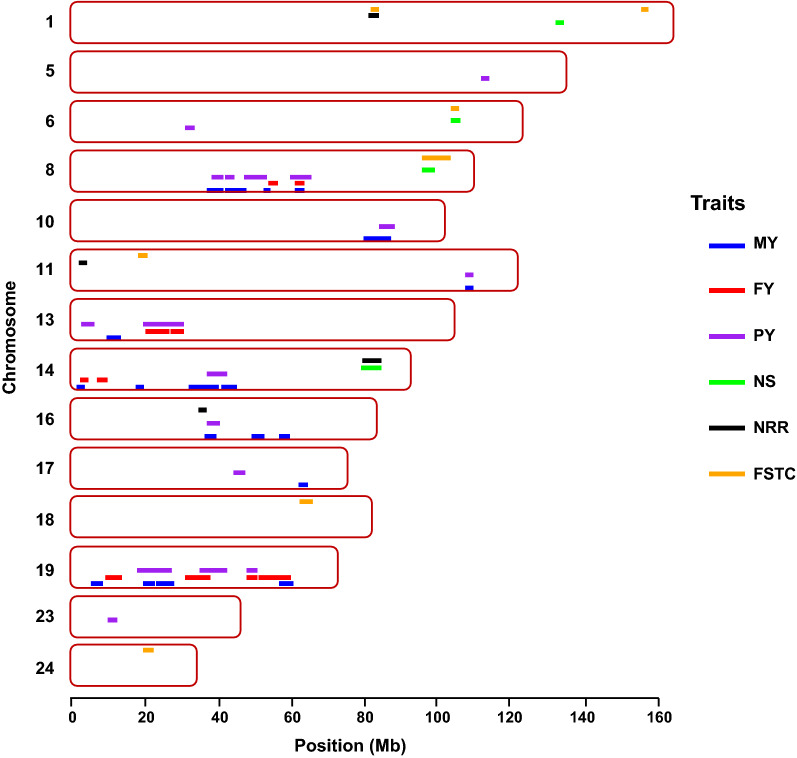
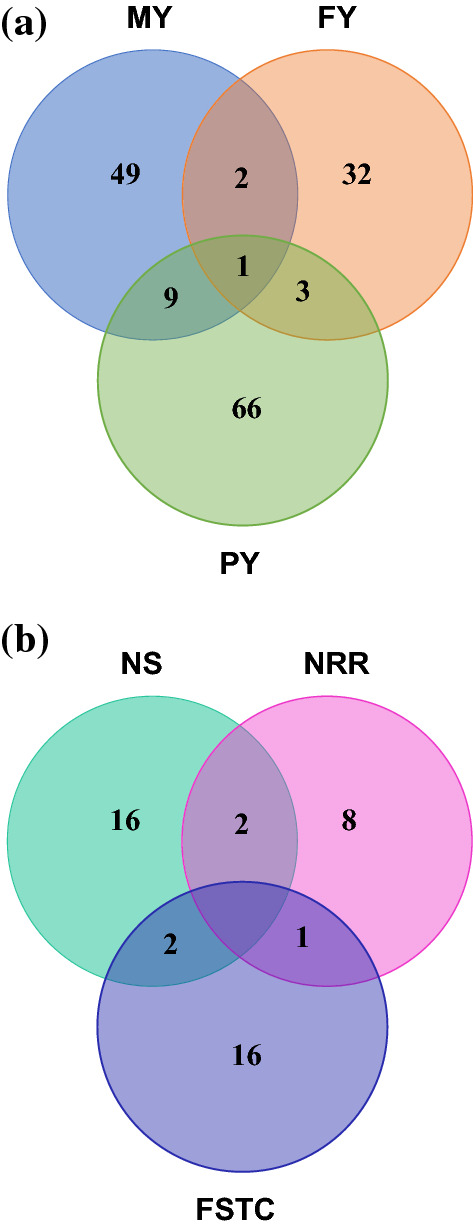
In total, 133 and 34 unique ROH genotypes with unfavorable effects were identified for production and fertility traits, respectively, at a 1% genome-wise false discovery rate. Most of these ROH regions were located on bovine chromosomes 8, 13, 14 and 19 for both production and fertility traits. For production traits, the average of all the unfavorably identified unique ROH genotypes effects were estimated to decrease milk yield by 247.30 kg, fat yield by 11.46 kg and protein yield by 8.11 kg. Similarly, for fertility traits, an average 4.81-day extension in first service to conception, a 0.16 increase in number of services, and a - 0.07 incidence in 56-day non-return rate were observed. Furthermore, a ROH region located on bovine chromosome 19 was identified that, when homozygous, had a negative effect on production traits. Signatures of selection proximate to this region have implicated GH1 as a potential candidate gene, which encodes the growth hormone that binds the growth hormone receptor. This observed negative effect could be a consequence of unfavorable alleles in linkage disequilibrium with favorable alleles.
ROH genotypes with unfavorable effects on production and fertility traits were identified within and across multiple traits on most chromosomes. These identified ROH genotypes could be included in mate selection programs to minimize their frequency in future generations.
基因组信息的出现和基因分型成本的降低,使得人们可以利用基因组信息来估计基因组近交作为系谱近交的替代方法。利用基因组测量方法,已经观察到基因组近交对生产和繁殖性状的影响。然而,对于导致与感兴趣性状呈负相关的特定基因组区域,研究还很有限。我们的目的是鉴定给定基因组窗口内存在的与生产和繁殖性状呈负相关的独特纯合基因型(ROH),并量化这些鉴定出的 ROH 基因型的效应。
共获得 50,575 个基于 50K 单核苷酸多态性(SNP)阵列的基因型和 259,871 个系谱记录。在这 50,575 个基因型中,有 46,430 头奶牛具有生产和繁殖性状的表型记录,且初配日期在 2008 年至 2018 年之间。使用滑动窗口方法鉴定的独特 ROH 基因型被拟合到动物混合模型中作为固定效应,以确定它们对生产和繁殖性状的影响。
在全基因组假发现率为 1%的情况下,共鉴定出 133 个和 34 个对生产和繁殖性状有不利影响的独特 ROH 基因型。这些 ROH 区域大多数位于牛的 8、13、14 和 19 号染色体上,无论是对生产性状还是繁殖性状都是如此。对于生产性状,所有不利鉴定的独特 ROH 基因型效应的平均值估计会使产奶量减少 247.30 公斤,使脂肪产量减少 11.46 公斤,使蛋白质产量减少 8.11 公斤。同样,对于繁殖性状,首次配种至受孕的时间平均延长 4.81 天,配种次数增加 0.16 次,56 天内的返情率降低 0.07%。此外,在牛的 19 号染色体上鉴定出一个 ROH 区域,当纯合时,对生产性状有负面影响。该区域附近的选择信号表明 GH1 可能是一个潜在的候选基因,它编码与生长激素受体结合的生长激素。这种观察到的负效应可能是与有利等位基因处于连锁不平衡的不利等位基因的结果。
在大多数染色体上,已经鉴定出与生产和繁殖性状具有不利影响的 ROH 基因型,这些基因型在多个性状中存在。这些鉴定出的 ROH 基因型可以包含在交配选择计划中,以减少它们在后代中的频率。