Interdisciplinary Centre of Marine and Environmental Research (CIIMAR/CIMAR), University of Porto, Matosinhos, Portugal.
Department of Chemistry and Chemical Biology, Harvard University, Cambridge, MA, USA.
BMC Genomics. 2021 Aug 31;22(1):633. doi: 10.1186/s12864-021-07939-x.
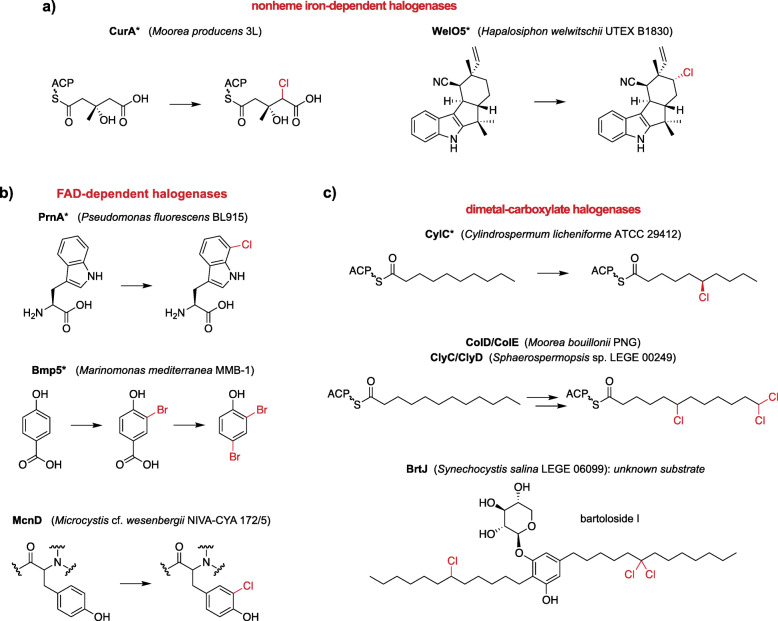
Halogenation is a recurring feature in natural products, especially those from marine organisms. The selectivity with which halogenating enzymes act on their substrates renders halogenases interesting targets for biocatalyst development. Recently, CylC - the first predicted dimetal-carboxylate halogenase to be characterized - was shown to regio- and stereoselectively install a chlorine atom onto an unactivated carbon center during cylindrocyclophane biosynthesis. Homologs of CylC are also found in other characterized cyanobacterial secondary metabolite biosynthetic gene clusters. Due to its novelty in biological catalysis, selectivity and ability to perform C-H activation, this halogenase class is of considerable fundamental and applied interest. The study of CylC-like enzymes will provide insights into substrate scope, mechanism and catalytic partners, and will also enable engineering these biocatalysts for similar or additional C-H activating functions. Still, little is known regarding the diversity and distribution of these enzymes.
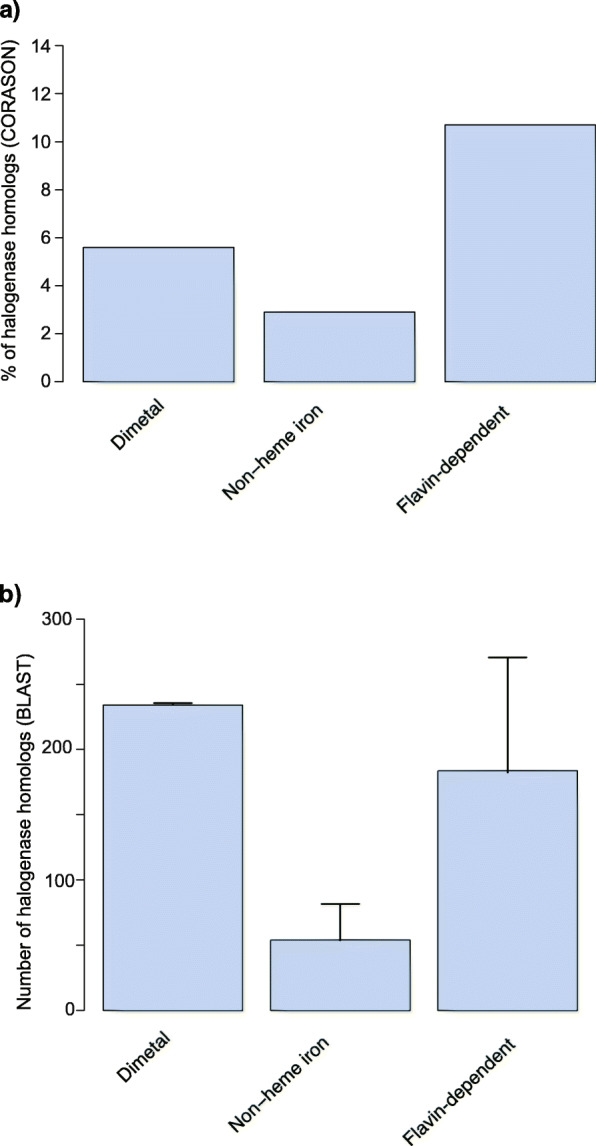
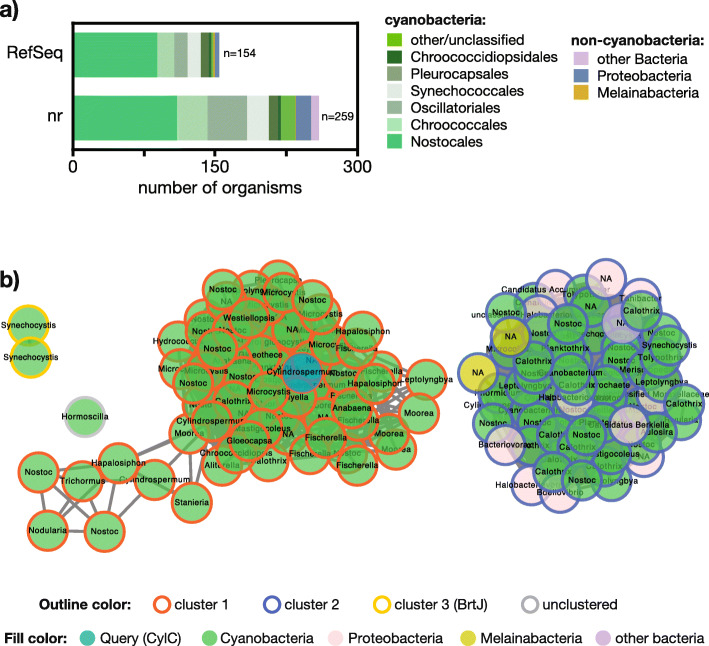
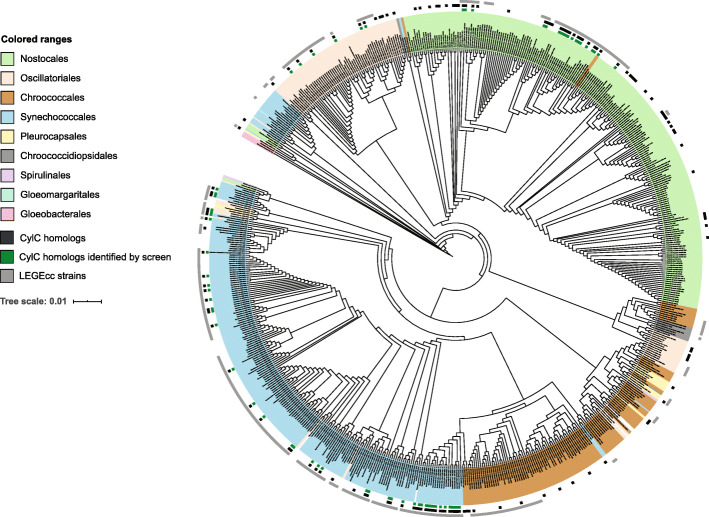
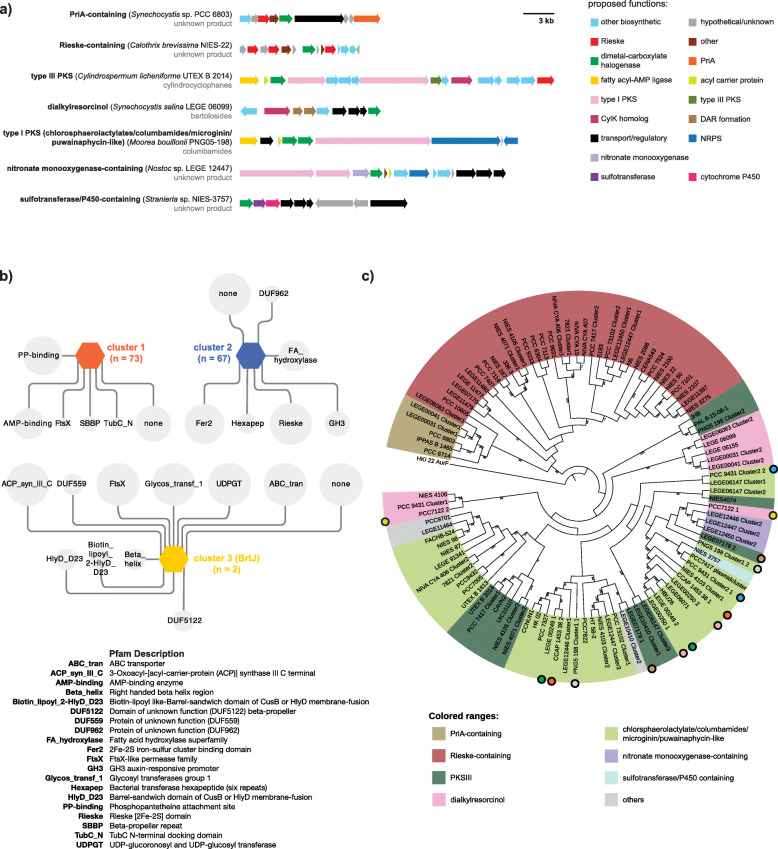
In this study, we used both genome mining and PCR-based screening to explore the genetic diversity of CylC homologs and their distribution in bacteria. While we found non-cyanobacterial homologs of these enzymes to be rare, we identified a large number of genes encoding CylC-like enzymes in publicly available cyanobacterial genomes and in our in-house culture collection of cyanobacteria. Genes encoding CylC homologs are widely distributed throughout the cyanobacterial tree of life, within biosynthetic gene clusters of distinct architectures (combination of unique gene groups). These enzymes are found in a variety of biosynthetic contexts, which include fatty-acid activating enzymes, type I or type III polyketide synthases, dialkylresorcinol-generating enzymes, monooxygenases or Rieske proteins. Our study also reveals that dimetal-carboxylate halogenases are among the most abundant types of halogenating enzymes in the phylum Cyanobacteria.
Our data show that dimetal-carboxylate halogenases are widely distributed throughout the Cyanobacteria phylum and that BGCs encoding CylC homologs are diverse and mostly uncharacterized. This work will help guide the search for new halogenating biocatalysts and natural product scaffolds.
卤化是天然产物,尤其是海洋生物来源的天然产物的一个常见特征。卤化酶对其底物的选择性使得卤化酶成为生物催化剂开发的有趣目标。最近,CylC——第一个被描述的预测双金属-羧酸卤化酶——在圆柱环肽生物合成中被证明能够区域和立体选择性地将一个氯原子安装在未活化的碳中心上。CylC 的同源物也存在于其他已鉴定的蓝细菌次级代谢物生物合成基因簇中。由于其在生物催化、选择性和执行 C-H 活化方面的新颖性,这种卤化酶类具有相当大的基础和应用价值。对 CylC 样酶的研究将提供关于底物范围、机制和催化伙伴的见解,并使这些生物催化剂能够进行类似或额外的 C-H 激活功能。尽管如此,关于这些酶的多样性和分布仍然知之甚少。
在这项研究中,我们使用了基因组挖掘和基于 PCR 的筛选来探索 CylC 同源物的遗传多样性及其在细菌中的分布。虽然我们发现这些酶的非蓝细菌同源物很少,但我们在公开可用的蓝细菌基因组和我们内部的蓝细菌培养物收集物中鉴定了大量编码 CylC 样酶的基因。编码 CylC 同源物的基因广泛分布在蓝细菌的生命树中,存在于不同结构(独特基因群的组合)的生物合成基因簇中。这些酶存在于各种生物合成环境中,包括脂肪酸激活酶、I 型或 III 型聚酮合酶、二烷基间苯二酚生成酶、单加氧酶或 Rieske 蛋白。我们的研究还表明,双金属-羧酸卤化酶是蓝细菌门中最丰富的卤化酶类型之一。
我们的数据表明,双金属-羧酸卤化酶广泛分布在蓝细菌门中,并且编码 CylC 同源物的 BGC 是多样的,且大多未被表征。这项工作将有助于指导寻找新的卤化生物催化剂和天然产物支架。