Molecular and Cellular Oncogenesis Program and Melanoma Research Center, The Wistar Institute, Philadelphia, Pennsylvania.
Department of Biochemistry and Molecular Biology, Johns Hopkins Bloomberg School of Public Health, Baltimore, Maryland.
Cancer Res. 2021 Oct 15;81(20):5230-5241. doi: 10.1158/0008-5472.CAN-20-1496. Epub 2021 Aug 30.
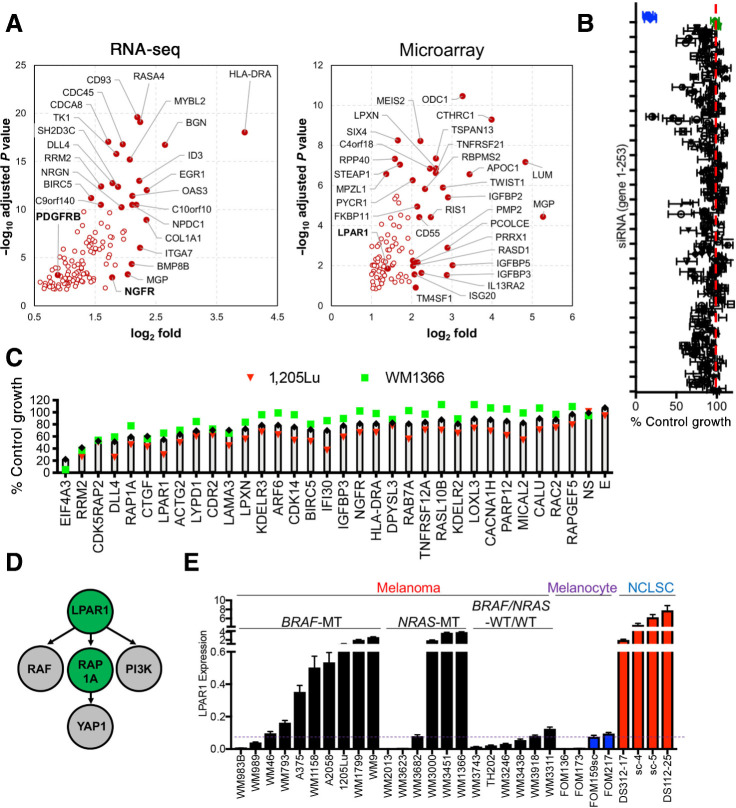
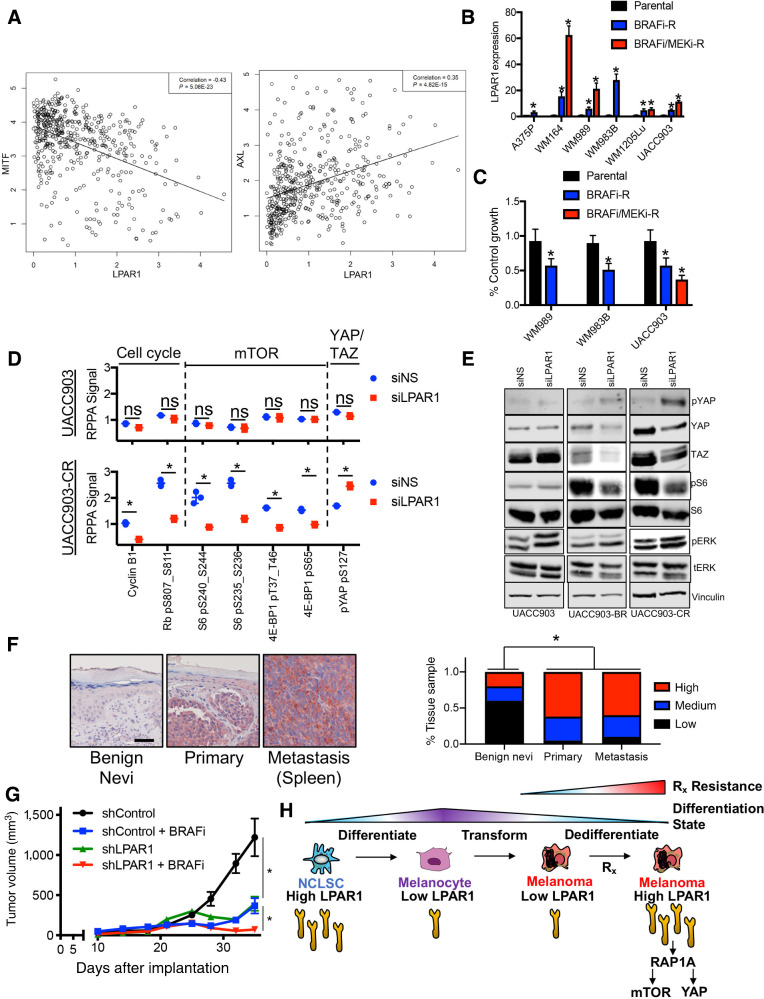
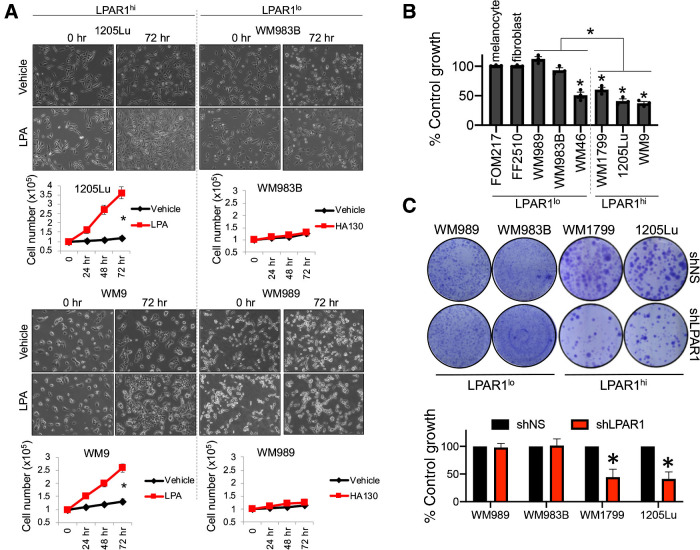
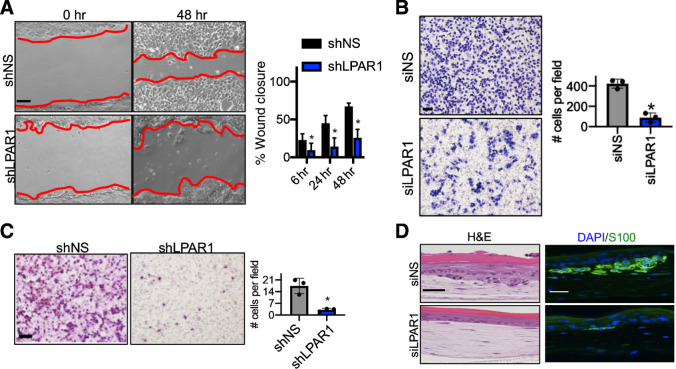
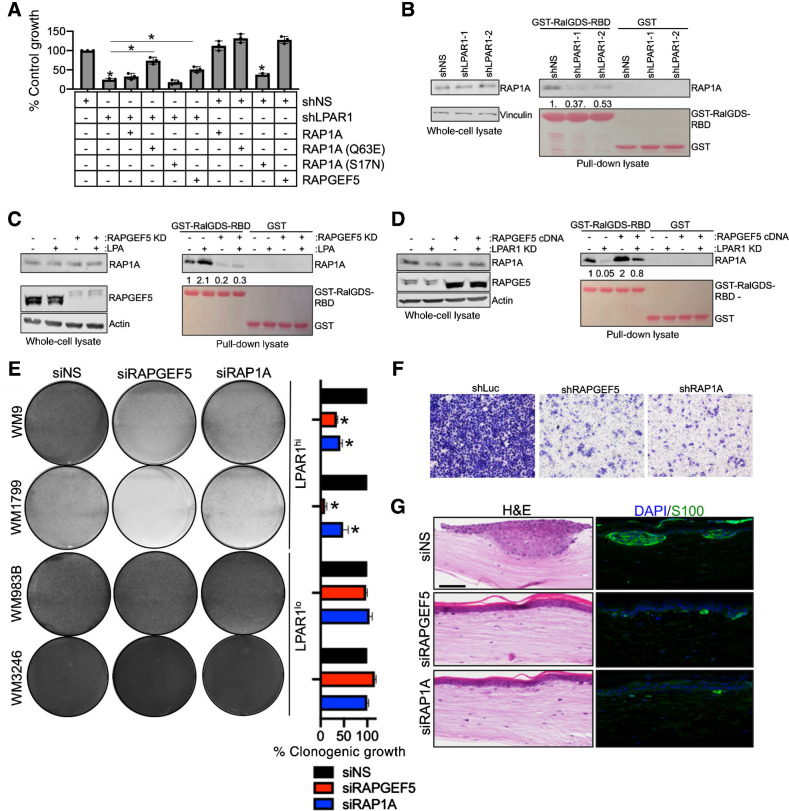
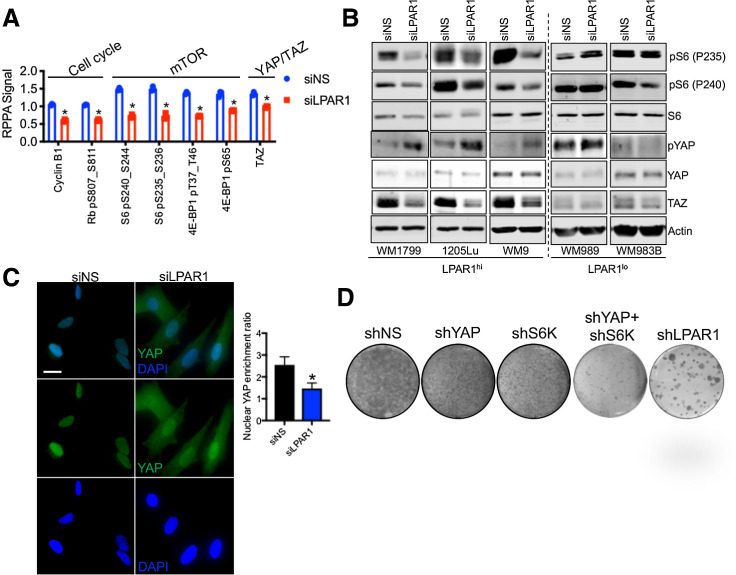
Metastatic melanoma is challenging to clinically address. Although standard-of-care targeted therapy has high response rates in patients with BRAF-mutant melanoma, therapy relapse occurs in most cases. Intrinsically resistant melanoma cells drive therapy resistance and display molecular and biologic properties akin to neural crest-like stem cells (NCLSC) including high invasiveness, plasticity, and self-renewal capacity. The shared transcriptional programs and vulnerabilities between NCLSCs and cancer cells remains poorly understood. Here, we identify a developmental LPAR1-axis critical for NCLSC viability and melanoma cell survival. LPAR1 activity increased during progression and following acquisition of therapeutic resistance. Notably, genetic inhibition of LPAR1 potentiated BRAFi ± MEKi efficacy and ablated melanoma migration and invasion. Our data define LPAR1 as a new therapeutic target in melanoma and highlights the promise of dissecting stem cell-like pathways hijacked by tumor cells. SIGNIFICANCE: This study identifies an LPAR1-axis critical for melanoma invasion and intrinsic/acquired therapy resistance.
转移性黑色素瘤在临床上难以处理。尽管标准护理靶向治疗在 BRAF 突变型黑色素瘤患者中具有高反应率,但大多数情况下都会发生治疗复发。固有耐药性黑色素瘤细胞驱动治疗耐药性,并表现出类似于神经嵴样干细胞(NCLSC)的分子和生物学特性,包括高侵袭性、可塑性和自我更新能力。NCLSCs 和癌细胞之间的共享转录程序和脆弱性仍知之甚少。在这里,我们确定了一个发育性 LPAR1 轴对 NCLSC 活力和黑色素瘤细胞存活至关重要。LPAR1 活性在进展过程中以及获得治疗耐药性后增加。值得注意的是,LPAR1 的遗传抑制增强了 BRAFi ± MEKi 的疗效,并消除了黑色素瘤的迁移和侵袭。我们的数据将 LPAR1 定义为黑色素瘤的一个新的治疗靶点,并强调了剖析肿瘤细胞劫持的干细胞样途径的潜力。
这项研究确定了一个 LPAR1 轴对黑色素瘤侵袭和内在/获得性治疗耐药性至关重要。