Department of Health Care, China-Japan Friendship Hospital, Ministry of Health, China.
Department of Cardiology, China-Japan Friendship Hospital, China.
Mediators Inflamm. 2021 Aug 21;2021:9976912. doi: 10.1155/2021/9976912. eCollection 2021.
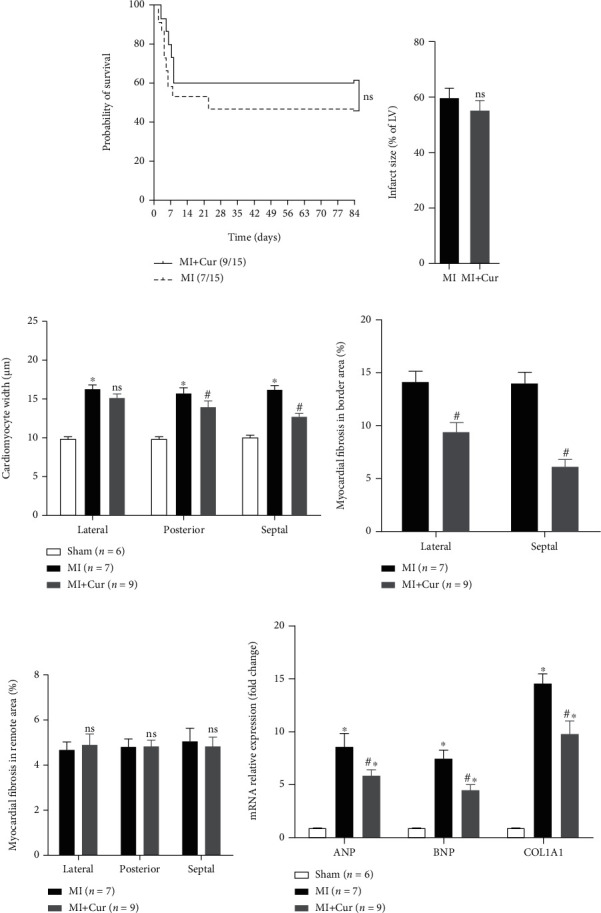
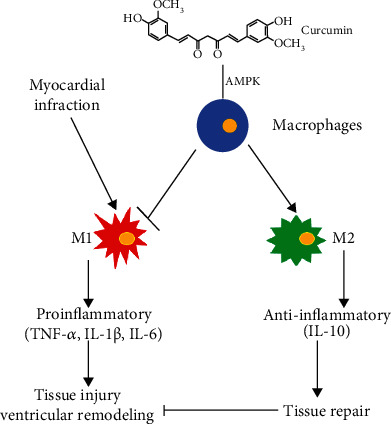
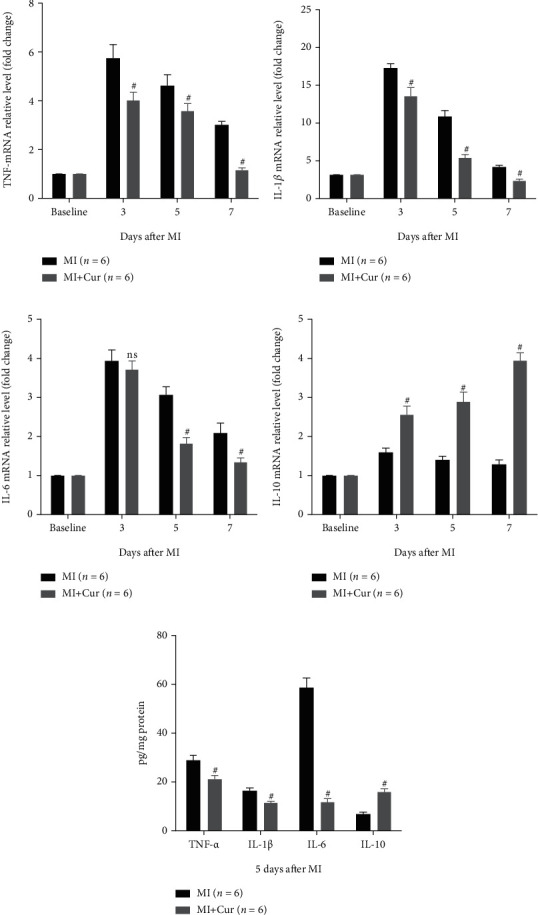
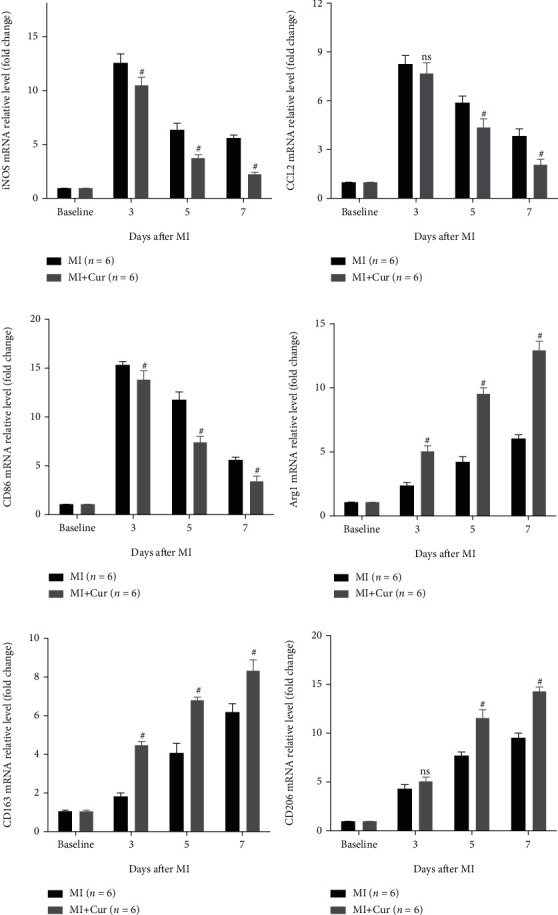
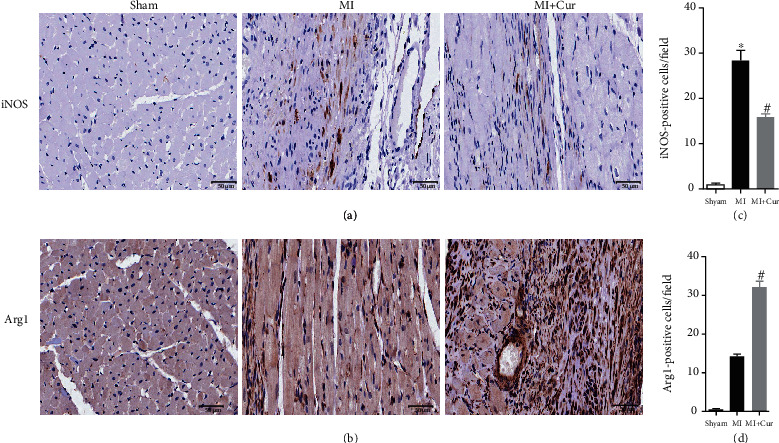
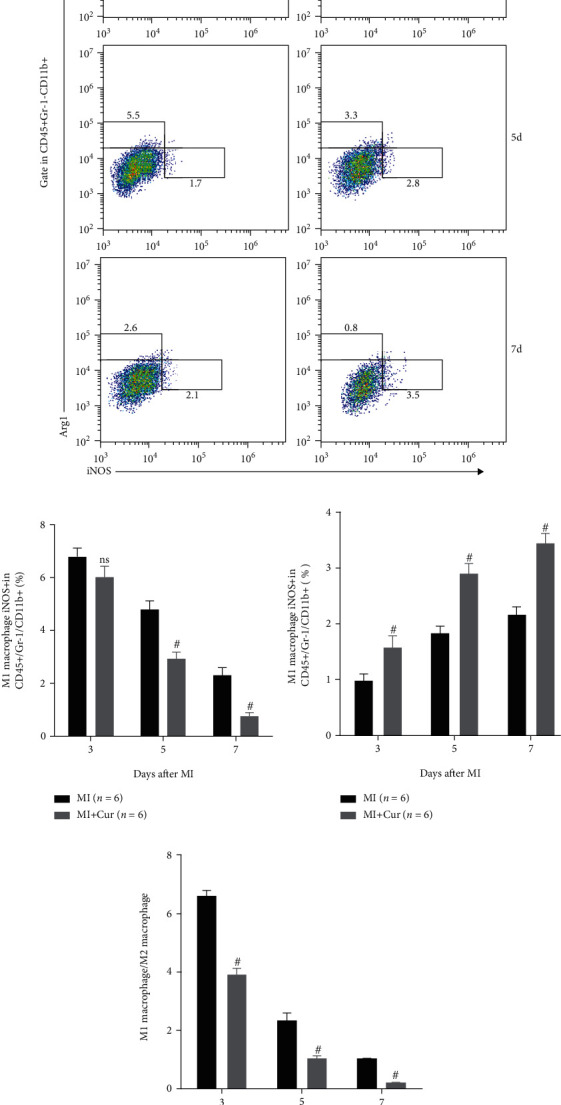
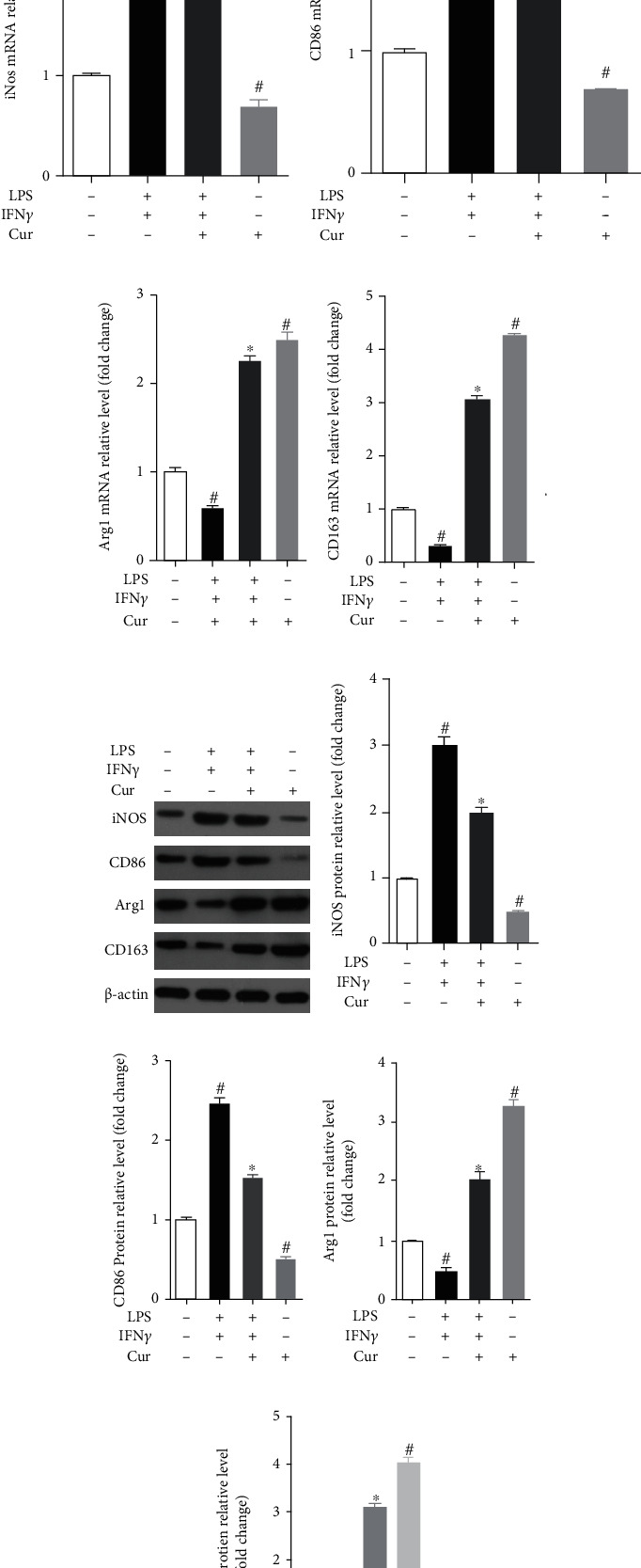
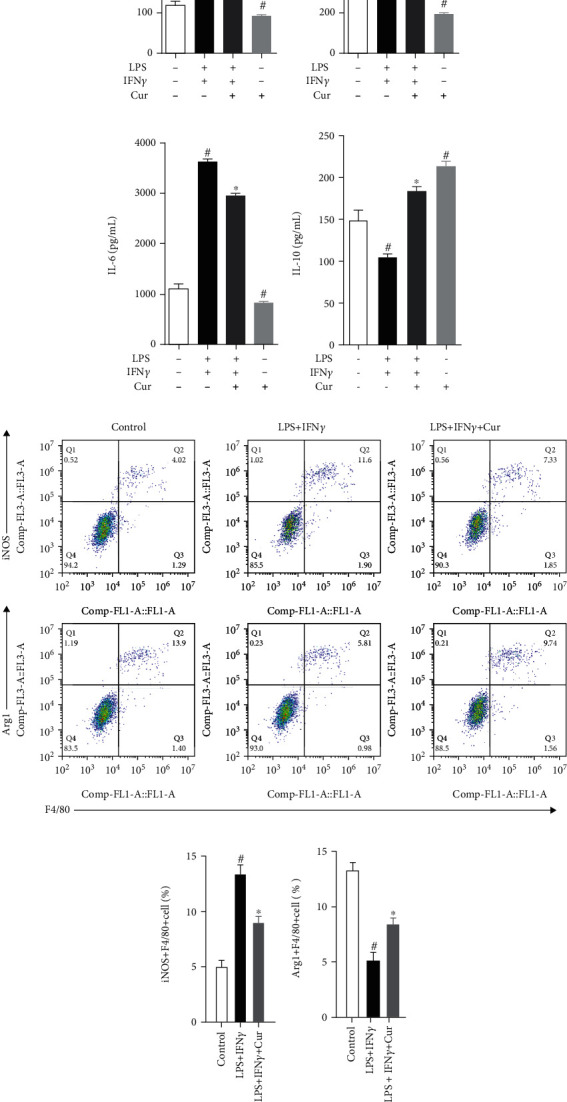
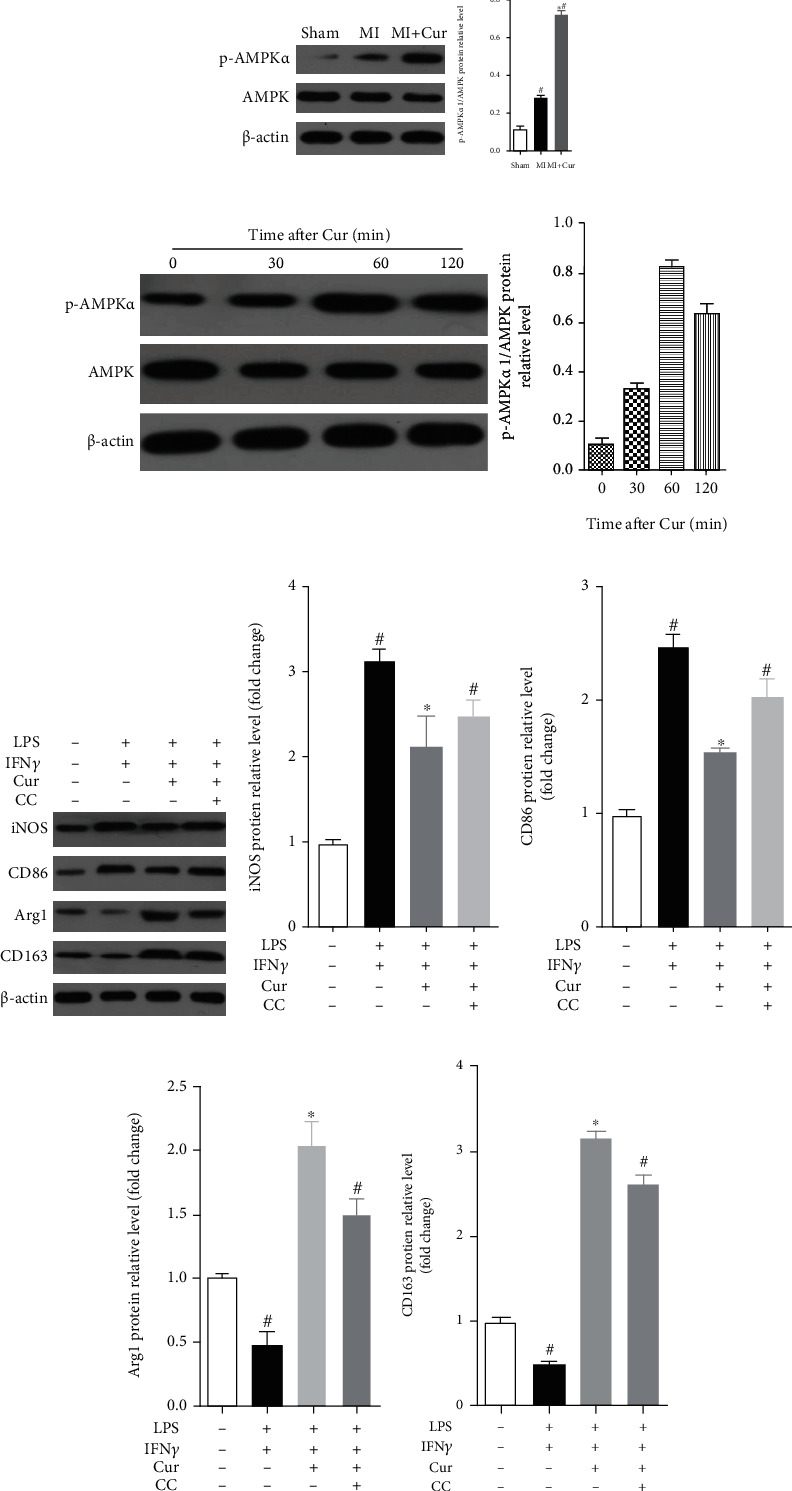
Inflammation causes tissue damage and promotes ventricular remodeling after myocardial infarction (MI), and the infiltration and polarization of macrophages play an important role in regulating inflammation post-MI. Here, we investigated the anti-inflammatory function of curcumin after MI and studied its relationship with macrophage polarization. In vivo, curcumin not only attenuated ventricular remodeling 3 months after MI but also suppressed inflammation during the first 7 days post-MI. Importantly, the results of qPCR and immunochemistry showed that curcumin decreased M1 (iNOS, CCL2, and CD86) but increased M2 macrophage (Arg1, CD163, and CD206) marker expression in the myocardium of MI mice during the first 7 days post-MI. And flow cytometry analysis indicated that curcumin suppressed M1 (CD45+Gr-1-CD11b+iNOS+ cells) but enhanced M2 macrophage (CD45+Gr-1-CD11b+Arg+ cells) expansion in the myocardium of MI mice during the first 7 days post-MI. In vitro, curcumin decreased LPS/IFN-elevated M1 macrophage marker (iNOS and CD86) expression and the proportion of M1 macrophages (iNOS+F4/80+ cells) but increased LPS/IFN-suppressed M2 macrophage marker (Arg1 and CD206) expression and the proportion of M2 macrophages (Arg1+F4/80+ cells). In addition, curcumin modulates M1/M2 macrophage polarization partly via AMPK. In conclusion, curcumin suppressed the MI-induced inflammation by modulating macrophage polarization partly via the AMPK pathway.
炎症会导致心肌梗死后的组织损伤和心室重构,而巨噬细胞的浸润和极化在调节心肌梗死后的炎症中起着重要作用。在这里,我们研究了姜黄素在心肌梗死后的抗炎功能,并研究了它与巨噬细胞极化的关系。在体内,姜黄素不仅在心肌梗死后 3 个月减轻了心室重构,而且在心肌梗死后的前 7 天抑制了炎症。重要的是,qPCR 和免疫组织化学的结果表明,姜黄素在心肌梗死后的前 7 天降低了 M1(iNOS、CCL2 和 CD86)标志物,但增加了 M2 巨噬细胞(Arg1、CD163 和 CD206)标志物的表达。流式细胞术分析表明,姜黄素在心肌梗死后的前 7 天抑制了 M1(CD45+Gr-1-CD11b+iNOS+细胞)但增强了 M2 巨噬细胞(CD45+Gr-1-CD11b+Arg+细胞)的扩张。体外,姜黄素降低了 LPS/IFN 升高的 M1 巨噬细胞标志物(iNOS 和 CD86)表达和 M1 巨噬细胞的比例(iNOS+F4/80+细胞),但增加了 LPS/IFN 抑制的 M2 巨噬细胞标志物(Arg1 和 CD206)表达和 M2 巨噬细胞的比例(Arg1+F4/80+细胞)。此外,姜黄素通过 AMPK 调节 M1/M2 巨噬细胞极化。总之,姜黄素通过调节 AMPK 途径部分抑制了 MI 诱导的炎症,从而抑制了炎症。