Discipline of Earth Science, Indian Institute of Technology Gandhinagar, Gujarat 382 355, India.
Gujarat Biotechnology Research Centre (GBRC), Sector-11, Gandhinagar, Gujarat 382 011, India.
Sci Total Environ. 2021 Oct 20;792:148367. doi: 10.1016/j.scitotenv.2021.148367. Epub 2021 Jun 8.
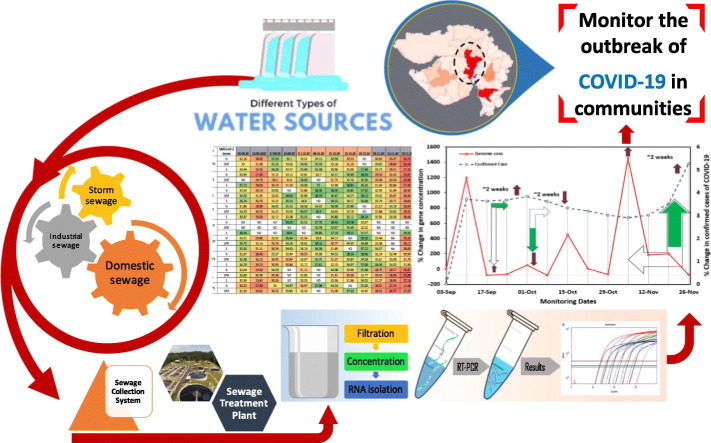
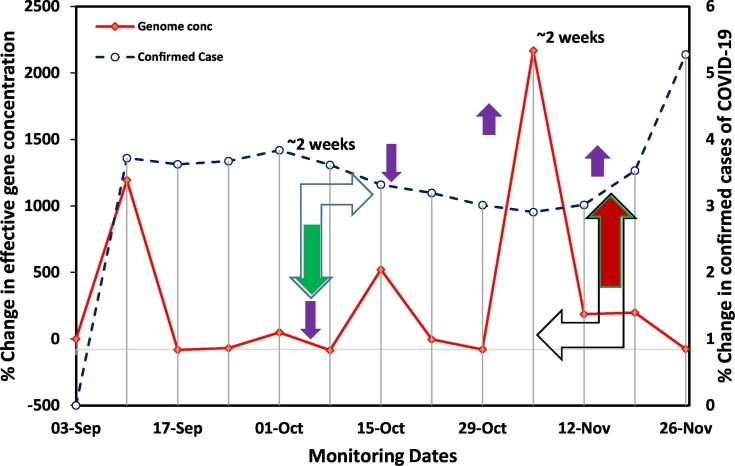
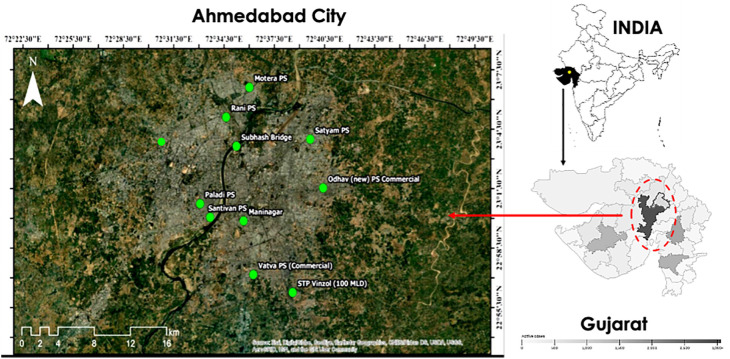
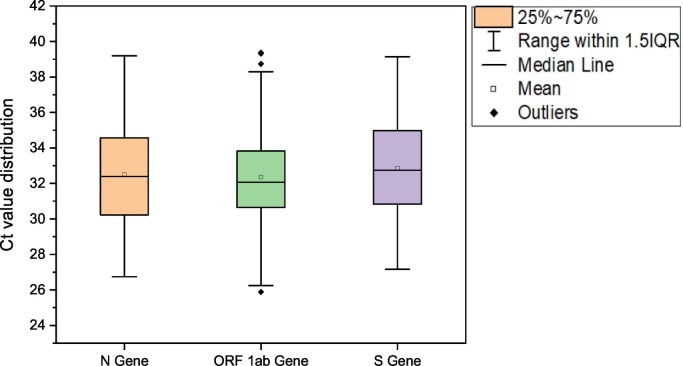
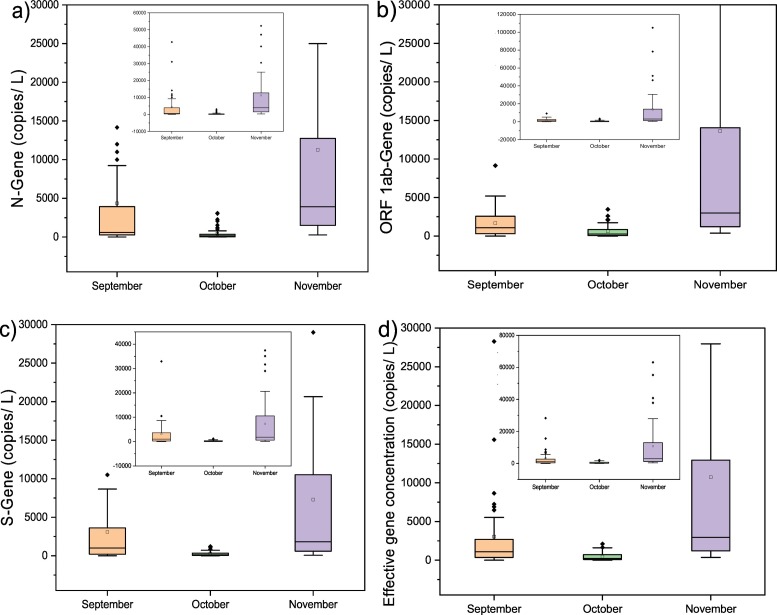
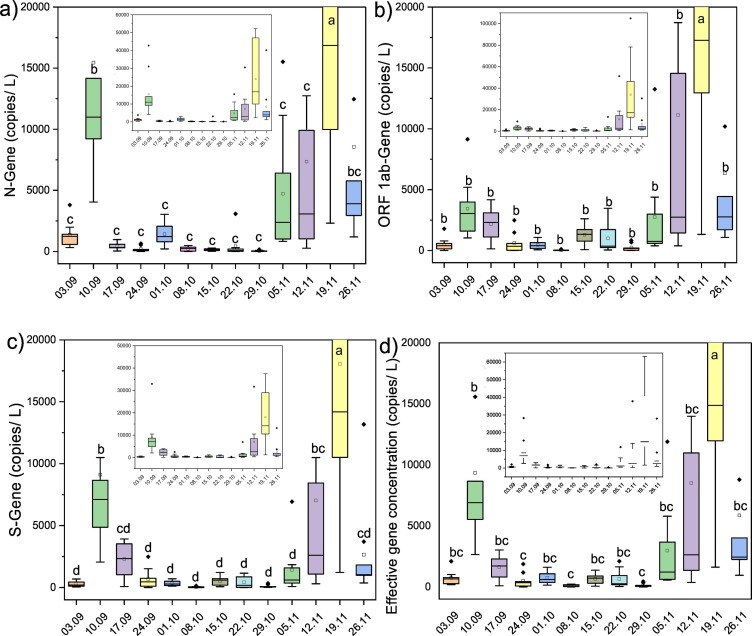
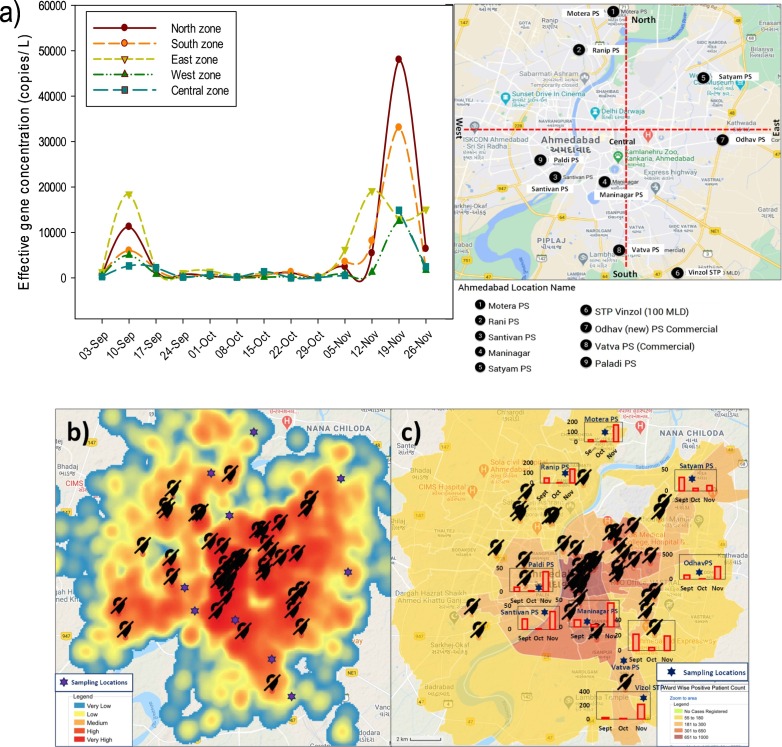
Following the proven concept, capabilities, and limitations of detecting the RNA of Severe Acute Respiratory Coronavirus 2 (SARS-CoV-2) in wastewater, it is pertinent to understand the utility of wastewater surveillance data on various scale. In the present work, we put forward the first wastewater surveillance-based city zonation for effective COVID-19 pandemic preparedness. A three-month data of Surveillance of Wastewater for Early Epidemic Prediction (SWEEP) was generated for the world heritage city of Ahmedabad, Gujarat, India. In this expedition, 116 wastewater samples were analyzed to detect SARS-CoV-2 RNA, from September 3rd to November 26th, 2020. A total of 111 samples were detected with at least two out of three SARS-CoV-2 genes (N, ORF 1ab, and S). Monthly variation depicted a significant decline in all three gene copies in October compared to September 2020, followed by a sharp increment in November 2020. Correspondingly, the descending order of average effective gene concentration was: November (10,729 copies/L) > September (3047 copies/L) > October (~454 copies/L). Monthly variation of SARS-CoV-2 RNA in the wastewater samples may be ascribed to a decline of 20.48% in the total number of active cases in October 2020 and a rise of 1.82% in November 2020. Also, the monthly recovered new cases were found to be 16.61, 20.03, and 15.58% in September, October, and November 2020, respectively. The percentage change in the gene concentration was observed in the lead of 1-2 weeks with respect to the percentage change in the provisional figures of confirmed cases. SWEEP data-based city zonation was matched with the heat map of the overall COVID-19 infected population in Ahmedabad city, and month-wise effective gene concentration variations are shown on the map. The results expound on the potential of WBE surveillance of COVID-19 as a city zonation tool that can be meaningfully interpreted, predicted, and propagated for community preparedness through advanced identification of COVID-19 hotspots within a given city.
基于检测严重急性呼吸冠状病毒 2 (SARS-CoV-2) RNA 的能力和局限性的经验,了解污水监测数据在不同规模上的效用是很重要的。在本工作中,我们提出了基于污水监测的首个城市分区,以有效应对 COVID-19 大流行。对印度古吉拉特邦艾哈迈达巴德市的一项为期三个月的污水监测预警监测数据进行了研究。在此项考察中,对 2020 年 9 月 3 日至 11 月 26 日的 SARS-CoV-2 RNA 进行了 116 个污水样本分析。总共有 111 个样本检测到至少有三个 SARS-CoV-2 基因(N、ORF1ab 和 S)中的两个。与 2020 年 9 月相比,10 月所有三个基因拷贝的月变化明显下降,随后在 2020 年 11 月急剧增加。相应地,平均有效基因浓度的降序为:11 月(10729 拷贝/L)>9 月(3047 拷贝/L)>10 月(~454 拷贝/L)。污水样本中 SARS-CoV-2 RNA 的月度变化可能归因于 2020 年 10 月活跃病例总数下降 20.48%,2020 年 11 月上升 1.82%。此外,2020 年 9 月、10 月和 11 月,每月新恢复的病例分别为 16.61%、20.03%和 15.58%。基因浓度的百分比变化与确诊病例的临时数据百分比变化在 1-2 周内呈领先关系。基于 SWEEP 数据的城市分区与艾哈迈达巴德市整体 COVID-19 感染人口的热点图相匹配,显示了每月有效基因浓度的变化。结果阐述了污水监测作为城市分区工具的潜力,可以通过对给定城市内 COVID-19 热点的高级识别,对社区准备工作进行有意义的解释、预测和传播。