Center for Precision Medicine Multi-Omics Research, Peking University Health Science Center, Peking University, 100191, Beijing, China.
School of Basic Medical Sciences, Peking University Health Science Center, 100191, Beijing, China.
Nat Commun. 2020 Nov 17;11(1):5859. doi: 10.1038/s41467-020-19706-9.
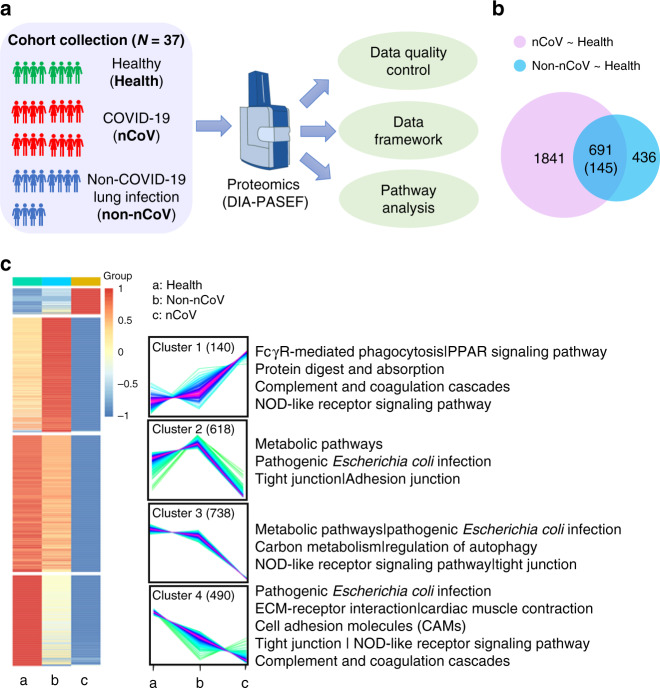
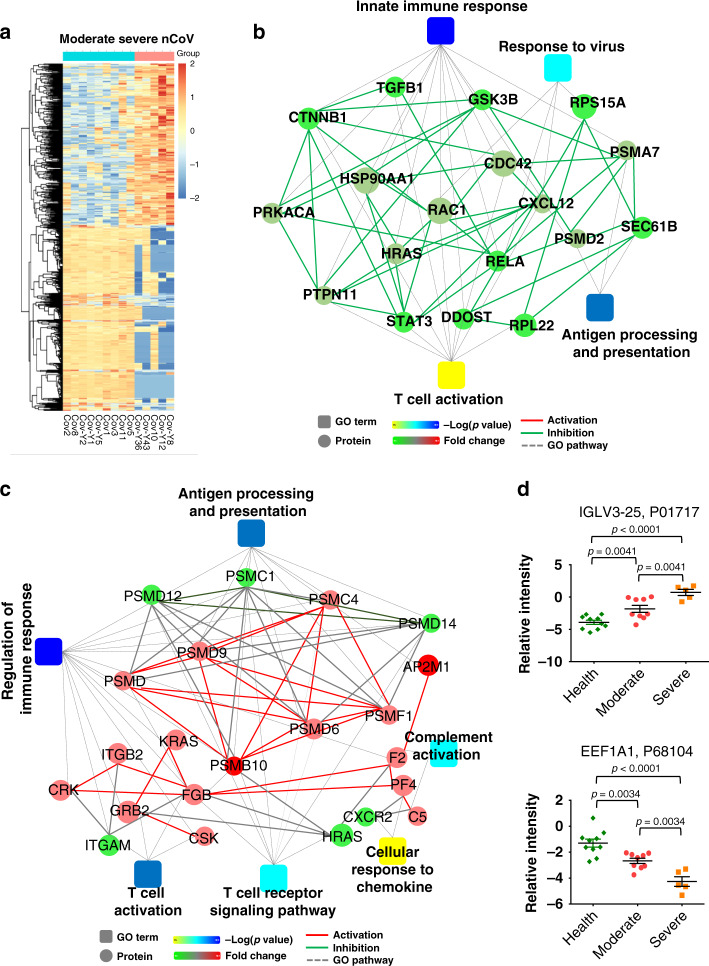
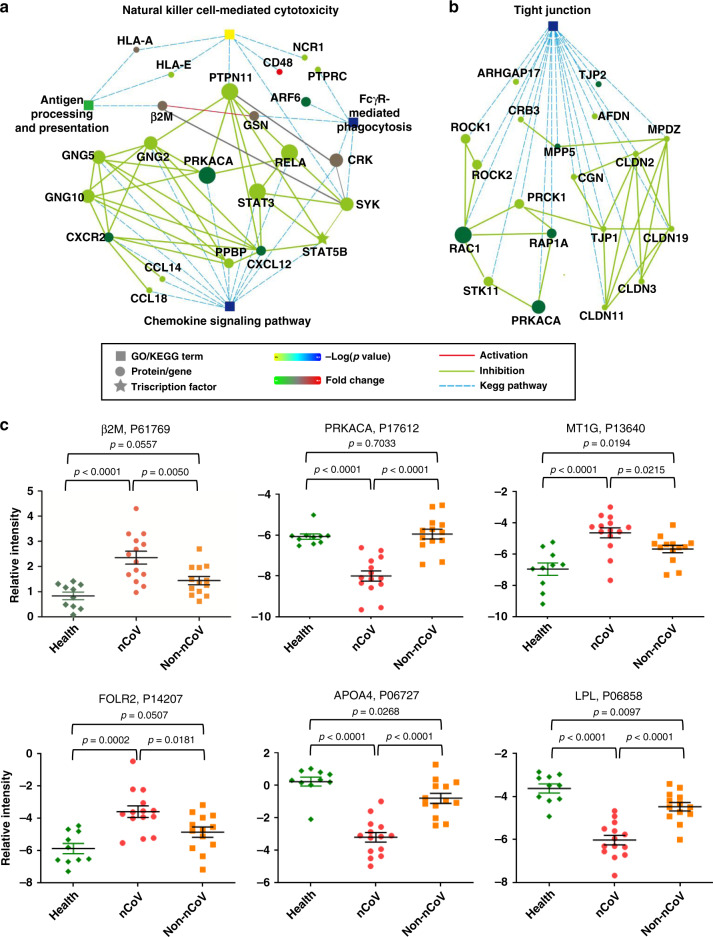
The outbreak of COVID-19 has become a worldwide pandemic. The pathogenesis of this infectious disease and how it differs from other drivers of pneumonia is unclear. Here we analyze urine samples from COVID-19 infection cases, healthy donors and non-COVID-19 pneumonia cases using quantitative proteomics. The molecular changes suggest that immunosuppression and tight junction impairment occur in the early stage of COVID-19 infection. Further subgrouping of COVID-19 patients into moderate and severe types shows that an activated immune response emerges in severely affected patients. We propose a two-stage mechanism of pathogenesis for this unusual viral infection. Our data advance our understanding of the clinical features of COVID-19 infections and provide a resource for future mechanistic and therapeutics studies.
新型冠状病毒肺炎疫情的爆发已经成为全球性的大流行。这种传染病的发病机制及其与其他肺炎病因的区别尚不清楚。在这里,我们使用定量蛋白质组学方法分析了新型冠状病毒肺炎感染病例、健康供体和非新型冠状病毒肺炎肺炎病例的尿液样本。分子变化表明,免疫抑制和紧密连接损伤发生在新型冠状病毒肺炎感染的早期。将新型冠状病毒肺炎患者进一步分为中度和重度,表明严重感染患者出现了激活的免疫反应。我们提出了这种不寻常病毒感染的发病机制两阶段模型。我们的数据增进了对新型冠状病毒肺炎感染临床特征的理解,并为未来的机制和治疗研究提供了资源。