Zeng Yuanyuan, Zhang Jie, Xu Mengmeng, Chen Fuxian, Zi Ruidong, Yue Jicheng, Zhang Yanan, Chen Nannan, Chin Y Eugene
Institutes of Biology and Medical Sciences, Soochow University, Suzhou 215123, Jiangsu, China.
Department of Respiratory Medicine, the First Affiliated Hospital of Soochow University, Suzhou 215006, Jiangsu, China.
J Cancer. 2021 Aug 8;12(19):5888-5894. doi: 10.7150/jca.60170. eCollection 2021.
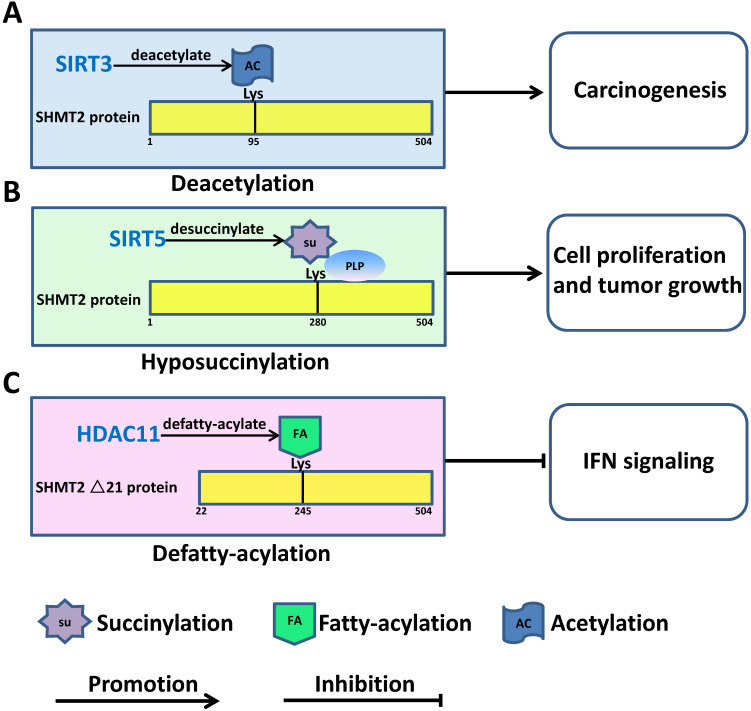
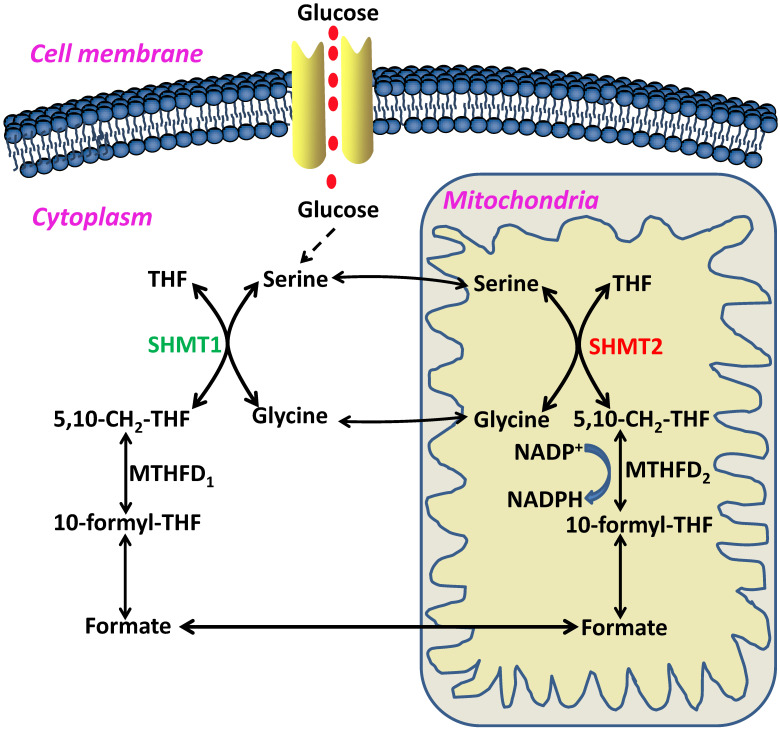
In the last few years, cellular metabolic reprogramming has been acknowledged as a hallmark of human cancer and evaluated for its crucial role in supporting the proliferation and survival of human cancer cells. In a variety of human tumours, including hepatocellular carcinoma (HCC), breast cancer and non-small-cell lung cancer (NSCLC), a large amount of carbon is reused in serine/glycine biosynthesis, accompanied by higher expression of the key glycine synthetic enzyme mitochondrial serine hydroxymethyltransferase 2 (SHMT2). This enzyme can convert serine into glycine and a tetrahydrofolate-bound one-carbon unit, ultimately supporting thymidine synthesis and purine synthesis and promoting tumour growth. In tumour samples, elevated expression of SHMT2 was found to be associated with poor prognosis. In this review, the pivotal roles of SHMT2 in human carcinogenesis are described, highlighting the underlying regulatory mechanisms through promotion of tumour progression. In conclusion, SHMT2 may serve as a prognostic marker and a target for anticancer therapies.
在过去几年中,细胞代谢重编程已被公认为人类癌症的一个标志,并因其在支持人类癌细胞增殖和存活方面的关键作用而受到评估。在包括肝细胞癌(HCC)、乳腺癌和非小细胞肺癌(NSCLC)在内的多种人类肿瘤中,大量碳在丝氨酸/甘氨酸生物合成中被重新利用,同时关键甘氨酸合成酶线粒体丝氨酸羟甲基转移酶2(SHMT2)的表达也更高。这种酶可以将丝氨酸转化为甘氨酸和一个与四氢叶酸结合的一碳单位,最终支持胸苷合成和嘌呤合成并促进肿瘤生长。在肿瘤样本中,发现SHMT2表达升高与预后不良有关。在这篇综述中,描述了SHMT2在人类致癌过程中的关键作用,强调了通过促进肿瘤进展的潜在调控机制。总之,SHMT2可能作为一种预后标志物和抗癌治疗的靶点。