Babiano-Espinosa Lucía, Wolters Lidewij H, Weidle Bernhard, Compton Scott N, Lydersen Stian, Skokauskas Norbert
Regional Centre for Child and Youth Mental Health and Child Welfare, Department of Mental Health, Norwegian University of Science and Technology, Trondheim, Norway.
Department of Child and Adolescent Psychiatry, St. Olav's University Hospital, Trondheim, Norway.
Child Adolesc Psychiatry Ment Health. 2021 Sep 4;15(1):47. doi: 10.1186/s13034-021-00400-7.
Obsessive-compulsive disorder (OCD) is a disabling mental health disorder affecting 1-3% of children and adolescents. Cognitive behavioral therapy (CBT) is recommended as the first-line treatment, but is limited by accessibility, availability, and, in some cases, response to treatment. Enhancement with Internet technologies may mitigate these challenges.
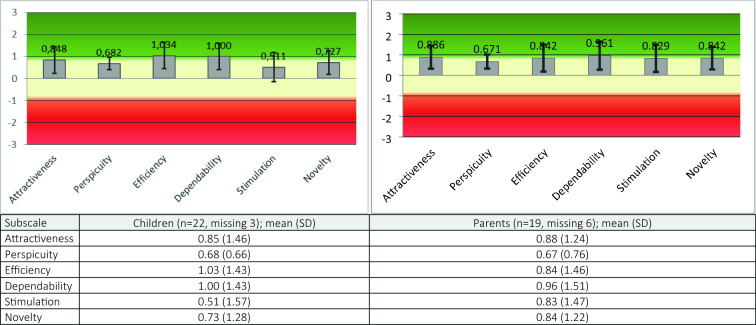
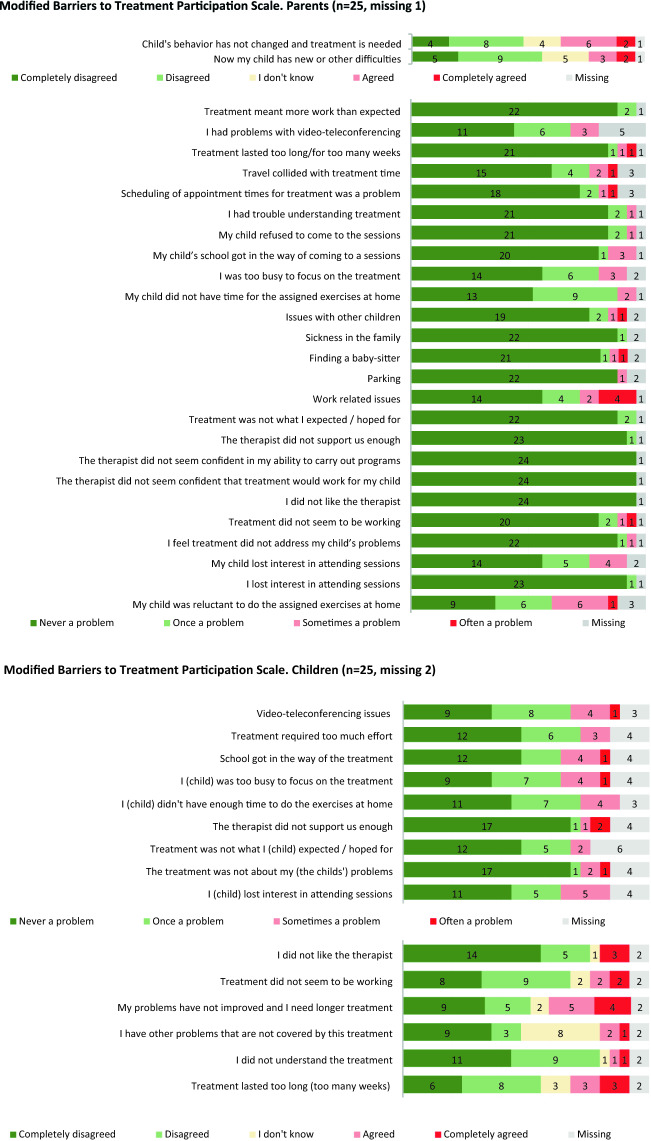
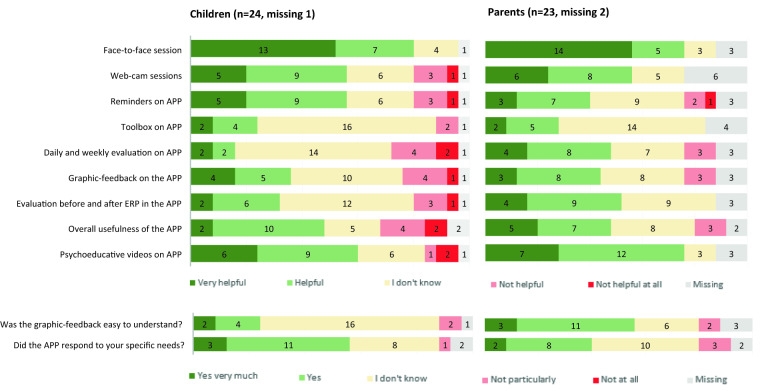
We developed an enhanced CBT (eCBT) treatment package for children and adolescents with OCD to improve treatment effect as well as user-friendliness. This study aims to explore the feasibility, acceptability, and preliminary effectiveness of the eCBT intervention. The eCBT protocol consists of 10 face-to-face and 12 webcam sessions delivered in 14 weeks. CBT is enhanced by a smartphone application (app) for children and parents to support and monitor treatment, psychoeducative videos, and therapist-guided webcam exposure exercises conducted at home. Assessments were performed at baseline, post-treatment, and at 3- and 6-month follow-up. Primary measures of outcomes were the the Client Satisfaction Questionnaire-8 (CSQ-8) (acceptability), treatment drop-out (feasibility) and the Children's Yale-Brown Obsessive-Compulsive Scale (CY-BOCS) (preliminary effectiveness).
This paper describes 25 patients with OCD (aged 8-17 years) treated with eCBT. Results indicated that children and parents were satisfied with eCBT, with CSQ-8 mean scores of 27.58 (SD 0.67) and 29.5 (SD 3.74), respectively (range 8-32). No patients dropped out from treatment. We found a mean of 63.8% symptom reduction on the CY-BOCS from baseline to post-treatment. CY-BOCS scores further decreased during 3-month and 6-month follow-up.
In this explorative study, eCBT for pediatric OCD was a feasible, acceptable intervention demonstrating positive treatment outcomes.
强迫症(OCD)是一种致残性心理健康障碍,影响1%至3%的儿童和青少年。认知行为疗法(CBT)被推荐为一线治疗方法,但受到可及性、可用性的限制,在某些情况下还受到治疗反应的限制。利用互联网技术进行强化可能会缓解这些挑战。
我们为患有强迫症的儿童和青少年开发了一种强化认知行为疗法(eCBT)治疗方案,以提高治疗效果和用户友好性。本研究旨在探讨eCBT干预的可行性、可接受性和初步有效性。eCBT方案包括在14周内进行10次面对面和12次网络摄像头治疗。通过一款面向儿童和家长的智能手机应用程序(app)来强化CBT,以支持和监测治疗,提供心理教育视频,以及在家中进行由治疗师指导的网络摄像头暴露练习。在基线、治疗后以及3个月和6个月随访时进行评估。主要结局指标包括客户满意度问卷-8(CSQ-8)(可接受性)、治疗退出率(可行性)和儿童耶鲁-布朗强迫症量表(CY-BOCS)(初步有效性)。
本文描述了25例接受eCBT治疗的强迫症患者(年龄8至17岁)。结果表明,儿童和家长对eCBT满意,CSQ-8平均得分分别为27.58(标准差0.67)和29.5(标准差3.74)(范围8至32)。没有患者退出治疗。我们发现从基线到治疗后,CY-BOCS症状平均减轻了63.8%。CY-BOCS得分在3个月和6个月随访期间进一步下降。
在这项探索性研究中,针对儿童强迫症的eCBT是一种可行、可接受的干预措施,显示出积极的治疗效果。