Department of Environmental Medicine and Public Health, Icahn School of Medicine at Mount Sinai, New York, NY 10029, USA.
Department of Mental Health, Bloomberg School of Public Health, Johns Hopkins University, Baltimore, MD 21205, USA.
Environ Int. 2021 Dec;157:106849. doi: 10.1016/j.envint.2021.106849. Epub 2021 Sep 2.
Teeth have unique histology that make this biomatrix a time-capsule for retrospective exposure analysis of fetal and early life. However, most analytic methods require pulverizing the whole tooth, which eliminates exposure timing information. Further, the range of chemicals and endogenous exposures that can be measured in teeth has yet to be fully characterized.
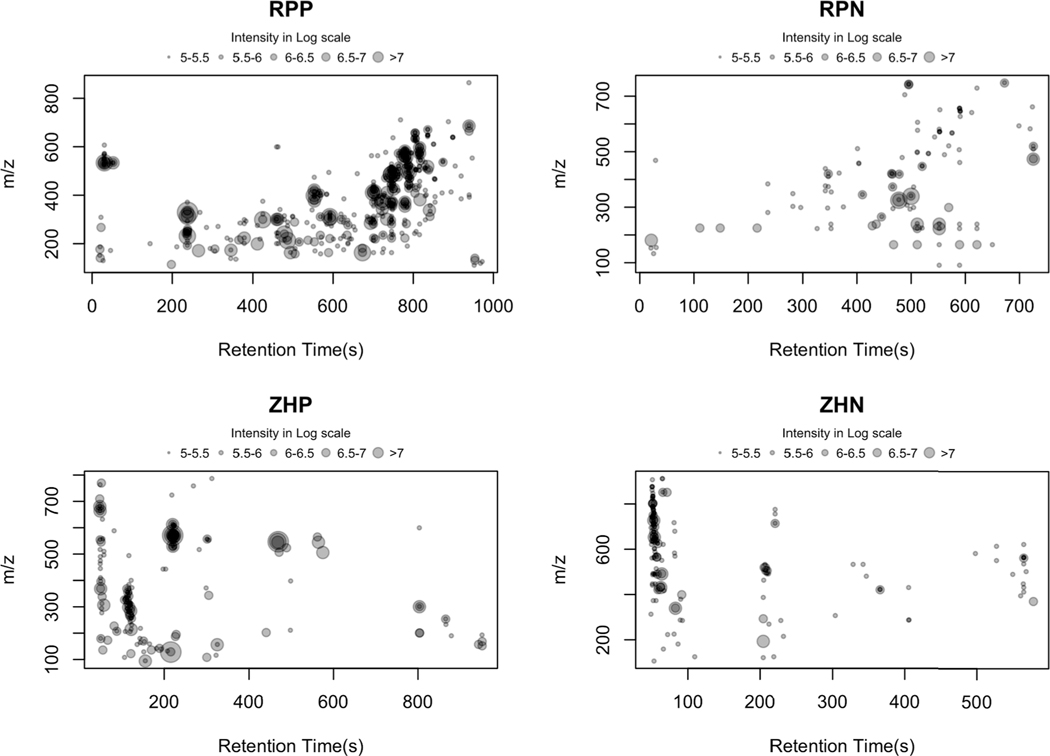
We performed untargeted metabolomics on micro-dissected layers from naturally shed deciduous teeth. Using four liquid-chromatography high-resolution mass spectrometry analytical modes, we profiled small molecules (<1000 Da) from prenatal and postnatal tooth fractions. In addition, we employed linear regression on the tooth fraction pairs from 31 children to identify metabolites that discriminate between prenatal and postnatal exposures.
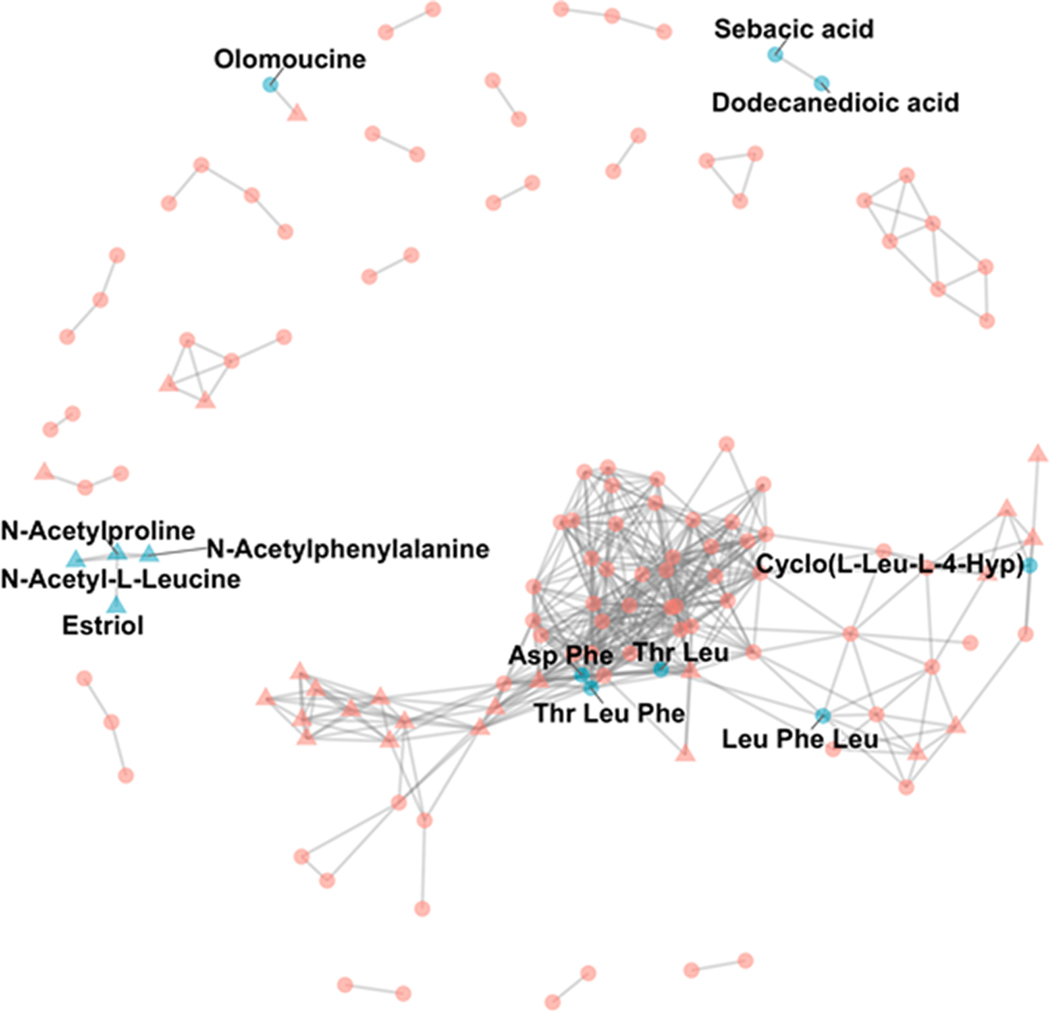
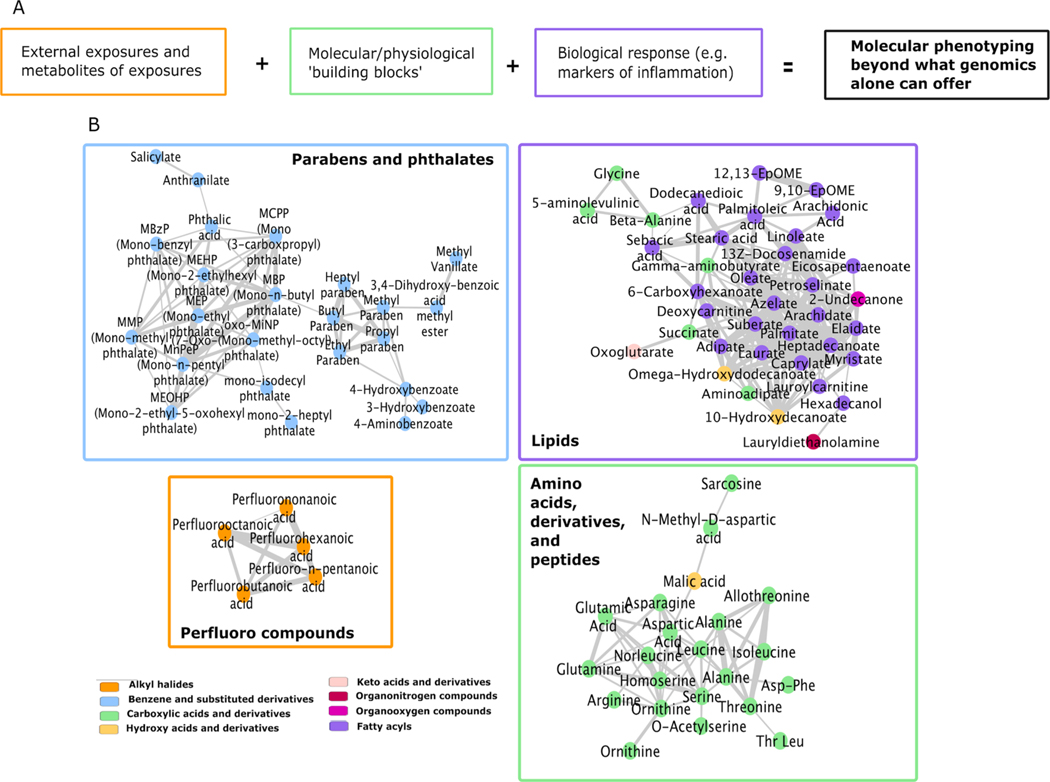
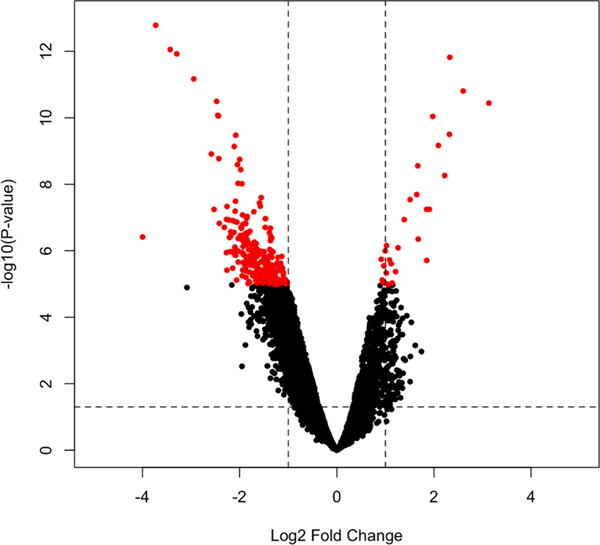
Of over 10,000 features measured in teeth dentin, 390 unique compounds were annotated from 62 chemical classes. The class with the largest number of compounds was carboxylic acids and their derivatives (36%). Of the annotated exogenous metabolites (phthalates, parabens, perfluoroalkyl compounds, and cotinine) and endogenous metabolites (fatty acids, steroids, carnitines, amino acids, and others), 91 are linked to 256 health conditions through published literature. Differential analysis revealed 267 metabolites significantly different between the prenatal and the postnatal tooth fractions (adj. p-value < 0.05, Bonferroni correction), and 21 metabolites exclusive to the prenatal fraction.
The prenatal and early postnatal exposome revealed from dental biomarkers represents a broad range of endogenous and exogenous metabolites for a comprehensive characterization in environmental health research. Most importantly, this technology provides a direct window into fetal exposures that is not possible by maternal biomarkers. Indeed, we identified several metabolites exclusively in the prenatal fraction, suggesting unique fetal exposures that are markedly different to postnatal exposures. Expansion of databases that include tooth matrix metabolites will strengthen biological interpretation and shed light on exposures during gestation and early life that may be causally linked with later health conditions.
牙齿具有独特的组织学特征,使其成为胎儿和生命早期回溯性暴露分析的时间胶囊。然而,大多数分析方法需要粉碎整个牙齿,从而消除了暴露时间信息。此外,能够在牙齿中测量的化学物质和内源性暴露的范围尚未得到充分描述。
我们对自然脱落的乳牙进行微解剖层的非靶向代谢组学分析。使用四种液相色谱-高分辨率质谱分析模式,我们对胎儿和出生后牙齿部分的小分子(<1000 Da)进行了分析。此外,我们还对 31 名儿童的牙齿部分对进行线性回归,以鉴定能够区分胎儿和出生后暴露的代谢物。
在牙齿牙本质中测量的 10000 多个特征中,有 390 种独特的化合物被鉴定出,分为 62 个化学类别。化合物数量最多的类别是羧酸及其衍生物(36%)。在所鉴定的外源性代谢物(邻苯二甲酸酯、对羟基苯甲酸酯、全氟烷基化合物和可替宁)和内源性代谢物(脂肪酸、类固醇、肉碱、氨基酸等)中,有 91 种与 256 种健康状况通过文献联系起来。差异分析显示,267 种代谢物在胎儿和出生后牙齿部分之间有显著差异(adj.p 值<0.05,Bonferroni 校正),其中 21 种代谢物仅存在于胎儿部分。
从牙齿生物标志物中揭示的胎儿和早期新生儿暴露组代表了广泛的内源性和外源性代谢物,可用于环境健康研究中的全面特征描述。最重要的是,这项技术为胎儿暴露提供了一个直接的窗口,而这是通过母体生物标志物无法实现的。事实上,我们在胎儿部分中发现了几种仅有的代谢物,表明了独特的胎儿暴露,与出生后暴露明显不同。扩展包括牙基质代谢物的数据库将加强生物学解释,并揭示妊娠期和生命早期可能与后期健康状况有关的暴露。