State Key Laboratory of Reproductive Medicine, School of Public Health, Nanjing Medical University, Nanjing, China.
Key Laboratory of Modern Toxicology of Ministry of Education, School of Public Health, Nanjing Medical University, Nanjing, China.
Environ Health Perspect. 2022 Mar;130(3):37003. doi: 10.1289/EHP9745. Epub 2022 Mar 7.
Maternal exposure to environmental chemicals during pregnancy can influence various maternal and offspring health parameters. Modification of maternal metabolism by environmental exposure may be an important pathway for these impacts. However, there is limited evidence regarding exposure to a wide array of chemicals and the metabolome during pregnancy.
We investigated the relationship between the urinary exposome and metabolome during pregnancy.
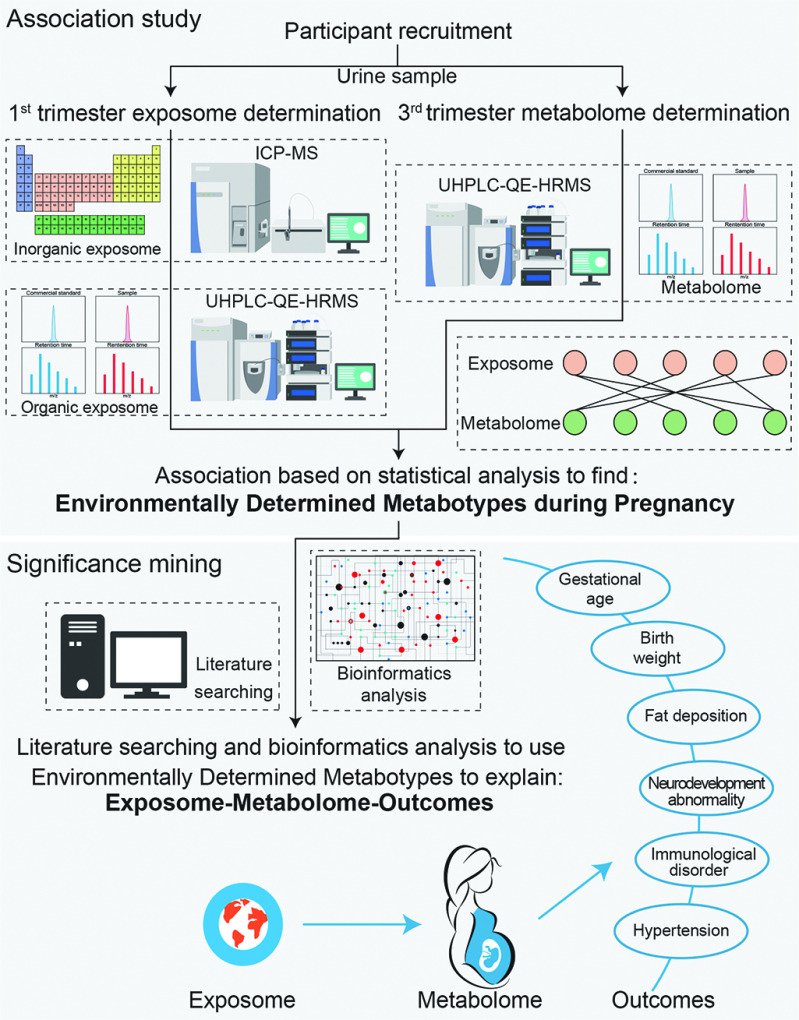
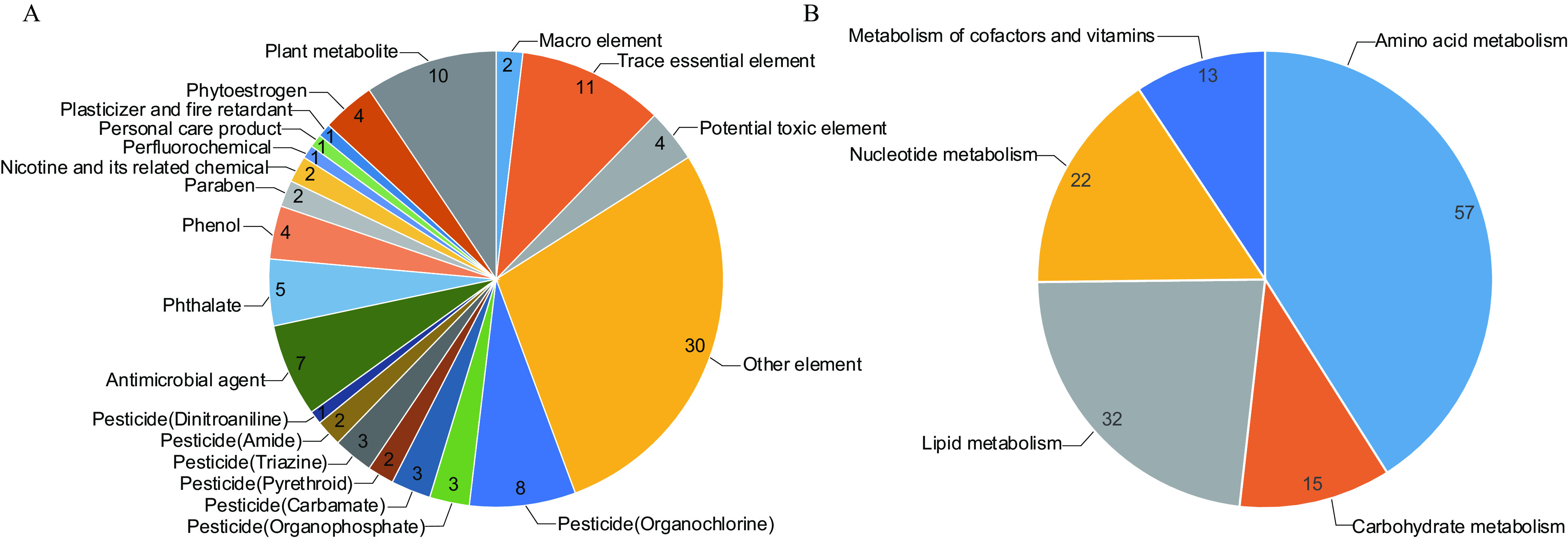
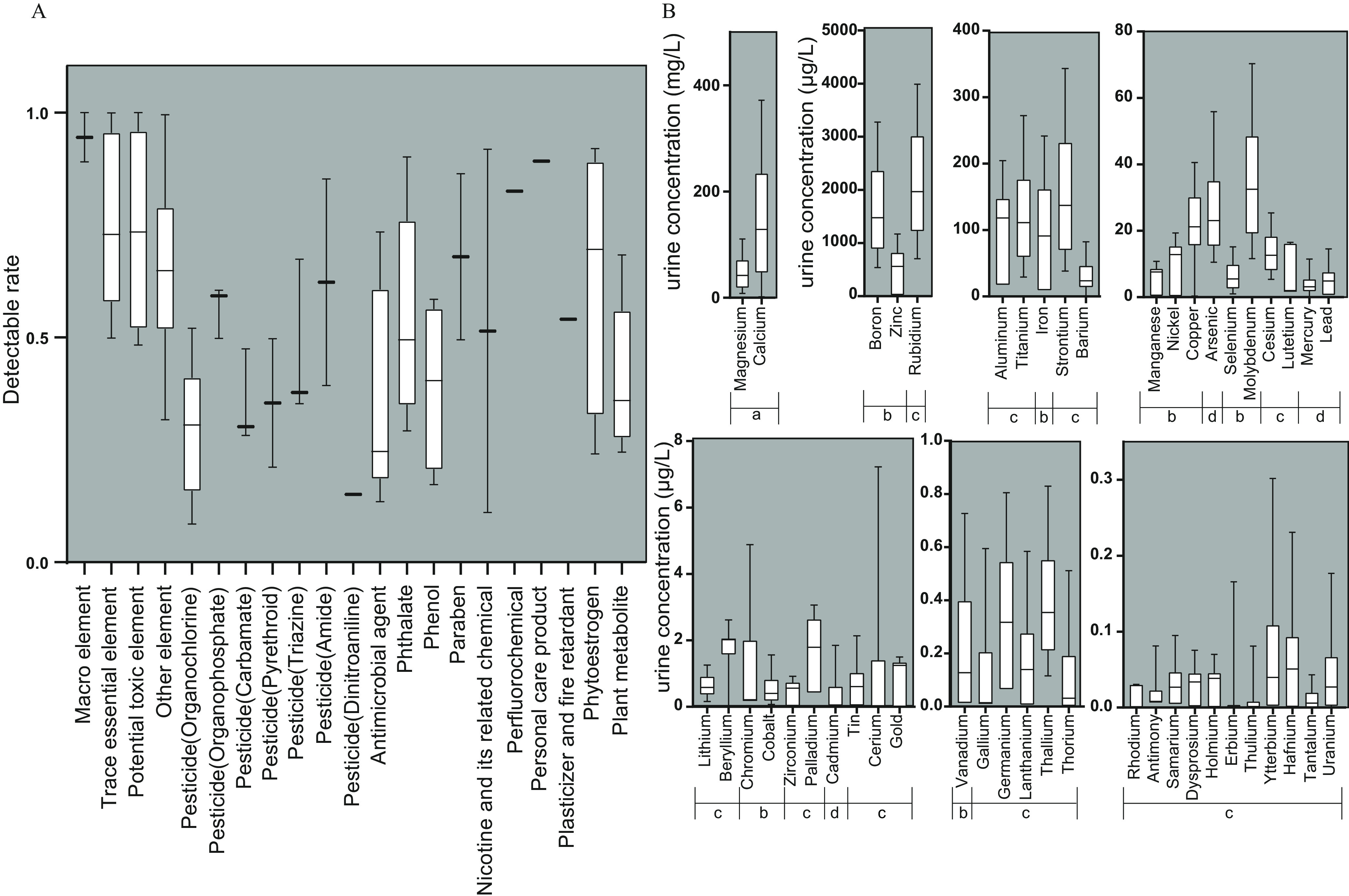
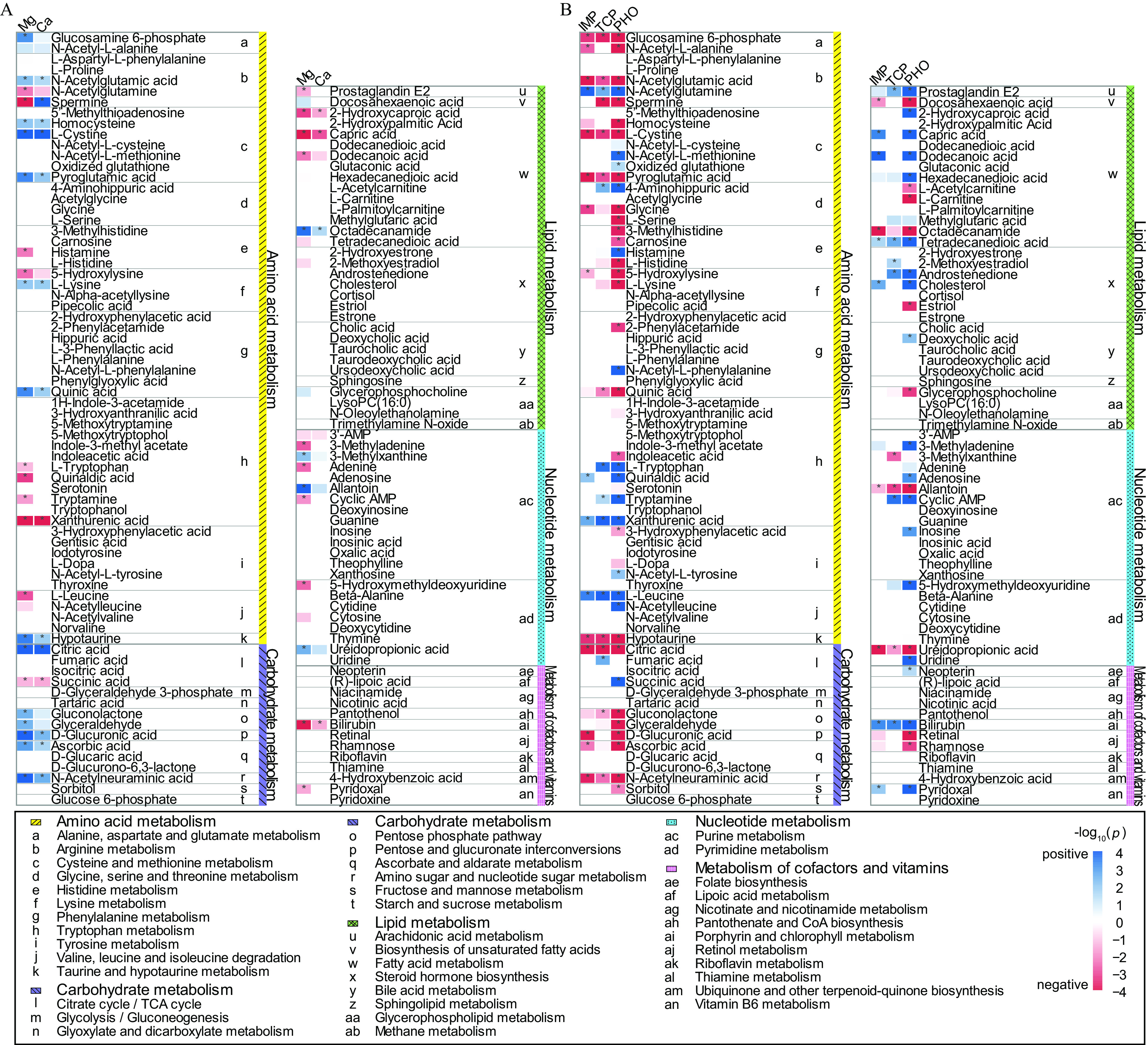
Urine samples were collected in the first and third trimesters from 1,024 pregnant women recruited in prenatal clinics in Jiangsu Province, China. The exposome was analyzed using the first trimester sample with ultra-high performance liquid chromatography-high resolution accurate mass spectrometry (UHPLC-HRMS) and inductively coupled plasma mass spectrometry. The metabolome was analyzed using the third trimester sample with UHPLC-HRMS. We evaluated associations between each of 106 exposures in the first trimester with 139 metabolites in the third trimester.
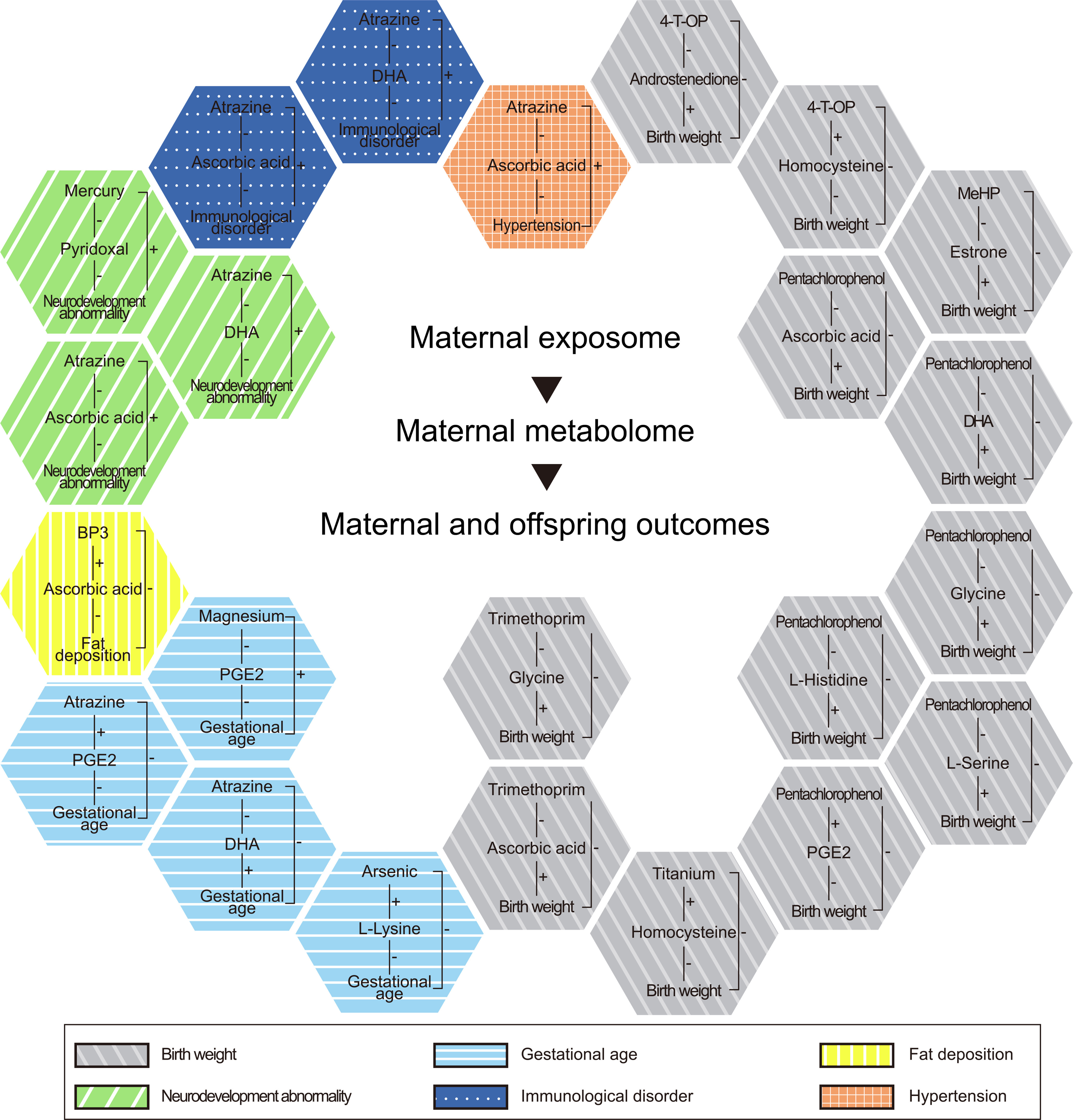
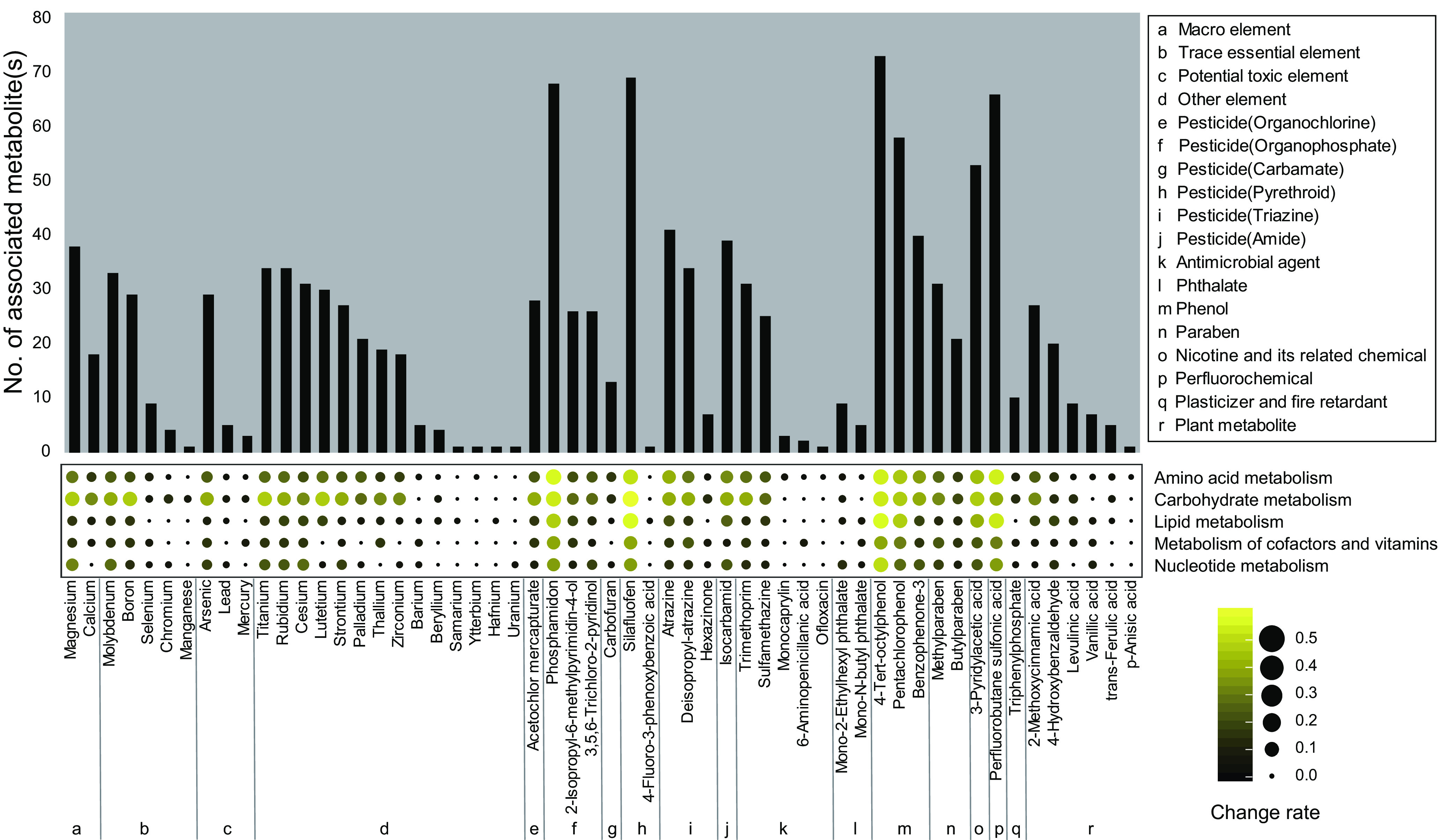
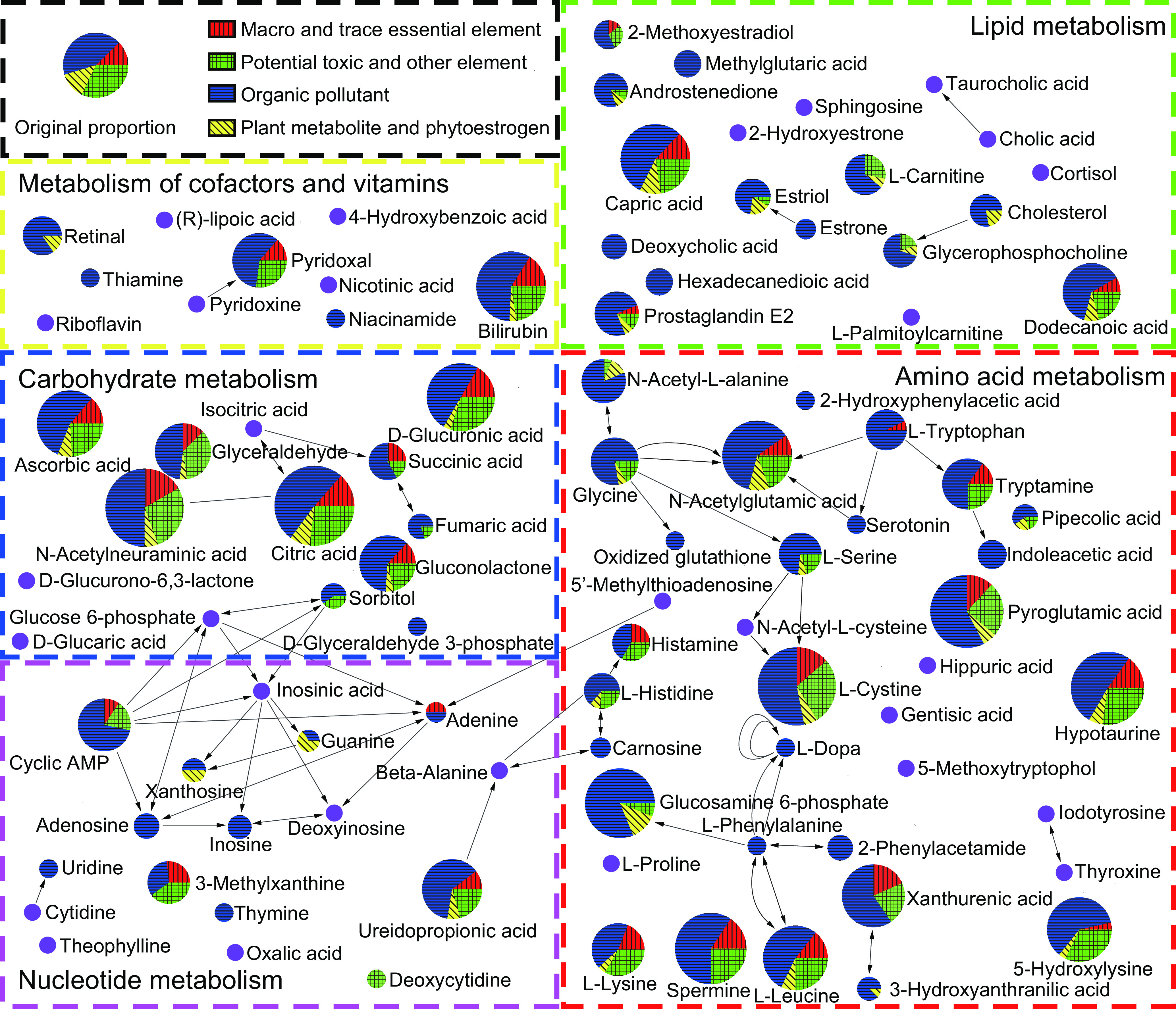
We identified 1,245 significant associations (, Bonferroni correction) between chemical exposures and maternal metabolism during pregnancy. Among elements, the largest number of the significant metabolic associations were observed for magnesium, and among organic compounds, for 4--octylphenol. We used exposome-metabolome associations to explore mechanisms underlying published associations between prenatal chemical exposures and offspring health outcomes. This integration of the literature with our results suggests that reported associations between 10 analytes and birth weight, gestational age, fat deposition, neurobehavioral development, immunological disorders, and hypertension may be partially mediated by metabolites associated with these exposures.
This high-dimensional analysis of the urinary exposome and metabolome identified many associations between chemical exposures and maternal metabolism during pregnancy. Integration of these associations with the literature on health outcomes of exposure suggests that environmental modulation of the maternal metabolome may play a role in the association between prenatal exposure on pregnancy and child health outcomes. https://doi.org/10.1289/EHP9745.
母体在怀孕期间接触环境化学物质会影响各种母体和后代的健康参数。环境暴露对母体代谢的改变可能是这些影响的一个重要途径。然而,关于怀孕期间广泛的化学物质和代谢组的暴露情况的证据有限。
我们研究了怀孕期间尿液暴露组和代谢组之间的关系。
从中国江苏省产前诊所招募的 1024 名孕妇的第一和第三孕期采集尿液样本。使用超高效液相色谱-高分辨率精确质量 spectrometry(UHPLC-HRMS)和电感耦合等离子体质谱法分析第一孕期样本中的暴露组。使用 UHPLC-HRMS 分析第三孕期样本中的代谢组。我们评估了第一孕期 106 种暴露与第三孕期 139 种代谢物之间的关联。
我们在怀孕期间母体代谢与化学暴露之间确定了 1245 个显著关联(,Bonferroni 校正)。在元素中,镁的代谢关联数量最多,而在有机化合物中,4--辛基酚的代谢关联数量最多。我们使用暴露组-代谢组关联来探索产前化学暴露与后代健康结果之间已发表关联的潜在机制。将文献与我们的结果相结合表明,文献报道的 10 种分析物与出生体重、胎龄、脂肪沉积、神经行为发育、免疫紊乱和高血压之间的关联可能部分由与这些暴露相关的代谢物介导。
本研究对尿液暴露组和代谢组进行了高维分析,确定了母体在怀孕期间接触化学物质与代谢之间的许多关联。将这些关联与暴露对健康结果的文献进行整合表明,环境对母体代谢组的调节可能在产前暴露与妊娠和儿童健康结果之间的关联中发挥作用。https://doi.org/10.1289/EHP9745。