Department of Neuroscience, Biomedical Research Institute, Faculty of Medicine and Life Sciences, Hasselt University, Hasselt, Belgium.
Department Psychiatry and Neuropsychology, School for Mental Health and Neuroscience, Maastricht University, Maastricht, Netherlands.
Cell Mol Life Sci. 2021 Oct;78(19-20):6631-6644. doi: 10.1007/s00018-021-03927-2. Epub 2021 Sep 5.
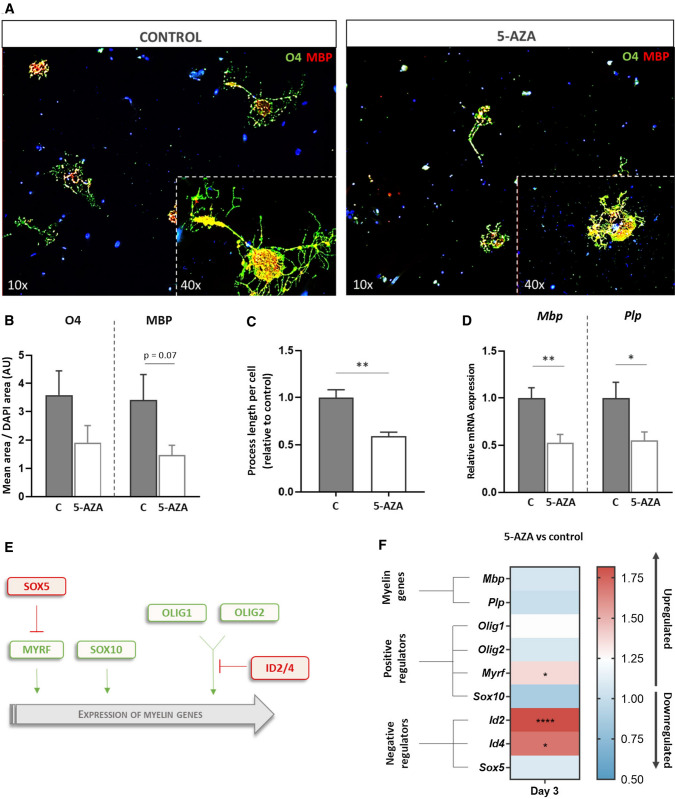
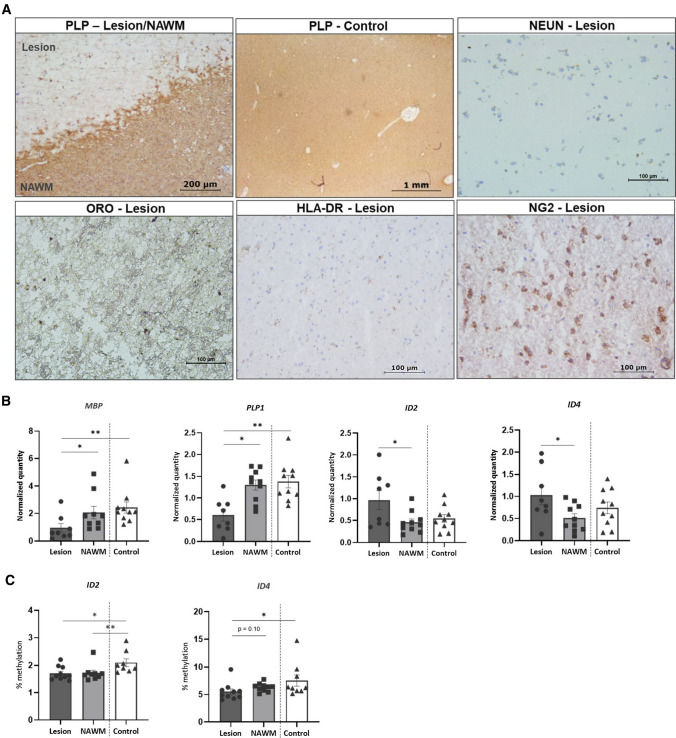
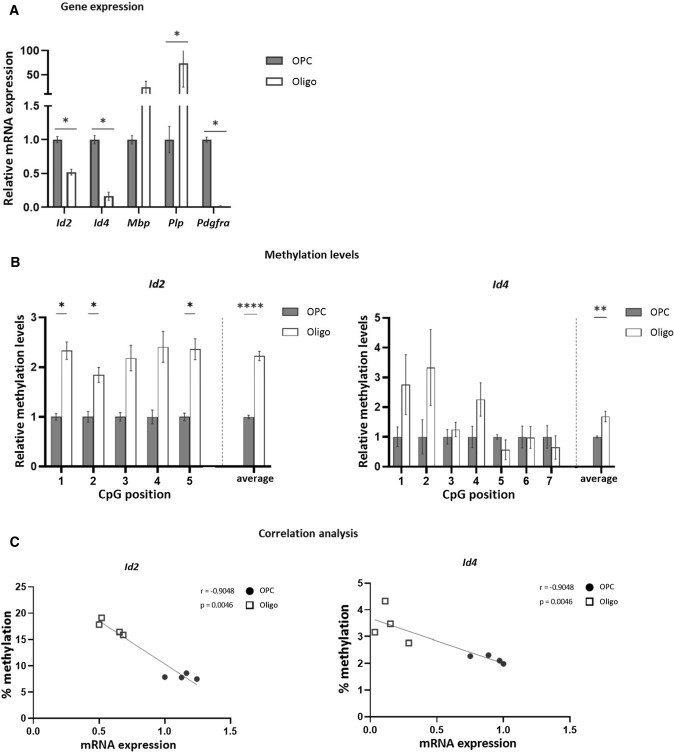
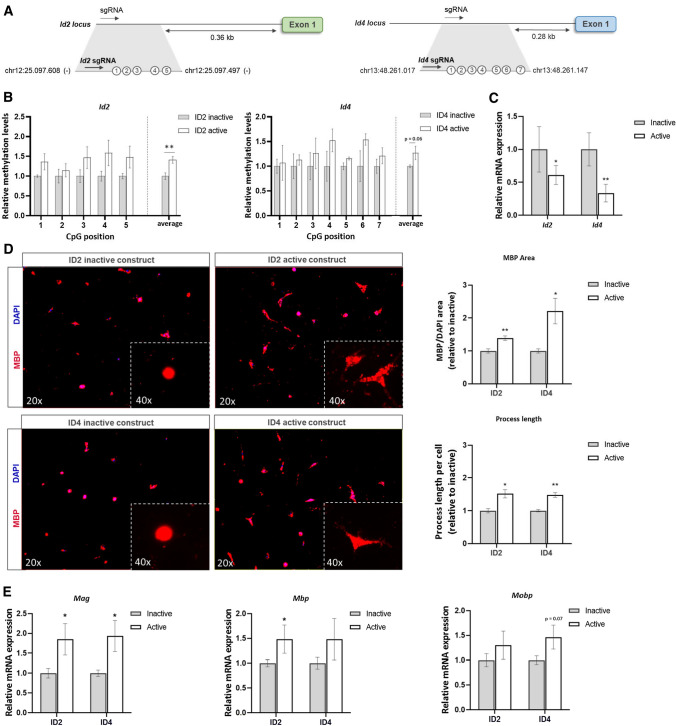
The differentiation of oligodendrocyte precursor cells (OPCs) into myelinating oligodendrocytes is the prerequisite for remyelination in demyelinated disorders such as multiple sclerosis (MS). Epigenetic mechanisms, such as DNA methylation, have been suggested to control the intricate network of transcription factors involved in OPC differentiation. Yet, the exact mechanism remains undisclosed. Here, we are the first to identify the DNA-binding protein inhibitors, Id2 and Id4, as targets of DNA methylation during OPC differentiation. Using state-of-the-art epigenetic editing via CRISPR/dCas9-DNMT3a, we confirm that targeted methylation of Id2/Id4 drives OPC differentiation. Moreover, we show that in the pathological context of MS, methylation and gene expression levels of both ID2 and ID4 are altered compared to control human brain samples. We conclude that DNA methylation is crucial to suppress ID2 and ID4 during OPC differentiation, a process that appears to be dysregulated during MS. Our data do not only reveal new insights into oligodendrocyte biology, but could also lead to a better understanding of CNS myelin disorders.
少突胶质前体细胞(OPC)分化为髓鞘形成的少突胶质细胞是脱髓鞘疾病(如多发性硬化症,MS)中髓鞘再生的前提。表观遗传机制,如 DNA 甲基化,被认为可以控制参与 OPC 分化的转录因子的复杂网络。然而,确切的机制尚不清楚。在这里,我们首次鉴定出 DNA 结合蛋白抑制剂 ID2 和 ID4 是 OPC 分化过程中 DNA 甲基化的靶标。我们使用最先进的基于 CRISPR/dCas9-DNMT3a 的表观遗传学编辑技术,证实了 ID2/ID4 的靶向甲基化驱动了 OPC 分化。此外,我们还发现,与对照人脑样本相比,在 MS 的病理情况下,ID2 和 ID4 的甲基化和基因表达水平都发生了改变。我们得出结论,DNA 甲基化对于在 OPC 分化过程中抑制 ID2 和 ID4 至关重要,而这一过程在 MS 中似乎失调。我们的数据不仅揭示了少突胶质细胞生物学的新见解,而且可能有助于更好地理解中枢神经系统髓鞘疾病。