Neuroprotection Research Laboratory, Department of Radiology and Neurology, Massachusetts General Hospital and Harvard Medical School, Charlestown, Massachusetts.
Department of Neurology, Graduate School of Medicine, Kyoto University, Kyoto, Japan.
Glia. 2019 Apr;67(4):718-728. doi: 10.1002/glia.23567. Epub 2018 Nov 28.
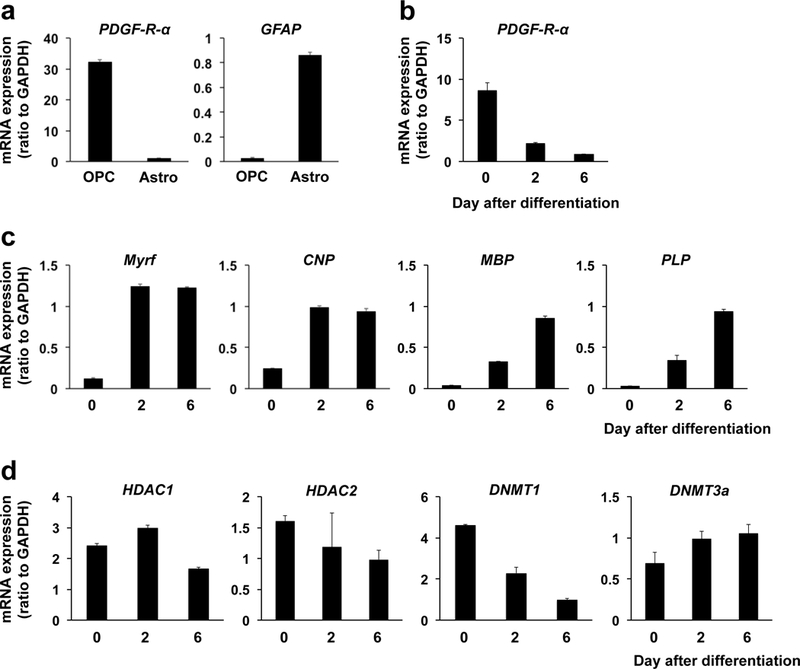
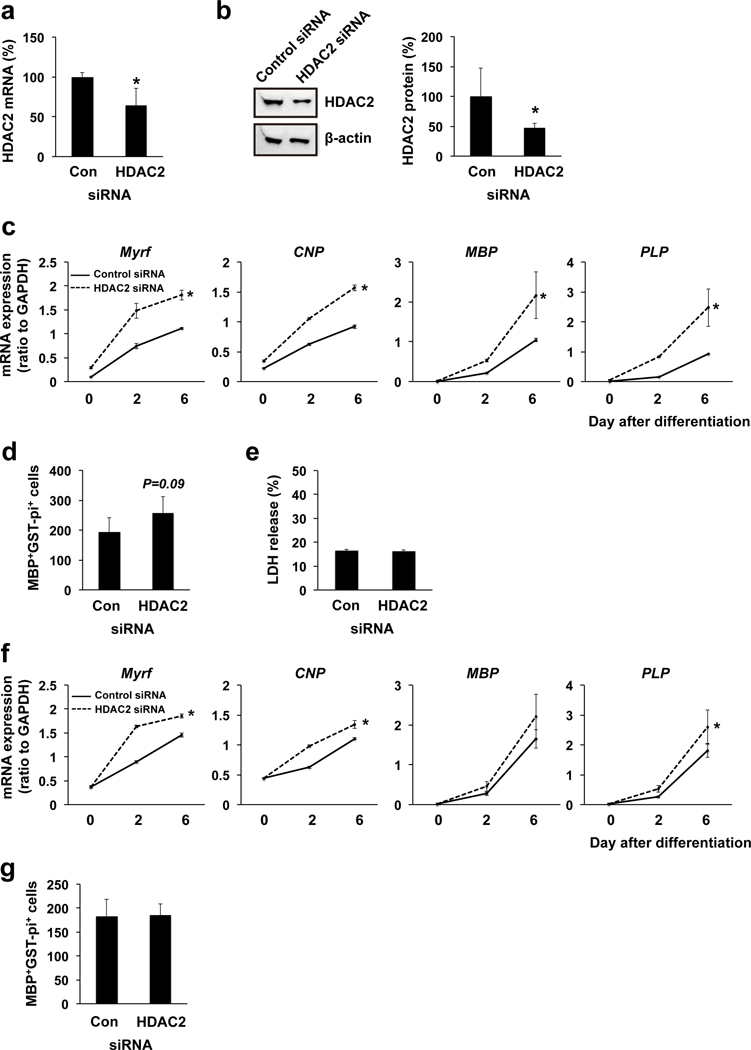
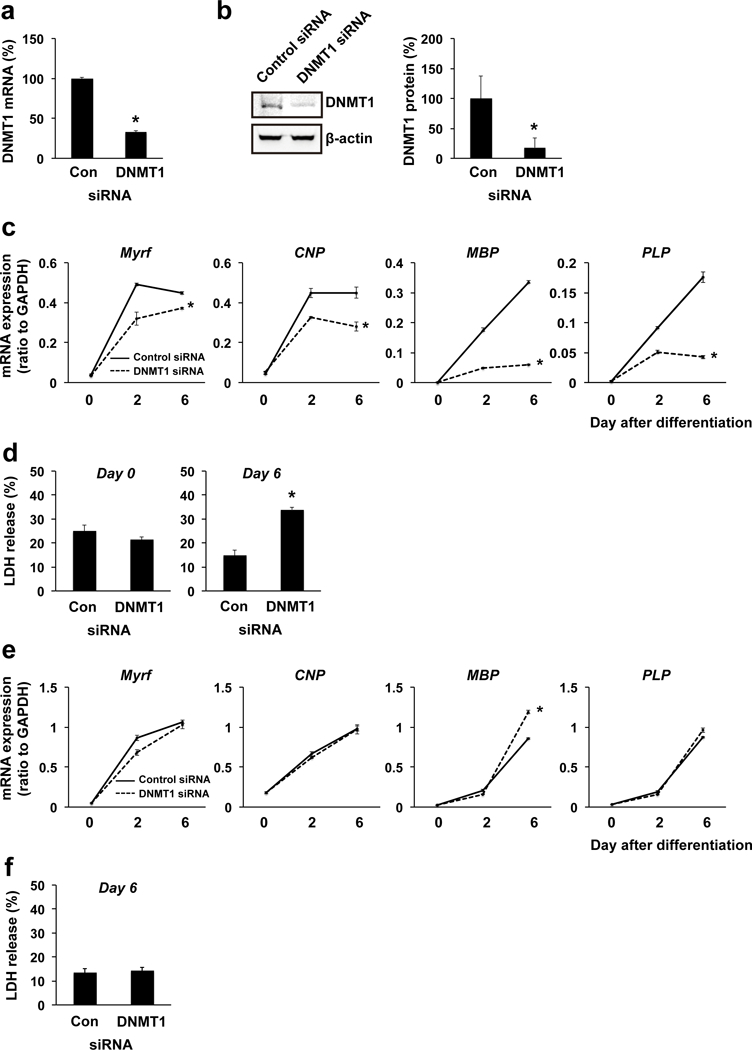
During development or after brain injury, oligodendrocyte precursor cells (OPCs) differentiate into oligodendrocytes to supplement the number of oligodendrocytes. Although mechanisms of OPC differentiation have been extensively examined, the role of epigenetic regulators, such as histone deacetylases (HDACs) and DNA methyltransferase enzymes (DNMTs), in this process is still mostly unknown. Here, we report the differential roles of epigenetic regulators in OPC differentiation. We prepared primary OPC cultures from neonatal rat cortex. Our cultured OPCs expressed substantial amounts of mRNA for HDAC1, HDAC2, DNMT1, and DNMT3a. mRNA levels of HDAC1 and HDAC2 were both decreased by the time OPCs differentiated into myelin-basic-protein expressing oligodendrocytes. However, DNMT1 or DNMT3a mRNA level gradually decreased or increased during the differentiation step, respectively. We then knocked down those regulators in cultured OPCs with siRNA technique before starting OPC differentiation. While HDAC1 knockdown suppressed OPC differentiation, HDAC2 knockdown promoted OPC differentiation. DNMT1 knockdown also suppressed OPC differentiation, but unlike HDAC1/2, DNMT1-deficient cells showed cell damage during the later phase of OPC differentiation. On the other hand, when OPCs were transfected with siRNA for DNMT3a, the number of OPCs was decreased, indicating that DNMT3a may participate in OPC survival/proliferation. Taken together, these data demonstrate that each epigenetic regulator has different phase-specific roles in OPC survival and differentiation.
在发育过程中或脑损伤后,少突胶质前体细胞(OPC)分化为少突胶质细胞,以补充少突胶质细胞的数量。尽管已经广泛研究了 OPC 分化的机制,但表观遗传调节剂(如组蛋白去乙酰化酶(HDAC)和 DNA 甲基转移酶酶(DNMT))在该过程中的作用在很大程度上仍然未知。在这里,我们报告了表观遗传调节剂在 OPC 分化中的差异作用。我们从新生大鼠皮层中制备了原代 OPC 培养物。我们培养的 OPC 表达了大量的 HDAC1、HDAC2、DNMT1 和 DNMT3a 的 mRNA。OPC 分化为髓鞘碱性蛋白表达的少突胶质细胞时,HDAC1 和 HDAC2 的 mRNA 水平均降低。然而,DNMT1 或 DNMT3a 的 mRNA 水平在分化过程中分别逐渐降低或升高。然后,我们在开始 OPC 分化之前用 siRNA 技术敲低培养物中的这些调节剂。虽然 HDAC1 敲低抑制 OPC 分化,但 HDAC2 敲低促进 OPC 分化。DNMT1 敲低也抑制 OPC 分化,但与 HDAC1/2 不同,DNMT1 缺陷细胞在 OPC 分化的后期阶段显示出细胞损伤。另一方面,当 OPC 被用于 DNMT3a 的 siRNA 转染时,OPC 的数量减少,表明 DNMT3a 可能参与 OPC 的存活/增殖。综上所述,这些数据表明,每个表观遗传调节剂在 OPC 的存活和分化中具有不同的阶段特异性作用。