Department of Neurology, Xiangya Hospital, Central South University, Changsha, China.
Cancer Med. 2021 Oct;10(20):7418-7439. doi: 10.1002/cam4.4248. Epub 2021 Sep 5.
Glioma is the most common central nervous system tumor in adults, and a considerable part of them are high-degree ones with high malignancy and poor prognosis. At present, the classification and treatment of glioma are mainly based on its histological characteristics, so studies at the molecular level are needed.
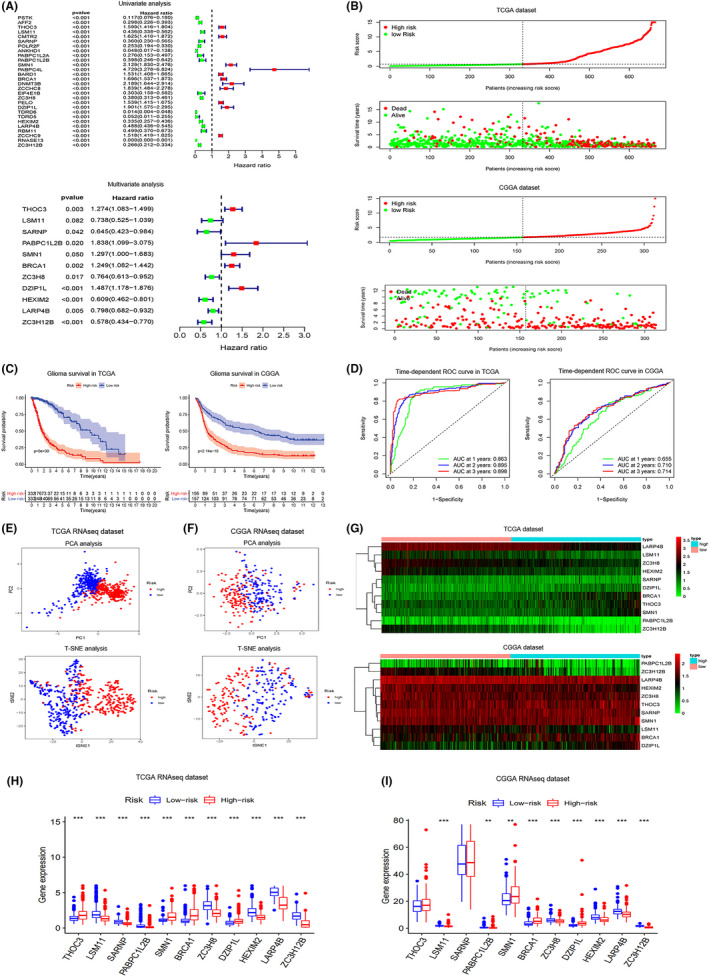
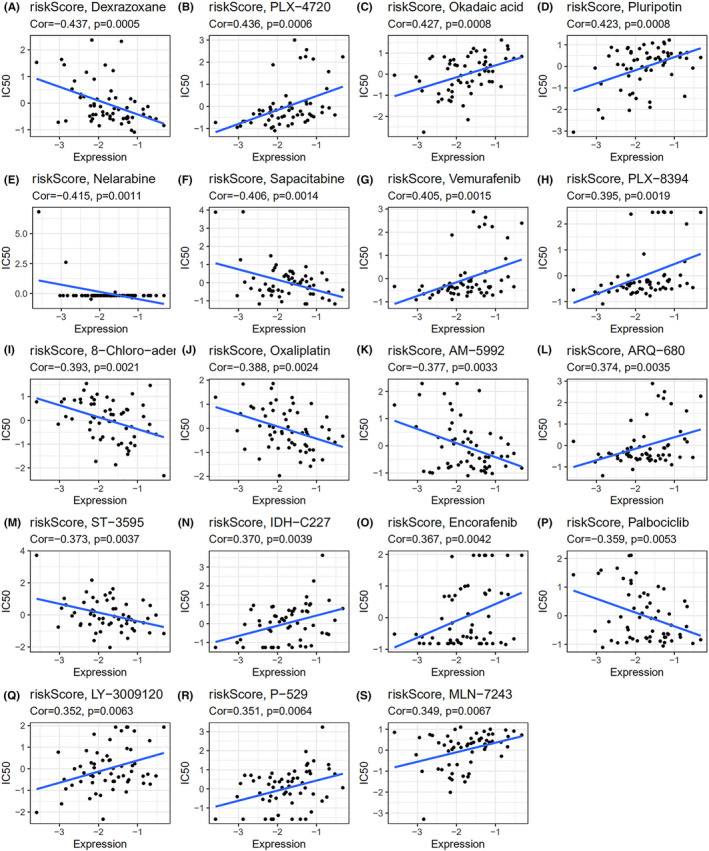
RNA-seq data from The Cancer Genome Atlas (TCGA) datasets (n = 703) and Chinese Glioma Genome Atlas (CGGA) were utilized to find out the differentially expressed RNA-binding proteins (RBPs) between normal cerebral tissue and glioma. A prediction system for the prognosis of glioma patients based on 11 RBPs was established and validated using uni- and multi-variate Cox regression analyses. STITCH and CMap databases were exploited to identify putative drugs and their targets. Single sample gene set enrichment analysis (ssGSEA) was used to calculate scores of specific immune-related gene sets. IC50 of over 20,000 compounds in 60 cancer cell lines was collected from the CellMiner database to test the drug sensitivity prediction value of the RBP-based signature.
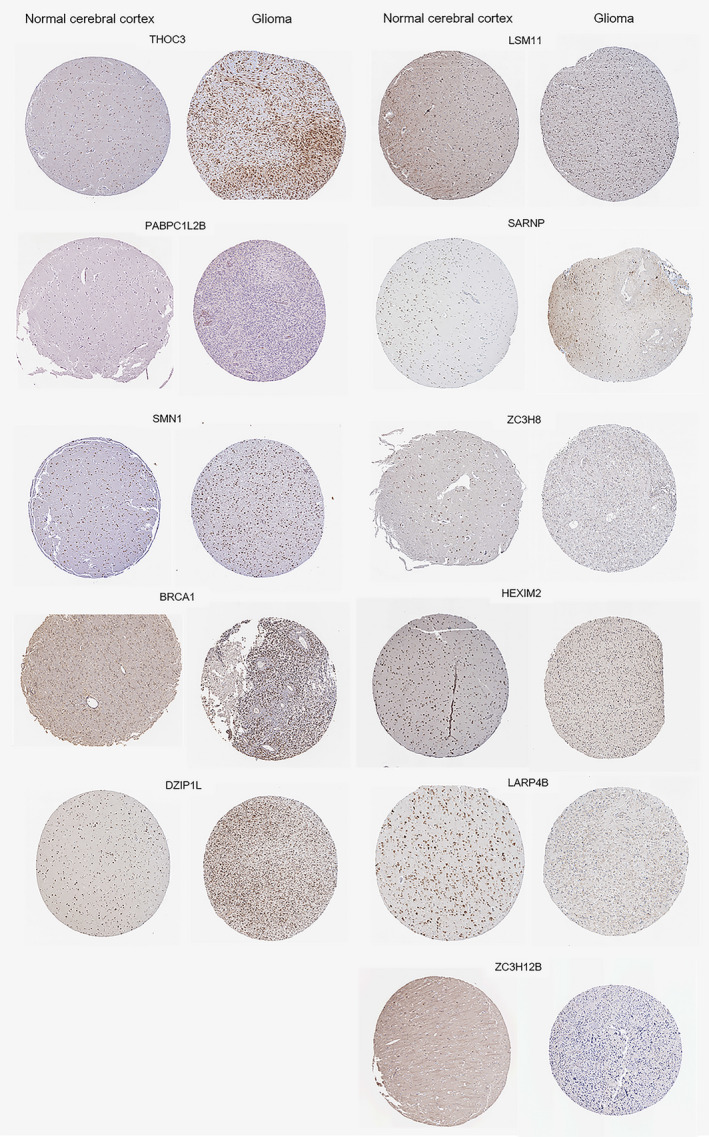
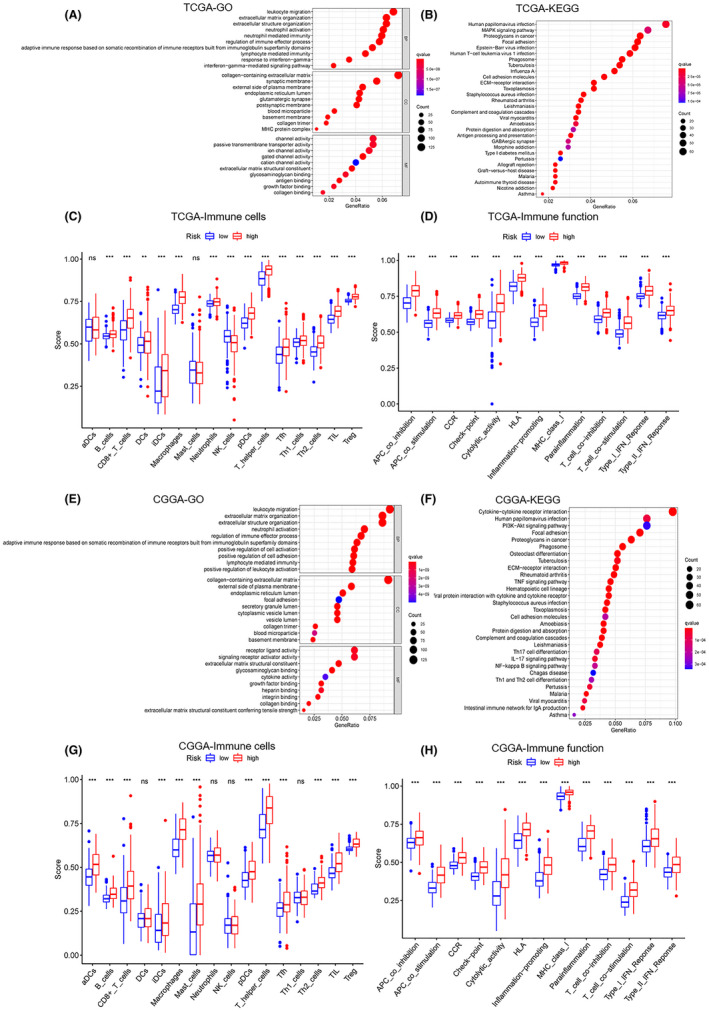
We established a reliable prediction system for the prognosis of glioma patients based on 11 RBPs including THOC3, LSM11, SARNP, PABPC1L2B, SMN1, BRCA1, ZC3H8, DZIP1L, HEXIM2, LARP4B, and ZC3H12B. These RBPs were primarily associated with ribosome and post-transcriptional regulation. RBP-based risk scores were closely related to immune cells and immune function. We also confirmed the potential of the signature to predict the drug sensitivity of currently approved or evaluated drugs.
Differentially expressed RBPs in glioma can be used as a basis for prognosis prediction, new drugs screening and drug sensitivity prediction. As RBP-based glioma risk scores were associated with immunity, immunotherapy may become an important treatment for glioma in the future.
脑胶质瘤是成人中枢神经系统最常见的肿瘤,其中相当一部分为高度恶性肿瘤,具有高度恶性和预后不良的特点。目前,脑胶质瘤的分类和治疗主要基于其组织学特征,因此需要进行分子水平的研究。
利用癌症基因组图谱(TCGA)数据集(n=703)和中国脑胶质瘤基因组图谱(CGGA)的 RNA-seq 数据,筛选正常脑组织和脑胶质瘤之间差异表达的 RNA 结合蛋白(RBPs)。采用单变量和多变量 Cox 回归分析,建立并验证基于 11 个 RBPs 的脑胶质瘤患者预后预测模型。利用 STITCH 和 CMap 数据库鉴定潜在药物及其靶点。采用单样本基因集富集分析(ssGSEA)计算特定免疫相关基因集的评分。从 CellMiner 数据库中收集 60 种癌细胞系中超过 20,000 种化合物的 IC50,以测试基于 RBP 的signature 对药物敏感性预测的价值。
我们建立了一个基于 11 个 RBPs 的脑胶质瘤患者预后可靠的预测系统,包括 THOC3、LSM11、SARNP、PABPC1L2B、SMN1、BRCA1、ZC3H8、DZIP1L、HEXIM2、LARP4B 和 ZC3H12B。这些 RBPs 主要与核糖体和转录后调控有关。基于 RBP 的风险评分与免疫细胞和免疫功能密切相关。我们还证实了该 signature 预测已批准或评估药物的药物敏感性的潜力。
脑胶质瘤中差异表达的 RBPs 可作为预后预测、新药筛选和药物敏感性预测的基础。由于基于 RBP 的脑胶质瘤风险评分与免疫有关,免疫疗法可能成为未来脑胶质瘤的重要治疗方法。