Rocha Filho T M, Moret M A, Chow C C, Phillips J C, Cordeiro A J A, Scorza F A, Almeida A-C G, Mendes J F F
International Center for Condensed Matter Physics and Instituto de Física, Universidade de Brasília, Brasília - BRAZIL.
Centro Universitário SENAI CIMATEC and Universidade do Estado da Bahia, Salvador - Brazil.
Chaos Solitons Fractals. 2021 Nov;152:111359. doi: 10.1016/j.chaos.2021.111359. Epub 2021 Aug 31.
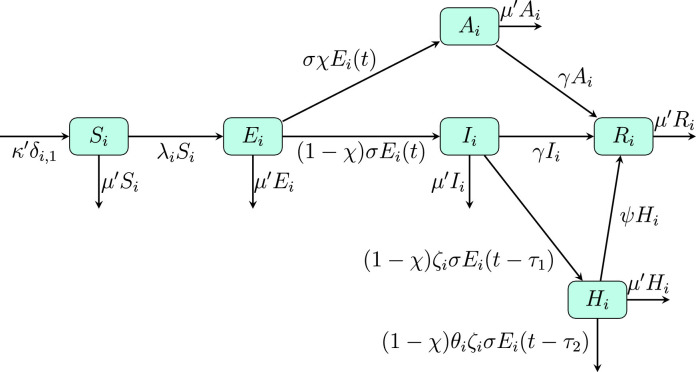
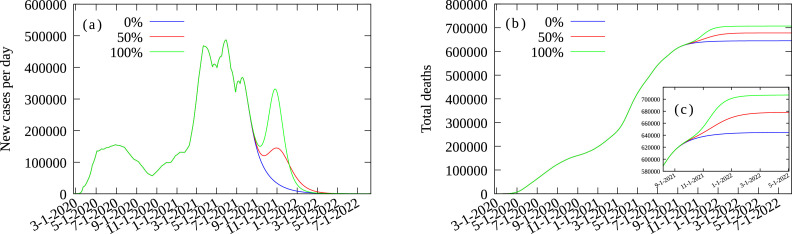
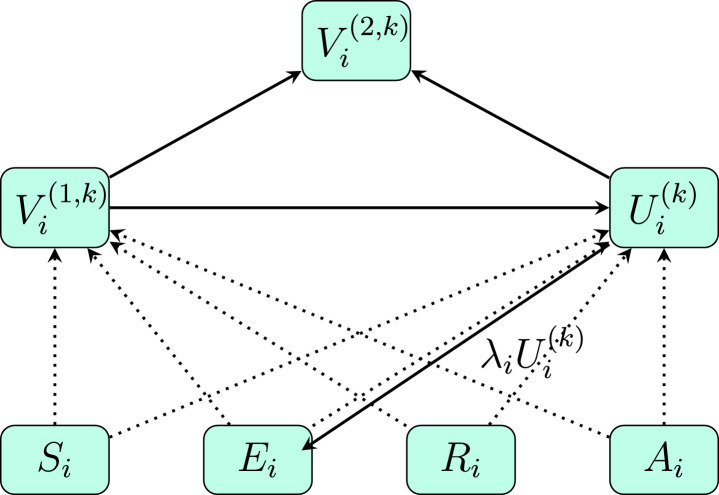
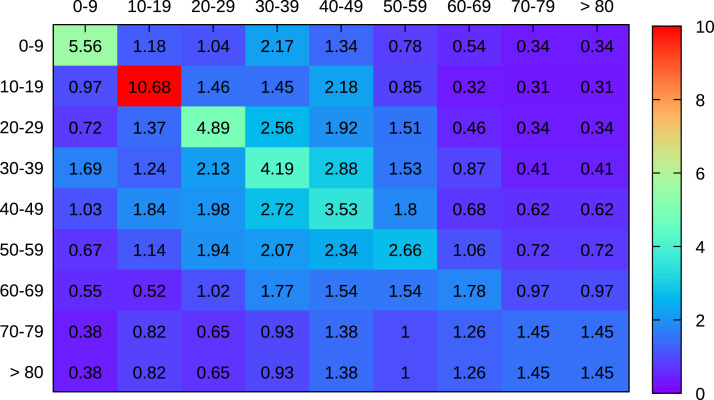
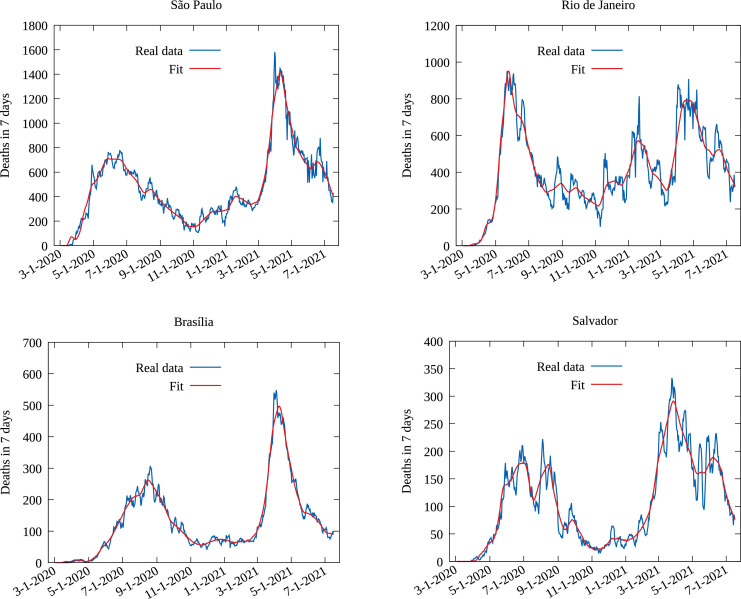
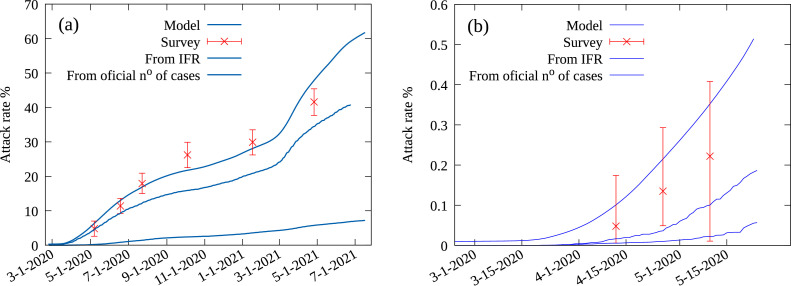
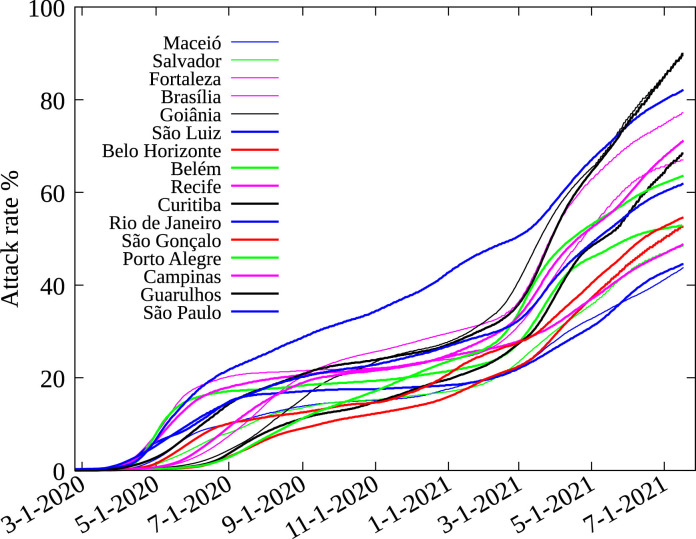
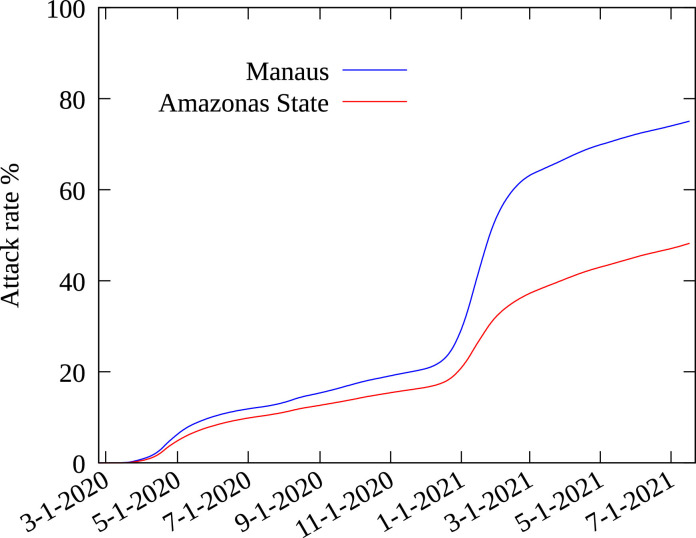
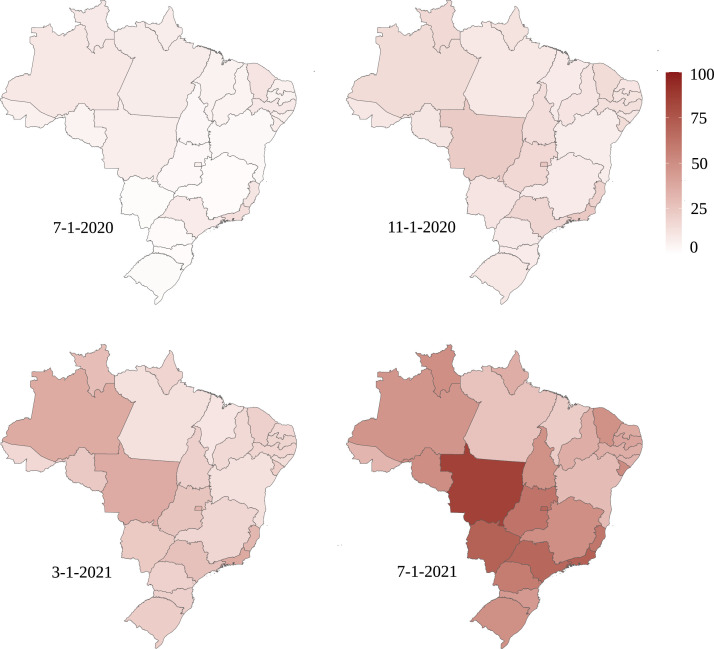
We introduce a compartmental model SEIAHRV (Susceptible, Exposed, Infected, Asymptomatic, Hospitalized, Recovered, Vaccinated) with age structure for the spread of the SARAS-CoV virus. In order to model current different vaccines we use compartments for individuals vaccinated with one and two doses without vaccine failure and a compartment for vaccinated individual with vaccine failure. The model allows to consider any number of different vaccines with different efficacies and delays between doses. Contacts among age groups are modeled by a contact matrix and the contagion matrix is obtained from a probability of contagion per contact. The model uses known epidemiological parameters and the time dependent probability is obtained by fitting the model output to the series of deaths in each locality, and reflects non-pharmaceutical interventions. As a benchmark the output of the model is compared to two good quality serological surveys, and applied to study the evolution of the COVID-19 pandemic in the main Brazilian cities with a total population of more than one million. We also discuss with some detail the case of the city of Manaus which raised special attention due to a previous report of We also estimate the attack rate, the total proportion of cases (symptomatic and asymptomatic) with respect to the total population, for all Brazilian states since the beginning of the COVID-19 pandemic. We argue that the model present here is relevant to assessing present policies not only in Brazil but also in any place where good serological surveys are not available.
我们引入了一个具有年龄结构的SEIAHRV(易感、暴露、感染、无症状、住院、康复、接种) compartmental模型,用于模拟SARS-CoV病毒的传播。为了对当前不同的疫苗进行建模,我们为接种一剂和两剂且无疫苗失效的个体使用了不同的 compartment,以及为接种后出现疫苗失效的个体设置了一个 compartment。该模型允许考虑任意数量具有不同效力和剂次间隔的不同疫苗。年龄组之间的接触通过接触矩阵进行建模,传染矩阵则从每次接触的传染概率得出。该模型使用已知的流行病学参数,通过将模型输出拟合到每个地区的死亡序列来获得随时间变化的概率,并反映非药物干预措施。作为基准,将模型输出与两项高质量的血清学调查结果进行比较,并应用于研究巴西主要城市(总人口超过100万)的COVID-19大流行演变情况。我们还详细讨论了玛瑙斯市的情况,该市因先前的一份报告而备受关注。我们还估计了自COVID-19大流行开始以来巴西所有州的攻击率,即病例(有症状和无症状)占总人口的总比例。我们认为,这里提出的模型不仅与评估巴西当前的政策相关,而且与评估任何没有高质量血清学调查的地方的政策都相关。