Bouton Chad, Bhagat Nikunj, Chandrasekaran Santosh, Herrero Jose, Markowitz Noah, Espinal Elizabeth, Kim Joo-Won, Ramdeo Richard, Xu Junqian, Glasser Matthew F, Bickel Stephan, Mehta Ashesh
Feinstein Institutes for Medical Research at Northwell Health, New York, NY, United States.
Institute of Bioelectronic Medicine, Feinstein Institutes for Medical Research, New York, NY, United States.
Front Neurosci. 2021 Aug 17;15:699631. doi: 10.3389/fnins.2021.699631. eCollection 2021.
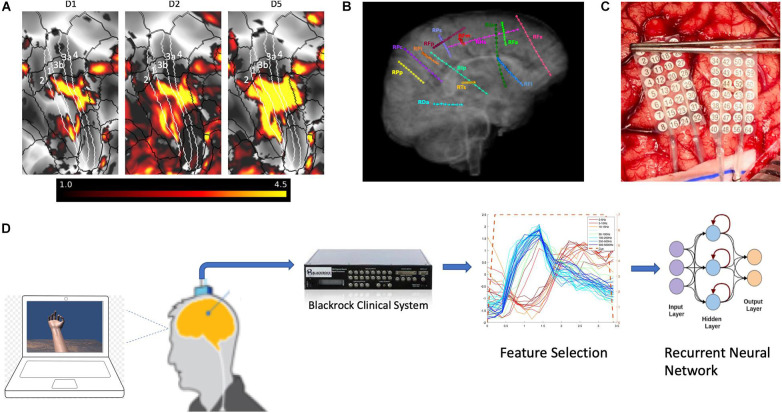
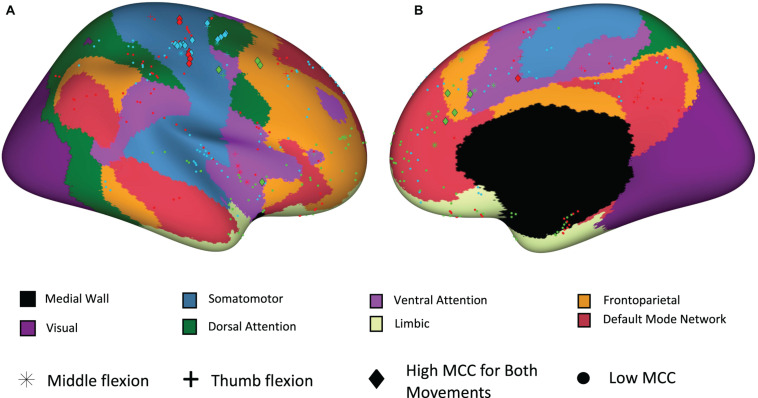
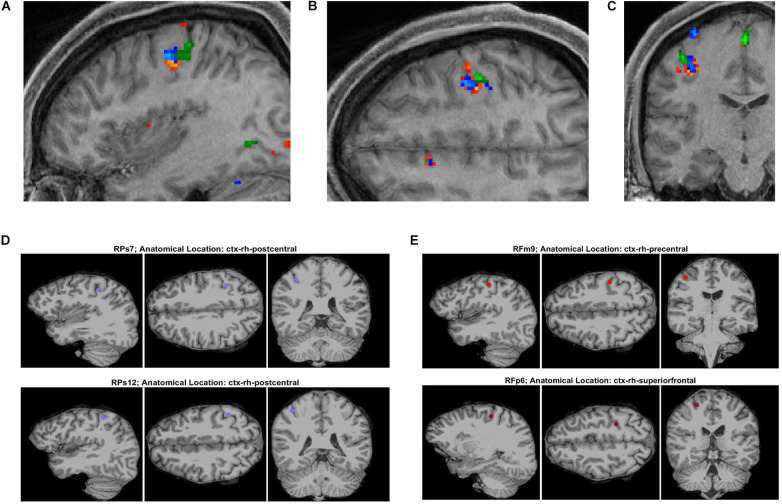
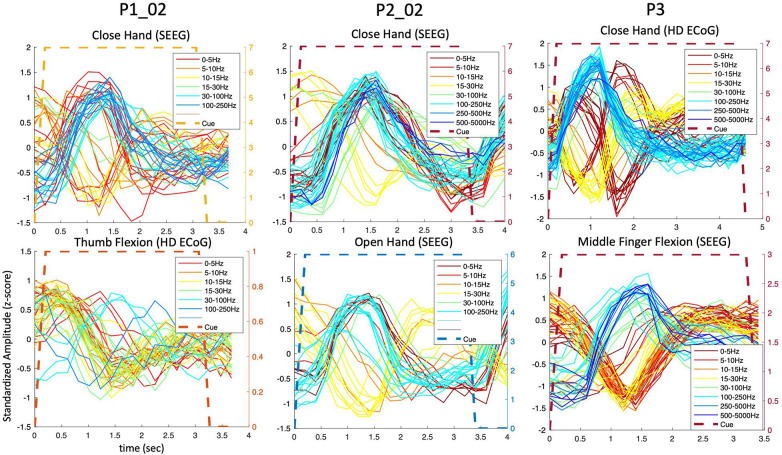
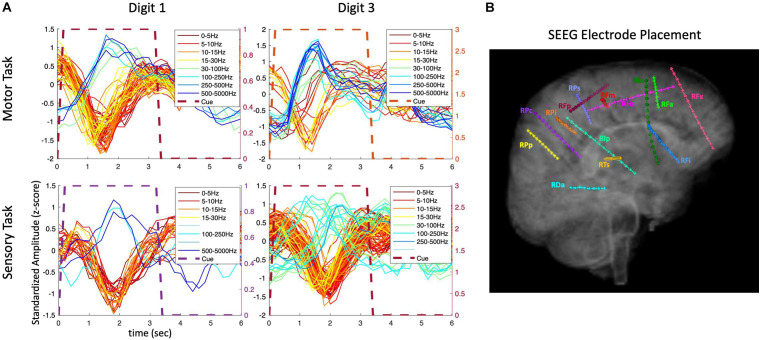
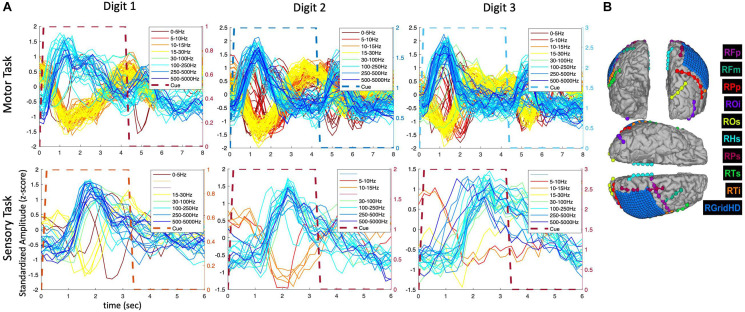
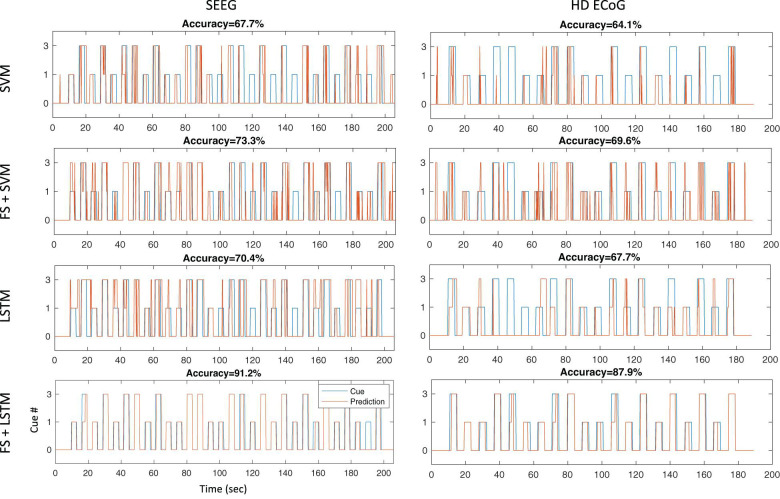
Millions of people worldwide suffer motor or sensory impairment due to stroke, spinal cord injury, multiple sclerosis, traumatic brain injury, diabetes, and motor neuron diseases such as ALS (amyotrophic lateral sclerosis). A brain-computer interface (BCI), which links the brain directly to a computer, offers a new way to study the brain and potentially restore impairments in patients living with these debilitating conditions. One of the challenges currently facing BCI technology, however, is to minimize surgical risk while maintaining efficacy. Minimally invasive techniques, such as stereoelectroencephalography (SEEG) have become more widely used in clinical applications in epilepsy patients since they can lead to fewer complications. SEEG depth electrodes also give access to sulcal and white matter areas of the brain but have not been widely studied in brain-computer interfaces. Here we show the first demonstration of decoding sulcal and subcortical activity related to both movement and tactile sensation in the human hand. Furthermore, we have compared decoding performance in SEEG-based depth recordings versus those obtained with electrocorticography electrodes (ECoG) placed on gyri. Initial poor decoding performance and the observation that most neural modulation patterns varied in amplitude trial-to-trial and were transient (significantly shorter than the sustained finger movements studied), led to the development of a feature selection method based on a repeatability metric using temporal correlation. An algorithm based on temporal correlation was developed to isolate features that consistently repeated (required for accurate decoding) and possessed information content related to movement or touch-related stimuli. We subsequently used these features, along with deep learning methods, to automatically classify various motor and sensory events for individual fingers with high accuracy. Repeating features were found in sulcal, gyral, and white matter areas and were predominantly phasic or phasic-tonic across a wide frequency range for both HD (high density) ECoG and SEEG recordings. These findings motivated the use of long short-term memory (LSTM) recurrent neural networks (RNNs) which are well-suited to handling transient input features. Combining temporal correlation-based feature selection with LSTM yielded decoding accuracies of up to 92.04 ± 1.51% for hand movements, up to 91.69 ± 0.49% for individual finger movements, and up to 83.49 ± 0.72% for focal tactile stimuli to individual finger pads while using a relatively small number of SEEG electrodes. These findings may lead to a new class of minimally invasive brain-computer interface systems in the future, increasing its applicability to a wide variety of conditions.
全球数以百万计的人因中风、脊髓损伤、多发性硬化症、创伤性脑损伤、糖尿病以及运动神经元疾病(如肌萎缩侧索硬化症,即ALS)而遭受运动或感觉障碍。脑机接口(BCI)将大脑直接与计算机相连,为研究大脑以及潜在地恢复患有这些使人衰弱疾病的患者的功能障碍提供了一种新方法。然而,BCI技术目前面临的挑战之一是在保持有效性的同时将手术风险降至最低。微创技术,如立体脑电图(SEEG),由于其并发症较少,已在癫痫患者的临床应用中得到更广泛的使用。SEEG深度电极还可以接触到大脑的脑沟和白质区域,但在脑机接口方面尚未得到广泛研究。在这里,我们首次展示了对与人类手部运动和触觉相关的脑沟和皮层下活动进行解码。此外,我们还比较了基于SEEG的深度记录与置于脑回上的皮层脑电图电极(ECoG)的解码性能。最初解码性能较差,并且观察到大多数神经调制模式在每次试验中的幅度都有所变化且是短暂的(明显短于所研究的持续手指运动),这促使我们开发了一种基于使用时间相关性的可重复性度量的特征选择方法。开发了一种基于时间相关性的算法,以分离出持续重复(准确解码所需)且具有与运动或触觉相关刺激相关信息内容的特征。我们随后使用这些特征以及深度学习方法,以高精度自动对各个手指的各种运动和感觉事件进行分类。在脑沟、脑回和白质区域发现了重复特征,并且对于高密度(HD)ECoG和SEEG记录,在很宽的频率范围内主要是相位性或相位 - 紧张性的。这些发现促使我们使用非常适合处理短暂输入特征的长短期记忆(LSTM)循环神经网络(RNN)。将基于时间相关性特征选择与LSTM相结合,在使用相对较少数量的SEEG电极时,手部运动的解码准确率高达92.04 ± 1.51%,单个手指运动的解码准确率高达91.69 ± 0.49%,单个指腹的局部触觉刺激的解码准确率高达83.49 ± 0.72%。这些发现可能会在未来催生一类新型的微创脑机接口系统,提高其在各种病症中的适用性。