Jin Hulin, D'Urso Vittorio, Neuteboom Berend, McKenna Sean D, Schweickhardt Rene, Gross Alec W, Fomekong Nanfack Yves, Paoletti Andrea, Carter Carina, Toleikis Lars, Fluck Markus, Scheuenpflug Juergen, Cai Ti
the healthcare business of Merck KGaA, Darmstadt, Germany.
Istituto di Ricerche Biomediche "A. Marxer" RBM S.p.A. Colleretto Giacosa, Italy, an affiliate of Merck KGaA, Darmstadt, Germany.
Oncoimmunology. 2021 Aug 29;10(1):1958590. doi: 10.1080/2162402X.2021.1958590. eCollection 2021.
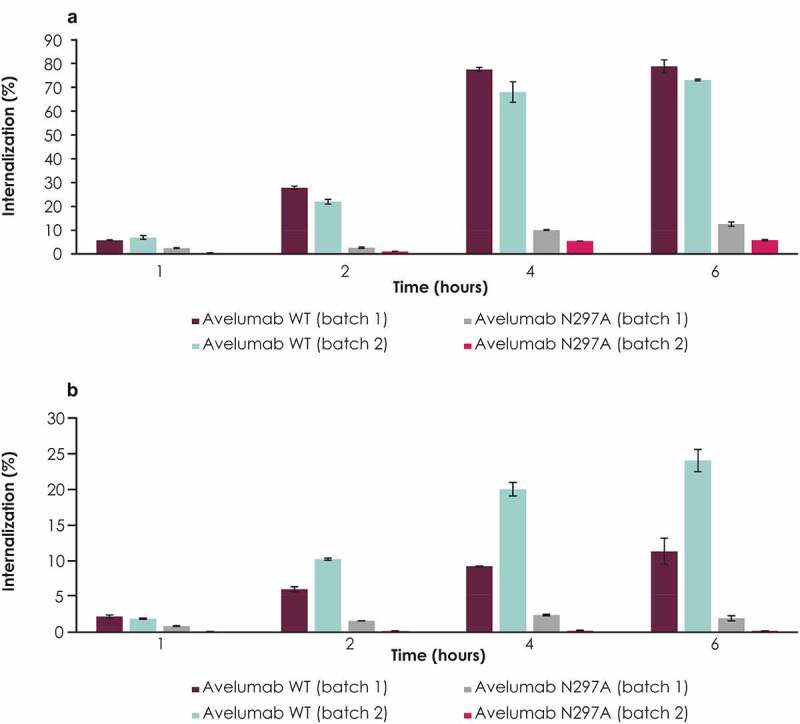
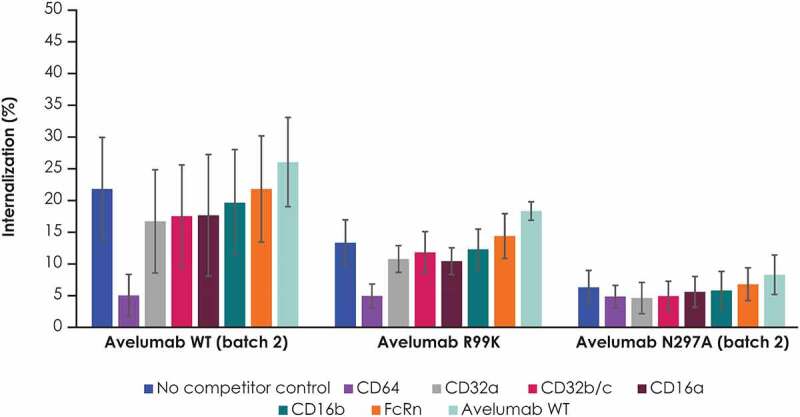
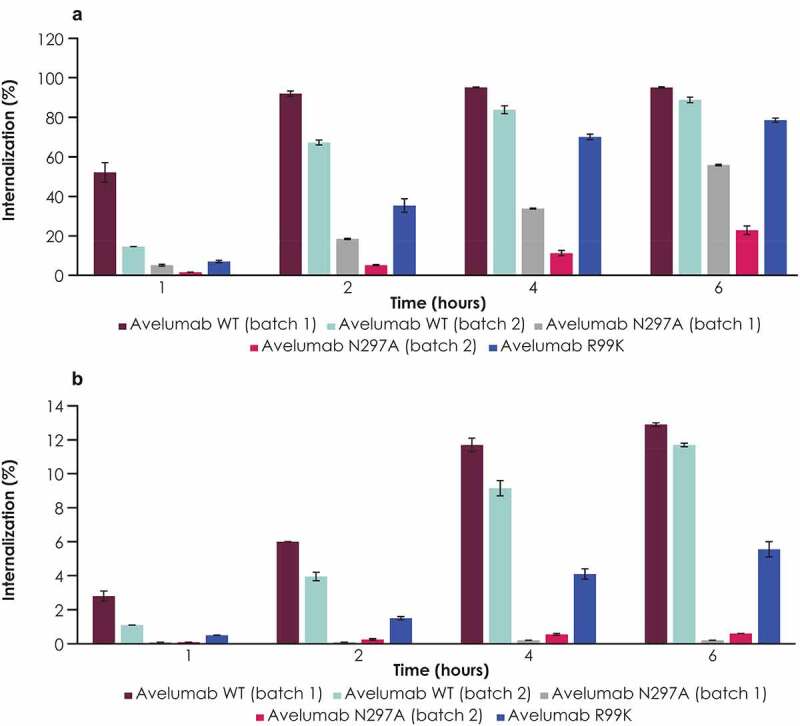
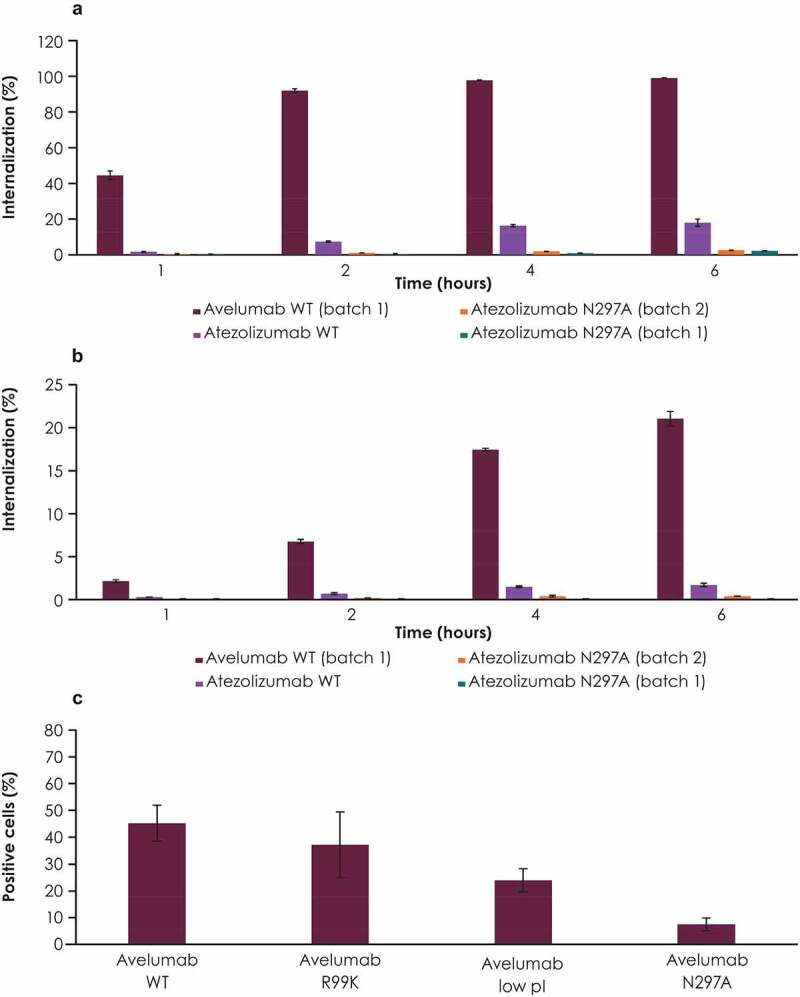
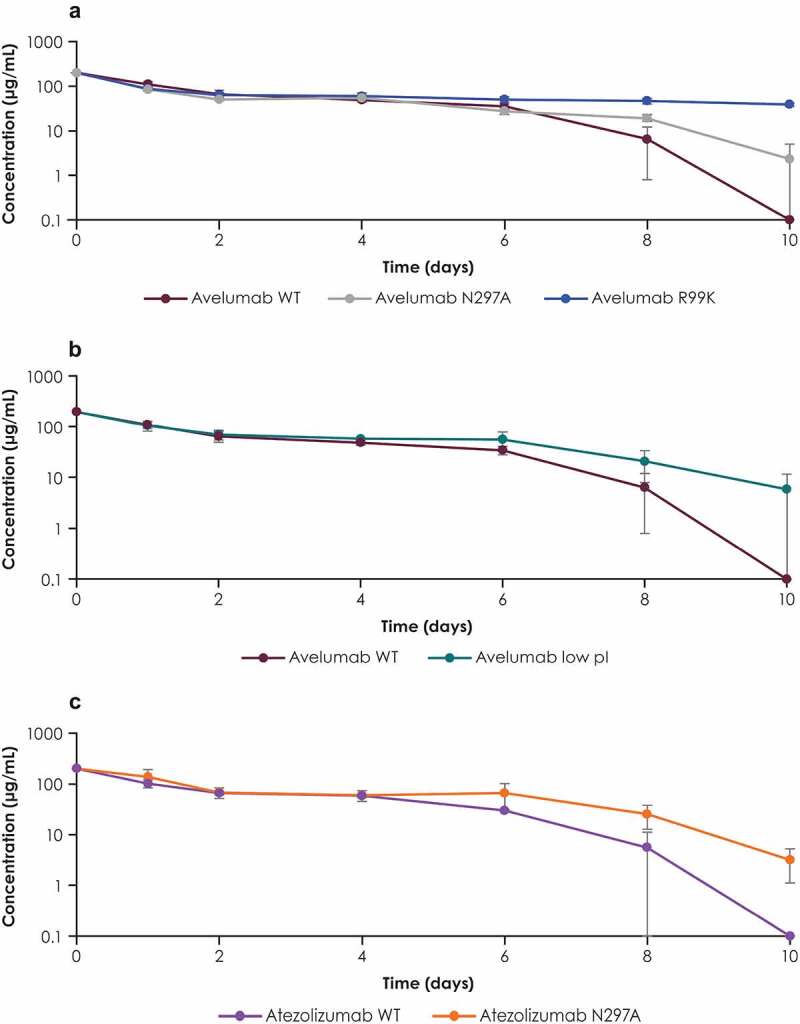
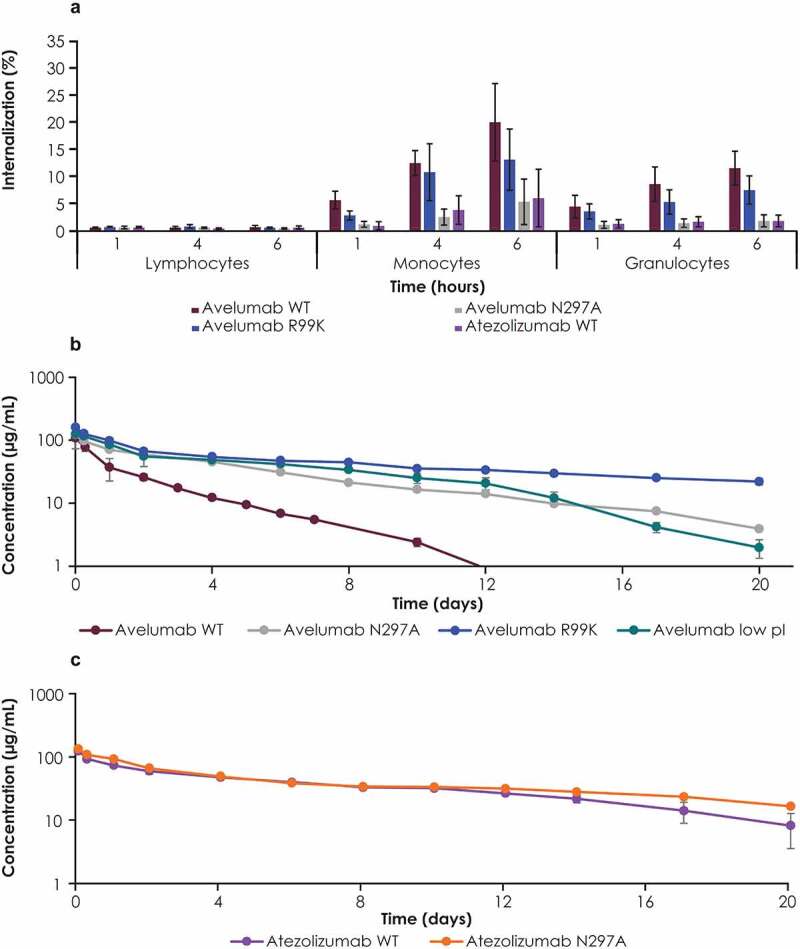
Avelumab is an IgG1 anti-programmed death ligand 1 (anti-PD-L1) monoclonal antibody that has been approved as a monotherapy for metastatic Merkel cell carcinoma and advanced urothelial carcinoma, and in combination with axitinib for advanced renal cell carcinoma. Avelumab is cleared faster and has a shorter half-life than other anti-PD-L1 antibodies, such as atezolizumab and durvalumab, but the mechanisms underlying these differences are unknown. IgG antibodies can be cleared through receptor-mediated endocytosis after binding of the antibody Fab region to target proteins, or via Fcγ receptor (FcγR)-mediated endocytosis. Unlike other approved anti-PD-L1 antibodies, avelumab has a native Fc region that retains FcγR binding capability. We hypothesized that the rapid clearance of avelumab might be due to the synergistic effect of both FcγR-mediated and PD-L1 target-mediated internalization. To investigate this, we performed and studies that compared engineered variants of avelumab and atezolizumab to determine mechanisms of cellular internalization. We found that both FcγR and PD-L1 binding contribute to avelumab internalization. While FcγR binding was the dominant mechanism of avelumab internalization , with CD64 acting as the most important FcγR, studies in mice and cynomolgus monkeys showed that both FcγR and PD-L1 contribute to avelumab elimination, with PD-L1 binding playing a greater role. These studies suggest that the rapid internalization of avelumab might be due to simultaneous binding of both PD-L1 and FcγR in trans. Our findings also provide a basis to alter the clearance and half-life of monoclonal antibodies in therapeutic development.
阿维鲁单抗是一种IgG1抗程序性死亡配体1(抗PD-L1)单克隆抗体,已被批准作为转移性默克尔细胞癌和晚期尿路上皮癌的单一疗法,并与阿昔替尼联合用于晚期肾细胞癌。与其他抗PD-L1抗体(如阿特珠单抗和度伐鲁单抗)相比,阿维鲁单抗清除速度更快,半衰期更短,但这些差异背后的机制尚不清楚。IgG抗体可在抗体Fab区域与靶蛋白结合后通过受体介导的内吞作用清除,或通过Fcγ受体(FcγR)介导的内吞作用清除。与其他已批准的抗PD-L1抗体不同,阿维鲁单抗具有天然Fc区域,保留了FcγR结合能力。我们假设阿维鲁单抗的快速清除可能是由于FcγR介导和PD-L1靶点介导的内化作用的协同效应。为了研究这一点,我们进行了实验和研究,比较了阿维鲁单抗和阿特珠单抗的工程变体,以确定细胞内化机制。我们发现FcγR和PD-L1结合均有助于阿维鲁单抗的内化。虽然FcγR结合是阿维鲁单抗内化的主要机制,CD64是最重要的FcγR,但在小鼠和食蟹猴中的研究表明,FcγR和PD-L1均有助于阿维鲁单抗的清除,其中PD-L1结合起更大作用。这些研究表明,阿维鲁单抗的快速内化可能是由于PD-L1和FcγR同时发生反式结合。我们的研究结果也为在治疗开发中改变单克隆抗体的清除率和半衰期提供了依据。