Reddington Carly L, Conibear Luke, Robinson Suzanne, Knote Christoph, Arnold Stephen R, Spracklen Dominick V
School of Earth and Environment Institute for Climate and Atmospheric Science University of Leeds Leeds UK.
Model-Based Environmental Exposure Science Faculty of Medicine University of Augsburg Augsburg Germany.
Geohealth. 2021 Sep 1;5(9):e2021GH000418. doi: 10.1029/2021GH000418. eCollection 2021 Sep.
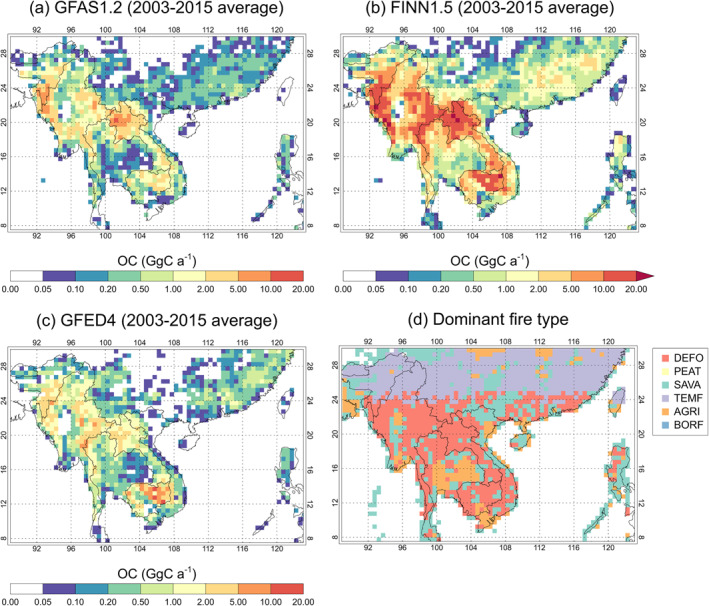
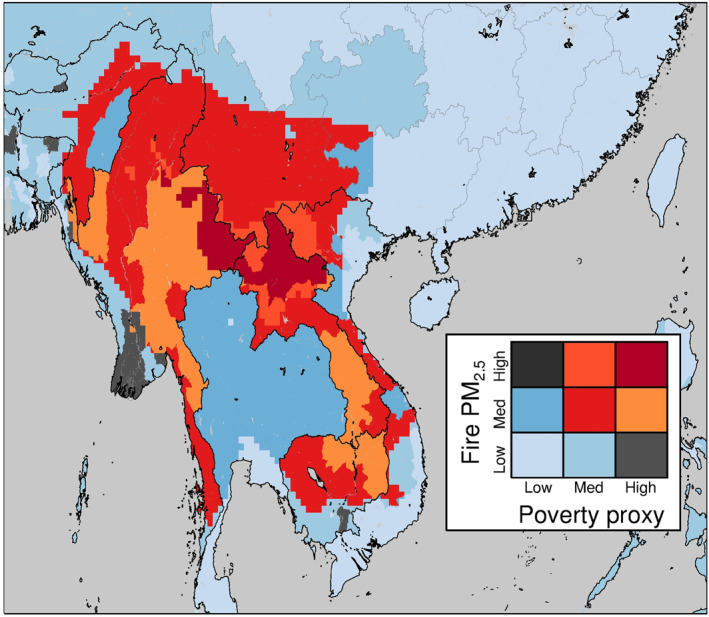
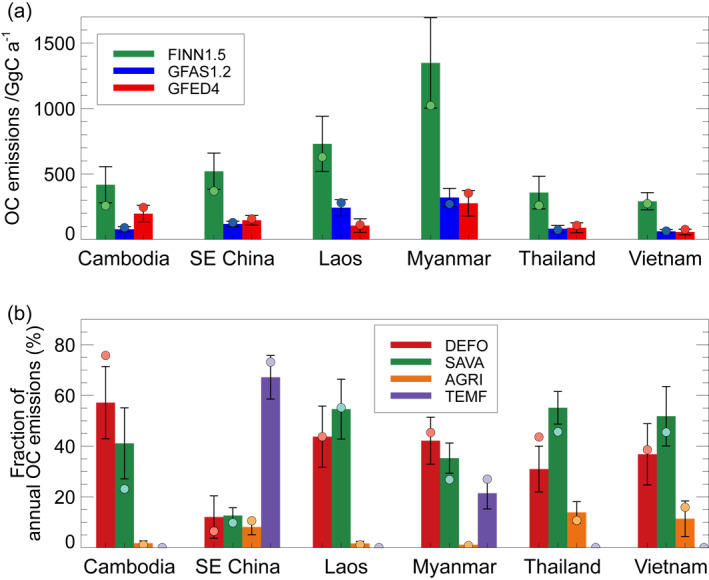
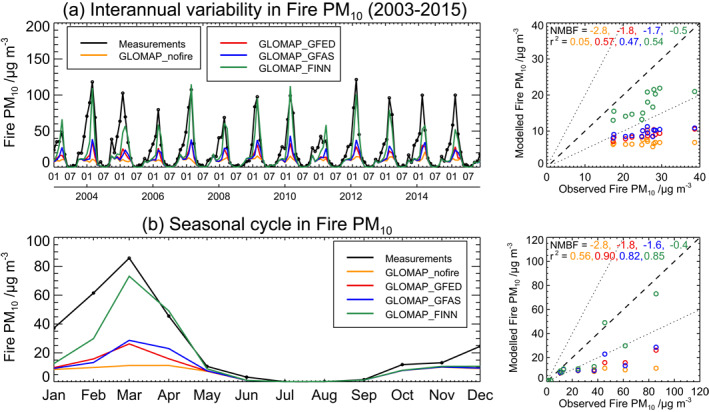
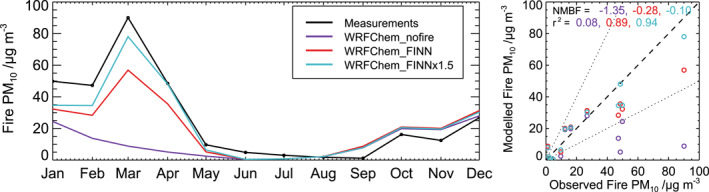
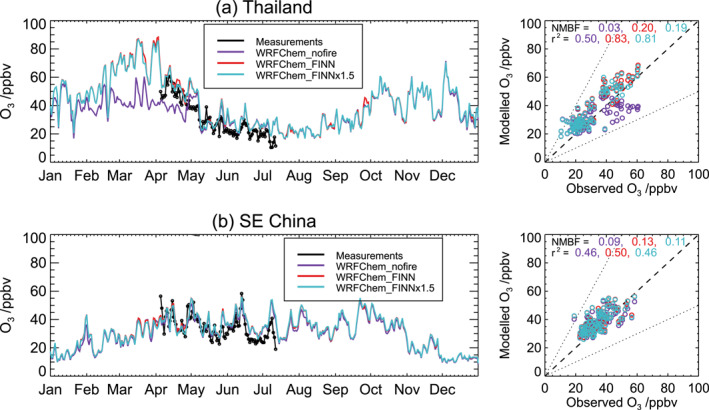
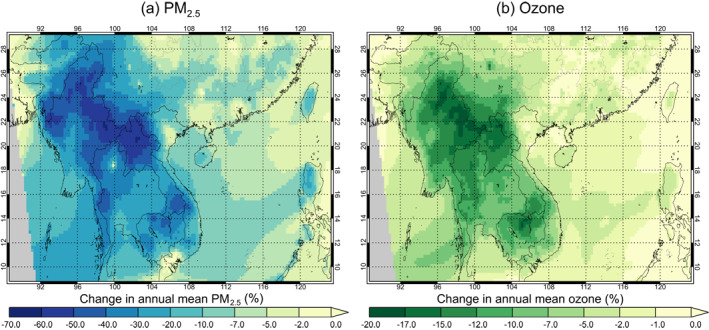
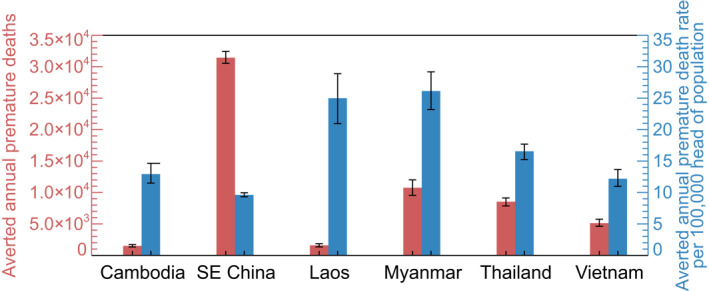
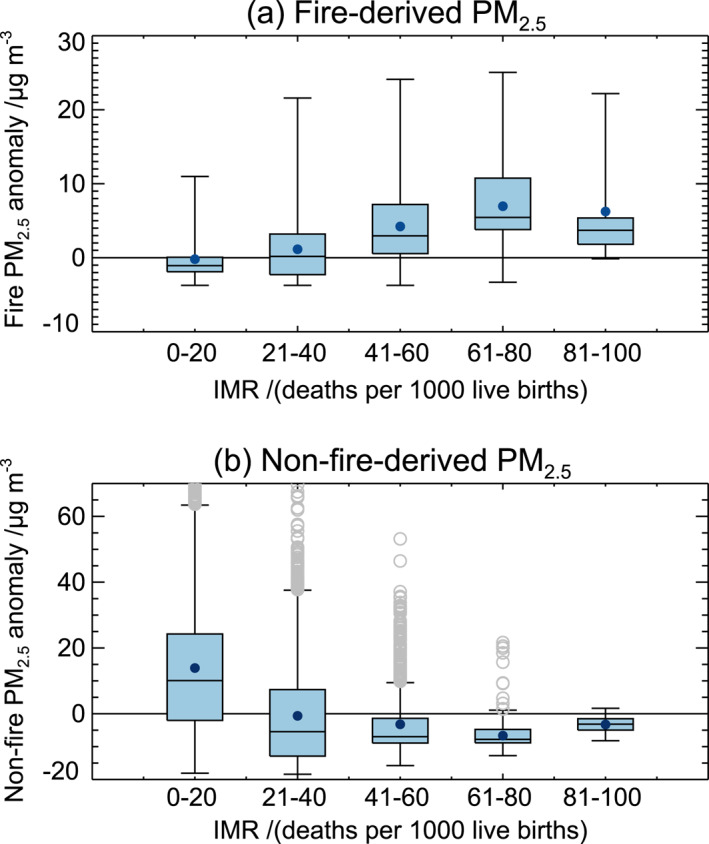
Forest and vegetation fires, used as tools for agriculture and deforestation, are a major source of air pollutants and can cause serious air quality issues in many parts of Asia. Actions to reduce fire may offer considerable, yet largely unrecognized, options for rapid improvements in air quality. In this study, we used a combination of regional and global air quality models and observations to examine the impact of forest and vegetation fires on air quality degradation and public health in Southeast Asia (including Mainland Southeast Asia and south-eastern China). We found that eliminating fire could substantially improve regional air quality across Southeast Asia by reducing the population exposure to fine particulate matter (PM) concentrations by 7% and surface ozone concentrations by 5%. These reductions in PM exposures would yield a considerable public health benefit across the region; averting 59,000 (95% uncertainty interval (95UI): 55,200-62,900) premature deaths annually. Analysis of subnational infant mortality rate data and PM exposure suggested that PM from fires disproportionately impacts poorer populations across Southeast Asia. We identified two key regions in northern Laos and western Myanmar where particularly high levels of poverty coincide with exposure to relatively high levels of PM from fires. Our results show that reducing forest and vegetation fires should be a public health priority for the Southeast Asia region.
森林和植被火灾被用作农业和森林砍伐的手段,是空气污染物的主要来源,会在亚洲许多地区引发严重的空气质量问题。减少火灾的行动可能为迅速改善空气质量提供大量但在很大程度上未被认识到的选择。在本研究中,我们结合区域和全球空气质量模型以及观测数据,来研究森林和植被火灾对东南亚(包括中南半岛和中国东南部)空气质量恶化及公众健康的影响。我们发现,消除火灾可通过将民众接触细颗粒物(PM)浓度降低7%以及地表臭氧浓度降低5%,大幅改善东南亚地区的空气质量。这些PM暴露量的减少将给该地区带来可观的公共卫生效益;每年可避免59,000例(95%不确定区间(95UI):55,200 - 62,900)过早死亡。对国家以下层面婴儿死亡率数据和PM暴露情况的分析表明,火灾产生的PM对东南亚各地较贫困人群的影响尤为严重。我们确定了老挝北部和缅甸西部两个关键地区,在这些地区,特别高的贫困程度与接触相对高水平的火灾产生的PM情况同时存在。我们的研究结果表明,减少森林和植被火灾应成为东南亚地区公共卫生的优先事项。