Lehner Benjamin A E, Benz Dominik, Moshkalev Stanislav A, Meyer Anne S, Cotta Monica A, Janissen Richard
Kavli Institute of Nanoscience, Delft University of Technology, Delft 2629HZ, The Netherlands.
Chemical Engineering, Delft University of Technology, Delft 2629HZ, The Netherlands.
ACS Appl Nano Mater. 2021 Aug 27;4(8):8334-8342. doi: 10.1021/acsanm.1c01522. Epub 2021 Aug 16.
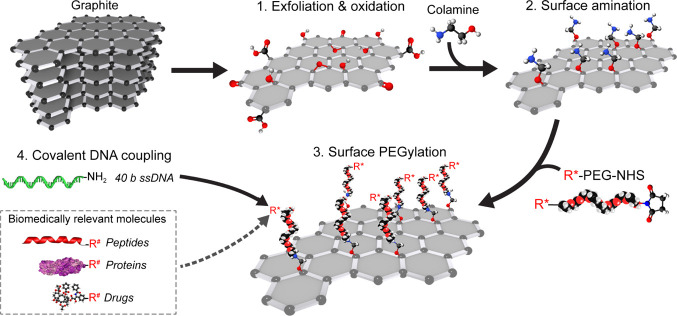
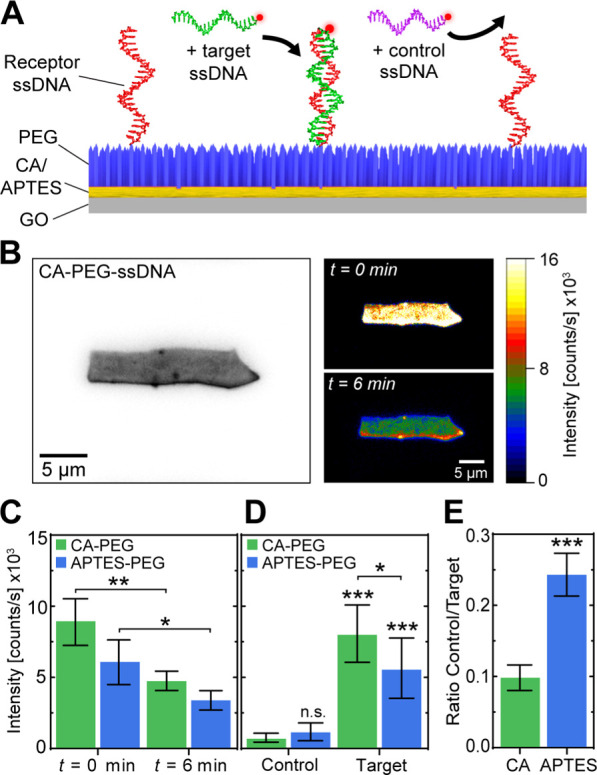
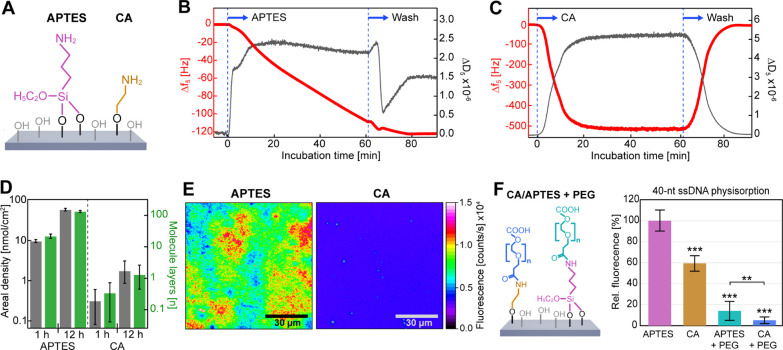
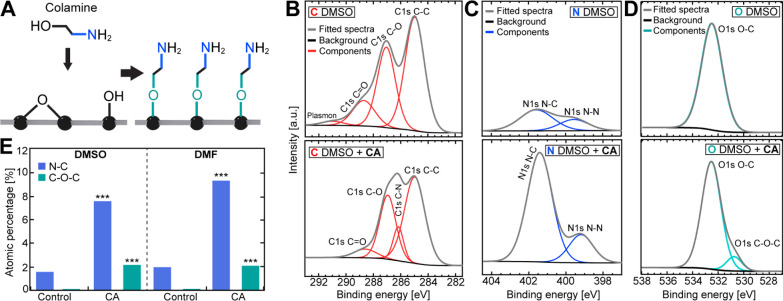
Graphene oxide (GO) has immense potential for widespread use in diverse and biomedical applications owing to its thermal and chemical resistance, excellent electrical properties and solubility, and high surface-to-volume ratio. However, development of GO-based biological nanocomposites and biosensors has been hampered by its poor intrinsic biocompatibility and difficult covalent biofunctionalization across its lattice. Many studies exploit the strategy of chemically modifying GO by noncovalent and reversible attachment of (bio)molecules or sole covalent biofunctionalization of residual moieties at the lattice edges, resulting in a low coating coverage and a largely bioincompatible composite. Here, we address these problems and present a facile yet powerful method for the covalent biofunctionalization of GO using colamine (CA) and the poly(ethylene glycol) cross-linker that results in a vast improvement in the biomolecular coating density and heterogeneity across the entire GO lattice. We further demonstrate that our biofunctionalized GO with CA as the cross-linker provides superior nonspecific biomolecule adhesion suppression with increased biomarker detection sensitivity in a DNA-biosensing assay compared to the (3-aminopropyl)triethoxysilane cross-linker. Our optimized biofunctionalization method will aid the development of GO-based in situ applications including biosensors, tissue nanocomposites, and drug carriers.
氧化石墨烯(GO)因其耐热性、耐化学性、优异的电学性能和溶解性以及高比表面积,在各种生物医学应用中具有广泛应用的巨大潜力。然而,基于GO的生物纳米复合材料和生物传感器的发展受到其固有的生物相容性差以及在其晶格上难以进行共价生物功能化的阻碍。许多研究采用通过(生物)分子的非共价和可逆附着对GO进行化学修饰的策略,或仅对晶格边缘的残余部分进行共价生物功能化,导致涂层覆盖率低且复合材料在很大程度上具有生物不相容性。在此,我们解决了这些问题,并提出了一种简便而有效的方法,使用乙醇胺(CA)和聚乙二醇交联剂对GO进行共价生物功能化,这使得整个GO晶格上的生物分子涂层密度和异质性有了极大的提高。我们进一步证明,与(3-氨丙基)三乙氧基硅烷交联剂相比,我们以CA作为交联剂的生物功能化GO在DNA生物传感测定中提供了卓越的非特异性生物分子粘附抑制,同时提高了生物标志物检测灵敏度。我们优化的生物功能化方法将有助于基于GO的原位应用的发展,包括生物传感器、组织纳米复合材料和药物载体。