Department of Environmental Coexistence, Center for Southeast Asian Studies, Kyoto University, Kyoto, Japan
Department of Psychiatry, Faculty of Medicine, Universitas Indonesia, Jakarta, Indonesia.
BMJ Open. 2021 Sep 6;11(9):e050259. doi: 10.1136/bmjopen-2021-050259.
Substance use disorder (SUD) is a leading contributor to the global burden of disease. In Indonesia, the availability of formal treatment for SUD falls short of the targeted coverage. A standardised therapeutic option for SUD with potential for widespread implementation is required, yet evidence-based data in the country are scarce. In this study, we developed a cognitive behavioural therapy (CBT)-based group telemedicine model and will investigate effectiveness and implementability in a multicentre randomised controlled trial.
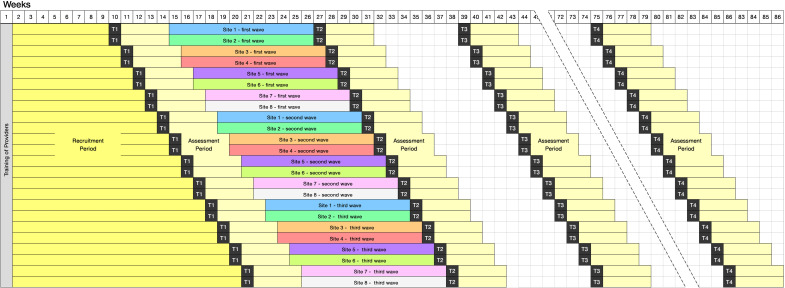
A total of 220 participants will be recruited from the social networks of eight sites in Indonesia: three hospitals, two primary healthcare centres and three rehabilitation centres. The intervention arm will participate in a relapse prevention programme called the Indonesia Drug Addiction Relapse Prevention Programme (Indo-DARPP), a newly developed 12-week module based on CBT and motivational interviewing constructed in the Indonesian context. The programme will be delivered by a healthcare provider and a peer counsellor in a group therapy setting via video-conferencing, as a supplement to participants' usual treatments. The control arm will continue treatment as usual. The primary outcome will be the percentage increase in days of abstinence from the primarily used substance in the past 28 days. Secondary outcomes will include addiction severity, quality of life, motivation to change, psychiatric symptoms, cognitive function, coping, and internalised stigma. Assessments will be performed at baseline (week 0), post-treatment (week 13), and 3 and 12 months post-treatment completion (weeks 24 and 60). Retention, participant satisfaction, and cost-effectiveness will be assessed as the implementation outcomes.
The study protocol was reviewed and approved by the Ethics Committees of Universitas Indonesia and Kyoto University. The results will be disseminated via academic journals and international conferences. Depending on trial outcomes, the treatment programme will be advocated for adoption as a formal healthcare-based approach for SUD.
UMIN000042186.
物质使用障碍(SUD)是全球疾病负担的主要原因之一。在印度尼西亚,SUD 的正规治疗提供情况远低于目标覆盖范围。需要一种标准化的 SUD 治疗选择,具有广泛实施的潜力,但该国的循证数据很少。在这项研究中,我们开发了一种基于认知行为疗法(CBT)的团体远程医疗模式,并将在一项多中心随机对照试验中研究其有效性和可实施性。
总共将从印度尼西亚八个地点的社交网络中招募 220 名参与者:三家医院、两家初级保健中心和三家康复中心。干预组将参加一个名为印度尼西亚药物成瘾复发预防计划(Indo-DARPP)的预防复发计划,这是一个新开发的 12 周模块,基于在印度尼西亚背景下构建的 CBT 和动机访谈。该方案将由医疗保健提供者和同伴咨询师在小组治疗环境中通过视频会议提供,作为参与者常规治疗的补充。对照组将继续接受常规治疗。主要结果将是过去 28 天内主要使用物质的禁欲天数增加百分比。次要结果将包括成瘾严重程度、生活质量、改变动机、精神症状、认知功能、应对方式和内化耻辱感。评估将在基线(第 0 周)、治疗后(第 13 周)以及治疗完成后 3 个月和 12 个月(第 24 周和第 60 周)进行。保留率、参与者满意度和成本效益将作为实施结果进行评估。
该研究方案已由印度尼西亚大学和京都大学的伦理委员会审查和批准。结果将通过学术期刊和国际会议传播。根据试验结果,该治疗方案将被倡导作为 SUD 的正式基于医疗保健的方法。
UMIN000042186。